Talk Cocktail

Talk Cocktail

By Jeff SchechtmanNews
Download on the App Store

Talk Cocktail episodes

  • Don't watch another Football game, until you listen to this!
    Once upon a time, our national pastime had nine innings, a long season, a pastoral setting and the worship and appreciation of the Boys of Summer.
    Today, that pastime has been replaced by 60 minutes of intense violence.  With words like blitz and gridiron.  Where once stadiums had an ambulance standing by for fans that might have a medical emergency, today, the ambulance is there for the players whose concussions and broken bones and worse, are the norm. What’s worse, is that is also a game that children want to play.
    I guess we shouldn't’ be surprised that a culture that reveres “Bullets and Burgers” would turn to football as its new national pastime.  Put more succinctly, is football driving the decay of our culture, or has our culture provided the perfect storm for the explosion of football's success?
    Former sports journalist Steve Almond, in Against Football: One Fan's Reluctant Manifesto,takes a look at the decay and corruption that is football today. A sport perhaps more in need of a warden than a commissioner. 
    My conversation with Steve Almond:

    Get full access to Talk Cocktail Podcast at jeffschechtman.substack.com/subscribe
    30 min
  • The Miseducation of the American Elite and the Way to a Meaningful Life
    We are deep in the heart of back to school season. Therefore, it's worth noting that while we have had dozens and dozens of conversations, on this program, about the improvement and mechanics of education, about its need to transform itself into a modern world, rarely have we ever stepped back to examine or even question the purpose of that education.  In part, because the answer today, almost seems like a paraphrase of Bill Clinton,... It’s the career  stupid!
    But should it be?  Should there be a higher and more noble purpose, particularly for higher education?  As education moves more and more toward modeling the work force, that is being about collaboration and problem solving, are we losing something?
    Has the worship of STEM and Wall Street, and the abandonment of the traditional Liberal Arts education left us in a lurch, whose implications have rippled out to impact almost every aspect of society.
    If that’s true... then there is no app for that.  There is only the conversation started by William Deresiewicz in Excellent Sheep: The Miseducation of the American Elite and the Way to a Meaningful Life
    My conversation with William Deresiewicz:

    Get full access to Talk Cocktail Podcast at jeffschechtman.substack.com/subscribe
    28 min
  • What deeper learning is all about
    While the world is changing around us, while creative destruction consumes so many areas, sometimes it seems like education stagnates.  After all, many, if not most, of our schools still operate in a manner designed in an agrarian world; pre Internet, pre technology and long before we knew and understood how the brain was wired, how children or anyone else really learns.
    The good news is we are beginning to see progress.  All across the country bold, persistent experiments are taking place that are creating schools that set the stage for the future of education.
    One such school is the Ron Clark Academy in Southeast Atlanta. It has been called one of the best schools in America.
    It’s co-founder Kim Bearden has taught over 2000 student and has been involved in virtually all aspects of education.  Now she distills much of what she’s learned in her new book, Crash Course: The Life Lessons My Students Taught Me.
    My conversation with Kim Bearden:

    Get full access to Talk Cocktail Podcast at jeffschechtman.substack.com/subscribe
    23 min
  • Change or perish in education...How to build a better teacher
    Almost every aspect of our culture and economy has been touched by technology and creative destruction. Still, three areas have lagged behind, and all three are beginning to be addressed and changed.  They are finance, healthcare and education.
    Although incumbents still rule in healthcare and finance, the ground is beginning to shift.  But in education, less so.  The very fact that we are still debating the merits and sanctity of practices that date to the agrarian age, is telling.
    But change is happening.  Throughout the country small individual efforts are being made.  Efforts that reexamine the questions at the very foundation of learning of understanding and putting knowledge to use. 
    One thing that hasn’t changed, is that teachers are still on the front lines.  For them too, it will be change or perish.   
    Elizabeth Green takes a deep look into this change, in Building a Better Teacher: How Teaching Works.
    My conversation with Elizabeth Green:

    Get full access to Talk Cocktail Podcast at jeffschechtman.substack.com/subscribe
    25 min
  • Information....adapt or perish
    So much of the way our brains and nervous system are hardwired, emerges as man did, from the primordial stew of life. Clearly, modern science tells us we are more suited to be hunter gatherers than we are multitasking and purveyors of Google Glass.
    Yet no matter how much some may desire it, we are not going back to a simpler time.  Information will continue to pore in on us, multilateral demands on our time will increase, and to succeed at anything, work, play or home, we will have to adapt or perish.
    So the question becomes, do we try and shape this brave new world to fit the way we are, or do we move through life, knowing we are on the ramparts of the efforts to change human evolution?
    The answer is really both.  This is where esteemed neuroscientist Daniel J. Levitin takes us in his new book The Organized Mind: Thinking Straight in the Age of Information Overload.
    My conversation with Daniel Levitin:

    Get full access to Talk Cocktail Podcast at jeffschechtman.substack.com/subscribe
    24 min
  • The Power of Creative Pairs - The Powers of Two
    Ginger Roger once said, of her partnership with Fred Astaire, that she did everything he did, “but backwards and in high heels.”  In many ways this gets to the heart of partnerships.  Two people that have a similar mission, but see it perhaps in opposite and positively reinforcing ways.
    The examples are course legend.  Jobs and Wozniak, Lennon & McCartney, Parker and Stone, Larry and Sergei, Mel Brooks and Carl Reiner, Crick and Watson, Joel and Ethan Coen, and Hewlett & Packard, to name just a few.
    When you look at the list, it becomes clear that there is something special about the power of two. Is it an accident, or something inherent in the creative process?  That’s the focus of Joshua Wolf Shenk’s new book, Powers of Two: Finding the Essence of Innovation in Creative Pairs.
    My conversation with Joshua Wolf Shenk:

    Get full access to Talk Cocktail Podcast at jeffschechtman.substack.com/subscribe
    27 min
  • The Real Cost of Fracking
    Across the country, fracking—the extraction of natural gas by hydraulic fracturing—is being touted as the nation’s answer to energy independence.  Energy companies have repeatedly assured us that the process is safe,
    But is there a hidden cost, a hidden danger?  What really is the process of fracking and what are its consequence on people, the environment and those that come in contact with it?
    Michelle Bamberger and Robert Oswald, combine their expertise in a new look at how contamination at drilling sites translates into ill health and heartbreak for both families and their pets. 
    In The Real Cost of Fracking: How America's Shale Gas Boom Is Threatening Our Families, Pets, and Food, they give voice to the people at ground zero of the fracking debate, the authors illustrate what they believe to be the consequences of fracking, which In their view,  poses a dire threat to the air we breathe, the water we drink, and even our food supply.
    My conversation with Michelle Bamberger and Robert Oswald:

    Get full access to Talk Cocktail Podcast at jeffschechtman.substack.com/subscribe
    23 min
  • The fall of Nixon and the rise of Reagan
    We often think of the 60’s as a time when the left was in the ascendancy. When great social movements, like the women's movement, the antiwar movement and the civil rights movement were given their birth.  In fact, arguably, the most lasting legacy of the 60’s maybe the rise of modern conservatism.
    The history of modern conservatism and of the current Republican party has its beginnings in the early 1960’s and continues into the confusion we see in the party today.
    Rick Perlstein has been one of our most astute chroniclers of that history,  beginning with his examination of Barry Goldwater in Before the Storm, and through his look at the 60’s and 70’s in Nixonland.
    Now Pearlstein takes us to the next phase, in his examination of the handoff of the party from Nixon to Reagan in The Invisible Bridge: The Fall of Nixon and the Rise of Reagan.

    But more than a political story, it’s the story of the transformation of America. A time when America suffered its first military defeat, was shocked by the oil crisis, the hostage crises, inflation, stagflation, a criminal Presidency, a rogue CIA, and more.  But it also became a time when as a solution to our multiple problems, reality gave way to fantasy; when facts gave way to fiction, when like television or the movies, make believe would take us to the place we’d rather be. And leading that transformation was Ronald Reagan.
    My conversation with Rick Perlstein:

    Get full access to Talk Cocktail Podcast at jeffschechtman.substack.com/subscribe

    29 min
  • Have we reached the end of American community?
    The world has changed.  We can intimately and immediately know what's taking place in the far reaches of the world or across America. But we often don’t know what’s going on with our neighbors and in our own community.
    Today we are a part of many communities of interest, not necessarily communities of geography. And is it any surprise really?  The natural human tendency is to associate with people like us. But  as mobility and tolerance have allowed a diversity of communities, it has, in fact, atomized us in ways that we seek the similar, no matter where on the planet it might be.
    But what is the consequence of this?  We were once a great and vast continental nation, that had to rely on community as a form of safety and self govemment.  Today that’s not the case.  The result has impacted our relationships, or politics, and the very way we govern ourselves.
    Where it’s going and how we got here is the subject The Vanishing Neighbor: The Transformation of American Community, a brilliant new book by Marc Dunkelman.
    My conversation with Marc Dunkelman:

    Get full access to Talk Cocktail Podcast at jeffschechtman.substack.com/subscribe
    28 min
  • Have we reached The End of Absence?
    There once was a time before the internet, before the automobile, before air conditioning, and television and radio and even before the printing press.  All these inventions and many others, dramatically transformed the ways in which we live.  At the time each was criticized for the ruinous impact it would have.  The printing press was thought to be the end of religion, air conditioning would keep us inside, and not allow us to connect with others. The automobile would destroy community and  television would pollute our brains.
    The fact is that each of these inventions changed us and changed the way we lived.  And the result was not good or bad.  It was just different.  It was all part of the process of human evolution.  Ever since man first emerged from the cave, we have been engaged in an ongoing effort to try and shape and define  our man made environment, just  as it continues to try shape and define us.  
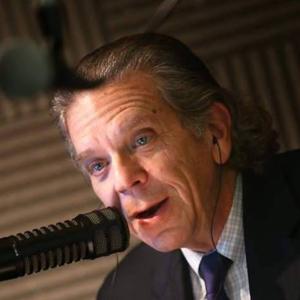
    Michael Harris thinks we need to reclaim some of that lost world. He details his ideas in The End of Absence: Reclaiming What Weve Lost in a World of Constant Connection.
    My conversation with Michael Harris:

    Get full access to Talk Cocktail Podcast at jeffschechtman.substack.com/subscribe
    28 min

About Talk Cocktail

From the publisher's feed

Jeff Schechtman talks with authors, journalists, newsmakers and opinion shapers, and sheds light on the issues of the day, from local stories to national and international headlines and ideas.…