Talk Cocktail

Talk Cocktail

By Jeff SchechtmanNews
Download on the App Store

Talk Cocktail episodes

  • Held hostage for 460 days
    Many of us remember the 1978 movie Midnight Express, where Billy Hayes is held and tortured by his Turkish captors, as  attempts are made to extract ransom.Well imagine today, a young woman caught in a similar situation,  kidnaped and held by brutal captors, not because of an attempt to smuggle drugs, but because she was trying to tell a story as a young and struggling and aspiring journalist.  The location was not Turkey, but Mogadishu, Somalia, considered by some, one of the most dangerous places on earth.  What brought Amanda Lindhout to this place, and what in her background gave her the strength and grace to survive a devastating 460 day ordeal?  Her story   A House in the Sky,  tells us a great deal about her, and also about the indomitable resiliency of the human spirit.My conversation with Amanda Lindhout:
    33 min
  • The reselling of the Presdient
    Look at any campaign, for student body President to the President of the United States and we see some key ingredients. The clarity and strength of the message, the quality of political organization, the discipline of the candidate, the get out the vote effort and resonance of the broader issues.As President Obama entered his reelection campaign, a full two years before election day, by any objective standard, these things were in flux and not always for the better. To paraphrase his opposition, the hope and change thing wasn’t going so well.  And yet Obama would become the first president, since Ike, to be re elected with over 50% of the vote. What they did, right and wrong is the subject of Richard Wolffe’s, 2012 campaign biography The Message: The Reselling of President Obama. My conversation with Richard Wolffe:
    26 min
  • My Brother, My Sister
    Even though our culture is dripping with sex, topics of sexuality don’t always come easily to our understanding or to our conversation.  It has taken generations for gays and lesbians to begin to achieve their full measure of acceptance, and there is still work to be done.  Same sex marriage is finally beginning to gather a majority constituency.But clearly, the world of transgender people is yet to achieve anything near equality or understanding.Yet as we understand more about it, as we begin to see it up close and personal, inside our own families and friends, perhaps the understanding and acceptance will evolve.There is no more powerful example of this than the story that esteemed film critic Molly Haskell tells about the transformation of her own brother in her memoir My Brother My Sister: Story of a Transformation.My conversation with Molly Haskell:
    25 min
  • Why Wilson matters
    Last week President Obama, in addressing the issue of Syria, talked about America's unique role in the world.  Russian President Putin would go on to criticize the idea of American exceptionalism.  The fact is that Obama's commitment to and Putin's criticism of America's place in the world, has its roots in the ideas of our 28th President, Woodrow Wilson.  Inaugurated 100 years ago. In urging Congress to enter WWI, Wilson talked about the need to make the world "safe for democracy."  In so doing, he perhaps inadvertently laid the predicate for the next century of US foreign policy and an idealism that often went beyond America's direct national interests.He would come to define the modern activist Presidency, and would lay the groundwork for a broader role for the federal government.He did it all coming to office with a minimum of political experience, accusations of elitism, racism and a disregard for civil liberties.  Still, he ranks as one of our great Presidents. The how and why of this is embedded in A. Scott Berg's sweeping biography Wilson, thirteen years in the making.A Scott Berg is a best selling biographer, a winner of the NationalBook Award and the Pulitzer Prize.My conversation with Scott Berg:
    33 min
  • Why we should welcome adversity
    We are all familiar with the words of Nietzsche who said, "that which doesn't kill us, makes us stronger."  It has become a kind of mantra for a society in which everyone seems under siege, or faces some kind of adversity.  But is it true?We’re told that we learn from our mistakes, but is there an easier way?  Does the willingness to lean into to adversity, make it more likely?  Do those who deny adversity’s benefits, have less of it?  And how does the value of learning from adversity get weaker,  often closed down, by the power of positive thinking which is often so much a part of our happy talk culture?These are some of the ideas dealt with by Dr. Norman Rosenthal in  The Gift of Adversity: The Unexpected Benefits of Life's Difficulties, Setbacks, and Imperfections.  Rosenthal is a psychiatrist and the scientist who in the 1980s first described winter depression or seasonal affective disorder (SAD). He spent 20 years as a researcher at the National Institute of Mental Health (NIMH) where he studied disorders of mood, sleep, and biological rhythms.My conversation with Dr. Norman Rosenthal:
    24 min
  • A Better Way of Death
    When we speak of death and sickness, it is often as if we are engaged in the language of war.  We are battling, fighting, staving off.  Perhaps we'd be better to think of it in language from the 17th Century poet John Donne, in “Death Be Not Proud.” That might help us to understand a different language of death, but it was all before the advent of the medical/industrial complex. The ways in which the forces of medicine stand in the way of a “meaningful death.”That’s the world that journalist Katie Butler writes about in Knocking on Heaven's Door: The Path to a Better Way of Death.  Her story, in the NY Times Magazine, about her father's death, was one of the most commented upon articles in the history of the Magazine.My conversation with Katie Butler:
    30 min
  • 9/11/2012 - Benghazi, Libya...just the facts
    On 9/11 of last year the US Mission in Benghazi, Libya, an isolated ad hoc outpost, was attacked.  The small security team from the diplomatic security service, was no match for large numbers of jihadist forces that would attack, in what has been called “a perfect worst case scenario.”This was the first time that a US diplomat had been killed since 1988, in Pakistan. Perhaps in another time it would have brought respect for the heroics of the men who valiantly fought back to save the mission and the Ambassador.  Perhaps it would have brought a legitimate investigation of what happened and how we might learn from such attacks.Instead, like almost everything else today, it’s simply been a catalyst for bitter partisanship, for political opportunism and the continuing efforts of some, to find anything to attack the President and the administration.In that haze we’ve lost sight of what really happened and why it still matters. Two national security experts, Fred Burton and Samuel Katz, provide the first full scale account in their book Under Fire: The Untold Story of the Attack in Benghazi.My conversation with Burton and Katz:
    34 min
  • Masters and Johnson
    Today we are a culture steeped in Sex. It’s part of almost every aspect of our politics, our culture, and our economy. It’s about selling cars, and also the dispensing of medical care.But just 60 years ago, it was a subject that was all but taboo.  We not only didn’t speak its name in polite company, but we knew very little about it and how it worked, both physiologically and psychologically.  Then William Masters came along and with his partner Virginia Johnson, changed all that. They not only medicalized the discussion and understanding of sex, but unleashed the power of female sexuality in ways that would forever change society.Few have studied and understood their work better than Thomas Maier. His book Masters of Sex: The Life and Times of William Masters and Virginia Johnson, the Couple Who Taught America How to Love  has just be re released and the Showtime series, based on the book, premiers later this month.My conversation with Thomas Maier:
    32 min
  • Working Class Adulthood in an Age of Uncertainty
    It used to be that we had a somewhat standard expectations as to what it means to be a grown up.  It they weren’t norms really, at least they were a general set of expectations:  College, marriage, a house, a car, kids...all the accouterments of the American dream.  It’s interesting, that even amid the turmoil and social and cultural transitions of the 60’s and 70’s, these stars remained pretty fixed in our imagination.Yet the broader economic transitions of globalization, economic disparity and deindustrialization, have had a far greater impact.  One that has tilted these expectation off their axis and may be creating a generation where coming of age, where adulthood, means something entirely different. In fact, it may be the entirety of the reason for the stagnation of the middle-class. Jennifer Silva, a Postdoctoral Fellow at Harvard's Kennedy School, take a look at what's happening in Coming Up Short: Working-Class Adulthood in an Age of Uncertainty.My conversation with Jennifer Silva:

    25 min
  • Back to School
    Few subjects get as much attention as education. Yet in many ways it’s like the weather.  We talk a lot about it, but sometimes it seems we can do very little.  Perhaps the most important thing we can do is focus on teachers. For they are at the ramparts of the battle. They are not just a piece of the puzzle, arguably they are the largest piece.  Yet how many of us, even the most active parents, really understand what it’s like in the classroom, day after day. What it really means to be a teacher.  Few are more distinguished or more successful than Rafe Esquith. He has taught at Hobart Elementary School in Los Angeles for twenty-four years. He is the only teacher to have been awarded the president's National Medal of the Arts and his new book is  Real Talk for Real Teachers: Advice for Teachers from Rookies to Veterans: "No Retreat, No Surrender!"My conversation with Rafe Esquith:
    26 min

About Talk Cocktail

From the publisher's feed

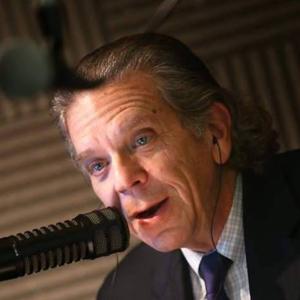
Jeff Schechtman talks with authors, journalists, newsmakers and opinion shapers, and sheds light on the issues of the day, from local stories to national and international headlines and ideas.…