
Sign up to save your podcasts
Or

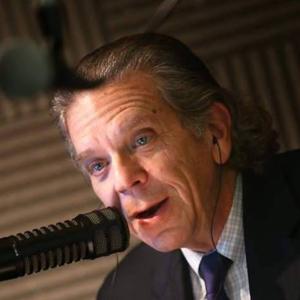


As we hurtle towards a future increasingly intertwined with artificial intelligence (AI), what does this mean for society, for jobs, and for our security? Could AI, one day, be used maliciously, or in warfare or terrorism? And if these threats are real, how can we implement safeguards, and ensure the technology we create doesn’t turn against us?
At a time when AI is reshaping our reality and pushing the boundaries of what was once considered mere science fiction, this technological revolution demands our attention. On thisWhoWhatWhy podcast, I delve deep into the realm of AI and its potential impact on humanity with Matthew Hutson, a contributing writer at The New Yorker. Hutson’s work, featured in publications such as Science, Nature, Wired, and The Atlantic, reflects his background in cognitive neuroscience, and his emphasis on AI and creativity. His article “Can We Stop Runaway AI” appears in the current issue of The New Yorker.
At the heart of our conversation lies the concept of the technological singularity — a moment when AI surpasses human intelligence. Hutson details the role of machine- learning algorithms in AI’s remarkable progress, highlighting its capacity to continuously learn and improve. We also explore the growing trend of using AI to enhance AI itself, uncovering the implications and potential risks inherent in this self-improvement process.
One of the great ironies of the world today is that while the problems we face, particularly with respect to climate, must, if they’re ever to be solved, bring the world closer together in seeking solutions. One of the ways that we can come together via travel or in person is also one of the supreme carbon-intensive things that we do to harm the planet.
And yet, the airline industry has committed to at least making the effort towards zero emissions by 2050. Like so much of what must save us from the ravages of climate change, technology lies at the heart of the solution. Along with it, the forces of the market, of innovators, investors, entrepreneurs, and scientists, must move with the same vision that the Wright brothers took to create the idea of flying itself.Telling this modern story is renowned British journalistChristopher de Bellaigue,a historian, and journalist, known for his reporting and books on the Middle East and environmental and ethical issues. His latest isFlying Green: On The Frontiers of a New Aviation.
My WhoWhatWhy conversation with Christopher de Bellaigue:
In the early 2000s, a significant media-business mistake emerged: the belief that website traffic is a commodity like oil, which would generate increased revenue as advertising improved. However, unlike other commodities, traffic lacked scarcity. The internet made traffic virtually infinite, posing challenges for new media-business models.
In this podcast,Ben Smith,former founding editor-in-chief of BuzzFeed, former media columnist for The New York Times, and author ofTraffic: Genius, Rivalry, and Delusion in the Billion Dollar Race to Go Viral,discusses the rise and fall of new media like Gawker and BuzzFeed, the impact and consequences of megaplatforms like Facebook and Twitter, and the shifting landscape of contemporary journalism.Smith examines the fluctuating trust in legacy news brands and the growing power of individual voices over faceless institutions, drawing parallels to developments in Hollywood, sports, and politics. Smith highlights the recent decline in both social media’s influence, and as a destination for news and information, and how this has led to more readers visiting homepages directly. He also emphasizes that conservative media outlets appear to have derived the most valuable insights from the social media era, adapting their strategies to thrive in the changing landscape.Looking ahead, Smith suggests that journalism must help beleaguered consumers navigate the vast information landscape by providing context and a clear voice. He speculates that this may involve a return to some of the principles of print journalism — concision and an editorial perspective — while adapting to the digital era’s demands.
My conversation with Ben Smith:
Hernan Diaz was just awarded the 2023 Pulitzer Prize for his novel, "Trust."
Last year, I had the opportunity to talk with Diaz about the book, his perspective on the Gilded Age, the persistent myths surrounding wealth, and the impact of these narratives on society as a whole. We also explored how the affluent can essentially "buy" their own reality amidst the enigmatic allure of money. Diaz's novelTRUSTcouldn't be more relevant to our current times. .
My conversation with Hernan Diaz::
As software takes over our lives — from hospitals to schools and even our national infrastructure — we’re facing an explosive wave of cyberattacks that could threaten our very existence.
The US — a hacker’s favorite playground — is a ticking time bomb, with 80 percent of its crucial systems tied to the internet and in private hands, with ZERO government control.
Join me in my WhoWhatWhy podcast for a conversation with New York Times cybersecurity reporter Nicole Perlroth. We are diving deep into her book This is How They Tell Me The World Ends, freshly updated with new revelations.
My WhoWhatWhy conversation with Nicole Perlroth:
My WhoWhatWhy conversation with Jeff Sharlet about “The Undertow.” He explores the complex relationship between religion, religious nationalism, right-wing politics, and how these forces have intertwined with Trumpism and are fueling a slow civil war
Struggling to find time for various tasks, our multi-colored Google calendars signify the complexity of the 21st century. The TV show Friends, popular across generations, nostalgically reminds us of simpler times in the early '90s without constant digital distractions.
This era allowed for unstructured, agenda-free time spent with friends, which now seems like a quaint memory. Nowadays, we hang out less frequently and with fewer friends, often while multitasking or participating in structured activities.The once-common late-night dorm room hangouts have become nostalgic. Are we losing something valuable by giving up this unstructured time?Sheila Liming explores the potential disconnect between socializing and our ever-growing to-do lists in Hanging Out: The Radical Power of Killing Time.
My conversation with Sheila Liming::
My WhoWhatWhy conversation with Jeff Sharlet about “The Undertow.” He explores the complex relationship between religion, religious nationalism, right-wing politics, and how these forces have intertwined with Trumpism and are fueling a slow civil war
As software takes over our lives — from hospitals to schools and even our national infrastructure — we’re facing an explosive wave of cyberattacks that could threaten our very existence.
The US — a hacker’s favorite playground — is a ticking time bomb, with 80 percent of its crucial systems tied to the internet and in private hands, with ZERO government control.
Join me in my WhoWhatWhy podcast for a conversation with New York Times cybersecurity reporter Nicole Perlroth. We are diving deep into her book This is How They Tell Me The World Ends, freshly updated with new revelations.
Perlroth exposes the dire need for a rock-solid national security strategy and exposes the terrifying world of “zero days” — secret security flaws that hackers crave. With a no-holds-barred talent war between the government and private companies, the US government’s cybersecurity defenses are left gasping for air.
Perlroth unveils the chilling tale of Russian hackers trying to topple US elections and the Ukrainian power grid, and the Chinese looking into America’s every digital nook and cranny.
This high-level conversation explores the critical need for ironclad cybersecurity policies and the power of imagination in defending against nightmare cyber threats.
From the publisher's feed