
Sign up to save your podcasts
Or

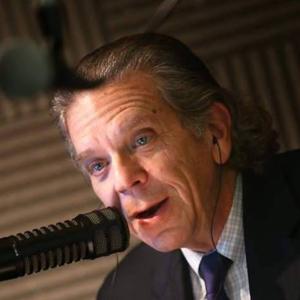


But perhaps the only way to really understand it is through the sharp lens of contemporary American political history. Particularly the years since the end of WWII.
Our divisions no matter how profound and how powerful, do not stand alone. They exist as a link in the broad scope of our contemporary political story. Without grasping that history, this moment is just noise.
Sure we can study history. Many great books have been written about these times. But those that have lived through all of it, who have paid attention to both the players and the events of this 75 year period are best qualified to try and figure out where we are today. Chris Matthews is certainly on of these. He writes about it in his new book This Country: My Life in Politics and History.
Investigative science journalist Nicholas Wade helped to turn the tide. His massive, in-depth article in Medium and in the Bulletin of Atomic Scientists opened the floodgates on the discussion. Wade joins me on this week’s WhoWhatWhy podcast.
The great chronicler of cites Jane Jacobs said “that by its nature, the metropolis provides what otherwise could be given only by traveling; namely, the strange.”
Very few cities, other than New York offer that strangeness.The ability to round the corner and be surprised,
Craig Taylor get to the heart of this in New Yorkers: A City and Its People in Our Time
And yet, a year later we celebrate a return to normal, and yet our divisions have intensified. Normal is now represented by a mass shooting every week, and even wearing a mask in the name of health, safety and science divides us.
Twenty years ago 9/11 united us for a brief and shining moment. A year ago, it seemed that the pandemic, like war and depressions before, would positively imprint and unite us.
And yet in some ways it doesn't seem like we’ve learned very much. However, there are those that see hope, who see the light at the end of the proverbial tunnel.
Tim Shriver knows a lot about hope and perseverance, as the long time chairman of the Special Olympics. Now he has coedited a new volume entitled The Call to Unite: Voices of Hope and Awakening.
The same is true for kinds of wealth. Those that inherit it are different from those that win it, or those that start from nothing and create it for them and for others. All wealth is not the same
The b***h goddess success, William James said, demands strange sacrifices from those that worship her. Some people are willing to make those sacrifice and other are not
All of this speaks to the varieties of wealth in America. But are there similarities, are there patterns and behaviors of the wealthy, both good and bad, that we can understand? And if so, what does that knowledge do for us?
That’s what Michael Mechanic, a senior editor at Mother Jones, looks at in Jackpot: How the Super-Rich Really Live—and How Their Wealth Harms Us All.
Is it any wonder that the most important film of that year would be a dark, bleak film that pushed the limits of sexuality on screen and would go on to be the first X-rated film to win an Academy Award. The film was Midnight Cowboy.
My guest Pulitzer Prize-winning journalist Glenn Frankel defines the terms and history of the film in Shooting Midnight Cowboy: Art, Sex, Loneliness, Liberation, and the Making of a Dark Classic
My conversation with Glenn Frankel:
From the publisher's feed