
Sign up to save your podcasts
Or

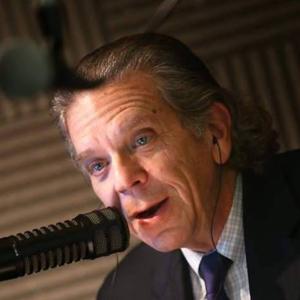


Its effort today to modernize both its culture and its economy, the US’s own confidence about oil independence and other dramatic geopolitical shifts have caused us to reassess the Saudi role in the world. At the same time, the murder of Jamal Kashogi and other human rights abuses have not helped. In short, Saudi Arabia still remains a great enigma. Trying to help us understand it is as a new administration must face another new policy is Saudi expert David Rundell, the author of Vision or Mirage: Saudi Arabia at the Crossroads.
My conversation with David Rundell:
The past four years, really right up to this moment, have been a test for the American republic. Over and over we’ve heard it asked, “can our institutions hold, are the ideas and documents of the framers adequate for the modern age.”
At the same time, we’ve heard over and over again since Nov. 8, 2016, how did we get here? What has driven us to such political and social division, to our appetite for authoritarianism, the disregard for norms, the rural-urban and the educational divide?What ties all of these questions together is the idea that when faced with a complex sometimes unsolvable problem, it’s best to go back to foundational principles. To deconstruct the enterprise and strip it to its original foundation to see how all of the problems have been layered on and how we might find meaning and/or solutions. This is essentially what Pulitzer prize-winning journalist and another Tom Ricks does in his new work First Principles: What America's Founders Learned from the Greeks and Romans and How That Shaped Our Country
My conversation with Tom Ricks:
The United States Senate was once considered the world’s greatest deliberative body. As we witnessed in the first presidential debate, it’s entirely possible that honest debate in America is actually dead. And why should we assume that the US Senate is any different?
But rather than coming to mourn what once was, perhaps by summoning up the history of some of those senators who once infused the body with all that made it and the country great, we can almost by sheer force of will create an environment that might let it bloom once again. After all, isn’t that why we study history, why we visit monuments and capitals and museums. So that we might take with us, in some primal and visceral way, the inspiration of the best that came before and integrate it into doing good today?
In part, this is what US Senator Sherrod Brown, does in his new book, Desk 88.
My WhoWhatWhy conversation with Sen. Sherrod Brown
From the publisher's feed