
Sign up to save your podcasts
Or

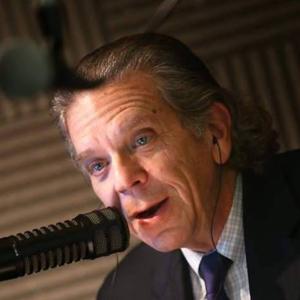


In today’s world it’s not just technology that changes quickly. Just twenty-five years ago, some thought we had reached the end of history. That the end of the Cold War would bring about protracted peace, that the ending of the great power struggle between the US and the Soviet Union would mark a new era. In many ways it did, but not necessarily the one that was anticipated.
Just as we’ve seen deconstruction in almost every area of society, so too in foreign policy. The gravitational pull of great powers that held the world together, just as that same force held major industries together, fragmented. Independence, democratization, real time instant communications and commerce, let loose global and destabilizing forces that we are trying hard to sort through. While in business it might mean the end of a company or an industry, in foreign affairs this disarray just might mean the end of the world.
Dr. Richard Haass, the president of the Council on Foreign Relations has served in several administrations and is also the author or editor of twelve books on foreign policy and international relations. His latest is A World in Disarray: American Foreign Policy and the Crisis of the Old Order.
My conversation with Richard Haass:
Somebody asked me recently if I thought that this time that we are living through will be as significant and as profoundly influential as the ‘60’s. I don't’ know the answer to that. What I do know is that there are recurring themes from that period that we seem to be relitigating and reliving.
Race is certainly one. Renewed discussion about Vietnam, press freedom and the threat of nuclear war, are some of the others.
Daniel Ellsberg, was once at the center of these issues and he is still here to provide his wisdom and insights into the way that history maybe repeating itself.
The Ken Burns documentary about Vietnam, which conspicuously did not include a conversation with Ellsberg, and the Steven Spielberg film, The Post, have once again catapulted Ellsberg to the front of our national dialogue.
Most of us know Daniel Ellsberg for the Pentagon Paper which he copied and leaked in 1971. What we don’t know is that Ellsberg was a war planner and nuclear strategist at RAND, and one of the leading thinkers about the role and actual use of nuclear weapons.
Now, after all of these years, he’s written about it in The Doomsday Machine: Confessions of a Nuclear War Planner.
My WhoWhatWhy.org conversation with Daniel Ellsberg:
There is an old expression that’s long been part of the training of medical students. It says that if you hear hooves, look for horses, not zebras. The idea is simple. Look first in the most obvious places. Often times the solution is in pain sight and doesn't require some deep, expensive digging.
The same might very well be said of Donald Trump and Russia. Sure we all hear about the complex web, but really there is a kind of elemental simplicity to the story.
Trump came to the attention of Russians as far back as 1987. The Russians, seeking contacts or assets in the US, dangled in front of Trump the prospect of doing business in Russia. They paraded before him oligarchs who he admired, and who he was jealous of.
They keep their eyes on on him for years. He even married two wives from the former soviet bloc. Two wives who grew up behind the Iron Curtain.
He went back to Russia in 2013, by which time planet Trump was surrounded by people like Michael Cohen, Felix Sater, the Agalaroffs, Paul Manafort and dozens and duzens of Russians that had bought property in Trump Tower, or one of his other real estate interests.
When he fell on financial hard times, Russians and particularly Deutsche Bank in Moscow, were there to help with laundered money
In 2016, when he finally ran for president, something he’d been talking about for decades, we know the Russians intervened to help. Paul Manafort, with deep Russian and Ukrainian ties, would, for a time, manage the campaign.
When he won, so many that were circling the mothership Trump would lie about their contacts with Russia. His cabinet would be filled with people like Wilbur Russ, Rex Tillerson and the sister of Eric Prince, all with deep ties to Russia.
All the while he would continue to praise Vladimir Putin. This is the story that Luke Harding brings forth in Collusion: Secret Meetings, Dirty Money, and How Russia Helped Donald Trump Win
My WhoWhatWhy.org conversation with Luke Harding:
Bill Binney was an NSA analyst whose work was so effective it was shut down. It threatened to derail the gravy train fueled by the kinds of problems he might have solved — including preventing potential terrorist attacks. The contractors and executives riding that train had a motto: “keep the problem going, so the money keep flowing.”
My WhoWhatWhy.org conversation with Bill Binney:
Once upon a time, at the apogee of the cold war, the CIA recruited the best and the brightest from our most elite universities. The likes of George HW Bush, James Jesus Angleton, William Bundy, Porter Goss, and Cord Meyer, all owed their allegiance to God Country and Yale. And Harvard also had its share. These universities were, as someone once referred them, “a nursery of spooks.”
Today, like everything else, espionage has gone through its own creative destruction. Colleges and universities are still at the epicenter of espionage, but it’s all been impacted by globalization, technology, the free flow of international students and professors and information, and yes, 9/11. It’s as if the military industrial-complex that Eisenhower warned us about, is now the military, industrial, intelligence and university complex.
Bringing this all into bold relief is Pulitzer Prize winning author Daniel Golden, in his book Spy Schools: How the CIA, FBI, and Foreign Intelligence Secretly Exploit America's Universities.
My conversation with Dan Golden:
As the new year begins, we often think about what to do with our money. In a world in which we are more socially and politically divided than ever, in which change is happening at an exponential pace, in which technology may lead us to a worse or a better place, how we invest, how we spend money, and where that money goes, takes on more urgency than ever.
Both spending and investing is now more than just part of our economic dialogue. It is a part of our social fabric. How it comes together, and what it accomplishes has profound consequences.
Morgan Simon is a leader in impact investment who builds bridges between finance and social justice. Over the past seventeen years, she has influenced over $150 billion in capital and she recently authored Real Impact: The New Economics of Social Change.
My conversation with Morgan Simon:
I’m not sure when politics became a dirty word. But there was a time when it was a noble profession. When the best the the brightest sought to serve, and when differences of opinion were about how to better the lives of all people, not just those at the top, or those at the margins, or those in power.
To successfully engage in politics tooks a very special skill set, that was about understanding people and what they wanted, and forming coalitions to compromise and get things done. How far we have fallen from that ideal.
It was Bismarck who said that “politics was the art of the possible.” Few understood this better than the 32nd President of the United States, Franklin Roosevelt. Presidential historian Robert Dallek takes a deep dive into the political Roosevelt, in Franklin D. Roosevelt: A Political Life
My conversation with Robert Dallek:
From the time we first enter the world, to the moment we read or listen to the morning news, we are trying to make sense of the world. We are trying to discern patterns, to create a narrative, to fit the puzzle pieces together in ways that make sense. All the while creating the minimum amount of cognitive dissonance, so that we can move forward each day without having a complete nervous breakdown.
And so it is that societies and cultures do exactly the same things as part of a kind of collective effort to finding meaning. Be it in art, as we try to find metaphorical meaning in the equivalent of a grain of sand, or in the worship of religion, money, success or hierarchical achievement. The problem often comes when these patterns we internalize, run headlong into reality.
That’s a part of what I explore with Jeremy Lent as we look at The Patterning Instinct: A Cultural History of Humanity's Search for Meaning.
My conversation with Jeremy Lent:
You may remember that during the cold war, particularly during the Vietnam conflict, we were told that the battle was for the “hearts and minds” of the enemy. We understood that in conflict, propaganda, particularly as told through narrative, was an important tool of warfare.
Narrative, if successful, was there to reinforce the battle. The ultimate expression of this was the phrase, sometimes attributed to both John Wayne and Chuck Colson, that “if you have them by the balls, their hearts and minds will follow.”
Today, in our 24/7 always on, social media saturated world, the objective has changed. Now, the battle through social media and television, for the proverbial hearts and minds, is sometime the goal, in and of itself.
As we’ve seen with Russia in both the Ukraine, and in it’s new cold war with the US, sometimes control of the Twitter and Facebook narrative is enough to create disruption, to change the terms of the conflict itself and ultimately to win. Suddenly, in cold war 2.0, a keyboard has as much power as an F15. That's the reality that David Patrikarakos lays bear in War in 140 Characters: How Social Media Is Reshaping Conflict in the Twenty-First Century.
My WhoWhatWhy.org conversation with David Patrikarakos:
Tune in to the news any day, and there is lots to lose sleep over. Not the least of which is the worry that if we are not sleeping correctly, we will age faster, increase our risk of Alzheimer's and be susceptible to a host of other illnesses.
It’s hard to imagine, that with all of the other crisis going on, how much time and conversation gets devoted to the subject of sleep. It must mean that it’s pretty important. At least Matthew Walker thinks so. He is a professor of neuroscience and psychology at UC Berkeley, the Director of its Sleep and Neuroimaging Lab, and a former professor of psychiatry at Harvard University, and the author of Why We Sleep: Unlocking the Power of Sleep and Dreams.
My conversation with Matthew Walker:
From the publisher's feed