
Sign up to save your podcasts
Or



Featured on this episode of Talking With the Tooth Cop is author, business coach, and mentor Chuck Blakeman. Throughout the interview, Chuck and I discuss the critical differences between management and leadership, how to avoid falling into the trap of always planning and never executing, and Chuck shares the two most important business words you've never heard of. He draws on his 35 years of experience and multiple best-selling books to give you the greatest knowledge in the dental industry, and it's a conversation you don't want to miss.
Doing business should not be a 30 year grind! And why money is not the ultimate motivatorContrary to the "old guard" mindset that doing business has to involve 30 long years of doing work you don't actually enjoy, business doesn't have to be that way! Chuck urges listeners of this episode of Talking With the Tooth Cop to consider the question, "what motivates me to get out of bed and come to work?" The answer to this question is very rarely solely money-focused. Making money is not the sole empowering motivation to be at work, for any person in any industry. Essentially, dentists who own their own practice should strive to own an actual business, not a job. Too many practices rely on the dentist to be the income producer. And if the income producer isn't physically present at the site (i.e. not on vacation or doing work outside of the office), money isn't being made. If this is the way your practice is being run, then you own a job. Be sure to listen to my conversation with Chuck to discover how to rejuvenate your motivation for working in dentistry and how to revamp your practice's processes.
What do Leonardo Da Vinci and the dental industry have in common?Even though the famous artist Leonardo Da Vinci and the dental industry have seemingly nothing in common, Chuck changed that mindset for me on this episode of Talking With the Tooth Cop. Da Vinci trained an apprentice to paint in exactly the same manner as he, stroke for stroke. The end result was 2 identical Mona Lisa masterpieces. Up until a few years ago, the world thought Da Vinci himself had painted both pieces. Chuck explains that the lesson to be learned from this story is that if Da Vinci can find someone to train and mentor to that high caliber level, then certainly modern dentists can too. You have to avoid the voice in your head that tries to claim that you're the only person who can do this work and do it well. This theory is commonly referred to as the "craft person's disease," or the Da Vinci Principle. This mindset will prevent you from moving onto bigger and better projects. For the full intriguing story, don't miss this podcast.
The best 2 questions to ask yourself and how to find the answers that will lead you to successThe biggest takeaway from this episode surrounds 2 main questions: 1) Is what I'm doing right now the highest and best use of my time? And 2) If what I'm doing isn't the highest and best use of my time, then how do I do it for the last time? Chuck tells me that you have to relentlessly pursue finding these answers because they will set you free. No matter if it takes you 3 minutes or 3 months after you answer these questions you will be presented with a game plan that will take you into the next level of business success. If you have to hire a new worker, train your current employees, buy a new software, or find a new process, whatever it may be, just start doing it! Your practice and your life-work balance will thank you.
Why management vs leadership destroys engagement and why you should have stakeholders instead of employeesWhen employees are managed and not led, their ability to create and engage with the work is destroyed. That's the idea behind Chuck's second major book, "Why Employees Are Always a Bad Idea." He claims that no one should ever be managed - everyone should always be led. If you replace the idea of having "employees" with having "stakeholders" your practice will achieve higher levels of flow and success. Chuck is a huge proponent of the idea of "giving everyone their brain back" and empowering them to make localized decisions in their area of expertise. By leading your stakeholders you require them to bring their highest and best level of work to the practice every single day. And that's how you achieve your goals. Chuck explains these stellar ideas and more on this podcast episode, and you don't want to miss his insights.
Outline of This EpisodeIt can be challenging to balance all of the aspects of pediatric dentistry practices. Patients, employees, industry trends, insurance requirements, and countless other areas all demand your full attention. That's why people like Tonya Burns, owner of Complete Dental Practice Consulting are such assets in the pediatric dentistry industry. In this episode of Talking with the Tooth Cop, I ask Tonya to share her knowledge of pediatric dentistry management systems. She covers four main areas of focus: the key systems for running an efficient practice, how to be a high-volume practice without feeling like a clinic, the art of putting patients at ease starting with the first phone call, and how to take Medicaid insurance and still have a productive practice. Your practice will benefit greatly from hearing her insights, so don't miss this episode!
The key systems for running an efficient, fast-paced practiceIdentifying systems to implement in your practice to ensure positive workflow is essential. The clinical and business sides of your practice must be balanced, and systems are critical in order for patients to be taken care of quickly while still making them feel valued. Tonya explains that some of the major system categories include: the new patient process, treatment plans, financial plans, appointment scheduling, and everything involving insurance companies. She walks you through each of these categories in an engaging, informative manner and her advice should be heard, so give this episode your full attention.
How to be a high-volume practice without feeling like a clinicIn order to be the most efficient practice possible, you need to start by asking yourself and your employees the following questions. Do we have the appropriate number of staff? Are we training our staff effectively and giving them the tools they need to succeed? Are we appropriately utilizing each employee's skill sets and talents within our practice? Are our scheduling methods up-to-date and effective? And are we consistent in our management systems and in our communications with parents? By addressing these questions, your practice will be better equipped to handle large amounts of patients while still providing top-notch care.
The art of putting parents at ease starting with the first phone callUnfortunately, many parents have a fear of the dentist that they inadvertently pass onto their children. Tonya explains that pediatric dentistry professionals need to be highly skilled in putting parents (and their young patients) at ease starting from the very first interaction. This starts with having consistent verbiage that is used by all employees in all forms of communication (phone calls, emails, and at the check-in desk). Your team members also need to be able to convey treatment plans, describe financial details, and answer all questions in a prompt, clear manner. Be sure to catch all of Tonya's insightful information on this episode of Talking with the Tooth Cop.
How to take Medicaid insurance and still have a productive practiceYour pediatric dentistry practice CAN overcome the Medicaid stigma! All of the systems and processes that Tonya discussed in the first three sections apply to Medicaid patients as well, and all of these details need to be tracked in order to be effective. To combat the "see hole, fill hole" scheduling mentality, she recommends scheduling Medicaid patients in low-demand time frames, but not creating exclusive Medicaid days. She also suggests not immediately focusing on what type of insurance a family has during the first few minutes of a new phone call. For the rest of Tonya's suggestions on handling Medicaid in your practice, be sure to listen to this episode.
Outline of This EpisodeOn this episode of Talking with the Tooth Cop, I explain seven of the most important things to look for in your dental records. I also describe different types of audits that can be used to ensure efficient and effective record-keeping practices as well as explain why all of these processes are critical in your dental practice. Keeping proper records goes beyond preventing lawsuits and insurance headaches. It enters into the realm of ensuring adequate patient care and doing your best to operate the best practice for your patients and staff alike. Be sure to catch the full episode for all the details!
Why you need to ensure exceptional dental records via auditingIn my experience, I have learned that unfortunately, most schools do not teach the critical skill of writing good records. In a constantly changing regulatory environment, stellar recordkeeping provides an invaluable layer of security to your practice. Even though it's easy to become complacent in mundane office-keeping tasks, proper records are essential. They provide an ongoing, chronological record of what you did, why you did it, when it happened, and how you performed the procedure. Essentially, they enhance patient care. Don't forget to listen to the full audio to discover all seven items to look for in your records!
Types of audits used in dental practicesOn this episode, I explain a variety of different types of audits that can be used in your practice. Prospective/pre-bill audits occur on a daily basis and essentially check for missing line items in billing. It's always easier to take the time upfront to check for accuracy, and I guarantee it'll save your billing staff incredible amounts of time in the future. Issues with under and over-payments to insurance companies take away from the time you could be spending working directly with patients and building up your staff. Daily auditing is one thing you can do that can impact your bottom line. For more information on retrospective audits, comprehensive audits, and focused retrospective audits don't miss this informative episode!
Comparing clinical notes with your dental records - a crucial stepEvery dental practitioner and his/her staff should constantly ask themselves, "Do the clinical notes describe every aspect of the billing records?" The balance between clinical notes and billing is immensely valuable when taking preventive action against unnecessary paperwork and insurance issues. It's important to carefully examine the claims you submit to insurance providers and look for red flags that would point towards gaps in information. This episode is full of helpful information that will make your practice and your office run much smoother - you don't want to miss it.
Dental records as justification for patient treatmentFor cases of restorative and needed treatment, dental records serve as a backup layer of information in the event of an audit. They describe why a particular diagnosis was given, why a procedure was recommended, and the follow-up care that was prescribed. When dentists are audited, the first layer is typically not done by a fellow dental professional. Having accurate records laid out in layman's terms can exponentially speed up the audit process. It's important to always be examining ways in which record-keeping habits can be tweaked and improved upon. You don't want to miss the rest of this insightful episode of Talking with the Tooth Cop.
Outline of This EpisodeIn any environment where people are being served, customer service is of primary importance. Dental practice customer service needs to be a huge priority for every dental office because there is already a built-in "fear factor" of sorts that has to be overcome. My guest today is Dr. David Moffet, my long-time friend who is a Dentist and dental practice consultant who has literally made it his business to learn and teach excellent customer service in dentistry. This conversation is fun and filled with all kinds of insights about what it takes to be the dental practice of choice for your existing patients, making them your advocates to new patients. Find out more by listening.
Customer service in dentistry is all about the experience your patients have.Everybody seems able to recount a horror story about a visit to the dentist. Sometimes they are laughable and entertaining, but in the end, you don't want them to be about YOUR practice, do you? Customer service in dentistry is all about the experience your patients have while they are in your office, and the way you set up your systems, train your staff, and even the number of people you have on the clock at any given time are the ways you create that enjoyable experience your patients will tell their friends and family about - in a positive light. Dr. David Moffet shares some of his many insights about how to create a dynamic dental practice that attracts customers instead of repelling them, on this episode.
Your dental practice needs to avoid communicating a nickel and dime attitude.We all know dental treatment can be expensive. It's not something that can or should be hidden. But the negative feelings patients may have about the expense can be offset by the type of interactions they have with you and your team. Make their experience more valuable to them personally, more patient-focused so that what your patients receive makes a deeper, lasting impact. Practically, that means avoiding anything that communicates that you're focused on the fees. How do you accomplish that? My guest, Dr. David Moffet has some great tips to help you make your practice different in those important ways, so don't miss this episode.
There's no new secret to success: Treat others the way you want to be treated.Imagine the typical dental waiting room. There are many patients waiting to be seen, sterile music is playing, hushed conversations are happening in the reception area, the phone rings now and then. It's pretty boring and definitely not fun. Is that what you're aiming for? What can you do to create a different experience for your patients? What can you do to make it enjoyable, different, and even fun? The effort you make in these unnoticed areas are what set you apart, making your practice the go-to office for dental treatment. Join me as I talk with Dr. David Moffet about how to create the ultimate patient experience, on this episode of Talking With The Toothcop.
It's true in dental practices too: you have to spend money to make money.Too often, dental practices are run like assembly lines. Patients in, patients out. When it starts to feel that way to your patients, you've got a situation that needs to be remedied immediately. Yes, you need to be efficient in order to keep costs low, but not at the expense of the experience your patients have. On this episode, Dr. David Moffet shares some of the best ways you can spend money to create a better patient experience and how they produce a great return in terms of profitability and the ability to scale your practice, ultimately serving even more patients. Be sure you take the time to listen.
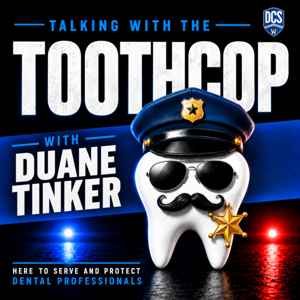
Outline of This EpisodeIt’s pretty exciting to me to be bringing you this first episode of my new podcast, “Talking With the Toothcop.” I’ve been wanting to do this for a long time and finally decided it was time to get moving. You’ve happened upon the “zero episode” where I explain a bit of who I am, why I’m doing this podcast in the first place, and what you can expect each week. Dental compliance is something all you busy dental professionals know is important but don’t have the time to learn inside and out. That’s why I’m here. I’m the Toothcop.
Compliance has a lot to do with whether your dental practice is successful or not.All you dental pros out there know that building a successful dental practice isn’t as simple as graduating from dental school and turning on your "open" sign. You’ve got a lot of regulatory hoops to jump through in order to set up shop efficiently and in a way that isn’t going to get you in trouble. You could do the work to learn it all yourself, or you can let me help. I’m here to walk you through the headaches of OSHA and HIPAA compliance, the upkeep of patient records and more. My name is Duane Tinker, but you can call me Tink — and I’m the Toothcop. Join me for weekly podcast episodes and learn what you need to know about dental compliance issues.
Everybody needs an ally to help them know what they don’t know... so they can know it.I’m like anyone else, I don’t know what I don’t know. That’s why it’s helpful every now and then to put myself in the place of the student, to learn from someone who’s been down the path I want to go down. If you work in the dental industry you know that feeling because the regulatory burden of compliance is one of those dark, scary paths you never want to walk down, but you need to. My company, Dental Compliance Specialists is designed to serve as your ally. We are there to ensure that you are doing what it takes to avoid lawsuits and disciplinary actions. We're armed with the knowledge and expertise to assist you in aligning your practice with the law. Consider this podcast your weekly dose of motivation and information, reinforcing the belief that you have what it takes to succeed!
Do you know what investigators are looking for when they look into your dental practice?One of the advantages I have as your audio dental compliance partner is that I used to be on the other side — I investigated dentists for noncompliance issues. So, I know what the investigators are searching for when noncompliance is suspected, and I want to help you get through those investigations unscathed. I’ve assembled my own team of investigators that will come into your dental practice and complete a thorough audit. But short of that, I want to serve you on this podcast by sharing my experience with you, so you can be ready the next time they knock on your door.
Every dental professional has read the compliance laws that govern their practice, right?I agree with you. You don’t have time to read and understand every word of the legislation that governs your work as a dental professional. For that reason, it’s almost impossible to comply with the rules and regulations set forth by the agencies — unless you have some help. I lead a team of compliance specialists who want to help your practice follow the necessary laws so that you are never in any legal trouble. You worked hard for your dental degree, so don’t put it in jeopardy through a noncompliance issue you didn’t know about. Let us help. Subscribe to this podcast and get weekly info to help you stay out of trouble and in the black.
Connect with The Toothcop!
Reach out to Duane Tinker on LinkedIn and explore Dental Compliance Specialists, your trusted partners in navigating the complexities of dental regulations and compliance. Schedule your consultation today by calling (817) 755-0035. Thanks for tuning in to Talking with the Toothcop! Don't forget to follow and enable notifications for future episodes.
*** Disclaimer: Duane Tinker is not an attorney and does not offer binding legal advice concerning regulatory compliance. The information in this podcast should not be relied upon or construed as legal advice in any way. Consult your attorney for legal advice concerning compliance matters as they pertain to your dental practice.
From the publisher's feed