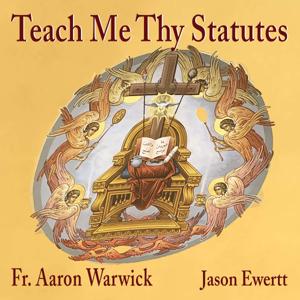
Teach Me Thy Statutes

Teach Me Thy Statutes

Download on the App Store

Teach Me Thy Statutes episodes

  • The Sending of the Seventy
    In today’s episode we discussed the significance of the seventy apostles that are mentioned explicitly in Luke’s Gospel and how they also relate to the twelve disciples. Fr Aaron explained that they symbolize the dual mission of Jesus: the mission to the Jews, as well as to the Gentiles. We then discussed Jesus emphasis that we cannot allow power to corrupt us, but rather must use it for the benefit of others.
    12 min
  • God's Commandments vs. Our Natural Instincts
    We discuss the sharp contrasts between God's commandments as taught by Jesus and our natural human instincts. We explored how the acts of initiation (i.e. circumcision and baptism) into God's covenant community symbolize this dichotomy, and the practical implications for daily living.
    15 min
  • The Sermon on the Plain
    We discuss several key aspects of the sermon on the plain, including the deeper meaning of the location of the sermon, the use of the term Son of Man, and the number (four) of blessings and woes. We then turned to the anti-imperial nature of the blessings and woes given by Jesus, viewing them in light of that general anti-imperial theme found throughout Scripture.
    13 min
  • Galilee & The Great Commission
    Jesus gave the "Great Commission" to go forth and baptize the nations from Galilee. Today, we discussed why it is significant that Jesus gave this command in the same place where He started His public ministry. In addition, we spoke of the importance of the second half of that commandment, to "teach" and "observe" all Jesus commanded.
    13 min
  • Godly Grief vs. Worldly Grief
    Today’s episode briefly recounted I Corinthians, in which Paul attempts to deal with the notion that salvation has been fully received without recognizing that repentance is essential and that the judgment still lies ahead. In II Corinthians we find Paul commending the church in Corinth for listening and exhibiting some signs of repentance. We then discussed what distinguishes worldly grief from godly grief. As Fr Aaron explained, worldly grief causes us to lose hope, leads to despair and leads us to concentrate on our past mistakes. In contrast, Godly grief leads us to repentance and gives us hope. Godly grief recognizes our mistakes but views them as an opportunity to learn and grow, and thus provides hope for a better future.
    12 min
  • What Is "The Acceptable Year of the Lord"?
    Today we discuss Jesus' reading in the synagogue from Isaiah, proclaiming "the acceptable year of the Lord." We highlighted how this saying relates to the Year of Jubilee, and then delved into the meaning and application of the Jubilee. Specifically, we discussed how the Year of Jubilee is a "re-setting" of society, with the land re-distributed to the original owners, debts being forgiven, and the slaves being freed. We concluded by noting how the Year of Jubilee was to be observed in both letter and spirit, and how ignoring the spirit of the Year of Jubilee was cited by Jeremiah as a reason for Israel being punished via the Babylonian captivity.

    13 min
  • The Hymn to the Philippians: Jesus Is A Different Type of King
    We opened today’s episode with a brief background on the epistle to the Philippians and how Paul likely viewed it as his last will/testament, and how Philippi served as a strategic outpost whereby he could spread the Gospel message throughout the Roman Empire and beyond. In addition, we discussed the significance of the “hymn of the Philippians” and how Jesus was entirely unlike any prior kings or rulers, and how He sets the example for us to follow.
    15 min
  • Is The Gospel Fair?
    Today’s parable led us into a discussion surrounding fairness and justice. We are taught from an early age about the importance of these concepts, and often these ideas of fairness and justice are good for society. But when considering the working out of our salvation, these concepts can become problematic. Here we see that God is not simply a just God, but that He exceeds justice and emphasizes higher virtues of mercy and compassion. Fr Aaron reminded us of the notion of viewing our salvation like an inheritance, which is something that cannot be earned but can be lost. We discussed this metaphor in light of the parable of the workers in vineyard, and how we should apply the teaching to our own lives.
    14 min
  • What Is The Sign of Jonah?
    We began our discussion today by reviewing the events of the three chapters leading up to Jesus’ statement about His only sign being the sign of Jonah. This review helps us understand the full meaning of Jesus’ statement. In the end, we learn that not only is Jesus referring to His death and third-day resurrection; but like Jonah who came forth from the whale to preach God’s message of repentance and salvation to his enemies, so too will Christ rise triumphantly, taking His message to Jew and Gentile alike, and will call His disciples to go forth and spread the Gospel over all the world, and most especially to the occupying enemy, the Romans.
    15 min
  • Faith & Science
    Today’s reading from Mark 5 led us into a discussion of faith and science and how a Christian should understand the relationship between the two. While the relationship between faith and science has changed over the centuries, in more recent history the pendulum continues to swing. Fr Aaron explained that he views the current state of this debate as moving back toward a recognition by academics that there is value to be found in Christianity. And while their rationale for the value of our faith is certainly incomplete and lacking in fullness, nevertheless we can see there is greater potential for understanding between those who align themselves with one position or the other in this debate. As for Christians and how we should understand and apply science and faith, we must first recognize that these things should co-exist. For in the study of science we find that God’s creative power is revealed to us; as the Psalm says, “The heavens declare the glory of God; And the firmament shows His handiwork.”
    20 min

About Teach Me Thy Statutes

From the publisher's feed

Each week, Fr. Aaron Warwick and Jason Ewertt meet to discuss biblical readings from the Orthodox lectionary.