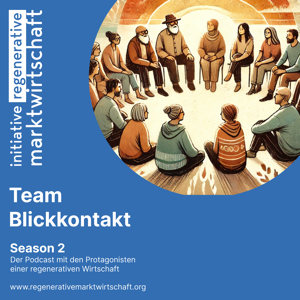
Team Blickkontakt

Team Blickkontakt

Download on the App Store

Team Blickkontakt episodes

  • Mpiima Ibrahim
    In dieser Folge spreche ich mit Ibrahim Mpiima, Klimagerechtigkeitsaktivist aus Uganda und Teil des XR Justice Movement Uganda. Ibrahims Engagement entspringt keiner abstrakten Inspiration, sondern persönlicher Verzweiflung: Seine Großmutter wurde im Zuge des EACOP-Projekts (East African Crude Oil Pipeline) von ihrem Land in Hoima vertrieben, nie angemessen entschädigt – und starb zwei Wochen nach ihrer Ankunft in Kampala. Schweigen, sagt er, wäre Verrat an ihr und an künftigen Generationen.

    Was Extraktivismus konkret bedeutet: Ibrahim macht greifbar, was in Europa oft nur theoretisch bekannt ist. Die EACOP-Pipeline wird zu 62 % von TotalEnergies (Frankreich) finanziert, Uganda und Tansania halten je 15 %, CNOOC (China) 8 %. Die Lasten tragen lokale Gemeinschaften: Über 50 Flüsse sind verschmutzt, Wälder gerodet, Wildtiere vertrieben, Menschen ohne Zustimmung umgesiedelt, die Pipeline wird von einer Armee bewacht, die Anwohner einschüchtert. Profite fließen ab, Schäden bleiben.

    Wie Bewegung entsteht: Ibrahim beschreibt eindrucksvoll, wie er mit Bauern, Studierenden, Marktverkäuferinnen, Vertriebenen und politisch Verfolgten Vertrauen aufbaut. Sein Kernsatz: Viele Bewegungen scheitern, weil sie mit Ideologie beginnen statt mit Beziehungen. Echte Kohärenz entsteht durch Zuhören, durch einfache Fragen („Was schmerzt in eurer Gemeinschaft? Was fürchtet ihr zu verlieren?"), durch gemeinsames Handeln im Kleinen – Aufräumaktionen, Gespräche, geteilte Mahlzeiten – und durch emotionale Ehrlichkeit, die Verletzlichkeit zulässt, ohne in Hoffnungslosigkeit zu verfallen.

    Eine Beobachtung über uns: Auf seine Zeit in den Niederlanden zurückblickend wundert sich Ibrahim, wie roboterhaft Menschen aneinander vorbeigingen. In Uganda sei der Mensch noch ein Gemeinschaftskind. Wer in entkoppelten Kulturen etwas Ähnliches aufbauen will, dem rät er: klein und lokal anfangen, zuhören vor dem Führen, keine fertigen Antworten mitbringen, Strukturen aus Beziehungen wachsen lassen, Führung verteilen – und sich auf Repression vorbereiten.

    Die unsichtbare Wahrheit: Menschen sind anpassungsfähig – im Guten wie im Schlechten. Wer Schweigen übt, wird schweigsam; wer Mut übt, dem wird Mut normal. Und tiefer noch: Menschen wollen nicht nur überleben, sie wollen Würde, Zugehörigkeit, Sinn. Genau hier liegt nach Ibrahim die Kraft jeder ernsthaften Bewegung.Ein Gespräch über Trauer, Mut und die politische Kraft echter Beziehungen – und ein Aufruf, das extraktive Paradigma zu durchbrechen, bevor es die Lebensgrundlagen aller zerstört.

    Links zur Bewegung – XR Justice Movement Uganda:
    • Website: https://www.xrjusticemovementug.com/
    • X (Twitter): https://x.com/justiceug256
    • Instagram: https://www.instagram.com/justiceug256
    Ibrahim Mpiima persönlich:
    • X (Twitter): https://x.com/ebrahym68
    • Instagram: https://www.instagram.com/mpiima_ibrah
    • LinkedIn: https://www.linkedin.com/in/mpiima-ibrahim-6a57303a1
    • Bluesky: https://bsky.app/profile/ebrahym.bsky.social

    44 min
  • Michael Pachmajer
    In diesem Gespräch argumentiert Michael Pachmajer, dass die Bürgerinnen und Bürger einer Demokratie die souveräne Macht und Verantwortung haben, die „Spielregeln“ für Wirtschaft und Gesellschaft selbst zu gestalten. Er verweist auf historische Beispiele wie die Zerschlagung von Monopolen, um zu verdeutlichen, dass Machtkonzentrationen reguliert werden können.

    Michael identifiziert zentrale „Transformationsblockaden“ in der Gegenwart: Veraltete Regeln, die nicht mehr für das digitale Zeitalter geeignet sind, führen trotz vorhandenem Wissen und Wohlstand zu einem gefühlten Stillstand. Angesichts existenzieller Krisen wie dem Klimawandel, dessen „Tipping Points“ bereits überschritten sind oder kurz bevorstehen, betont er eine enorme Dringlichkeit. Ein langes Abwarten sei keine Option mehr – der Wandel muss schnell geschehen.
    Sein zentraler Appell ist ein Weckruf zur zivilgesellschaftlichen Aktion: Die Menschen sollen ihre Gestaltungsmacht erkennen, zusammenkommen und mutig die notw endigen Regeländerungen einfordern, auch um zu verhindern, dass einige wenige Akteure die Regeln nach ihren Interessen neu definieren. Seine eigene Arbeit sieht er darin, Menschen und Organisationen zu befähigen, diese Blockaden zu überwinden und neue Energie für eine positive Zukunft freizusetzen, in der eine Wirtschaft im Einklang mit Mensch und Planet möglich ist.
    1 hr 14 min
  • Lieven Callewaert
    In this conversation, social entrepreneur Lieven Callewaert shares his personal and professional journey toward fostering regenerative systems. His quest began with a longing for simplicity, a stark contrast to the complex life he was leading. A pivotal moment was the complicated birth of his second child, Amber, which shattered his perception of conventional systems and catalyzed a profound reconnection with himself, nature, and community. 

    This journey ultimately led him from Belgium to a small, close-knit island community near Vancouver, Canada.Lieven explains that true, simple connection is the precondition for creating coherence in any group. His work focuses on creating the conditions for deep listening and helping people remember what truly connects them. He emphasizes "place-based" approaches, arguing that physical location provides a natural boundary and common ground that facilitates genuine conversation. By fostering a safe space where a group's collective wisdom can emerge, it's possible to move beyond conflict and toward shared direction and action.

    The conversation then explores the challenge of applying this "inside-out" approach to drive large-scale systemic change. Lieven notes the frustration that only about 1% of investors and leaders grasp this deep, preparatory work. The solution, he argues, is not to talk about change anymore but to manifest it in tangible projects, such as innovative housing developments. By creating "living labs," it's possible to demonstrate new, regenerative models that can attract capital and challenge existing regulations. He concludes that the key is to remember our innate wisdom and our fundamental sense of belonging—to ourselves, to each other, and to the natural world—as the foundation for building a regenerative future.
    1 hr 13 min
  • Abdul Semakula
    In this episode, Ugandan innovator Abdul Semakula shares his profound journey from being a software developer to a leader in regenerative design. He argues that the global poly-crisis—from climate change to social breakdown—stems not from a list of problems to be solved, but from a fundamental broken relationship between humans and nature.

    Abdul explains that the conventional "problem-solution" mindset often creates a "hamster wheel" of unintended consequences and wicked problems. The regenerative approach, he learned, is to shift focus from fixing what's broken to identifying and nurturing the inherent potential within a community and its place. This work is deeply rooted in rediscovering core principles like the importance of place (our local bio-region), the African philosophy of Ubuntu (which emphasizes our nested interdependence with the whole), and our true human role as stewards of life.

    He offers a powerful example from his work in Uganda, where by creating safe spaces and facilitating a process of collective dreaming, he has inspired 92% of local landowners to collaborate on restoring a wetland and building a regenerative economy. His story is a compelling case for how rediscovering who we are and our connection to place can unlock the agency needed to build a thriving future.
    1 hr 7 min
  • Felipe Amaral
    Felipe Amaral’s journey reads like the plot of an inspirational film. Born into privilege in southern Brazil, he initially followed the well-trodden path: business school, a prestigious corporate job in suit and tie, and parents bursting with pride. Yet inside, Felipe felt increasingly hollow. Disenchanted by the corporate world’s promise, he traded his polished office for volunteer roles at leading nonprofits—only to confront the practical reality that passion alone doesn’t pay the bills. Battling depression, he turned to psychoanalysis to rebuild his sense of self, and in the process discovered a powerful truth: genuine curiosity, when coupled with the ability to create value, becomes the key to personal autonomy.Armed with that insight, Felipe co-founded Instituto Cloudera Data, a 22,000 m² innovation hub powered by a coalition of Brazil’s biggest companies, government agencies, universities, and nonprofits. His boldest vision: Data Generation, an ambitious educational pipeline that each year draws 20,000 applications from underserved Brazilian youth. Two months of rigorous online training winnows the field to 200 scholars, who then spend six months living and learning inside Cloudera Data’s real-world tech environment—where they absorb workplace culture, build networks, and prepare for careers. The payoff? A staggering 90 percent of graduates walk straight into jobs with the very companies that championed their training.But Felipe knows that hard skills alone aren’t enough. He has woven “safe-space circles” into every program, encouraging participants to share their struggles—from fractured family ties to self-doubt—so they can see that their challenges are not unique. This rare vulnerability becomes the glue that unites people across sectors and social strata, transforming a mere “innovation hub” into a living, breathing community.Now, Felipe invites changemakers from around the globe to witness this experiment in action at Cloudera Week, September 29–October 3 in Porto Alegre. Five days of keynotes, side-events, and what he playfully calls “Disneyland for careers” will bring 15,000 innovators together to explore education, sustainability, and the future of work. If Felipe’s story proves anything, it’s that when vision collides with relentless execution—and when you place human connection at the center—transformational change not only happens, it thrives.
    59 min
  • Anupa Dasgupta
    In this riveting episode of Team Blickkontakt, guest Anupa Dasgupta takes us on a journey through her layered identity and the evolution of her creative career. Opening with reflections on self-belief and the power of the universe, Anupa explains how growing up in a culturally rich, joint-family environment instilled in her a deep-rooted sense of belonging and community—a legacy passed down from her grandmother’s tradition of nurturing and hosting.Anupa shares her unique trajectory from fashion design to service design, emphasizing that her early passion for sketching and the tactile world of clothing was just the beginning. Over time, she discovered that these creative processes could be translated into solving real-world challenges. This realization paved the way for her shift into community-based design strategies and, eventually, into the dynamic realm of emerging technology and Web3.Throughout the conversation, she dives deep into what it means to build community coherence. Anupa outlines how a shared ethos—fueled by values like kindness, empathy, and accountability—forms the backbone of any thriving community. She discusses the necessity of creating safe, engaging spaces where members can bond over common goals, emphasizing that true connection goes far beyond superficial interactions. Moreover, she touches on the complexities of crafting incentive structures in the Web3 space; these structures must resonate with the community’s inherent values rather than feel forced or gimmicky.The discussion also highlights the transformative power of embracing failure as a learning tool—a mindset Anupa credits for helping her pivot and grow despite setbacks. Overall, her insights present a compelling blueprint for how individuals and communities can co-create a “good life” by aligning personal creativity with innovative, collective action in the digital age.
    54 min
  • Adam Newman
    In this provocative episode of Team Blickkontakt—the new voice for the regenerative market economy—we dive deep into the art of creating community coherence with special guest Adam Newman. The conversation immediately challenges conventional norms by asking Adam to reveal his true self. Eschewing the traditional “name, location, and job” introduction, Adam describes himself as a divine being on a transformative journey, one that began in the rugged landscapes of Colorado and evolved into a life of radical community engagement in the heart of Rio de Janeiro’s favelas.

    Adam’s story is one of soulful rebellion: from battling childhood bullying and societal conditioning to embracing his spiritual essence, he explains how his early connection with nature and innate sensitivity set him apart. Now residing in a low-income urban community, Adam has dedicated his life to bridging worlds—uniting the realms of abundance and scarcity, and transforming the painful legacies of exclusion into opportunities for collective empowerment.
    The dialogue explores how deep, personal deconstruction of one’s conditioned identity can ignite the process of communal healing. Adam recounts his hands-on experience in the favelas, where he and his team mapped social projects and built a digital platform to strategically distribute aid during crises like the pandemic. By leveraging technology and fostering genuine human connections, he demonstrates how physical spaces and shared experiences can catalyze unity among diverse groups—whether it’s a police officer offering free guitar classes or community leaders forming innovative alliances.

    Throughout the episode, themes of unconditional love, vulnerability, and the relentless pursuit of individual happiness as a pathway to collective transformation resonate. Adam’s insights underscore the idea that the foundations for a better world are already within us; they just need to be awakened, connected, and co-constructed. This thought-provoking conversation serves as a call to action, inviting listeners to reimagine how embracing our divine essence and shared humanity can pave the way for a more coherent, joyful, and resilient future.
    1 hr 2 min
  • Donnie Maclurcan
    In this episode of the Regenerative Market Economy Podcast, host Thomas and guest Donnie dive deep into the transformative power of "systems feeling"—a practice that connects our inner embodied wisdom to the dynamics of our communities. Through reflective drawing exercises and compelling personal stories, they reveal how asset-based community development and thoughtful facilitation can shift group conversations from deficit mindsets to strength-based collaboration. Listeners will gain practical insights on creating safe, creative spaces that empower every voice and spark collective action towards a truly regenerative future.
    1 hr 17 min
  • Season 2 - Team Blickkontakt - Start
    Willkommen zur Sonderfolge des Podcasts der Initiative Regenerative Marktwirtschaft – wir starten in die zweite Saison! Sebastian und Thomas reflektieren heute gemeinsam über die Erkenntnisse aus Saison 1 zum Thema "New Wohlstand" und geben spannende Einblicke, was uns in Saison 2 erwartet: das Projekt „Team Blickkontakt“.In der ersten Saison haben wir intensiv diskutiert, wie Wohlstand neu definiert werden kann – weg von rein finanziellen Kennzahlen, hin zu einem umfassenden Verständnis, das Gesundheit, Beziehungen, Natur und Sinnhaftigkeit einschließt. Inspiriert von Walisern, die mit dem "Future Generations Well-being Act" eine gesellschaftliche Vision für ein gutes Leben geschaffen haben, haben wir Methoden wie die „8 Kapitalformen“ vorgestellt und in Salons, Workshops und Bürgerräten erfolgreich erprobt.

    Saison 2 baut auf diesen Erfahrungen auf und bringt einen noch stärkeren Fokus auf junge Menschen. Das Projekt "Team Blickkontakt" möchte die Selbstwirksamkeit der jungen Generation stärken und vor Ort regenerative Lösungen entwickeln. Ziel ist es, lokale Initiativen zu starten, die von jungen Menschen getragen werden und Gemeinschaften unterstützen, nachhaltige und selbstbestimmte Wege zu einem guten Leben zu finden.Freut euch auf inspirierende Gespräche mit Experten, Pionieren und Praktikern, die Erfahrungen darin haben, Menschen zusammenzubringen und gemeinschaftliche Visionen in konkrete Aktionen umzusetzen. Seid dabei und gestaltet mit uns gemeinsam einen regenerativen Wohlstand der Zukunft!
    Kontakt: T@IRM-Foundation, S@IRM-Foundation Mehr Infos: www.regenerativemarktwirtschaft.org
    27 min
  • Neil Smith
    In this eye-opening episode of the IRM Podcast, we sit down with Neil Smith—a seasoned agriculturalist turned paradigm shifter—who shares his transformative journey from traditional farming to pioneering a regenerative market economy. Neil reveals how reconnecting with our roots through sustainable practices like nurturing soils, optimizing water systems, and embracing renewable energy can redefine what it means to live well. He also dives into the disruptive potential of technologies such as blockchain to decentralize power, empower local communities, and break free from profit-driven models. Together, they challenge the status quo by arguing for bold, systemic leaps rather than incremental change, inspiring listeners to reimagine a future where every individual benefits from a thriving, regenerative ecosystem.
    1 hr 5 min

About Team Blickkontakt

From the publisher's feed

Willkommen bei der Podcast-Reihe der IRM – Ihrem Wegweiser in eine nachhaltigere, gerechtere und zukunftsfähige Marktwirtschaft. In Season 1, "New Wohlstand", haben wir in fesselnden Gesprächen mit Experten, Visionären und Praktikern alternative Wege erkundet, den Wohlstand neu zu definieren und innovative Lösungsansätze zu entdecken, die den finanziellen, sozialen, ökologischen und kulturellen Reichtum unserer Gesellschaft fördern. Diese inspirierenden Dialoge haben den Grundstein gelegt für neue Perspektiven und die Grundlagen einer regenerativen Marktwirtschaft.