
Sign up to save your podcasts
Or



Welcome to Tell it Proud, stories of courage too good to erase or ignore. I'm your host Christina Blacken. I'm a public speaker, performer, writer, and founder of The New Quo which helps every day people practice authentic leadership through daily acts of courage that improves trust and wellbeing in how we live and work together.
Today's episode is an essay I wrote for The New Quo Learning Community of a review of an incredible book by Valarie Kaur's called "See No Stranger" This book is both an intimate memoir and a practical guide for social change, centered on her concept of "revolutionary love." Drawing from her experiences as a Sikh American, civil rights lawyer, filmmaker, and activist, Kaur presents revolutionary love as a powerful framework for personal and social transformation in divided times, so clearly this book is relevant at this time.
The Underground Railroad was a secret network of routes, safe houses, and abolitionists who helped enslaved people escape from slavery to freedom in the northern states, Canada, and Mexico from approximately the late 18th century until the Civil War, with one of its most famous stewards being Harriet Tubman, who was an abolitionist, social activist, and a formally enslaved person. It's no surprise that many people do not know that this route didn't just go north to freedom, as has been told in many adaptations and historical recounts of the Underground Railroad, but further south across borders into Mexico.
This episode covers more of that overlooked history and the incredible lessons we can take from how this had an impact on our world today.
Welcome to Tell it Proud, stories of courage too good to erase or ignore. I'm your host Christina Blacken. I'm a public speaker, performer, writer, and founder of The New Quo which helps every day people practice authentic leadership through daily acts of courage that improves trust and wellbeing in how we live and work together.
Today's episode is an essay I wrote for The New Quo Learning Community about Phillis Wheatley who was an American writer who was the first African-American author of a published book of poetry. She was captured and enslaved at a young age, overcoming significant oppression to express her voice and create a poetry legacy.
If you'd like to further support this podcast and connect with other like minded people join The New Quo Learning Community.
Welcome to Tell it Proud, stories of courage too good to erase or ignore. I'm your host Christina Blacken. I'm a public speaker, performer, writer, and founder of The New Quo which helps every day people practice authentic leadership through daily acts of courage that improves trust and wellbeing in how we live and work together.
Today's episode is an essay I wrote for The New Quo Learning Community about why you don't have to be a super talented famous person like Beyonce or Picasso to find fulfillment and deep meaning in creative thinking and creative work. We need to expand what we define and think of as creative because we are facing a world with a large dissatisfaction with work, and complex, towering social problems that won't disappear overnight. We need creativity for survival, like we need air.
If you'd like to further support this podcast and connect with other like minded people join The New Quo Learning Community.
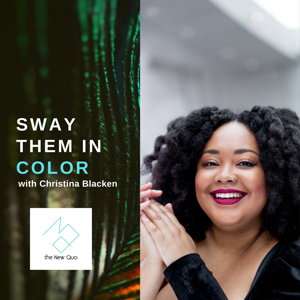
Today's episode is a throwback to one of my favorite episodes I produced on a previous podcast of mine called Sway Them in Color. In this solo episode, I unpack the concept of what I call an oppression pass, which is the belief that because you are liberal, marginalized yourself, like black people/have one black friend/are married to a black person/have black children you don't participate in or perpetuate in white supremacy.
My dear friends, I'm here to let you know oppression passes are being handed out like it's six flags, but they don't exist. In this episode I unpack five key narrative myths many liberal people, in particular white people (although anyone who claims to be liberal can fall into these traps), believe around racism that keeps white supremacy alive including:
myth 1: I know/am married to/friends with a black person, therefore I am not racist
myth 2: systemic racism doesn't exist, social outcomes are always from individual effort/character flaw
myth 3: the only form of protest that's acceptable is peaceful protest
myth 4: I am marginalized myself (gay, poor, have a disability etc) therefore I can't be racist
myth 5: I identify as a liberal, thus I am not racist
Today's episode is an essay I wrote for The New Quo Learning Community about a concept called mean world syndrome which was first coined in the 1970s by Dr George Gerbner, who discovered a cognitive bias where, over time, we start to see the world as more dangerous than it actually is due to long-term, moderate to heavy exposure to violence-related content through mass media (such as news reports and television shows). Those who are affected may experience increased feelings of fear, anxiety, and general pessimism. 45, Musk, and Zuckerberg and other leaders have a vested interest in exploiting individuals' mean world syndrome bias by pushing negative messaging to garner support for oppressive policies but there's ways we can combat this.
If you'd like to further support this podcast and connect with other like minded people join The New Quo Learning Community.
Today's episode is an essay I wrote for The New Quo Learning Community about neurodivergence which describes people whose brains develop or function in ways that differ from what is considered "typical" or "neurotypical" This essay covers fascinating history of how in pre-colonial Africa, communities recognized cognitive differences in attention, memory, and perception, not as flaws, but as a unique skill or purpose.
If you'd like to further support this podcast and connect with other like minded people join The New Quo Learning Community.
Welcome to Tell it Proud, stories of courage too good to erase or ignore. I'm your host Christina Blacken. I'm a public speaker, performer, writer, and founder of The New Quo which helps every day people practice authentic leadership through daily acts of courage that improves trust and wellbeing in how we live and work together.
Today's episode is a replay of a live storytelling event I performed in called Generation Women where they have women from every decade of life from their 20s all the way to 70s tell a true story from their lives. This story is about the time my neighbor called the police on me for singing, and it's a true story that highlights how bias entitlement affects our relationships and why advocating for ourselves even in the most absurd situations is incredibly important.
If you'd like to further support this podcast and connect with other like minded people join The New Quo Learning Community.
Today's podcast episode is a reading from an essay I originally wrote for The New Quo Learning Community where stories and practices of daily courage that create trust and wellbeing in how we live and work together are curated for members.
In this episode, I discuss research that 1 in 5 teens have had or know someone who has had a romantic relationship with artificial intelligence. There's so many sociological reasons this may be occurring, but one likely culprit is deep loneliness from the unmet need of mirroring and attunement.
If you'd like to further support this podcast and connect with other like minded people join The New Quo Learning Community
Welcome to Tell it Proud, stories of courage too good to erase or ignore. I'm your host Christina Blacken. I'm a public speaker, performer, writer, and founder of The New Quo which helps every day people practice authentic leadership through daily acts of courage that improves trust and wellbeing in how we live and work together.
Today's episode is an essay I wrote for the new quo learning community titled "this Japanese value can transform your relationships" it examines the value of omoiyari which is the concept of compassion and service to someone else's needs and feelings. This is counter to eurocentric and insecure cultures we live in that struggle with hyper-individualism and it creates a guide for the balance of independence and compromise that are necessary for healthy relationships.
If you'd like to further support this podcast and connect with other like minded people join The New Quo Learning Community.
From the publisher's feed