
Sign up to save your podcasts
Or


Episode 10 | Fertility and Other F Words
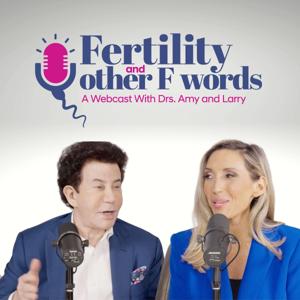
In this episode of Fertility and Other F Words, Dr. Amy Pearlman and Dr. Larry Lipshultz sit down with Mohit Kherafor a candid, practical discussion on testosterone and erectile function.
Dr. Khera is a board-certified urologist at Baylor College of Medicine, where he holds the F. Brantley Scott Chair in Urology and directs the Laboratory for Andrology Research. His training includes Vanderbilt University, Boston University (MBA/MPH), the University of Texas Health Science Center at San Antonio (MD), residency at Baylor, and fellowship training in Male Reproductive Medicine and Surgery.
A national leader in men’s health and sexual medicine, Dr. Khera has served on American Urological Association guideline panels, led multiple FDA-approved clinical trials, and most recently was President of the Sexual Medicine Society of North America.
In this episode, we cover
• Why testosterone is a powerful marker of a man’s current and future health
• What the science really says about testosterone, aging, and prostate cancer
• How lifestyle changes can improve testosterone, sexual function, and overall wellbeing
Key takeaways
• Testosterone has benefits far beyond simply restoring levels to the normal range
• Testosterone is a strong indicator of a man’s overall health now and in the future
• Low testosterone increases risk for heart disease and osteoporosis and is associated with mood changes and metabolic syndrome
• Emerging evidence suggests intermittent high-dose testosterone may benefit select men with prostate cancer
• Declining testosterone is more closely linked to increasing comorbidities than to aging alone
• Testosterone does not cause prostate cancer
• Diet, exercise, sleep, and stress reduction can meaningfully improve testosterone levels and sexual function
• Improving sexual health through lifestyle changes often serves as a gateway to improving overall health
Notice:
The Fertility and Other F Words webcast and YouTube channel are intended for general informational purposes only. They do not constitute the practice of medicine nor do they provide medical advice or create a doctor–patient relationship. Use of the information provided through this webcast, YouTube channel, or any linked materials is at the listener’s/viewer’s own risk. The content is not a substitute for professional medical advice, diagnosis, or treatment. Listeners/viewers should never disregard or delay seeking medical advice for any health condition and are strongly encouraged to consult their own qualified health care professional with any questions or concerns.
All content from the Fertility and Other F Words webcast is the property of PODCAST WITH DRS. AMY AND LARRY LLC.
Listeners and viewers may not use, distribute, re-distribute, reproduce, alter, or edit any portion of this content without the express written permission of the webcast owners.
The views and opinions expressed in this webcast are those of Drs. Amy Pearlman and Larry Lipshultz and do not reflect the official positions or responsibilities of Prime Institute, Baylor College of Medicine, or any affiliated institutions.
 View all episodes
 By Amy
Episode 10 | Fertility and Other F Words
In this episode of Fertility and Other F Words, Dr. Amy Pearlman and Dr. Larry Lipshultz sit down with Mohit Kherafor a candid, practical discussion on testosterone and erectile function.
Dr. Khera is a board-certified urologist at Baylor College of Medicine, where he holds the F. Brantley Scott Chair in Urology and directs the Laboratory for Andrology Research. His training includes Vanderbilt University, Boston University (MBA/MPH), the University of Texas Health Science Center at San Antonio (MD), residency at Baylor, and fellowship training in Male Reproductive Medicine and Surgery.
A national leader in men’s health and sexual medicine, Dr. Khera has served on American Urological Association guideline panels, led multiple FDA-approved clinical trials, and most recently was President of the Sexual Medicine Society of North America.
In this episode, we cover
• Why testosterone is a powerful marker of a man’s current and future health
• What the science really says about testosterone, aging, and prostate cancer
• How lifestyle changes can improve testosterone, sexual function, and overall wellbeing
Key takeaways
• Testosterone has benefits far beyond simply restoring levels to the normal range
• Testosterone is a strong indicator of a man’s overall health now and in the future
• Low testosterone increases risk for heart disease and osteoporosis and is associated with mood changes and metabolic syndrome
• Emerging evidence suggests intermittent high-dose testosterone may benefit select men with prostate cancer
• Declining testosterone is more closely linked to increasing comorbidities than to aging alone
• Testosterone does not cause prostate cancer
• Diet, exercise, sleep, and stress reduction can meaningfully improve testosterone levels and sexual function
• Improving sexual health through lifestyle changes often serves as a gateway to improving overall health
Notice:
The Fertility and Other F Words webcast and YouTube channel are intended for general informational purposes only. They do not constitute the practice of medicine nor do they provide medical advice or create a doctor–patient relationship. Use of the information provided through this webcast, YouTube channel, or any linked materials is at the listener’s/viewer’s own risk. The content is not a substitute for professional medical advice, diagnosis, or treatment. Listeners/viewers should never disregard or delay seeking medical advice for any health condition and are strongly encouraged to consult their own qualified health care professional with any questions or concerns.
All content from the Fertility and Other F Words webcast is the property of PODCAST WITH DRS. AMY AND LARRY LLC.
Listeners and viewers may not use, distribute, re-distribute, reproduce, alter, or edit any portion of this content without the express written permission of the webcast owners.
The views and opinions expressed in this webcast are those of Drs. Amy Pearlman and Larry Lipshultz and do not reflect the official positions or responsibilities of Prime Institute, Baylor College of Medicine, or any affiliated institutions.