
Sign up to save your podcasts
Or

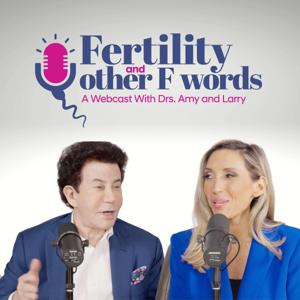


Episode 18 | Fertility and Other F Words
In this episode of Fertility and Other F Words, Dr. Amy Pearlman and Dr. Larry Lipshultz sit down with Lee Rosebush, PharmD, JD, MBA to discuss one of the most rapidly evolving and controversial areas in medicine: peptides, compounding pharmacies, FDA regulation, and the future of personalized healthcare.
Lee Rosebush is a pharmacist, attorney, and nationally recognized authority on pharmacy compounding, FDA regulation, healthcare law, and pharmaceutical policy. Lee leads the American Academy of Peptide Medicine's (AAPM) policy advocacy and compliance strategy as the Chairman and Chief Pharmacy Officer. He advises pharmaceutical, biologic, medical device, and healthcare companies on complex regulatory and compliance issues and serves as a leading voice on the future of peptide therapeutics and personalized medicine.
Whether you're a physician, healthcare professional, or patient trying to understand the changing landscape of peptides like BPC-157, this episode provides an evidence-based discussion of the science, legal considerations, and regulatory challenges shaping the future of these therapies.
In this episode, we cover:
Key Takeaways:
Check out the official website For the Academic Society for Peptide Medicine at pepmed.org
The Peptide Revolution is now available for purchase on Amazon https://www.amazon.com/dp/1631441280/?bestFormat=true&k=peptide%20revolution&ref_=nb_sb_ss_w_scx-ent-bk-ww_k0_1_18_de&crid=45FX9H9HE2AX&sprefix=peptide%20revolution
Notice:
The Fertility and Other F Words webcast and YouTube channel are intended for general informational purposes only. They do not constitute the practice of medicine nor do they provide medical advice or create a doctor–patient relationship. Use of the information provided through this webcast, YouTube channel, or any linked materials is at the listener’s/viewer’s own risk. The content is not a substitute for professional medical advice, diagnosis, or treatment.
Listeners/viewers should never disregard or delay seeking medical advice for any health condition and are strongly encouraged to consult their own qualified health care professional with any questions or concerns.
All content from the Fertility and Other F Words webcast is the property of PODCAST WITH DRS. AMY AND LARRY LLC.
Listeners and viewers may not use, distribute, re-distribute, reproduce, alter, or edit any portion of this content without the express written permission of the webcast owners.
The views and opinions expressed in this webcast are those of Drs. Amy Pearlman and Larry Lipshultz and do not reflect the official positions or responsibilities of Prime Institute, Baylor College of Medicine, or any affiliated institutions.
Episode 17 | Fertility and Other F Words
In this episode of Fertility and Other F Words, Dr. Amy Pearlman and Dr. Larry Lipshultz sit down with Michael Florida.
Michael Florida is a nutritionist and the owner and president of Michael Florida’s Life Nutrition. His passion for health started early as a competitive athlete, excelling in both track and baseball while even developing a strength training program for his high school. He went on to play college baseball at Sam Houston State University, where he earned dual degrees in Health Science and Biology and was recognized with a Leadership Award in Health Education.
Michael’s background spans personal training and advanced mentorship under a leading nutritionist in Houston before launching his own practice in 2012. Known for his ability to integrate both the physical and psychological aspects of health, he brings a uniquely comprehensive and practical approach to optimizing performance and overall wellness.
In This Episode, We Discuss:
Key Takeaways:
To learn more about Michael Florida, check out http://www.fuelingyourlife.net/
Notice:
The Fertility and Other F Words webcast and YouTube channel are intended for general informational purposes only. They do not constitute the practice of medicine nor do they provide medical advice or create a doctor–patient relationship. Use of the information provided through this webcast, YouTube channel, or any linked materials is at the listener’s/viewer’s own risk. The content is not a substitute for professional medical advice, diagnosis, or treatment.
Listeners/viewers should never disregard or delay seeking medical advice for any health condition and are strongly encouraged to consult their own qualified health care professional with any questions or concerns.
All content from the Fertility and Other F Words webcast is the property of PODCAST WITH DRS. AMY AND LARRY LLC.
Listeners and viewers may not use, distribute, re-distribute, reproduce, alter, or edit any portion of this content without the express written permission of the webcast owners.
The views and opinions expressed in this webcast are those of Drs. Amy Pearlman and Larry Lipshultz and do not reflect the official positions or responsibilities of Prime Institute, Baylor College of Medicine, or any affiliated institutions.
Episode 16 | Fertility and Other F Words
In this episode of Fertility and Other F Words, Dr. Amy Pearlman and Dr. Larry Lipshultz sit down with Alex Tatem, MD to discuss one of the most talked-about topics in men’s health right now: testosterone, peptides, and regenerative therapies for erectile dysfunction.
Dr. Tatem is a board-certified, fellowship-trained urologist specializing in men’s health, sexual medicine, and male fertility. He earned his medical degree at the Medical College of Georgia, completed his urology residency at Indiana University School of Medicine, and went on to complete fellowship training in Male Sexual and Reproductive Medicine at Baylor College of Medicine, where Dr. Lipshultz had the opportunity to work alongside him.
He now practices in Indianapolis, helping lead a high-volume men’s health program focused on erectile dysfunction, Peyronie’s disease, male infertility, and complex prosthetic surgery. Beyond the clinic and operating room, Dr. Tatem is also a standout educator on social media, known for breaking down nuanced men’s health topics into clear, practical, and highly engaging content for both patients and clinicians.
In this episode, we cover:
Key Takeaways:
To watch content by Dr. Alex Tatem subscribe to his YouTube channel, @DrAlexTatem
Notice:
The Fertility and Other F Words webcast and YouTube channel are intended for general informational purposes only. They do not constitute the practice of medicine nor do they provide medical advice or create a doctor–patient relationship. Use of the information provided through this webcast, YouTube channel, or any linked materials is at the listener’s/viewer’s own risk. The content is not a substitute for professional medical advice, diagnosis, or treatment.
Listeners/viewers should never disregard or delay seeking medical advice for any health condition and are strongly encouraged to consult their own qualified health care professional with any questions or concerns.
All content from the Fertility and Other F Words webcast is the property of PODCAST WITH DRS. AMY AND LARRY LLC.
Listeners and viewers may not use, distribute, re-distribute, reproduce, alter, or edit any portion of this content without the express written permission of the webcast owners.
The views and opinions expressed in this webcast are those of Drs. Amy Pearlman and Larry Lipshultz and do not reflect the official positions or responsibilities of Prime Institute, Baylor College of Medicine, or any affiliated institutions.
Episode 15 | Fertility and Other F Words
In this episode of Fertility and Other F Words, Dr. Amy Pearlman and Dr. Larry Lipshultz sit down with Brigham Buhler to unpack one of the most talked-about (and controversial) topics in modern medicine: peptides, and the healthcare system surrounding them.
Brigham is a healthcare entrepreneur on a mission to challenge and rebuild what he sees as a fundamentally broken medical system. He is the founder and CEO of Ways2Well, a functional and regenerative medicine clinic, and the owner of ReviveRx Pharmacy, where he is working to create more transparent, patient-centered models of care.
With firsthand experience navigating pharmacy benefit managers (PBMs), insurance companies, and regulatory frameworks, Brigham offers an insider perspective on how the system often works against patients and what it would take to fix it. He has become a vocal advocate for exposing the realities of corporate-driven healthcare and pushing for solutions rooted in prevention, innovation, and patient empowerment.
You may also recognize him from The Joe Rogan Experience, where he shared his perspective on the future of medicine and the urgent need for change.
In this episode, we cover:
Key takeaways:
This episode is a candid, behind-the-scenes look at healthcare, innovation, and the future of patient-driven medicine.
Notice:
The Fertility and Other F Words webcast and YouTube channel are intended for general informational purposes only. They do not constitute the practice of medicine nor do they provide medical advice or create a doctor–patient relationship. Use of the information provided through this webcast, YouTube channel, or any linked materials is at the listener’s/viewer’s own risk. The content is not a substitute for professional medical advice, diagnosis, or treatment.
Listeners/viewers should never disregard or delay seeking medical advice for any health condition and are strongly encouraged to consult their own qualified health care professional with any questions or concerns.
All content from the Fertility and Other F Words webcast is the property of PODCAST WITH DRS. AMY AND LARRY LLC.
Listeners and viewers may not use, distribute, re-distribute, reproduce, alter, or edit any portion of this content without the express written permission of the webcast owners.
The views and opinions expressed in this webcast are those of Drs. Amy Pearlman and Larry Lipshultz and do not reflect the official positions or responsibilities of Prime Institute, Baylor College of Medicine, or any affiliated institutions.
Episode 14 | Fertility and Other F Words
In this episode of Fertility and Other F Words, Dr. Amy Pearlman and Dr. Larry Lipshultz sit down with Alex Tatem, MD to discuss one of the most talked-about topics in men’s health right now: penile girth enhancement.
Dr. Tatem is a board-certified, fellowship-trained urologist specializing in men’s health, sexual medicine, and male fertility. He earned his medical degree at the Medical College of Georgia, completed his urology residency at Indiana University School of Medicine, and went on to complete fellowship training in Male Sexual and Reproductive Medicine at Baylor College of Medicine, where Dr. Lipshultz had the opportunity to work alongside him.
He now practices in Indianapolis, helping lead a high-volume men’s health program focused on erectile dysfunction, Peyronie’s disease, male infertility, and complex prosthetic surgery. Beyond the clinic and operating room, Dr. Tatem is also a standout educator on social media, known for breaking down nuanced men’s health topics into clear, practical, and highly engaging content for both patients and clinicians.
In This Episode, We Discuss:
Key Takeaways:
Research Highlights (SMSNA 2025 – PhalloFILL Study)
Study overview
Key findings
Bottom line
To watch content by Dr. Alex Tatem subscribe to his YouTube channel, @DrAlexTatem
Notice:
The Fertility and Other F Words webcast and YouTube channel are intended for general informational purposes only. They do not constitute the practice of medicine nor do they provide medical advice or create a doctor–patient relationship. Use of the information provided through this webcast, YouTube channel, or any linked materials is at the listener’s/viewer’s own risk. The content is not a substitute for professional medical advice, diagnosis, or treatment.
Listeners/viewers should never disregard or delay seeking medical advice for any health condition and are strongly encouraged to consult their own qualified health care professional with any questions or concerns.
All content from the Fertility and Other F Words webcast is th
Episode 13 | Fertility and Other F Words
In this episode of Fertility and Other F Words, Dr. Amy Pearlman and Dr. Larry Lipshultz sit down with Rick Manuel to pull back the curtain on peptides and regenerative medicine.
Rick is one of the owners of Optimal Balance Pharmacy and the owner of Houston Regen Consultants. He works with physicians around the world, helping them implement evidence-based protocols and navigate the rapidly evolving peptide space.
In this episode, we cover:
Key Takeaways:
To learn more about Optimal Balance Pharmacy, check out https://obprx.com/
Notice:
The Fertility and Other F Words webcast and YouTube channel are intended for general informational purposes only. They do not constitute the practice of medicine nor do they provide medical advice or create a doctor–patient relationship. Use of the information provided through this webcast, YouTube channel, or any linked materials is at the listener’s/viewer’s own risk. The content is not a substitute for professional medical advice, diagnosis, or treatment.
Listeners/viewers should never disregard or delay seeking medical advice for any health condition and are strongly encouraged to consult their own qualified health care professional with any questions or concerns.
All content from the Fertility and Other F Words webcast is the property of PODCAST WITH DRS. AMY AND LARRY LLC.
Listeners and viewers may not use, distribute, re-distribute, reproduce, alter, or edit any portion of this content without the express written permission of the webcast owners.
The views and opinions expressed in this webcast are those of Drs. Amy Pearlman and Larry Lipshultz and do not reflect the official positions or responsibilities of Prime Institute, Baylor College of Medicine, or any affiliated institutions.
Episode 12 | Fertility and Other F Words
In this episode of Fertility and Other F Words, Dr. Amy Pearlman and Dr. Larry Lipshultz sit down with Gabrielle Lyon—a healthcare disruptor reshaping how we think about muscle, strength, and longevity. A board-certified physician, bestselling author, host of The Dr. Gabrielle Lyon Show, and founder of Strong Medical, Dr. Lyon brings a fresh, evidence-based perspective to modern health. With training in family medicine and fellowship experience in nutritional and geriatric medicine, she has pioneered a muscle-centric approach that challenges conventional thinking. Her message is simple but powerful: muscle isn’t just about how you look—it’s a critical driver of metabolic health, resilience, and long-term survival.
In this episode, we cover:
Key Takeaways:
To learn more about Dr. Gabrielle Lyon, check out the following resources
YouTube @DrGabrielleLyon
The Forever Strong™ PLAYBOOK: A Six-Week, Science-Based Plan to Sharpen Your Mind, Strengthen Your Body, and Get Healthy at Any Age available on Amazon
Notice:
The Fertility and Other F Words webcast and YouTube channel are intended for general informational purposes only. They do not constitute the practice of medicine nor do they provide medical advice or create a doctor–patient relationship. Use of the information provided through this webcast, YouTube channel, or any linked materials is at the listener’s/viewer’s own risk. The content is not a substitute for professional medical advice, diagnosis, or treatment.
Listeners/viewers should never disregard or delay seeking medical advice for any health condition and are strongly encouraged to consult their own qualified health care professional with any questions or concerns.
All content from the Fertility and Other F Words webcast is the property of PODCAST WITH DRS. AMY AND LARRY LLC.
Listeners and viewers may not use, distribute, re-distribute, reproduce, alter, or edit any portion of this content without the express written permission of the webcast owners.
The views and opinions expressed in this webcast are those of Drs. Amy Pearlman and Larry Lipshultz and do not reflect the official positions or responsibilities of Prime Institute, Baylor College of Medicine, or any affiliated institutions.
Episode 11 | Fertility and Other F Words
In this episode of Fertility and Other F Words, Dr. Amy Pearlman and Dr. Larry Lipshultz sit down with Dr. Michelle Pearlman for a nuanced conversation on nutrition, gut health, and metabolic optimization.
Dr. Michelle Pearlman is board-certified in internal medicine, gastroenterology, and obesity medicine, with a clinical focus on metabolic health, nutrition, and the gut microbiome. She completed her training at Wake Forest, UC San Diego, and UT Southwestern, and previously directed the Medical Weight Management Program at the University of Miami.
Known for breaking down complex science into clear, actionable strategies, Dr. Pearlman shares evidence-based insights you can actually apply to your daily life, whether you're looking to improve gut health, optimize metabolism, or better understand the connection between nutrition and overall wellness.
And full disclosure- she’s also Dr. Amy Pearlman’s twin sister, which makes this episode a little more personal, a lot more fun, and packed with real talk you won’t hear anywhere else.
In this episode, we cover:
Key Takeaways
To learn more about GI health, nutrition, and high-protein, high-fiber options made with minimal ingredients and low added sugar, visit https://bytemd.app and be sure to check out the convenient Shop page for curated recommendations.
Notice:
The Fertility and Other F Words webcast and YouTube channel are intended for general informational purposes only. They do not constitute the practice of medicine nor do they provide medical advice or create a doctor–patient relationship. Use of the information provided through this webcast, YouTube channel, or any linked materials is at the listener’s/viewer’s own risk. The content is not a substitute for professional medical advice, diagnosis, or treatment.
Listeners/viewers should never disregard or delay seeking medical advice for any health condition and are strongly encouraged to consult their own qualified health care professional with any questions or concerns.
All content from the Fertility and Other F Words webcast is the pr
Episode 10 | Fertility and Other F Words
In this episode of Fertility and Other F Words, Dr. Amy Pearlman and Dr. Larry Lipshultz sit down with Mohit Kherafor a candid, practical discussion on testosterone and erectile function.
Dr. Khera is a board-certified urologist at Baylor College of Medicine, where he holds the F. Brantley Scott Chair in Urology and directs the Laboratory for Andrology Research. His training includes Vanderbilt University, Boston University (MBA/MPH), the University of Texas Health Science Center at San Antonio (MD), residency at Baylor, and fellowship training in Male Reproductive Medicine and Surgery.
A national leader in men’s health and sexual medicine, Dr. Khera has served on American Urological Association guideline panels, led multiple FDA-approved clinical trials, and most recently was President of the Sexual Medicine Society of North America.
In this episode, we cover
• Why testosterone is a powerful marker of a man’s current and future health
• What the science really says about testosterone, aging, and prostate cancer
• How lifestyle changes can improve testosterone, sexual function, and overall wellbeing
Key takeaways
• Testosterone has benefits far beyond simply restoring levels to the normal range
• Testosterone is a strong indicator of a man’s overall health now and in the future
• Low testosterone increases risk for heart disease and osteoporosis and is associated with mood changes and metabolic syndrome
• Emerging evidence suggests intermittent high-dose testosterone may benefit select men with prostate cancer
• Declining testosterone is more closely linked to increasing comorbidities than to aging alone
• Testosterone does not cause prostate cancer
• Diet, exercise, sleep, and stress reduction can meaningfully improve testosterone levels and sexual function
• Improving sexual health through lifestyle changes often serves as a gateway to improving overall health
Notice:
The Fertility and Other F Words webcast and YouTube channel are intended for general informational purposes only. They do not constitute the practice of medicine nor do they provide medical advice or create a doctor–patient relationship. Use of the information provided through this webcast, YouTube channel, or any linked materials is at the listener’s/viewer’s own risk. The content is not a substitute for professional medical advice, diagnosis, or treatment. Listeners/viewers should never disregard or delay seeking medical advice for any health condition and are strongly encouraged to consult their own qualified health care professional with any questions or concerns.
All content from the Fertility and Other F Words webcast is the property of PODCAST WITH DRS. AMY AND LARRY LLC.
Listeners and viewers may not use, distribute, re-distribute, reproduce, alter, or edit any portion of this content without the express written permission of the webcast owners.
The views and opinions expressed in this webcast are those of Drs. Amy Pearlman and Larry Lipshultz and do not reflect the official positions or responsibilities of Prime Institute, Baylor College of Medicine, or any affiliated institutions.
Episode 9 | Fertility and Other F Words
In this episode of Fertility and Other F Words, Dr. Amy Pearlman and Dr. Larry Lipshultz are joined by the incredible Dr. Lenaine Westney for an honest, practical conversation about urinary leakage (incontinence) and the treatment options that can truly change patients’ lives.
Dr. Westney is a Professor of Urology at MD Anderson Cancer Center in Houston and the Director of the Fellowship in Urinary Tract & Pelvic Reconstruction. She specializes in caring for patients with urinary symptoms after complex pelvic surgeries and cancer treatments. She’s also a true trailblazer—one of only a few African-American female full professors of urology in the U.S.—and a nationally recognized voice in both surgical innovation and diversity in academic medicine.
In this episode, we cover:
Key takeaways:
To learn more about incontinence treatment options, visit:
👉 https://www.fixincontinence.com/us/en/home.html
To find a pelvic physical therapist near you, check out this provider locator:
https://pelvicrehab.com/
Notice:
The Fertility and Other F Words webcast and YouTube channel are intended for general informational purposes only. They do not constitute the practice of medicine nor do they provide medical advice or create a doctor–patient relationship. Use of the information provided through this webcast, YouTube channel, or any linked materials is at the listener’s/viewer’s own risk. The content is not a substitute for professional medical advice, diagnosis, or treatment. Listeners/viewers should never disregard or delay seeking medical advice for any health condition and are strongly encouraged to consult their own qualified health care professional with any questions or concerns.
All content from the Fertility and Other F Words webcast is the property of PODCAST WITH DRS. AMY AND LARRY LLC.
Listeners and viewers may not use, distribute, re-distribute, reproduce, alter, or edit any portion of this content without the express written permission of the webcast owners.
The views and opinions expressed in this webcast are those of Drs. Amy Pearlman and Larry Lipshultz and do not reflect the official positions or responsibilities of Prime Institute, Baylor College of Medicine, or any affiliated institutions.
From the publisher's feed
Fertility and Other F Words is hosted by Amy Pearlman, M.D., a board-certified urologist and men’s health specialist, and Larry Lipshultz, M.D., a world-renowned expert in male reproductive…