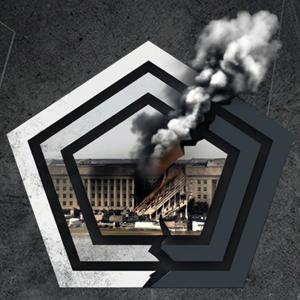
The 9.11 Pentagon Podcast Project

The 9.11 Pentagon Podcast Project

By Jermaine Williams, Imani ScottSociety & CultureDocumentaryGovernmentHistory
Download on the App Store

All The 9.11 Pentagon Podcast Project episodes

  • J. Jackson: there was a lot of panic and pandemonium ... everyday rules, standard rules do not cover a terrorist attack.
    With nearly 30 years of military experience under his belt, J. Jackson was working as a civilian in an administrative capacity on the morning of September 11, 2001. He was not based in the Pentagon, but he was in a nearby government building that was presumed to be a potential target and thus received an evacuation order.

    According to him, "there was a lot of panic and pandemonium ... everyday rules, standard rules do not cover a terrorist attack." It was shortly after the second attack on the World Trade Center that J. Jackson called his family members who lived in the D.C. area and New York City areas, and told them to, "stay home; don't go out." Shortly following the attack on the Pentagon, he was assigned the task of working as a family support officer for the family of one of his co-workers who was missing and presumed dead.

    During the months to follow, J. Jackson would be responsible for notifying family members that their loved ones were officially missing, making arrangements to collect DNA samples, and then advising them when their loved ones’ remains were found. He told me that despite the "pain in his heart," he was committed to staying strong for his fallen co-worker’s family, and that he “never showed weakness, the whole time."
    32 min
  • Sam: A Purple Heart for his actions on September 11, he says he "politely told the officer to 'go to hell.'"
    At the time of our interview, Sam was an officer in the U.S. Army. He had only been stationed at the Pentagon for a few weeks when the airplane pierced the building. After learning of the attacks on the World Trade Center, he called his wife and joked that if there was an attack on the Pentagon, there was only a 20 percent chance that it would hit his side of the building. He recalled, "She didn't think it was funny. So, I reassured her. I said 'I love you, and everything will be fine."'

    Sam was standing in a narrow corridor when he heard a "deafening roar" and was knocked to his feet. In the moments that followed, he recalled a duality of contradictory responses: panic and professionalism. After making it outside the burning building to the Courtyard, one of Sam’s co- workers told him, "We've got to go help." Sam remembered silently questioning his co-worker’s words. He said: "To be honest, you ask yourself, 'should I?' He told me that in those moments, there was a conscious and innate drive for self-preservation; even so, he decided to go along with his co-worker to help others.

    Over the hours that followed, Sam would help a series of people as they struggled to exit the damaged building. He helped two Navy seamen who had been blasted out of their offices find medical attention; he helped ensure that a Navy officer whose back was seared with an electrical cord got away from the building and to the medics, and he, along with several others, formed a "human mattress" so that persons trapped on the upper floors of the building could jump out of the windows and land safely.

    Later that day, after feeling as if he were "nervous, helpless, and not doing any good," he said he began to look for his co-worker, whom he found serving on a litter team. And then, days later, when Sam was approached by a Colonel asking to interview him to award him a Purple Heart for his actions on September 11, he says he "politely told the officer to 'go to hell."' In the end, Sam told me he felt that there were many more people, ''who were visibly shaken, and would be physically and emotionally scarred for life, who deserved such an honor." Later that same day, he told me he cried, for the "first and last time" since September 11, 2001.

    37 min
  • A Life Worthiness: I didn't sleep for two days, and I didn't eat for over a day. I felt vulnerable.
    Life Worthiness is a civilian who works in an administrative capacity in the Pentagon. She had been overcome with nervousness when she learned of the World Trade Center attacks. She said, "I was a wreck, just a wreck." So, she decided to call her husband, and that's when she felt the jolt to the building.

    After being led by her "XO" (Executive Officer) out of the building and into the Courtyard, she saw what she described as "mass hysteria." According to Life Worthiness, "people were confused, nervous. It was just sheer anxiety. So, I decided I'd better help comfort others and tell them that we were going to be fine; we were out of harm's way."

    It wasn't until she made it home later that afternoon that she allowed herself to feel "helpless" again and realized that she too needed to be comforted. "I didn't sleep for two days, and I didn't eat for over a day. I felt vulnerable," she recalled. Today, however, Life Worthiness says that she knows she was meant to survive 9.11. So, she has concluded that "God has other plans for me. I do have a journey ... there's something out there for me."
    40 min
  • Joshua: "It was faster than snapping your fingers, but it seemed like an eternity."
    Joshua is a civilian who works in an administrative capacity in the Pentagon. Like many others in the building on that morning, he had been watching the events in New York City on a television monitor before heading back to his desk. While seated at his desk, Joshua began to feel the building shaking and saw everything around him go dark.

    Joshua said that fire and smoke covered the room, but even so, he could see from where the fire was originating. "Everything was happening so fast,” he said. “It was faster than snapping your fingers, but it seemed like an eternity." As Joshua made his way towards the safety door, his feet became entangled in wires on the floor, so he struggled frantically to clear his feet of the wires and continued to make his way towards where he knew the door was.

    Despite the intensity of the situation, Joshua says that he never felt frightened. Instead, he recalls quite the opposite. “A peace, a spiritual peace came over me while I was in there ... I wasn't hesitating to get out of there, but it was a peaceful thing," he said.

    Once in the Courtyard, he and two co-workers grabbed fire extinguishers and tried twice to re- enter the building in search of others, but each time, the thickness of the smoke pushed them away. He had been determined, although unsuccessful, to make it back into the building, for he knew that others were still in there. And indeed, she would learn later that seven of his co- workers who had not escaped were killed that morning.
    38 min
  • Aunt Bea: I never felt fear like this before
    Aunt Bea is a civilian who has worked in the Pentagon for over 30 years. She told me that until the morning’s events of September 11, 2001, she had never felt fear at work. Her story begins as she was returning to her office after having retrieved a few items from the supply closet down the hall; that’s when she felt the jolt to the building.

    Initially, she thought it was construction- related based on a recent renovation project to the building. But as she watched ceiling tiles fall and debris flying around her, she realized it was much more. In response, Aunt Bea raced towards her office, where she was met by co-workers in the corridor; they told her she needed to walk with them and leave the building right away.

    Nervous and afraid, Aunt Bea followed them down the corridor; she told me she was walking as fast as she could. Once in the Courtyard, Aunt Bea met other co-workers, and they were all instructed to move away from the building since a second plane was expected. In response, she joined her co- workers and her boss on a three-mile trek to her boss's house. Along the way, they passed another military facility, where soldiers met them and gave them cups of water.

    At her boss's house, she and her co-workers sat together and watched events unfold on television as they munched on homemade chocolate chip cookies brought to them by a neighbor. Aunt Bea never sought counseling to help her handle the anxiety-laden afterthoughts of her experience. She told me that to help her post-event experiences of fear, she traveled with a “go bag” that included changes of clothes and toiletry items—in case something happened again.
    30 min
  • Smiley: September 11 really took me; it really broke my heart.
    Years before September 11, Smiley had served as a soldier in the U.S. Army, but since the mid-1980s she worked as a civilian in an administrative capacity at the Pentagon. Initially, she declined to participate in the study, feeling that talking to me would prompt too many disturbing memories. According to her, "September 11 really took me; it really broke my heart." But later, after being encouraged by her friends who’d met with me and allowing her to think about participating in my study, she decided that "talking about it might help."

    On the morning of September l 1, Smiley told me she had run for her life after hearing this "loud boom." She said she ran and kept running until she reached her truck, and then she went to the grocery store. She said: "I got in my truck and ended up at Shoppers Food Warehouse. I don't know how I got there. All I could think of was buying something to cook dinner for my husband." She told me that for many days after the attack she would cry uncontrollably. She also said she had trouble sleeping and eating; she described it as being: "anxious, depressed and fearful."

    After receiving psychotherapy and being placed on medication, Smiley returned to work. But she told me she was still haunted by reminders of that morning. According to her, "You come off the Metro, and you’ve got to be searched before you can come in [into the Pentagon]. You come in, and you see guys with machine guns on the top of the steps; it gets harder and harder every day to come into this building."
    32 min
  • Shortcake: I was digging in the ground searching for shelter.
    Shortcake is a civilian who works as a secretary in the Pentagon; she has worked there for over 15 years. When she recalled the morning of September 11, she remembered three things: the overwhelming beauty of the day that tempted her to stay home instead of going into work; an unexplainable but intense "funny feeling" that “something” was wrong, and the "big boom" that shook her office and forced her to run for her life.

    Despite her “funny feeling”/apprehension at the start of her morning, Shortcake decided she would go into the office that day. But once she got there, she told me that she shared her anxiety with others. According to her, "I told them, whatever y’all do, carry your purses everywhere you go today. They were like, 'yeah, whatever."' Because Shortcake was already a little edgy, when she heard the "big boom," she said she immediately grabbed her purse and headed for the door. She was determined to leave, despite reassurances from others in her office that it was "just construction noise." She was so agitated that she responded to their comments with a series of expletives, concluding with, "This office is not on the side of the construction." She recalled being nervous, afraid, and in shock. And she recalled praying: "Oh God, just let me see outside. Just get me outside."

    When she made it to the Courtyard, Shortcake heard warnings of a second plane attack, and this only heightened her anxiety as she told me she started digging. She said, "I was digging in the ground searching for shelter.” It was only after being encouraged by her co-workers to "calm down" and then seeing one of her best friends who appeared to be in a deep state of shock that she was able to regain her composure. Shortcake made frequent references to her challenges as a single parent to assure her children that, moving forward, she would be “safe” at work. But she admitted that in her heart, she felt that since September 11 her feelings of safety at the Pentagon had been betrayed.
    29 min
  • Jannel: 'I shouldn't have to come to work to die'
    Jannel is a civilian who works in an administrative capacity in the Pentagon. She was in the middle of a distribution run and talking with a co-worker when the building shook, and she was nearly knocked to her knees, but for the help of the co-worker.

    As the hallways darkened, the co-worker grabbed Jannel by her hand and said, "We've got to get out of here; God is with us." Crying, nervous, and shaken, Jannel ran along with her co-worker, struggling to keep up with his pace. Once in the Courtyard, she saw another co-worker, who told her they needed to pray, so they began praying.

    When Jannel looked up, she saw people who were bleeding and injured. But she also saw people entering and exiting the building and carrying body bags. Admittedly, Jannel said she had difficulty grasping all that was going on around her. She told me she started crying out: "Oh my God, somebody died. Please God, get me out of this place."

    Jannel told me that initially, she was completely aware that she was panicking, and didn’t feel like she could control her emotions as she considered: "I didn't know what was going on with me." Eventually, a co-worker comforted Jannel and reassured her that she was safe.

    But it would be months later, following intensive counseling and medication, before Jannel would really feel any semblance of safety. In addition to "crying spells," she told me she would have panic attacks at the mere sight of an airplane. She said, “Even today, I feel as though I shouldn't have to come to work to die. I don't really feel safe in this place, and I would love to feel safe here."
    36 min
  • Martin: We didn't think terrorism; that was foreign to us
    A soldier in the U.S. Army, Martin was at work in an area that had no access to a television or radio when the World Trade Center attacks occurred, so he and his co-workers learned of the event when pictures started being posted to the Internet. "We were shocked," he said. "We didn't think terrorism; that was foreign to us." Martin was standing near the filing cabinet in his office when he felt what he describes as a "shock wave" to the building.

    Like many others, Martin presumed the tremor was related to an explosion from the construction being done to renovate the building. "It wasn't until we stepped into the 5th corridor that we saw the smoke and debris. He recalls people scrambling and running; he told me that his immediate instinct was to evacuate, recalling: “I was numb." When he got into the Courtyard, Martin says he felt “A weighted numbness,” as he noticed “A woman who was burned, frantic, and distressed.” But he told me he didn't go to help her, and that decision to be a bystander instead of helping her still haunts him, to this day.

    In his words, Martin told me: "It still bothers me that I didn't take an active role to help her right then. Fortunately, someone else did." Instead of focusing on helping others, Martin told me he was focused on trying to reach his wife, “But the cells were jammed,” he said, “And my cell phone wasn't working.”

    Consequently, he decided to hitchhike home—still feeling an overwhelming need to speak with his wife. He told me that when he finally did get through to her, "She was distraught,” and thought he had been killed. Today, Martin says that he could have better controlled his emotions: "Because of the numbness and looking back, I think, well, I should have gone to the Lord in prayer immediately. But I didn't because I was numb."
    36 min
  • George: All I thought about on that day was getting back to my daughter
    Before working in the Pentagon, George had been a U.S. Marine. On the day of the attack, he was working in an administrative capacity for the U.S. government and was seated at his desk when he heard the explosion. Since he had just become aware of the attack on the World Trade Center, he said that upon hearing the explosion at the Pentagon he immediately thought, "Aw man, they hit us too."

    The force of the wind first slammed George into his desk, then onto the floor; eventually, George was smothered in debris. He told me, "I thought I was dead and I made my peace [with God]." Then, he says he heard his co-workers crying out, and one was screaming that she was on fire. But according to George, in those moments the only person he thought of was his two- year-old daughter and how sad she would be if no one were there to pick her up from Daycare that afternoon.

    With thoughts of his daughter at the forefront of his mind, he began fighting his way through the debris and then jumping over desks and cubicles. Even though he continued to slip and fall, he says he kept getting up and found his way through the debris with a co-worker closely behind.

    Once in the Courtyard, George told me he borrowed money (his belongings were still in his office) and made his way to the Metro, where he sat on the train -- bloodied and covered in ash, with the sole mission of getting to his daughter. Along the way, he would hitchhike from a stranger who drove him to his daughter's Daycare center. It wasn't until George made it there and held his daughter in his arms that he noticed the blood, felt the pain, and realized he was injured.
    37 min