
Sign up to save your podcasts
Or

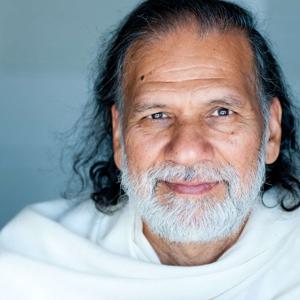


What if small changes inside your home could help create a more peaceful, positive, and spiritually supportive environment?
In this episode of Conversations with a Master, Sadhvi Siddhali Shree brings out a more practical side of Acharya Shree Yogeesh, asking about the everyday spaces where we sleep, meditate, pray, gather, and live.
The conversation begins with mirrors. Acharya Shree explains why he advises against placing a large mirror where it directly reflects someone sleeping, while also describing situations where mirrors may be useful elsewhere in the home.
From there, they explore the bedroom itself, including Acharya Shree’s recommendations for the direction of the bed and how the orientation of the body may affect energy over time.
Sadhvi Siddhali then asks how to create a supportive space for meditation and prayer. Acharya Shree discusses facing east, the placement of an altar, the materials used for sacred statues, and why he places particular value on stone and marble in spiritual spaces.
The episode also moves into the relationship between cleanliness and spiritual practice. Bathrooms, phones, sacred spaces, and objects used for mantra become part of a larger conversation about awareness—how what we touch, where we practice, and the environment around us can affect our state.
Acharya Shree also shares simple ways people can create a more positive atmosphere in their homes, including fresh flowers, incense, mantra, holy water, mirrors in gathering spaces, and traditional fire ceremonies.
Throughout the conversation, he emphasizes that traditions should not become rigid superstition. Practices may have had practical reasons in earlier times, and as living conditions change, spiritual understanding should also remain intelligent and adaptable.
One practice he repeatedly returns to is the Namokar Mantra, which he describes as universal and suitable for use without the same restrictions he associates with certain other sacred practices.
Ultimately, this episode expands the meaning of spirituality beyond meditation alone. Your home, habits, environment, and awareness can all become part of spiritual living.
Continue Your Spiritual Journey
Conversations with a Master is recorded at Siddhayatan Tirth & Spiritual Retreat, a spiritual center and ashram near Dallas, Texas, where Acharya Shree Yogeesh, Sadhvi Siddhali Shree, and Sadhvi Anubhuti offer teachings, retreats, meditation, yoga, and programs for inner transformation.
Visit Siddhayatan to step away from the distractions of everyday life, deepen your spiritual practice, and experience these teachings in person.
Explore upcoming retreats, events, teachings, and ways to visit at Siddhayatan.org.
EPISODE CREDITS:
Production by Siddhayatan Tirth Productions
Directed and Produced by Sadhvi Siddhali Shree
What if meditation is not something you do—but something that happens?
Meditation is everywhere. Therapists recommend it, spiritual traditions teach it, and millions of people practice it every day. But are we actually meditating—or are we practicing techniques that prepare us for something deeper?
In this conversation, host Sadhvi Siddhali Shree asks her longtime spiritual teacher, Acharya Shree Yogeesh, to explain the true meaning of meditation and how it differs from what is commonly practiced today.
Acharya Shree begins by examining the word itself. He explains that the English word meditation does not fully carry the meaning of the ancient concept of dhyana. One of the greatest misconceptions, he says, is treating meditation as an activity: something a person can do, learn, or teach.
According to Acharya Shree, what can be taught is the process. Breathwork, mantra, yoga, stillness, concentration, and other spiritual techniques can help prepare the body and mind, but they are not meditation itself. Meditation happens when the right inner conditions arise.
Their conversation explores why the senses continuously pull awareness toward the outside world and why quieting the body is much easier than quieting the mind. Even with closed eyes and a still body, the mind may continue moving from memory to memory and thought to thought.
Acharya Shree describes deeper meditation as a state in which awareness begins to move beyond the body, senses, thoughts, and mind. When those layers disappear, he asks, what remains?
The soul.
They also discuss the subtle gap between the inhale and exhale and how moments of complete thoughtlessness can create an opening into higher consciousness. Acharya Shree explains that the goal is not to force these experiences but to create the conditions in which they can naturally arise—and eventually expand.
The conversation turns to Samayik, an ancient Jain practice Acharya Shree describes as “soul time.” He explains the significance of remaining completely still and inwardly disconnected for forty-eight minutes and why sustained dhyana is closely connected with karma, consciousness, and enlightenment.
Sadhvi Siddhali also asks whether a particular posture is required for meditation. Acharya Shree challenges the familiar image of enlightenment happening only in the lotus position, sharing examples from the Tirthankaras—including Mallibai—to illustrate that spiritual realization is not dependent upon one posture, place, or technique.
Ultimately, Acharya Shree describes spiritual practice as a journey from effort to effortlessness. Techniques, disciplines, temples, and traditions can help create the conditions for inner transformation, but attachment to the method itself can eventually become another obstacle.
The process can be practiced.
Meditation must happen.
In this episode:
Continue Your Spiritual Journey
Conversations with a Master is recorded at Siddhayatan Tirth & Spiritual Retreat, a spiritual center and ashram near Dallas, Texas, where Acharya Shree Yogeesh, Sadhvi Siddhali Shree, and Sadhvi Anubhuti offer teachings, retreats, meditation, yoga, and programs for inner transformation.
Visit Siddhayatan to step away from the distractions of everyday life, deepen your spiritual practice, and experience these teachings in person.
Explore upcoming retreats, events, teachings, and ways to visit at Siddhayatan.org.
EPISODE CREDITS:
Production by Siddhayatan Tirth Productions
Directed and Produced by Sadhvi Siddhali Shree
Is everything in your life already written—or can you actually change your destiny?
We often use destiny to explain the circumstances we cannot understand. Why does one person seem to have opportunity after opportunity while another struggles for years? Why are two people born into the same family but live completely different lives? Is success destined? Are relationships destined? What about our spiritual path?
In this episode, Sadhvi Siddhali Shree asks Acharya Shree Yogeesh to explain the relationship between destiny, karma, God, free will, and human effort.
Acharya Shree explains that certain karmic circumstances can be strongly destined. In Jain philosophy, he refers to Nikachit Karma and Niyati—karma whose effects must eventually be experienced. But he strongly rejects the idea that destiny should make a person passive.
His central teaching throughout the conversation is:
Effort is more important than destiny.
A person may have favorable karma for wealth, success, opportunity, or another positive circumstance, but without effort, that possibility may never reach its full expression. In the same way, someone moving through difficult karma may not be able to erase every challenge immediately, but sincere effort can reduce its intensity.
This leads to another major question: Does God decide our destiny?
Acharya Shree says no. In his teaching, God does not personally determine who becomes rich or poor, who suffers, who marries whom, or which person receives an easier life. A liberated being is beyond attachment, preference, and interference. Karma belongs to the individual.
Rather than asking why God created a particular circumstance, Acharya Shree redirects attention toward what we are doing with the circumstances already in front of us.
The conversation also challenges the assumption that good destiny automatically creates happiness. Someone may have tremendous wealth but struggle in their relationships, health, family, or another part of life. As Acharya Shree puts it, happiness is multidimensional. Success in one area cannot always compensate for what feels deeply absent somewhere else.
Sadhvi Siddhali asks what happens when someone puts forth enormous effort and still does not succeed.
This is where Acharya Shree's teaching becomes especially relevant for both worldly and spiritual life.
Sometimes, he explains, difficult karma is actively unfolding. You may be doing the right things while still experiencing resistance. Your effort may not immediately produce the result you expect, but that does not mean the effort is accomplishing nothing.
According to Acharya Shree, the effort itself may be reducing the force of difficult karma.
The same principle applies to spiritual seekers. Someone may meditate, practice breathing techniques, repeat mantras, pray, and remain committed for years while wondering why they are not experiencing dramatic transformation.
The danger is deciding that because the result has not appeared, the effort has failed.
Acharya Shree's response is: never give up.
He draws upon the Bhagavad Gita's teaching of continuing to perform one's karma without becoming attached to the result. The responsibility is to act. Results may arrive quickly, slowly, or in a form we did not expect.
The episode culminates in a story that captures this distinction.
A village suffering from drought believed that when a particular monk danced, rain would eventually come. Some young men challenged him, convinced that anyone could dance. They danced for a day, became exhausted, saw no rain, and stopped.
The monk began dancing.
One day passed.
Then another.
He continued until eventually the rain came.
When they asked what made his dancing different, his answer was simple:
“You danced for the rain. I danced until the rain happened.”
That is the difference Acharya Shree wants spiritual seekers to understand.
One person keeps acting only as long as the expected reward appears.
Another continues because the effort itself has become their commitment.
You may not know what is destined ten or twenty years from now. You may not know exactly when difficult karma will end. You may not even know precisely what your life's purpose will ultimately become.
You do not need to know everything before moving forward.
Keep acting.
Keep creating.
Keep serving.
Keep practicing.
Keep walking.
And become so persistent that, as Acharya Shree says, one day destiny itself has to recognize that you became stronger than it.
Continue Your Spiritual Journey
Conversations with a Master is recorded at Siddhayatan Tirth & Spiritual Retreat, a spiritual center and ashram near Dallas, Texas, where Acharya Shree Yogeesh, Sadhvi Siddhali Shree, and Sadhvi Anubhuti offer teachings, retreats, meditation, yoga, and programs for inner transformation.
Visit Siddhayatan to step away from the distractions of everyday life, deepen your spiritual practice, and experience these teachings in person.
Explore upcoming retreats, events, teachings, and ways to visit at Siddhayatan.org.
EPISODE CREDITS:
Production by Siddhayatan Tirth Productions
Directed and Produced by Sadhvi Siddhali Shree
Does enlightenment mean knowing everything—or is that one of the biggest misconceptions about an enlightened master?
In this episode of Conversations with a Master, Sadhvi Siddhali Shree asks Acharya Shree Yogeesh what “supreme knowledge” really means after enlightenment.
If an enlightened being possesses pure or supreme knowledge, should they be able to answer every question, speak every language, predict every disaster, cure every illness, and solve every problem in the world?
Acharya Shree explains that enlightenment and ordinary human information are not the same thing.
When the soul becomes fully awakened, he describes supreme knowledge as being revealed. But as long as an enlightened being remains in a physical body, that body still functions as a limited instrument.
The senses are limited.
Language is limited.
Expression is limited.
An enlightened master may perceive far more than the physical instrument can communicate.
As Acharya Shree puts it, knowing and expressing are two different things.
He compares it to looking at a vast night sky. You may see countless stars at once, but that does not mean you can individually describe every star you are seeing.
This distinction also challenges the belief that enlightened masters should solve all of humanity’s problems.
Sadhvi Siddhali asks why wars, disasters, disease, and suffering still occur if enlightened beings possess such extraordinary awareness.
Acharya Shree explains that enlightened masters do not override the karma of every living being. Their purpose is not to control the world.
Yet he teaches that their very presence can have an influence. Rather than consciously interfering, the positive energy and expanded consciousness of enlightened beings may naturally reduce the intensity of suffering around them.
The conversation then turns toward what an enlightened state actually feels like.
Acharya Shree describes enlightenment as revealing the true nature of the soul rather than acquiring something that was previously absent. Some people laugh when realization happens because they suddenly recognize that what they were searching for had always been within them.
Others become deeply silent.
Acharya Shree discusses Mook Kevali—enlightened beings who do not publicly teach or who are unable to express the magnitude of their realization through language.
Not every enlightened master becomes a speaker, teacher, or public spiritual figure.
Sadhvi Siddhali also asks whether enlightenment is experienced differently in male and female bodies.
Acharya Shree strongly rejects the idea that enlightenment belongs primarily to men. Drawing from Jain teachings, he explains that male, female, and third-gender bodies all possess the potential for enlightenment.
The historical lack of recognized female masters, he argues, has more to do with culture and male-dominated societies than spiritual capacity.
The soul itself is beyond gender.
The episode ultimately dismantles several popular ideas about enlightenment: that it means possessing unlimited worldly information, that every enlightened person must teach, that masters are responsible for preventing suffering, or that realization belongs more naturally to one gender.
Enlightenment, Acharya Shree explains, is first and foremost the revelation of the soul’s true nature.
Continue Your Spiritual Journey
Conversations with a Master is recorded at Siddhayatan Tirth & Spiritual Retreat, a spiritual center and ashram near Dallas, Texas, where Acharya Shree Yogeesh, Sadhvi Siddhali Shree, and Sadhvi Anubhuti offer teachings, retreats, meditation, yoga, and programs for inner transformation.
Visit Siddhayatan to step away from the distractions of everyday life, deepen your spiritual practice, and experience these teachings in person.
Explore upcoming retreats, events, teachings, and ways to visit at Siddhayatan.org.
EPISODE CREDITS:
Production by Siddhayatan Tirth Productions
Directed and Produced by Sadhvi Siddhali Shree
Can you be deeply committed to the spiritual path without becoming rigid, judgmental, or joyless?
The episode begins with a playful question from Sadhvi Siddhali Shree: has there ever been a comedian enlightened master?
Acharya Shree Yogeesh’s answer is immediate: all enlightened masters are comedians.
From there, the conversation explores a surprisingly important question—why do spiritual seekers sometimes become so serious that they lose the joy, openness, and freedom spirituality is supposed to create?
Acharya Shree explains that discipline is necessary. A seeker who never takes the path seriously may remain on the surface. But discipline and tension are not the same thing.
When spiritual practice becomes rigid, forced, or obsessive, a person can become like a swan trying to swim against the current—putting forth enormous effort while barely moving forward.
The goal, Acharya Shree says, is to flow with the flow.
Sadhvi Siddhali reflects on her own early spiritual journey, when becoming serious about the path also made her more extreme. This leads into a broader discussion about judgment. A seeker may stop drinking, eating meat, or participating in certain behaviors and then begin focusing on everyone who still does.
Acharya Shree challenges this directly. If your attention is constantly on what other people are doing wrong, where is your own sadhana?
Spirituality is not about feeling superior. It is about working on yourself.
The conversation then turns toward five areas Acharya Shree says can create significant inner tension when attachment becomes too strong: wealth, relationships, marriage, children, and business. These parts of life do not have to be rejected, but they can become sources of worry, control, fear, and suffering when a person becomes completely identified with them.
That leads into one of the deepest themes of the episode: love versus attachment.
Acharya Shree does not teach people to stop loving their families. He teaches them to remove ownership and possessiveness from love.
Attachment says, “You belong to me.”
Pure love allows freedom.
In attachment, separation creates intense suffering, expectations create hurt, and jealousy or possessiveness can easily arise. In pure love, care remains—but ownership begins to disappear.
Non-attachment, he emphasizes, does not mean becoming cold, numb, or indifferent.
It means learning how to love without trying to possess.
Acharya Shree also explains that even attachment to something sacred can become an obstacle. He shares the Jain example of Mahavir and his chief disciple Indrabhuti Gautam to illustrate how attachment to the physical presence of a spiritual master can still interfere with liberation.
The larger teaching of the episode is freedom.
Spiritual growth should not make you heavier.
It should gradually release rigidity, judgment, possessiveness, and unnecessary suffering.
For Acharya Shree, the closer love becomes to pure love, the closer the seeker moves toward enlightenment.
Continue Your Spiritual Journey
Conversations with a Master is recorded at Siddhayatan Tirth & Spiritual Retreat, a spiritual center and ashram near Dallas, Texas, where Acharya Shree Yogeesh, Sadhvi Siddhali Shree, and Sadhvi Anubhuti offer teachings, retreats, meditation, yoga, and programs for inner transformation.
Visit Siddhayatan to step away from the distractions of everyday life, deepen your spiritual practice, and experience these teachings in person.
Explore upcoming retreats, events, teachings, and ways to visit at Siddhayatan.org.
EPISODE CREDITS:
Production by Siddhayatan Tirth Productions
Directed and Produced by Sadhvi Siddhali Shree
How do you stay spiritual when the people around you are difficult, negative, or constantly testing your peace?
In this episode of Conversations with a Master, Sadhvi Siddhali Shree asks Acharya Shree Yogeesh how spirituality can actually be practiced in the workplace—where difficult bosses, negative coworkers, criticism, stress, and uncomfortable conversations are often unavoidable.
Acharya Shree begins with the idea that work itself can be divine. When a person works peacefully and willingly rather than with resentment and force, even ordinary work can become part of spiritual life.
The greater challenge is learning not to absorb the negativity of others.
Acharya Shree uses the image of someone throwing a bucket of mud onto your clothes. The mud may be thrown once, but the mind can keep replaying the incident for hours, days, or even months. The person who hurt you may already have moved on, while you continue carrying the emotional residue.
His advice is to “change your clothes” internally: clean yourself, let the incident go, and refuse to allow someone else’s behavior to keep polluting your mind.
Sadhvi Siddhali asks whether being spiritual means always staying quiet. What happens when you need to stand up for yourself, challenge a boss, or respond to unfair treatment?
Acharya Shree’s answer is one of the central teachings of the episode: be your own boss.
For him, being your own boss means remaining in control of yourself. If another person’s criticism immediately controls your thoughts, emotions, and reactions, you have handed your inner authority to them.
Spirituality does not mean weakness, and it does not mean accepting unlimited mistreatment. Acharya Shree distinguishes between occasional negativity and situations that become continually harmful or abusive. Sometimes letting go is appropriate; at other times, a person may need to establish boundaries or leave.
The conversation then turns toward self-reflection. Acharya Shree reminds seekers how easy it is to spend life observing everyone else’s faults while avoiding their own. Real spirituality brings attention back inward: work on yourself first.
Sadhvi Siddhali also asks about the difference between ordinary criticism and the correction given by a true spiritual teacher. Acharya Shree compares a master to a potter who supports a clay pot with one hand while striking and reshaping it with the other.
What appears harsh from the outside may actually be correction supported by compassion.
The episode concludes with a practical spiritual practice for people entering negative environments. Acharya Shree recommends repeating Namo Arihantanam while visualizing white light surrounding the body as a form of spiritual protection before going to work.
Other people may not change.
The spiritual practice is learning how not to lose yourself because of them.
Continue Your Spiritual Journey
Conversations with a Master is recorded at Siddhayatan Tirth & Spiritual Retreat, a spiritual center and ashram near Dallas, Texas, where Acharya Shree Yogeesh, Sadhvi Siddhali Shree, and Sadhvi Anubhuti offer teachings, retreats, meditation, yoga, and programs for inner transformation.
Visit Siddhayatan to step away from the distractions of everyday life, deepen your spiritual practice, and experience these teachings in person.
Explore upcoming retreats, events, teachings, and ways to visit at Siddhayatan.org.
EPISODE CREDITS:
Production by Siddhayatan Tirth Productions
Directed and Produced by Sadhvi Siddhali Shree
Can artificial intelligence help us spiritually—or can it slowly take us further away from ourselves?
AI is already changing the way people work, communicate, create, learn, and even search for spiritual answers. In this episode of Conversations with a Master, Sadhvi Siddhali Shree asks Acharya Shree Yogeesh how spirituality can remain alive in a world increasingly shaped by artificial intelligence and technology.
Acharya Shree begins with a clear distinction between artificial intelligence and real intelligence. AI can organize information, assist with work, answer questions, and become an extremely useful tool. But he warns against allowing technology to replace the human intellect needed to think, question, reflect, and search inwardly.
His advice is simple: use AI as a servant, not as a master.
The danger, according to Acharya Shree, is not technology itself but dependence on it. When people stop exercising their own minds and begin relying on artificial systems for everything, technology can become another form of addiction. The more dependent a person becomes, the easier it may be to lose the inner independence required for spiritual growth.
Sadhvi Siddhali shares her own tension around AI. As a filmmaker and longtime user of technology, she sees its enormous potential for editing, creativity, and spreading spiritual teachings. At the same time, she does not want convenience to weaken her own awareness or spiritual discipline.
Acharya Shree encourages spiritual seekers—and especially future monks and teachers—to understand the technology of their time. Spiritual teachers cannot reach future generations if they have no understanding of the world those generations inhabit. The goal is not to reject AI, but to know it, use it, and still remain separate from it inwardly.
Their conversation also explores Acharya Shree’s interpretation of Kali Yuga as an age increasingly dominated by machinery. He warns that the deepest danger is not simply technological advancement, but reaching a point where human beings become so identified with technology that they forget who they are.
At the same time, he sees possibility. As technology grows, spiritual thirst may also grow. People may have unprecedented access to information, entertainment, convenience, and artificial intelligence while still sensing that something fundamental is missing.
Ultimately, Acharya Shree describes AI as both a blessing and a potential curse. It can help humanity tremendously when used consciously. But it cannot replace the soul, direct spiritual experience, or enlightenment.
No matter how sophisticated artificial intelligence becomes, he says, AI itself cannot become enlightened.
Continue Your Spiritual Journey
Conversations with a Master is recorded at Siddhayatan Tirth & Spiritual Retreat, a spiritual center and ashram near Dallas, Texas, where Acharya Shree Yogeesh, Sadhvi Siddhali Shree, and Sadhvi Anubhuti offer teachings, retreats, meditation, yoga, and programs for inner transformation.
Visit Siddhayatan to step away from the distractions of everyday life, deepen your spiritual practice, and experience these teachings in person.
Explore upcoming retreats, events, teachings, and ways to visit at Siddhayatan.org.
EPISODE CREDITS:
Production by Siddhayatan Tirth Productions
Directed and Produced by Sadhvi Siddhali Shree
What do you do when you are sincerely practicing—but you still feel like nothing is changing?
You meditate. You breathe. You repeat mantras. You study. You practice spiritual techniques. You put in the effort.
And yet, sometimes it can feel as though you are not getting anywhere.
In this episode, host Sadhvi Siddhali Shree asks her longtime spiritual teacher, Acharya Shree Yogeesh, why spiritual students can practice wholeheartedly and still struggle to see the results of their efforts.
Acharya Shree explains that one of the biggest misunderstandings about spirituality is expecting immediate results.
He compares the spiritual path to a student sitting for an examination. The student studies, answers the questions, and completes the work—but does not receive the result immediately. In the same way, spiritual practice may already be producing change even when the practitioner cannot yet recognize it.
Spirituality, Acharya Shree says, is a slow process.
Trying to rush it can actually become an obstacle.
He encourages seekers to stop performing spiritual practices solely for the result and instead learn to enjoy the practice itself. When expectation is hidden underneath the effort, a person may become discouraged because the transformation does not happen according to their preferred timeline.
Sometimes the people around you may even notice the change before you do.
The conversation then explores one of the most common traps on the spiritual path: comparison.
Why does one student appear to progress quickly while another practices just as sincerely and seems to struggle?
Acharya Shree explains that no two spiritual journeys begin from the same place. One person may have been working toward the same goal over many lifetimes, while another may be much earlier in their journey. Their karma, spiritual history, and previous effort may all be different.
Comparing two seekers, therefore, can create an incomplete picture.
Acharya Shree uses examples from spiritual history to emphasize how long transformation can take, describing the extended journeys attributed to figures such as Mahavira and Krishna. His message is not to become discouraged by the length of the path, but to understand that spiritual realization cannot be forced into a human timetable.
From there, Sadhvi Siddhali asks Acharya Shree what qualities a serious spiritual student needs in order to continue.
He identifies five supreme qualities:
Supreme patience.
Supreme confidence.
Supreme strength.
Supreme trust.
Supreme will.
Acharya Shree says that when these qualities become strong, a seeker becomes much more difficult to pull away from the spiritual path.
The conversation then moves into a more personal question: What is the hidden fear many spiritual students carry?
Acharya Shree says one of the strongest fears is worrying about what family, friends, and society will think if the seeker does not appear successful.
What if people think you failed?
What if they question the path you chose?
What if your spiritual life does not look impressive from the outside?
Acharya Shree challenges seekers to stop building their spiritual lives around those judgments. The spiritual journey, he says, is deeply individual.
Sadhvi Siddhali asks whether a person must leave society in order to become deeply spiritual or enlightened. Acharya Shree says no. He shares examples from spiritual tradition to illustrate that realization can happen even while living as a householder or remaining within society.
The issue is not simply where you live.
It is whether you allow the opinions and distractions of the world to control your inner direction.
The conversation becomes even more personal when Sadhvi Siddhali asks Acharya Shree about the length of his own spiritual journey. He describes it as extending across thousands of years and many spiritually dedicated lives, reinforcing the larger teaching of the episode: real spiritual growth takes time.
For seekers who admire a master and want to imitate that person’s path exactly, Acharya Shree gives another warning.
Do not imitate.
Every person has a different body, different strength, different limitations, and a different journey.
Instead, he advises students to work according to their own capacity and gradually develop the qualities they need.
Your goal may feel incredibly far away.
And at the same time, it may be closer than you think.
The episode ends with Acharya Shree challenging the entire idea of being obsessed with time. Rather than measuring spirituality in hours, years, or lifetimes, he encourages seekers to continue moving, continue practicing, and allow the journey to unfold.
Flow with the flow.
For Acharya Shree, that is part of spirituality itself.
Continue Your Spiritual Journey
Conversations with a Master is recorded at Siddhayatan Tirth & Spiritual Retreat, a spiritual center and ashram near Dallas, Texas, where Acharya Shree Yogeesh, Sadhvi Siddhali Shree, and Sadhvi Anubhuti offer teachings, retreats, meditation, yoga, and programs for inner transformation.
Visit Siddhayatan to step away from the distractions of everyday life, deepen your spiritual practice, and experience these teachings in person.
Explore upcoming retreats, events, teachings, and ways to visit at Siddhayatan.org.
EPISODE CREDITS:
Production by Siddhayatan Tirth Productions
Directed and Produced by Sadhvi Siddhali Shree
Have you ever felt alone on the spiritual path?
You may read spiritual books, practice yoga, meditate, listen to teachings, and genuinely want to grow—yet still feel as though you are not getting very far.
In this episode, host Sadhvi Siddhali Shree reflects on that experience from her own life. Before meeting Acharya Shree Yogeesh, she was deeply interested in spirituality and trying to learn on her own. When they first met, Acharya Shree told her something that would become central to her journey: spiritual guidance is important.
But why?
Acharya Shree explains that guidance exists in almost every area of life. We seek teachers in school, experts in business, and advice from parents and mentors. Yet he says spiritual guidance may be even more important because the path itself is often invisible. A seeker is trying to discover something they cannot yet clearly see, making it easy to become confused, distracted, or lost.
Their conversation explores one of the most common experiences on the spiritual path: the intense excitement of beginning.
A new seeker may want to transform immediately, renounce everything, or even reach enlightenment as quickly as possible. But Acharya Shree explains that excitement does not last. What matters is becoming steady.
As he tells Sadhvi Siddhali, spiritual progress requires continuity. Moving too quickly, becoming overly ambitious, or abandoning the path when enthusiasm fades can create setbacks. Spiritual growth is not necessarily about progressing fast—it is about continuing.
Sadhvi Siddhali asks what happens to people who seem deeply committed at first but later drift away because of family, work, responsibilities, or the demands of ordinary life. Acharya Shree explains that they may not have abandoned spirituality completely. Their progress may simply become slower because their attention is divided.
The spiritual seed may still be there.
This becomes one of the central teachings of the episode.
Acharya Shree describes his role as planting spiritual seeds. A person may hear a teaching today and appear unaffected. They may resist it, disagree with it, or even walk away. Yet years later, something may happen that causes that teaching to suddenly become meaningful.
The seed was already planted.
According to Acharya Shree, what determines when it begins to grow can include circumstance, readiness, karma, destiny, and the person’s own nature.
He also warns against using spirituality as an escape from worldly responsibilities. Someone may sincerely want to renounce everything in search of peace or enlightenment, but if unfinished responsibilities continue occupying the mind, physical renunciation alone will not create inner freedom.
Spiritual guidance helps a person understand when to move, when to wait, and when to allow the seed to grow naturally.
The conversation also explores what happens when a person becomes deeply in tune with a teaching. Acharya Shree describes how listeners sometimes feel as though a teaching is speaking directly to them. That sense of recognition can indicate that something within them is becoming receptive to truth.
Even resistance can have meaning. A person may react strongly to a spiritual message and reject it completely, only to understand it differently years later.
The discussion then moves into a deeper question: What is truth?
Acharya Shree explains truth not simply as telling the truth instead of lying, but as the inherent nature of something—the quality that belongs to it fundamentally.
In the same way that water naturally flows, he says the truth of a human being is found by discovering their own deepest nature.
The problem is that people continually search outside themselves.
The real spiritual search is ultimately about becoming familiar with who you truly are.
The episode concludes with Sadhvi Siddhali asking about taking refuge in a spiritual master and developing friendship with an enlightened teacher.
Acharya Shree explains that the company we keep influences what we become. Just as spending time around certain habits and environments can shape a person negatively, remaining close to a true spiritual master can gradually transform the seeker.
Spiritual guidance, then, is not simply receiving instructions.
It is walking alongside someone who can see the path more clearly than you can—and remaining close enough to eventually discover that truth for yourself.
Continue Your Spiritual Journey
Conversations with a Master is recorded at Siddhayatan Tirth & Spiritual Retreat, a spiritual center and ashram near Dallas, Texas, where Acharya Shree Yogeesh, Sadhvi Siddhali Shree, and Sadhvi Anubhuti offer teachings, retreats, meditation, yoga, and programs for inner transformation.
Visit Siddhayatan to step away from the distractions of everyday life, deepen your spiritual practice, and experience these teachings in person.
Explore upcoming retreats, events, teachings, and ways to visit at Siddhayatan.org.
EPISODE CREDITS:
Production by Siddhayatan Tirth Productions
Directed and Produced by Sadhvi Siddhali Shree
Before awakening often comes a moment that breaks the life we thought we understood.
What causes someone to begin searching for truth? Is suffering necessary for spiritual awakening, or can a person enter the spiritual path without experiencing deep pain?
In this opening conversation, host Sadhvi Siddhali Shree sits down with her longtime spiritual teacher, Acharya Shree Yogeesh, to examine why hardship so often becomes the beginning of a spiritual search.
Acharya Shree explains that suffering alone does not guarantee transformation. When pain becomes overwhelming, it can produce hopelessness rather than curiosity. At the opposite extreme, a life filled entirely with comfort and pleasure may give a person little reason to question anything. Spiritual curiosity often awakens in the middle—when someone has experienced enough pain to question life but still has the capacity to search, learn, and change.
Sadhvi Siddhali shares the personal experiences that shaped her path, including the death of her mother when she was thirteen, the questions about life and purpose that followed, meeting Acharya Shree at twenty, and later struggling to hold on to her spirituality while serving in the Iraq War.
Their conversation also explores why people often fail to value a teacher, relationship, or sacred place while it is still present; how karma and spiritual readiness can make one sentence, book, or encounter change a person’s entire life; and why spiritual progress does not mean suffering immediately disappears.
Acharya Shree describes authentic spirituality as an expansion of awareness—learning to recognize yourself in other people, animals, nature, and every living being. The spiritual path is not something another person can force upon you. It begins when you consciously choose to walk it.
In this episode:
About the Podcast
Conversations with a Master features candid, personal, and often humorous conversations between Sadhvi Siddhali Shree and her spiritual teacher, Acharya Shree Yogeesh. Together, they explore ancient spiritual wisdom, karma, meditation, consciousness, the soul, suffering, self-realization, and liberation.
Topics: spiritual awakening, why suffering happens, purpose of life, overcoming suffering, authentic spirituality, spiritual growth, karma, self-realization, spiritual teacher, soul, consciousness, inner transformation, ancient spiritual wisdom
Continue Your Spiritual Journey
Conversations with a Master is recorded at Siddhayatan Tirth & Spiritual Retreat, a spiritual center and ashram near Dallas, Texas, where Acharya Shree Yogeesh, Sadhvi Siddhali Shree, and Sadhvi Anubhuti offer teachings, retreats, meditation, yoga, and programs for inner transformation.
Visit Siddhayatan to step away from the distractions of everyday life, deepen your spiritual practice, and experience these teachings in person.
Explore upcoming retreats, events, teachings, and ways to visit at Siddhayatan.org.
EPISODE CREDITS:
Production by Siddhayatan Tirth Productions
Directed and Produced by Sadhvi Siddhali Shree
From the publisher's feed