
Sign up to save your podcasts
Or



In this final episode, Anne King brings the full journey together through the Master Toolkit.
After learning how to pause, gather, question, follow up, escalate, stay steady and navigate the reality of advocacy, the toolkit becomes a quick reference guide for the moments when listeners feel stuck, tired or unsure what to do next.
Anne explains that the toolkit does not need to be used in order. Listeners can dip in and choose the part that fits the situation they are facing.
The Master Toolkit gathers the key practical steps from across the book, including building a timeline, checking evidence, asking clear questions, understanding information, defining an end goal, following up, escalating, knowing when to pause, understanding rights in plain English, spotting red flags and keeping communication clear.
The episode closes the series by reminding listeners that advocacy is not about being loud, aggressive or expert. It is about clarity, evidence, persistence and knowing your worth.
The key message of this final episode is that ordinary people can learn to advocate for themselves and others, one steady step at a time.
This episode contains The Master Toolkit
To purchase the book please go to https://amzn.eu/d/0gGZDkSl
This Podcast was produced by Your Fairy Podmother https://www.fairypodmother.co.uk
In this episode, Anne King brings together everything covered so far and looks honestly at the reality of advocacy.
By this point, listeners have learned how to pause, gather information, build a timeline, ask questions, follow up, escalate, define an end goal and stay steady. But Anne makes it clear that real advocacy is not always tidy.
It can be frustrating, emotional, messy and slow. You may face silence, avoidance, contradictions, delays, defensiveness or people refusing to engage. That does not mean you are wrong, and it does not mean you stop.
Anne shares how her own journey involved a flawed process, missing evidence, unanswered questions and eventually a solicitor refusing to correspond further. But the paper trail, contradictions, evidence and persistence still mattered.
The episode also reminds listeners that lived experience can be powerful. Anne and her family were not experts, but by staying clear, consistent and factual, they were able to get the CCJ removed.
The key message of this episode is that real advocacy is not perfect. It is persistent.
This Episode contains Tool 14
To purchase the book please go to https://amzn.eu/d/0gGZDkSl
This Podcast was produced by Your Fairy Podmother https://www.fairypodmother.co.uk
In this episode, Anne King brings listeners to a key question in the advocacy process: what are you actually trying to achieve?
After gathering evidence, asking questions, following up and escalating where needed, it is easy to keep reacting without a clear direction. Anne explains that defining your end goal helps shape your tone, questions, evidence, pace and next steps.
Your goal might be to challenge a claim, seek correction or compensation, get something removed, understand what happened or bring the matter to a close. The goal may change as more information comes in, but knowing what you are aiming for now gives you a clear path.
Anne uses her own experience to show how the end goal became clear: getting the CCJ removed. From there, every question, piece of evidence and escalation worked towards that outcome.
The key message of this episode is that clarity becomes direction when you know what you are trying to achieve.
This Episode contains Tool 13
To purchase the book please go to https://amzn.eu/d/0gGZDkSl
This Podcast was produced by Your Fairy Podmother https://www.fairypodmother.co.uk
In this episode, Anne King explains when and how to escalate a situation without becoming aggressive or confrontational.
After gathering information, asking questions, following up and reviewing what has been received, there may come a point where the answers are still missing, incomplete, incorrect or contradictory. That is when escalation may become the next reasonable step.
Anne explains that escalation is not about causing trouble. It is about asking for the matter to be reviewed properly when clarity has not been provided.
The episode shows how to escalate in a way that is clear, factual and structured. State what you asked for, what you received or did not receive, why it matters and what you now need to happen.
Anne also explains how to respond when information is correct, partially correct or wrong.
The key message of this episode is that escalation is not pressure. It is a strategic step towards clarity, transparency and a fair process.
This Episode contains Tool 12
To purchase the book please go to https://amzn.eu/d/0gGZDkSl
This Podcast was produced by Your Fairy Podmother https://www.fairypodmother.co.uk
In this episode, Anne King explores what happens when you have asked your questions, followed up, kept a paper trail and stayed steady, but still receive no reply.
Silence can make people panic. It can lead you to doubt yourself or assume you have done something wrong. Anne explains that silence is not proof of failure. It is often part of the process.
The episode looks at why organisations may stay silent. They may be disorganised, avoiding accountability, missing information, stalling, or hoping you will go away. But if you have acted reasonably and kept a clear record, silence can strengthen your position.
Anne also explains what to do if a response does arrive. The information may be correct, partly correct, incomplete or wrong. Each type of response points to a different next step.
The key message of this episode is that once you have done your part, you are no longer waiting helplessly. You are informed, prepared and able to decide what happens next.
There is no Tool 11
To purchase the book please go to https://amzn.eu/d/0gGZDkSl
This Podcast was produced by Your Fairy Podmother https://www.fairypodmother.co.uk
In this episode, Anne King turns attention to the emotional side of advocacy.
By this stage, listeners have learned how to pause, gather information, ask questions, follow up and keep a paper trail. But advocacy is not usually resolved in one day. It is a process, and staying steady through that process matters.
Anne explains how stress can affect the way people read, respond and make decisions. When panic rises, it becomes easier to miss details, rush replies, assume the worst, apologise unnecessarily or give up too soon.
This episode reminds listeners that they do not have to respond instantly or fix everything at once. They can set the pace, take breaks, read things slowly and come back to the process in manageable steps.
Using her own experience, Anne shows how stepping back and breaking the situation down changed everything.
The key message of this episode is that steadiness is what makes the rest of advocacy possible.
This Episode contains Tool 10
To purchase the book please go to https://amzn.eu/d/0gGZDkSl
This Podcast was produced by Your Fairy Podmother https://www.fairypodmother.co.uk
In this episode, Anne King looks at the part of the process many people find uncomfortable: following up.
After you have asked questions and kept your communication clear, it can feel worrying when you need to chase a response. You may wonder if you are being difficult, annoying or doing something wrong.
Anne makes it clear that following up is not confrontation. It is a reasonable part of the process.
The episode explains why organisations may not reply straight away. Emails get missed, systems stall, cases pause and sometimes silence is used as a tactic. A calm follow-up brings the matter back into focus and keeps your paper trail moving.
Anne also explains the value of giving a reasonable amount of time before following up and keeping the wording short, neutral and professional.
The key message of this episode is that following up is not pressure. It is maintenance. It keeps the process moving without allowing panic to take over.
This episode Contains Tool 9
To purchase the book please go to https://amzn.eu/d/0gGZDkSl
This Podcast was produced by Your Fairy Podmother https://www.fairypodmother.co.uk
In this episode, Anne King focuses on one of the most important habits in advocacy: keeping a clean paper trail.
When you are dealing with companies, schools, councils, workplaces, housing providers, medical services or any other organisation, details can easily become blurred. People forget what was said, systems lose information and processes break down.
A paper trail helps protect you. It shows what happened, what was said, what was received, what was missing and when things took place.
Anne explains that a paper trail does not need to be complicated. It can include emails, letters, screenshots, call notes, receipts, statements, texts, online messages or anything else that helps show the facts.
The golden rule is to get things in writing wherever possible. If something is said on a phone call or in person, follow up afterwards with a short written confirmation.
The key message of this episode is that a clean paper trail gives you something solid to stand on when everything else feels uncertain.
This Episode contains Tool 8
To purchase the book please go to https://amzn.eu/d/0gGZDkSl
This Podcast was produced by Your Fairy Podmother https://www.fairypodmother.co.uk
In this episode, Anne King moves from noticing contradictions and gaps to turning them into clear questions.
This is the point where advocacy becomes active. Not through arguing, accusing or reacting, but by asking for the information needed to understand what has happened.
Anne explains why questions are powerful. They create accountability, slow the process down and move the conversation away from emotion and towards facts. A good question can reveal missing information, expose contradictions and help you stay in control.
The episode also explains the importance of asking one thing at a time. Instead of writing long, emotional messages, Anne encourages listeners to keep questions short, clear and focused.
Examples include asking for dates, copies of notices, evidence of steps taken, clarification of amounts, or explanation of gaps in a timeline.
The key message of this episode is that questions do not need to be confrontational to be powerful. Clear questions help you move from confusion into control.
This Episode contains Tool 7
To purchase the book please go to https://amzn.eu/d/0gGZDkSl
This Podcast was produced by Your Fairy Podmother https://www.fairypodmother.co.uk
In this episode of The Advocate You Didn’t Know You Could Be, Anne King explains how to start noticing the parts of a situation that do not quite line up.
Once you have built a timeline and gathered what you already have, the shape of the situation starts to become clearer. This is when contradictions and gaps begin to stand out.
Anne explains that contradictions are not accusations or arguments. They are simply moments where one thing does not match another. A company may say letters were sent, but you only received one. Someone may claim a process was followed, but the timeline suggests otherwise.
Gaps matter too. A missing reminder, unexplained silence, absent evidence or a step that should have happened but did not can all point to something that needs clarifying.
Using her own experience, Anne shows how spotting contradictions and gaps helped reveal what needed to be asked next.
The key message of this episode is that noticing what does not line up is not fighting. It is the beginning of understanding.
This Episode contains Tool 6
To purchase the book please go to https://amzn.eu/d/0gGZDkSl
This Podcast was produced by Your Fairy Podmother https://www.fairypodmother.co.uk
From the publisher's feed
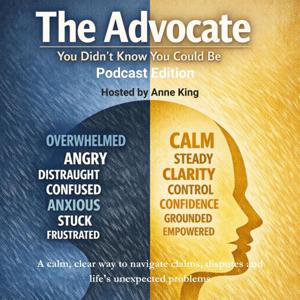
This is the podcast version of the book "The Advocate You Didn't Know You Could Be" by Anne King.
Whether you're dealing with a PCN, a school issue, a health dispute, or one of life's…
Each episode is based on the book, The Advocate You Didn't Know You Could Be, and together, we'll explore the emotional and practical side of speaking up for yourself, or on behalf of someone else calmly, clearly, and without fear.