
Sign up to save your podcasts
Or

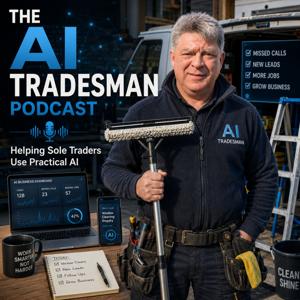


Busy isn't the same as valuable. In this episode, Rick digs into one of the biggest — and most common — mistakes tradesmen make: spending skilled, £50-£80+ an-hour time on £10-an-hour admin.
Drawing on a real story of losing a customer's quote and spending twenty minutes hunting through emails and spreadsheets to find it, Rick explains how that moment changed the way he ran his business — and how AI has helped him build a proper system so it never happens again.
In this episode:
How AI Can Help You Understand Your Business Numbers
Most tradesmen know they're busy.
Far fewer know which customers make them the most money, what it really costs to win new business, or how profitable each hour of work actually is.
In this episode, I look at five business numbers that every tradesman should understand—and how AI can help you track, analyse and improve them.
You'll discover:
• What Customer Acquisition Cost (CAC) really means.
This isn't about spreadsheets or complicated accounting. It's about using simple AI tools to make better business decisions, save time and build a more profitable business.
What can the British Army teach a self-employed tradesman?
More than you might think.
In this episode, I share three simple lessons I learnt during my time in the Army that have helped me build and run a successful business for nearly two decades.
We look at:
Whether you're a window cleaner, plumber, electrician, builder or any other sole trader, these practical principles can help you work smarter, reduce stress and build a better business.
Choose just one:
If you enjoyed this episode, please follow The AI Tradesman, leave a review, and share it with another tradesman who might benefit.
Get Found. Be Chosen. Stay Remembered.
You could be the best tradesman in town and still be losing work without ever realising it.
In this episode, Rick explores the hidden "leaks" that quietly cost trades businesses customers every week. It's not always your workmanship or your prices that lose you the job—sometimes it's what happens before you've even had the chance to speak to the customer.
Rick shares his own experience of spending money on a leaflet campaign, only to discover that two genuine enquiries had been sitting unread in his inbox all weekend. By the time he found them, both customers had already gone elsewhere. It was a powerful lesson that changed the way he runs his business.
In this episode you'll discover:
This week's challenge:
Before spending another pound on advertising, ask yourself:
Where is the biggest leak in my business?
Fix that first, and you'll often win more work without finding a single new customer.
How many jobs have you lost without ever knowing you were in the running?
In this episode, I explain why the first hour after a customer contacts your business could be the most valuable hour of your working day.
Drawing on my own experience as a window cleaner, along with research into customer response times, I explore why being the first to reply often matters more than being the cheapest or having the flashiest website.
We look at:
This isn't about becoming a salesman. It's about making sure the customers you've already attracted don't quietly disappear to somebody else.
If you found this episode useful, please follow the podcast and share it with another tradesman who could benefit.
Get Found. Be Chosen. Stay Remembered.
Everyone's asking the wrong question.
Is AI going to take your job?
For most tradespeople and small business owners, the answer is no.
But the person using AI effectively might.
In this episode, I explain why AI is becoming another tool in the toolbox rather than a replacement for skilled people, and how sole traders can start using it today to save time, improve customer service and grow their business.
In this episode:
If you're enjoying The AI Tradesman Podcast, please follow the show and leave a review. It really helps more sole traders discover practical AI.
New episodes every Tuesday.
If someone handed you £10,000 and said, "You can only invest this in your business," what would you do?
A new van?
Better tools?
Or something else entirely?
In this episode of The AI Tradesman, I explore the difference between buying and investing, and why the best investments often aren't the most obvious ones.
Drawing on my own experience of running an estate agency in the early days of the internet, I share a lesson that still shapes how I think about business today: sometimes the thing that looks optional today becomes essential tomorrow.
We also look at why AI is changing the game for sole traders and small business owners, not because it's clever, but because it can save time, improve customer service and free you up to focus on the work that really matters.
Why buying and investing aren't the same thing.
The questions every business owner should ask before spending money.
What I learned from missing the early opportunity of investing properly in a business website.
Why I believe AI is a once-in-a-generation opportunity for small businesses.
How AI can save time, improve customer experience and deliver a genuine return on investment.
Why I focus on building systems rather than collecting shiny new tools.
I'm also building a free resource at theaitradesman.com to help UK tradesmen and small business owners learn how to train AI to handle everyday admin tasks. More on that very soon.
Remember:
Get Found.
Thanks for listening, and if you know another tradesman or small business owner who'd enjoy this episode, I'd really appreciate you sharing it with them.
Have a question about AI or running a trade business? Send it in via theaitradesman.com and I may answer it in a future episode.
Most tradesmen and small business owners think they have a lead problem.
"I'm not getting enough enquiries."
"If I could just get more leads, everything would be fine."
But what if that's not the real problem?
In this episode of The AI Tradesman, Rick explores why many businesses don't need more leads until they stop losing the ones they already have.
Using the simple "Leaky Bucket" analogy, Rick explains how missed calls, slow email responses, forgotten enquiries and poor follow-up can quietly cost businesses thousands of pounds every year.
Drawing on his own experience running a window cleaning business, Rick shares how he discovered that speed of response often matters more than marketing spend, and why many business owners are unknowingly paying for leads that end up becoming customers of their competitors.
You'll learn:
• Why "more leads" isn't always the answer
If you're a sole trader, tradesman or small business owner looking to grow your business without increasing your advertising budget, this episode is for you.
Get Found. Be Chosen. Stay Remembered.
Connect with Rick and follow The AI Tradesman on Facebook for updates, tips and future episodes.
Questions, feedback or ideas for future episodes?
Email: [email protected]
In this episode of The AI Tradesman, Rick reflects on 35 years of watching technology transform the way we live and work.
From leaving the Army in 1990 with no mobile phone and no internet, to a world where customers can now ask AI to recommend a local tradesman, one thing remains constant:
Customer behaviour changes. Human nature doesn't.
People still want to save time, save money, and make good decisions.
If Rick were starting a trade business from scratch today, he'd focus on just three outcomes:
✅ Being Found
✅ Getting Chosen
✅ Staying Remembered
In this episode, he shares the five practical actions he'd take to make that happen, without needing a degree in computing or becoming a technology expert.
Whether you're a plumber, electrician, window cleaner, builder, landscaper, decorator, or any other small business owner, these principles can help you attract more customers and build a stronger business.
This week's challenge:
Ask yourself:
If I was starting my business from scratch today, what would I do differently?
Write down three answers.
Pick one.
Take action.
Because small improvements, repeated consistently, create remarkable results.
The AI Tradesman
Helping Small Businesses Use Practical AI.
Most business owners don't read terms and conditions.
Not because we're lazy.
Because we're busy and Ts & Cs are boring, long and written in legalese.
In this episode of The AI Tradesman, I explain how a simple email from Google about a trial ending made me realise just how many subscriptions and contracts most of us have running quietly in the background.
I show you how to use free AI tools such as ChatGPT and Gemini to review terms and conditions before you sign up for software, memberships, services and subscriptions.
We cover:
• Hidden renewal clauses
• Lock-in periods
• Cancellation policies
• Price increases
• Contract traps buried in the small print
• Carrying out your own subscription audit
AI won't replace a solicitor, but it can act as a fast and effective first filter before you commit your hard earned money.
You are an expert legal assistant helping a small trade business owner.
Analyse these terms and conditions.
Look specifically for:
• Hidden traps
• Automatic renewal clauses
• Minimum lock-in periods
• Unusual cancellation policies
• Clauses allowing price increases
• Any inconsistencies or contradictions
• Anything that seems potentially unfair to a small business
Provide a summary in plain English using simple bullet points.
Choose one subscription, software platform, membership or business service you're paying for.
Copy the terms and conditions into ChatGPT or Gemini.
See what it finds.
You may discover everything is fine.
Or you may discover a renewal date, lock-in period or hidden clause you didn't know existed.
Either way, you'll know.
And knowing is always better than guessing.
Contact: [email protected]