
Sign up to save your podcasts
Or

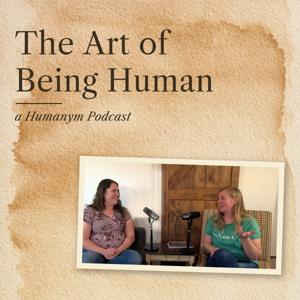


What if not knowing is part of being human, and even a beautiful place to be?
In a December 1817 letter to his brothers, the poet John Keats named a quality he called Negative Capability: being "capable of being in uncertainties, Mysteries, doubts, without any irritable reaching after fact & reason." Deanna and Lily read the letter and talk about what it looks like to stay present in the unknown instead of rushing to fix it.
In this episode:
Keats was 22 when he wrote this. More than 200 years later, it's still one of the most useful ideas for a layoff, a diagnosis, a creative block, or any season when the answer isn't coming yet.
Read the letter: https://humanym.com/letters/keats-to-george-and-tom-keats-1817
The Art of Being Human: a Humanym Podcast. In the Lost Art series, co-hosts Deanna and Lily read historical letters that reveal a particular human skill, and talk about where that skill comes from and how it grows in us: how to think more clearly, live more completely, and connect more deeply. Come join the conversation; you may walk away with more empathy for yourself and your own experiences.
Continue the conversation at https://humanym.com or download the Humanym app: a quiet place to reflect and connect with other real humans, where the letter you write is matched with someone who may just totally get you. Write. Match. Connect.
Clips from every episode: youtube.com/@humanym_channel · instagram.com/humanym_channel
Music: Rijko / You're Juliet (Indie Pop Version) / Courtesy of www.epidemicsound.com
How do you keep a conversation going with someone whose convictions differ from yours?
In May 1860, months after On the Origin of Species, Charles Darwin wrote to his friend, the botanist Asa Gray. The two didn't agree on everything, theology included, but they kept talking with honesty and respect. Deanna and Lily read the letter and talk about the courage it takes to stay in a conversation when you've been misunderstood.
In this episode:
It can be hard to find your own voice when others are quick to define it for you. Darwin's letter shows what it looks like to speak honestly and keep the friendship.
Read the letter: https://humanym.com/letters/darwin-to-asa-gray-1860
The Art of Being Human: a Humanym Podcast. In the Lost Art series, co-hosts Deanna and Lily read historical letters that reveal a particular human skill, and talk about where that skill comes from and how it grows in us: how to think more clearly, live more completely, and connect more deeply. Come join the conversation; you may walk away with more empathy for yourself and your own experiences.
Continue the conversation at https://humanym.com or download the Humanym app: a quiet place to reflect and connect with other real humans, where the letter you write is matched with someone who may just totally get you. Write. Match. Connect.
Clips from every episode: youtube.com/@humanym_channel · instagram.com/humanym_channel
Music: Rijko / You're Juliet (Indie Pop Version) / Courtesy of www.epidemicsound.com
How do you give honest feedback without damaging the relationship?
In 1814, Jane Austen's niece Anna sent her the manuscript of a novel. Austen's replies are funny, frank, and full of affection, and they show a pattern for criticism that still works: name the weak place, then offer a way forward. Deanna and Lily read the letters and talk about why the relationship comes first.
In this episode:
More than two centuries later, Austen's letters still show what it looks like to give feedback that strengthens both the relationship and the craft.
Read the letter: https://humanym.com/letters/austen-to-anna-austen-1814
The Art of Being Human: a Humanym Podcast. In the Lost Art series, co-hosts Deanna and Lily read historical letters that reveal a particular human skill, and talk about where that skill comes from and how it grows in us: how to think more clearly, live more completely, and connect more deeply. Come join the conversation; you may walk away with more empathy for yourself and your own experiences.
Continue the conversation at https://humanym.com or download the Humanym app: a quiet place to reflect and connect with other real humans, where the letter you write is matched with someone who may just totally get you. Write. Match. Connect.
Clips from every episode: youtube.com/@humanym_channel · instagram.com/humanym_channel
Music: Rijko / You're Juliet (Indie Pop Version) / Courtesy of www.epidemicsound.com
From the publisher's feed