
Sign up to save your podcasts
Or

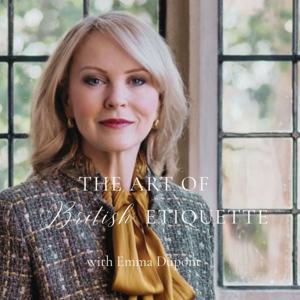


Why isn’t Catherine called Princess Catherine?
It sounds perfectly logical. She married a prince, and she is now The Princess of Wales. So why isn’t Princess Catherine her correct title?
In this episode of The Art of British Etiquette, we explore the fascinating rules and traditions behind British royal titles, and explain the important distinction between being a princess, being The Princess of Wales and being entitled to put the word ‘Princess’ before your Christian name.
In this episode, you will discover:
• Why Catherine did not become Princess Catherine when she married Prince William
• The difference between Princess Anne and The Princess of Wales
• Why Princess Charlotte is styled differently from Catherine
• What Princess William of Cambridge actually means
• Why Princess Michael of Kent is called Princess Michael
• What changed when William became Prince of Wales
• Why Diana was not formally Princess Diana
• How a small change in word order can indicate a completely different royal status
• What British royal titles reveal about rank, style, form of address and social hierarchy
• Why royal titles can help us understand wider British culture
Royal titles can seem unnecessarily complicated, but they reveal something fascinating about the British monarchy and the society that surrounds it.
From birth and marriage to rank, style and form of address, these conventions have developed over centuries and continue to shape the way members of the Royal Family are formally addressed today.
If you are fascinated by the British monarchy, British royal family, British culture or the traditions behind British society, this episode will help you understand the system rather than simply memorise the rules.
Find out more about Emma Dupont Etiquette School:
emmadupontetiquetteschool.co.uk
Why do British people so rarely say exactly what they mean?
British English communication is famously indirect. From understatement and polite disagreement to the many possible meanings of words such as ‘quite’ and ‘sorry’, understanding British communication often requires listening to much more than the words themselves.
In this episode of The Art of British Etiquette, we explore some of the subtle habits that characterise British conversation, including why British people soften disagreement, avoid direct refusals, understate their feelings and use polite language to communicate messages that may be rather more definite than they initially appear.
For international visitors, expatriates and anyone interested in understanding British culture, recognising these nuances can make British social interactions much easier to navigate.
In this episode, you will discover:
• Why British people often avoid saying ‘no’ directly
• British understatement and what it really means
• The surprisingly complicated word ‘quite’
• Why British requests can sound so tentative
• Why British people say ‘sorry’ so often
• How to recognise the meaning behind polite British language
Find out more about Emma Dupont Etiquette School:
emmadupontetiquetteschool.co.uk
The British Social Season is one of those traditions that can seem rather mysterious if you did not grow up with it.
What exactly is ‘The Season’? Why are Royal Ascot, Wimbledon, Henley Royal Regatta, Glyndebourne and the Chelsea Flower Show associated with it? And does The Season still matter today?
In this episode of The Art of British Etiquette, Emma Dupont explores the history and traditions of the British Social Season, from its origins in London society and the presentation of debutantes to the sporting, cultural and social events that form part of the modern Season.
In this episode, you will discover:
• What the British Social Season actually is
• Why society traditionally came to London for The Season
• The role of debutantes and presentations at Court
• Why The Season continued after debutante presentations ended
• How events such as Royal Ascot, Wimbledon, Henley Royal Regatta, Glyndebourne and the Chelsea Flower Show became associated with The Season
• Whether The Season is still considered an upper class tradition
• How different enclosures, memberships, invitations and dress codes affect access
• How British debutante traditions compare with those in America
• What international visitors should know before attending an event associated with The Season
• Why understanding British social traditions can make etiquette rules much easier to understand
The British Social Season is not simply a list of sporting and cultural events. It reflects something much larger about British society and its relationship with tradition, class, institutions, ceremony and continuity.
The original purpose of The Season may have changed considerably, but many of its rituals remain.
If you are visiting Britain, attending one of these famous events, or simply fascinated by British culture and traditions, understanding The Season offers a fascinating glimpse into the society that shaped many of Britain’s social conventions.
Find out more about Emma Dupont Etiquette School:
emmadupontetiquetteschool.co.uk
Should you remove your shoes when entering someone’s home in Britain?
Unlike countries such as Japan and Sweden, Britain does not traditionally have one universal rule, and the answer can reveal rather more about British culture than you might expect.
In this episode of The Art of British Etiquette, Emma Dupont explores British etiquette at home, from traditional ideas of hospitality and formal dress to the subtle influence of Britain’s class system and our curious reluctance to make too much fuss about our possessions.
In this episode, we explore:
• Whether British people traditionally remove their shoes at home
• How British customs differ from those in Japan and Sweden
• Why the formality of the occasion matters
• The fascinating connection between shoes, hospitality and social class
• What to do if your host has a shoes off household
• How to handle wet or muddy shoes politely
• The simple rule to follow when you are unsure
If you are wondering whether British people take their shoes off when visiting someone’s home, the answer is more nuanced than you might expect.
There is no single British house rule, so understanding the household, the occasion and your host is often more important than following a fixed rule.
Whether you are visiting Britain, living in the UK or simply fascinated by British culture, understanding these small domestic customs can make navigating British social situations considerably easier.
Find out more about Emma Dupont Etiquette School:
emmadupontetiquetteschool.co.uk
British and American English may share the same language, but the rules are not always quite the same.
Why might a British person say ‘may I have...?’ while an American says ‘can I get...?’ Why does ‘are you done?’ sound distinctly American to some British ears? And why do British and American writers use punctuation differently?
In this episode, we explore some of the more subtle differences between British and American English, including grammar, expressions, punctuation, register and politeness.
We will look at expressions such as ‘anyway’ and ‘anyways’, the British use of ‘Mr’, ‘Mrs’ and ‘Dr’ without full stops, and the way American informality and British linguistic softening can create very different impressions of what sounds polite.
British English pronunciation and American English pronunciation are another area where differences can be surprisingly revealing.
But language is about much more than vocabulary. The way we make a request, address another person or soften a sentence can reveal something about the culture in which that language developed.
Neither British nor American English is inherently more correct or more polite. Sometimes we are simply following different cultural rules within the same language.
In this episode, we explore:
• British and American English vocabulary and expressions
• Differences in British and American grammar
• British and American punctuation
• British and American pronunciation
• Differences in register and politeness
• How British linguistic softening differs from American informality
• Why the same expression can create a different cultural impression
Whether you are living in Britain, visiting Britain, working with British people or simply fascinated by the differences between British and American culture, understanding these distinctions can make cross-cultural communication much easier.
Find out more about Emma Dupont Etiquette School:
emmadupontetiquetteschool.co.uk
Why do British people say ‘sorry’ so much, even when they have not actually done anything wrong?
In Britain, ‘sorry’ is far more than an apology. It can soften a request, attract someone’s attention, acknowledge a minor inconvenience or simply smooth over an awkward social moment.
In this episode, we explore the cultural meaning behind one of the most frequently heard words in British English, and what its many uses reveal about British communication, politeness and social interaction.
In this episode, we explore:
• Why British people apologise when it is not their fault
• How ‘sorry’ is used to soften requests
• Why British people say ‘sorry?’ instead of ‘what?’
• How to recognise a genuine British apology
• What the word reveals about traditional British politeness
• A simple tip for navigating these interactions yourself
Whether you are visiting Britain, living in the UK, working with British people or simply fascinated by British culture, understanding these subtle communication habits can make British social interactions much easier to interpret.
Find out more about Emma Dupont Etiquette School:
emmadupontetiquetteschool.co.uk
Welcome to The Art of British Etiquette with Emma Dupont.
The Emma Dupont Etiquette School is an established British etiquette school based in London, specialising in British culture, British etiquette and social customs for an international audience.
If you have ever wondered why the British apologise so much, what really happens during the British Social Season, or how to navigate the unwritten rules of British life with confidence, you are in the right place.
Understanding British culture is at the heart of this podcast. We explore the etiquette, history, traditions and social nuances that help explain modern Britain.
Whether you are visiting Britain, living here, working with British people, or simply fascinated by British culture, we hope these episodes help you understand not only what the British do, but why.
On this podcast, you will discover:
• British communication
• British social customs
• British traditions
• British culture explained
• The British monarchy explained
• British society and history
• Understanding Britain
British customs are not universal. Many traditions vary according to region, generation, family background and personal preference. These episodes explore general cultural patterns rather than absolute rules.
Find out more about Emma Dupont Etiquette School:
emmadupontetiquetteschool.co.uk
From the publisher's feed
The Art of British Etiquette with Emma Dupont explores the customs, communication and social codes that shape everyday life in Britain.
From the subtleties of British politeness…
Drawing on her expertise as a British etiquette coach, each episode goes beyond traditional etiquette to explore not simply what the British do, but why they do it.
Designed especially for international listeners living in, working in or visiting Britain, and for anyone curious to understand British culture beyond the surface.