
Sign up to save your podcasts
Or


Making Life Easier Without Starting Over Again
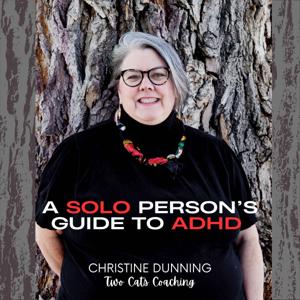
A Solo Person’s Guide to ADHD
In this episode, we talk about what comes after Structure.
If you’ve been following along, you already know:
Now we address the part that keeps breaking for so many people:
The reset cycle.
The new planner.
The new system.
The new promise.
And then—starting over again.
This episode explains why that cycle is so exhausting, and how to stop living from zero.
The Real Drain: Decision Fatigue
It’s not laziness.
It’s not lack of discipline.
It’s decision load.
When you live alone, you carry:
No shared systems.
No second brain.
Anchor and Pace are the final pieces of the ASSAP framework that reduce that load.
Anchor: Reducing Decision Friction
Anchors are not rules.
They’re defaults.
Instead of:
“I’ll decide in the moment.”
You create:
“When X happens, Y is already decided.”
Examples:
Anchors don’t remove freedom.
They remove friction.
And friction—not character—is what usually breaks systems.
A Critical Clarifier
Anchors are not hacks.
If you try to apply them to emotionally loaded problems without doing Access, Security, and Structure first, they won’t hold.
This episode explains why.
Organization Isn’t the Goal — Retrieval Is
A system works only if you can retrieve what you need under stress.
Structure builds the container.
Anchors make it usable.
Pace: Continuity, Not Speed
Pace is not about doing things faster.
It’s about preventing resets.
Monitoring is not anxiety.
Monitoring is care.
If you catch problems earlier than you used to, the system is working.
Progress looks like:
The ASSAP Loop
ASSAP isn’t linear. It’s a loop:
Smaller problems first.
Lower stakes.
Real feedback.
That’s how change accumulates instead of resets.
If This Feels Like Relief
If these episodes have helped you understand why nothing else stuck, this work may be for you.
I specialize in working with adults with ADHD—especially those who are single and carrying life without a built-in second brain.
This podcast shares the framework.
Coaching applies it to your real life.
🎁 Free Resource
Download the free audio + visual map designed to help you stay steady when your thinking starts to spiral:
👉 https://twocatscoaching.com
💬 Coaching
Learn more about working together:
👉 https://twocatscoaching.com/coaching
📬 Contact
Website: https://twocatscoaching.com
Email: [email protected]
Life doesn’t get easier because you try harder.
It gets easier because fewer things need rescuing.
 View all episodes
 By Christine
Making Life Easier Without Starting Over Again
A Solo Person’s Guide to ADHD
In this episode, we talk about what comes after Structure.
If you’ve been following along, you already know:
Now we address the part that keeps breaking for so many people:
The reset cycle.
The new planner.
The new system.
The new promise.
And then—starting over again.
This episode explains why that cycle is so exhausting, and how to stop living from zero.
The Real Drain: Decision Fatigue
It’s not laziness.
It’s not lack of discipline.
It’s decision load.
When you live alone, you carry:
No shared systems.
No second brain.
Anchor and Pace are the final pieces of the ASSAP framework that reduce that load.
Anchor: Reducing Decision Friction
Anchors are not rules.
They’re defaults.
Instead of:
“I’ll decide in the moment.”
You create:
“When X happens, Y is already decided.”
Examples:
Anchors don’t remove freedom.
They remove friction.
And friction—not character—is what usually breaks systems.
A Critical Clarifier
Anchors are not hacks.
If you try to apply them to emotionally loaded problems without doing Access, Security, and Structure first, they won’t hold.
This episode explains why.
Organization Isn’t the Goal — Retrieval Is
A system works only if you can retrieve what you need under stress.
Structure builds the container.
Anchors make it usable.
Pace: Continuity, Not Speed
Pace is not about doing things faster.
It’s about preventing resets.
Monitoring is not anxiety.
Monitoring is care.
If you catch problems earlier than you used to, the system is working.
Progress looks like:
The ASSAP Loop
ASSAP isn’t linear. It’s a loop:
Smaller problems first.
Lower stakes.
Real feedback.
That’s how change accumulates instead of resets.
If This Feels Like Relief
If these episodes have helped you understand why nothing else stuck, this work may be for you.
I specialize in working with adults with ADHD—especially those who are single and carrying life without a built-in second brain.
This podcast shares the framework.
Coaching applies it to your real life.
🎁 Free Resource
Download the free audio + visual map designed to help you stay steady when your thinking starts to spiral:
👉 https://twocatscoaching.com
💬 Coaching
Learn more about working together:
👉 https://twocatscoaching.com/coaching
📬 Contact
Website: https://twocatscoaching.com
Email: [email protected]
Life doesn’t get easier because you try harder.
It gets easier because fewer things need rescuing.