
Sign up to save your podcasts
Or



The morning after the murder, the gate of a kindergarten in Herzeliya opened as usual. This episode asks what kind of home the assassin came from, and whether he could have come out of any home at all. It follows his neighborhood, his schools and yeshivas, what he said he believed, three earlier attempts recorded in the court record, his brother and the circle around him, and his parents. It ends with what the courts decided, and what has happened since. We do not give him a stage: his own words are few, and each is set beside a fact. Every claim is attributed, and where the evidence is thin, we say so. Narration is generated with AI voice technology.
Before the shots, there were words. A letter of warning from a settler leader to the Prime Minister. A flyer with a death certificate and a blank for the date. A chant at demonstrations: "With blood and fire, we'll drive Rabin out." A question put to thirty rabbis. And the week after the murder, when a country argued about who was responsible. Every claim in this episode is attributed by name, from the press of those days, with the right and the left both held to account. This episode contains quotations that call for violence against a named person. Narration is generated with AI voice technology. Archival material courtesy of the National Library of Israel, Beit Ariela (Tel Aviv), and the Government Press Office.
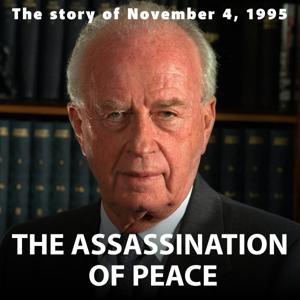
On the night of November 4, 1995, a crowd in Tel Aviv sang for peace. An hour later, the Prime Minister who had stood on that stage was dead. The Assassination of Peace tells the story of that night and the week that followed, in five episodes, through the voices of the people who lived it. Narration is generated with AI voice technology. Archival material courtesy of the National Library of Israel, Beit Ariela (Tel Aviv), and the Government Press Office.
From the publisher's feed