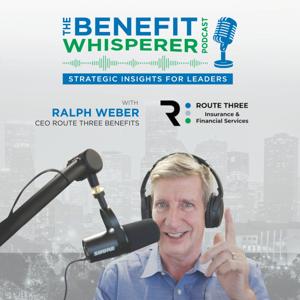
The Benefit Whisperer

The Benefit Whisperer

By Ralph WeberBusiness
Download on the App Store

The Benefit Whisperer episodes

  • The Woman Who Took on Big Insurance and WON! (Ep. 50)
    Healthcare pricing isn’t based on cost, it’s based on a system most employers never see.
    In this episode, Ralph Weber talks with Marilyn Bartlett, a nationally recognized healthcare cost containment expert, about how she helped transform a failing public health plan by challenging hospital pricing structures and contract assumptions.
    They discuss:
    The reality behind hospital charge masters
    Why discounts don’t equal savings
    The lack of employer access to claims data
    The role of contracts in driving costs
    Practical steps employers can take to regain control
    This episode is essential for anyone responsible for managing healthcare spend.
    Subscribe for more conversations that expose what’s really happening inside healthcare.
    Ralph Weber Host, The Benefit Whisperer 🌐 https://mybenefitssuck.com 📧[email protected]
    Marilyn Bartlett Senior Policy Fellow NASHP | National Academy for State Health Policy https://www.linkedin.com/in/marilyn-bartlett-a1639b285/
    39 min
  • “This Should Be Illegal,” Mark Cuban on U.S. Healthcare (Ep. 49)
    Episode Overview
    In this episode of The Benefit Whisperer, Ralph Weber sits down with Mark Cuban, David Scheinker, and Dr. Kevin Schulman to expose how healthcare pricing really works in the United States.
    This is not theory.
    It’s a direct look at:
    Facility fees
    340B program dynamics
    Insurance-driven pricing
    And why patients and employers rarely know what they’ll pay
    At one point, Cuban compares healthcare billing to:
    Charging $3 for a beer… and $5,000 for the cup.
    Key Topics 
    Healthcare Pricing & Transparency
    Why medical pricing is often unknown until after care
    How contracts define process, not actual payment amounts
    Insurance & Incentives
    How insurers and intermediaries profit from complexity
    Why delays, denials, and negotiations are built into the system
    Hospital Revenue Models
    The role of facility fees in cost inflation
    How programs like 340B influence pricing behavior
    Employer Impact
    Why employers are funding the system, but lack visibility and control
    The disconnect between plan design and actual outcomes
    Potential Solutions
    Direct contracting models
    Transparent pricing strategies
    Simplified, digitally defined agreements
    Key Takeaway 
    The U.S. healthcare system is not unpredictable by accident. It's structured in a way where complexity and lack of transparency directly support revenue generation.
    Guests & Contact Information
    Ralph Weber
    Host, The Benefit Whisperer
    🌐 https://mybenefitssuck.com
    Mark Cuban
    Founder, Cost Plus Drugs
    Dr. David Scheinker
    Executive Director of Systems Design and Collaborative Research, Stanford Lucile Packard Children’s Hospital
    Founder & Director, SURF (Stanford Medicine)
    🌐www.surf.stanford.edu
    📧 www.linkedin.com/in/david-scheinker/
    Kevin Schulman
    Professor of Medicine and Health Policy, Stanford University
    Faculty Director, Stanford Clinical Excellence Research Center
    Produced by Kathrine Mowrey (Content & Distribution)

    1 hr 32 min
  • Hospitals Aren’t Providers Anymore, They’re Collection Agencies (Ep. 48)
    In this episode of The Benefit Whisperer, Ralph Weber explores how healthcare in America evolved into a complex financial system driven by delayed payments, administrative layers, and risk transfer. With $5.5 trillion in annual spend, the issue is no longer just cost, it’s structure. This episode is essential for employers and advisors seeking clarity on what’s truly driving healthcare expenses.
    00:00 Introduction to Healthcare in America
    01:25 Historical Context of Healthcare Financing
    05:19 The Evolution of Healthcare Payment Models
    08:03 The Complexity of Healthcare Systems
    09:47 Defining Healthcare: Medical Care vs. Healthcare Finance
    11:31 Outcomes vs. Incentives in Healthcare
    13:10 The Billing and Collections Machine
    16:24 The Absurdity of Healthcare Billing
    18:27 Understanding Healthcare Costs and Profitability
    19:50 The Revenue Cycle and Payment Delays
    22:04 Adversarial Payment Environments in Healthcare
    23:48 The Complexity of Healthcare Billing
    25:50 Reforming the Healthcare System
    27:35 The Evolution of Healthcare as an Intermediary System
    29:12 Looking Ahead: Solutions and Innovations in Healthcare
    37:37 Red, Grey and White Minimalist Animated Like Share and Subscribe Button Video.mp4
    Share with a colleague. Email [email protected] · (832) 924-3330 · fixmybenefitsnow.com · Schedule a free 15 minute consultation bit.ly/4tagXcp
    38 min
  • The “OpenTable for Doctors” That’s Breaking Healthcare (Ep. 47)
    Dr. Paula Muto, founder of UberDoc, joins Ralph Weber to discuss how direct-pay healthcare is transforming specialist access. By removing insurance barriers, patients gain faster access to care with transparent pricing. This episode explores how employers can reduce costs, improve access, and rethink traditional benefits strategies through models like the Direct Pay Option (DPO).
    If you’re an employer, broker, or advisor tired of the PPO hamster wheel, this conversation will challenge how you think about healthcare delivery.
    Guest: Dr. Paula Muto LinkedIn: linkedin.com/in/paulamutomd/
    Host: Ralph Weber • [email protected]
    Phone: (832) 924-3330
    Website: fixmybenefitsnow.com
    Schedule a FREE consultation with Ralph: bit.ly/4i93SLR
    35 min
  • Blind Trust in Healthcare Is Costing Employers Millions (Ep. 45)
    Healthcare costs continue to rise, but many employers don’t realize how little oversight exists within their health plans.
    In this episode of The Benefit Whisperer, Ralph Weber speaks with healthcare advocate and claims audit expert Kimberly Carleson about why employers should take a closer look at their healthcare claims.
    Kimberly’s journey into healthcare advocacy began when her husband was diagnosed with stage-four metastatic bladder cancer. Doctors told her he had two years to live. Instead of accepting that prognosis, she sought second opinions and pushed for treatment.
    Nineteen years later, her husband is still alive.
    That experience opened her eyes to deeper problems in the healthcare system.
    Today Kimberly works with employers to audit claims, uncover billing errors, and help plans regain control of their healthcare spending.
    In this episode they discuss:
    Why most healthcare claims go unchecked
    • The billing patterns that appear again and again
    • Why employers often don’t control their own data
    • How contracts can prevent oversight
    • What employers can do to regain control
    This conversation highlights an uncomfortable truth: oversight in healthcare plans is often missing.
    And employers are the ones paying the price.
    ​​​​​Ralph Weber
    The Benefit Whisperer
    www.thebenefitwhisperer.com
    (832) 924-3330
    Schedule a FREE Consultation
    35 min
  • The “HOME TEAM” Gets Paid 160x MORE. Is That Fair? (Ep. 45)
    In this episode of The Benefit Whisperer, Ralph Weber examines Tennessee’s proposed legislation, SB 2040 and HB 1959, aimed at preventing pharmacy benefit managers (PBMs) from owning pharmacies.
    An audit from the Tennessee Department of Commerce & Insurance found instances where a major PBM allegedly reimbursed its own pharmacy up to 16,000% more than independent pharmacies for the same drug. One example cited showed reimbursement of approximately $9,000 versus $57 for identical medication quantities.
    Independent pharmacist and healthcare policy advocate Benjamin Jolley explains:
    • The structure of SB 2040 and HB 1959• How these bills mirror Arkansas Act 624• The economic impact of PBM vertical integration• What AWP and reimbursement pricing really mean• Why small employers and self-funded plans could bear the cost• Legal challenges surrounding similar legislation
    This episode explores healthcare market concentration, employer plan costs, and patient access issues through a fact-based policy discussion.
    If you’re responsible for healthcare spend, this conversation deserves your attention.
    Subscribe for direct, unfiltered conversations exposing waste in healthcare.
    🎙 Hosted by Ralph Weber📌 The Benefit Whisperer
    23 min
  • How to Appeal the 850 Million Claims that are Rejected Every Year and Win 70 to 90% of the Time (Ep. 44)
    Healthcare claim denials are not rare administrative errors. They are systemic.
    In the United States, approximately 850 million insurance claims are denied every year, roughly 17% of all submitted claims. Yet appeal win rates can range from 70% to 90%, raising a critical question:
    Why are so many claims denied in the first place?
    In this episode, Ralph Weber speaks with physician and Claimable co-founder Warris Bokhari about:
    The economics behind insurance claim denials
    The “98% of eligible claims” narrative, and what it leaves out
    AI-driven denial systems and automated claim edits
    Employer liability under ERISA for denied claims
    Transplant, oncology, and specialty drug denial cases
    The impact of 200–600 day payment delays on hospitals
    How patients and employers can respond effectively
    They discuss how insurance denials affect patients, employers, providers, and the broader healthcare system, and why appeals succeed at such a high rate when properly constructed.
    For employers sponsoring self-funded health plans, this episode is a critical reminder: you are legally responsible for the decisions made on behalf of your plan.
    For patients, it offers practical insight into how to push back, and win.
    Ralph Weber, The Benefit Whisperer
    Share with a colleague. Email [email protected] · (832) 924-3330 · fixmybenefitsnow.com · Schedule a free 15 minute consultation
    53 min
  • Money From Sick People: How PBMs Use AWP, Spread, and Rebates to Inflate Drug Costs (Ep.43)
    PBMs promise big “discounts,” but what if those discounts are calculated off inflated prices? In this episode of The Benefit Whisperer, Ralph Weber interviews Antonio Ciaccia (46brooklyn Research / Three Axis Advisors) to decode the drug pricing alphabet soup, AWP, MAC, NADAC, rebates, and GPOs, and explain how incentives inside the pharmacy supply chain can drive costs up while still claiming “savings.”
    Antonio shares why AWP remains the bedrock of legacy PBM contracting, how generic pricing can become a “Wild West,” and why rebates often amount to “money from sick people,” especially for members in high-deductible plans. Practical, plain-English steps for employers: understand compensation, get your full contract, and demand itemized claims data.
    00:00 Unveiling the Pharmacy Benefits World
    01:42 Antonio's Journey into Drug Pricing
    04:23 Understanding AWP and Its Implications
    09:40 The Illusion of Discounts in Drug Pricing
    13:06 The Role of PBMs in Drug Pricing
    17:02 Challenges in Changing PBM Contracts
    20:42 The Financial Incentives of PBMs
    22:54 PBM Dysfunction in the Broader Healthcare Context
    25:34 The Role of PBMs in Drug Pricing
    27:57 Empowering Employers in Drug Cost Management
    32:46 Decoding Drug Pricing Acronyms
    36:30 The Impact of GPOs and Rebates on Drug Costs
    41:44 Understanding the Burden on Patients and Employers
    Ralph Weber, The Benefit Whisperer
    Share with a colleague. Email [email protected] · (832) 924-3330 · fixmybenefitsnow.com · Schedule a free 15 minute consultation
    45 min
  • ERISA’s Next Battlefield: Voluntary Benefits Lawsuits, Broker Commissions, and Fiduciary Exposure (Ep. 42)
    Voluntary benefits. ERISA exposure. Data transparency.
    In this episode of The Benefit Whisperer, Ralph Weber welcomes back ERISA attorney Julie Selesnick to discuss three legal developments reshaping employer-sponsored health plans:
    The rise of voluntary benefit lawsuits targeting employers and brokers
    Why the Mayo Clinic case survived dismissal—and what it signals for plan sponsors
    How carriers and TPAs restrict access to claims data employers are legally entitled to
    Julie explains why fiduciary responsibility doesn’t disappear when benefits are “voluntary,” how plan documents and vendor contracts create real liability, and what employers must do now to reduce risk.
    A must-listen for CFOs, HR leaders, brokers, and anyone responsible for plan governance.
    The Benefit Whisperer
    FREE CONSULTATION: bit.ly/4qMqLbz
    www.thebenefitwhisperer.com
    (832) 924-3330
    45 min
  • Chris Deacon Unpacks the Benefits System; It’s not Broken, It’s Rigged. (Ep. 41)
    Chris Deacon isn’t here to make friends, she’s here to fix benefits. As New Jersey’s former Director of Health Benefits, she knows where the bodies are buried. Ralph Weber interviews Chris on the broken systems, misaligned incentives, and real steps employers can take to regain control of their plans.
    00:00 The Staggering Cost of Healthcare
    01:10 Understanding Healthcare as a System
    04:14 Urgent Issues in Healthcare
    07:39 The Role of Technology in Healthcare Costs
    11:37 Risk Management in Healthcare Spending
    15:12 The Impact of Vertical Integration on Costs
    18:52 The Future of Healthcare Financing
    20:14 The Technology of Real-Time Transactions
    21:00 Historical Context: The Baylor Plan and Modern Costs
    24:50 The Waste in Healthcare Spending
    26:59 Disincentives in the Healthcare Industry
    29:57 The Role of Employers in Healthcare Decisions
    34:54 Hope for the Future: Technology and Transparency
    Contact: [email protected] · fixmybenefitsnow.com · (832) 924-3330
    36 min

About The Benefit Whisperer

From the publisher's feed

Welcome to The Benefit Whisperer with Ralph Weber from Route Three, a full-service financial services firm specializing in all facets of insurance and advanced financial and estate planning needs. In…

More shows like The Benefit Whisperer

Relentless Health Value by Stacey Richter

Relentless Health Value

242 Listeners

Self-Funded by Spencer Smith

Self-Funded

37 Listeners