
Sign up to save your podcasts
Or

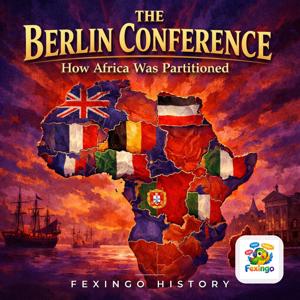


In this episode, Lucas and Luna explore the 1827 Bombardment of Algiers, a pivotal event that foreshadowed European colonial expansion in North Africa. They discuss the Fly Whisk Incident, where Algerian Dey Hussein struck the French consul with a fly whisk, triggering a three-year naval blockade and ultimately a French invasion. The episode delves into the decline of the Ottoman Regency of Algiers, the role of corsairs and Christian slaves, and the diplomatic intricacies leading to the 1830 invasion. Lucas highlights the irony of France's justification — protecting Mediterranean commerce — while itself engaging in slave trading. The conversation also touches on the broader context of the Barbary Wars and the shifting balance of power in the Mediterranean.
#BombardmentOfAlgiers #FlyWhiskIncident #DeyHussein #BarbaryCorsairs #OttomanRegency #FrenchInvasion #Algiers1827 #MediterraneanHistory #ColonialHistory #NorthAfrica #CharlesX #Slavery #Piracy #HistoryOfFrance #19thCentury #Imperialism #History #FexingoHistory
Keep every episode free: buymeacoffee.com/fexingo
Episode 109 of Fexingo History takes us back to the roots of the Scramble for Africa, exploring the 1827 Bombardment of Algiers—decades before the Berlin Conference. Lucas and Luna unpack the diplomatic spat known as the Fly Whisk Incident, where Dey Hussein Dey struck the French consul with a fly whisk, escalating tensions over grain debts and French ambitions. We delve into the resulting naval blockade, the 1830 French invasion, and how this early clash set the stage for European colonization of North Africa. Along the way, we meet figures like Admiral Duperré, the Dey's corsairs, and the janissaries who defended Algiers. Discussing the impact on the Ottoman Regency of Algiers, the rise of French Algeria, and the long shadow cast on Maghreb history, this episode offers a fresh angle on a pivotal moment that foreshadowed the partition of Africa. With detailed accounts of the bombardment, the capture of the Casbah, and the exile of the Dey, listeners gain insight into the violent beginnings of French colonial rule.
#History #FexingoHistory #BerlinConference #ScrambleForAfrica #Algiers #Algeria #FlyWhiskIncident #HusseinDey #FrenchColonialism #Bombardment #Corsairs #Janissaries #OttomanEmpire #Maghreb #AdmiralDuperré #Casbah #1827 #ColonialHistory
Keep every episode free: buymeacoffee.com/fexingo
Episode 108 of The Berlin Conference takes us to the coast of West Africa, where the German colony of Togoland became a testing ground for the principle of 'effective occupation' that Bismarck's diplomats had scribbled onto the General Act of the Berlin Conference. We follow the career of Gustav Nachtigal, the explorer turned imperial commissioner who signed the Treaty of Lome with local chiefs in 1884, and trace how that single document triggered a chain of treaties, boundary commissions, and armed patrols that carved the Ewe people's homeland into German and French spheres. We examine the peculiar land tenure systems of the Aneho and the Mina traders who had long dominated Atlantic commerce, and ask whether the conference's paper rules had any real meaning on the ground. Lucas and Luna also explore the bizarre episode of the 'Togo gunboats' — five small river vessels that Germany rushed to assemble in Hamburg and ship to Lome in pieces, reassembling them on the beach to assert control over the lagoon network. The episode concludes with a reflection on how the Berlin Conference's legacy looked from the perspective of a single African community caught between two European empires.
#GustavNachtigal #Togoland #TreatyOfLome #BerlinConference #EffectiveOccupation #EwePeople #Aneho #MinaTraders #GermanColonialEmpire #ScrambleForAfrica #WestAfrica #TogoGunboats #GermanProtectorate #1884 #AfricanResistance #History #FexingoHistory #ColonialHistory
Keep every episode free: buymeacoffee.com/fexingo
In 1883, as European powers jostled for control of Africa, a Franco-Malagasy war erupted on the east coast. This episode focuses on the bombardment of Tamatave (Toamasina) by a French fleet under Admiral Pierre. The conflict stemmed from a dispute over the Lambert Charter, a land concession granted by the Merina monarchy to Frenchman Joseph Lambert. When Queen Ranavalona II's government refused to accept French claims of sovereignty over parts of Madagascar, French warships shelled the port city. The episode explores the Merina kingdom's efforts to modernize under Prime Minister Rainilaiarivony, the role of British and American trade interests, and the eventual imposition of a French protectorate in 1890. We discuss the Treaty of Tamatave, the Malagasy resistance led by the Merina army, and how the Berlin Conference's principle of 'effective occupation' fueled France's aggression. This is a lesser-known chapter of the Scramble for Africa that reveals how maritime power and legal exploitation carved up the continent.
#BerlinConference #ScrambleForAfrica #Madagascar #Tamatave #RanavalonaII #Rainilaiarivony #LambertCharter #FrenchColonialism #Bombardment #MerinaKingdom #Toamasina #IndianOcean #AdmiralPierre #FrancoMalagasyWar #EffectiveOccupation #1883 #19thCentury #FexingoHistory
Keep every episode free: buymeacoffee.com/fexingo
In this episode, Lucas and Luna explore the military strategy and diplomacy that enabled Emperor Menelik II of Ethiopia to defeat a European colonial power at the Battle of Adwa in 1896. They discuss how Menelik modernized his army using imported firearms—especially the rapid-firing Lebel and Gras rifles—and how he played French, Russian, and Italian interests against each other to secure weapons and training. The conversation delves into the role of Empress Taytu Betul, the controversial Article 17 of the Treaty of Wichale, and the impact of the battle on African resistance movements. Lucas explains how Ethiopia maintained its independence while the rest of the continent was partitioned, and how the victory reshaped the balance of power in the Horn of Africa. This is a focused look at the arms race, diplomacy, and military tactics behind one of the most significant African victories against colonialism.
#MenelikII #BattleOfAdwa #EthiopianEmpire #TreatyOfWichale #TaytuBetul #StarvationCamp #LebelRifle #GrasRifle #OresteBaratieri #ItalianColonialism #HornOfAfrica #19thCentury #AfricanResistance #ColonialHistory #MilitaryHistory #Adwa1896 #History #FexingoHistory
Keep every episode free: buymeacoffee.com/fexingo
In 1863, the British Royal Navy bombarded Kagoshima, the capital of the Satsuma domain in Japan, in retaliation for the Namamugi Incident, where Satsuma samurai killed a British merchant. This episode explores how the Berlin Conference's principle of 'effective occupation' echoed earlier gunboat diplomacy, and how the Satsuma Bombardment inadvertently accelerated Japan's Meiji Restoration. We discuss the role of the Namamugi Affair, the British fleet under Sir Augustus Kuper, the Satsuma leadership of Shimazu Hisamitsu and Saigō Takamori, and the subsequent Treaty of London. The bombardment shattered Satsuma's resistance to foreign influence, leading to modernization and the end of the Tokugawa shogunate. This story reveals the global ripple effects of European imperial tactics, linking the Scramble for Africa to Japan's transformation.
#BerlinConference #SatsumaBombardment #NamamugiIncident #Kagoshima #SaigoTakamori #ShimazuHisamitsu #RoyalNavy #AugustusKuper #MeijiRestoration #GunboatDiplomacy #JapanHistory #Bakumatsu #BritishEmpire #EffectiveOccupation #TreatyOfLondon #FexingoHistory #History #Imperialism
Keep every episode free: buymeacoffee.com/fexingo
In this episode of The Berlin Conference: How Africa Was Partitioned, hosts Lucas and Luna explore the global humanitarian movement that rose up in response to King Leopold II's atrocities in the Congo Free State. They focus on the unlikely figure of E.D. Morel, a former shipping clerk who became the whistleblower that exposed the brutal rubber and ivory regime. The conversation covers the role of the Force Publique, the chicotte whip, the system of forced labor and hostage-taking, and the alliance Morel formed with Roger Casement and the British government. They discuss the Congo Reform Association, the 1908 transfer of the Congo to Belgian rule, and the long shadow these events cast on modern human rights advocacy. This episode also touches on the Berlin Conference's principle of 'effective occupation' and how Leopold exploited it to create a personal fiefdom. A nuanced look at one of history's first great humanitarian campaigns.
#CongoFreeState #KingLeopoldII #EDMorel #CongoReformAssociation #RogerCasement #ForcePublique #Chicotte #RubberHorror #BerlinConference #ScrambleForAfrica #BelgianCongo #HumanRights #HannahArendt #JosephConrad #HeartOfDarkness #19thCentury #History #FexingoHistory
Keep every episode free: buymeacoffee.com/fexingo
In this episode of The Berlin Conference: How Africa Was Partitioned, Lucas and Luna explore how Ethiopia under Emperor Menelik II became the only African nation to successfully resist European colonization during the Scramble for Africa. They discuss Menelik's shrewd diplomacy, his massive military modernization using imported firearms, the pivotal Battle of Adwa in 1896 where Ethiopian forces decisively defeated Italy, and the subsequent Treaty of Addis Ababa that secured Ethiopian sovereignty. The episode also touches on Menelik's expansionist policies, the role of Russian and French support, and the lasting legacy of Adwa as a symbol of African resistance. This fresh angle covers a major topic not yet addressed in previous episodes, focusing on a key African victory that reshaped colonial borders.
#Ethiopia #MenelikII #BattleOfAdwa #ScrambleForAfrica #ItalianColonialism #AddisAbaba #EmperorMenelik #AfricanResistance #19thCentury #ColonialHistory #TreatyOfWichale #RasMakonnen #TaytuBetul #OresteBaratieri #EuropeanImperialism #AfricanHistory #History #FexingoHistory
Keep every episode free: buymeacoffee.com/fexingo
Episode 102 of The Berlin Conference series explores the British bombardment of Alexandria in 1882 and its role in the Scramble for Africa. Lucas and Luna discuss the Urabi Revolt, the nationalist movement led by Ahmed Urabi Pasha, and how British fears over the Suez Canal and financial control in Egypt led to a devastating naval attack that killed hundreds of Egyptians. They examine the controversial figure of Urabi, the role of Khedive Tewfik, and the long-term consequences: British occupation that lasted until 1954. The episode also touches on connections to the Berlin Conference, showing how European powers' interventions in North Africa set the stage for the formal partition of the continent. Specific details include the June 11 riots, the bombardment by Admiral Beauchamp Seymour, and the aftermath including the trial of Urabi. This is a fresh angle focusing on a pivotal event in Egypt's history that directly influenced the scramble dynamics.
#BerlinConference #BombardmentOfAlexandria #UrabiRevolt #AhmedUrabi #BritishEmpire #Egypt #SuezCanal #KhediveTewfik #AdmiralSeymour #ColonialHistory #1882 #NorthAfrica #ScrambleForAfrica #Imperialism #NavalWarfare #History #FexingoHistory #19thCentury
Keep every episode free: buymeacoffee.com/fexingo
In this episode, Lucas and Luna explore the story of Samori Touré, the brilliant Mandinka leader who built the Wassoulou Empire and fought a two-decade war against French colonial expansion in West Africa. They discuss his innovative military strategies, his use of guerrilla tactics and scorched earth, his forced relocation to the forest region, and his eventual capture. The episode also touches on the role of the Berlin Conference in fueling French ambitions and the broader pattern of African resistance. Specific terms include Samori Touré, Wassoulou, Sofa, Kankan, Sikasso, and the 1886 Treaty of Niako.
#SamoriTouré #WassoulouEmpire #MandinkaResistance #BerlinConference #FrenchColonialism #WestAfrica #Sofa #Kankan #Sikasso #TreatyOfNiako #GuerrillaWarfare #ScrambleForAfrica #AfricanHistory #ColonialResistance #19thCentury #History #FexingoHistory #Podcast
Keep every episode free: buymeacoffee.com/fexingo
From the publisher's feed