
Sign up to save your podcasts
Or

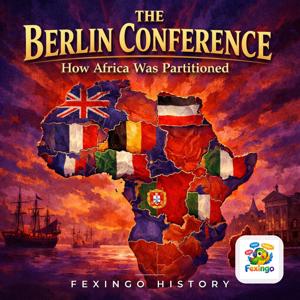


In the aftermath of the Berlin Conference, European powers rushed to claim African territory through 'effective occupation.' But one man, Almamy Sullimani of the Limba people in what is now Sierra Leone, challenged this system head-on. In 1890, he wrote a letter to the German and British authorities, asserting his sovereignty over the Bombali Bombali region and refusing to recognize any European claims. This episode dives into the details of the Bombali Bombali incident, exploring how Sullimani used diplomacy, local alliances, and a deep understanding of European legal language to resist colonization. We examine the British response, the role of the Limba and neighboring Temne and Loko peoples, and how this small-scale defiance fit into the larger pattern of African resistance after the Berlin Conference. Discover how one man's stand became a symbol of resistance and a rare case where African legal arguments were taken seriously by European powers.
#BombaliBombali #AlmamySullimani #Limba #SierraLeone #BerlinConference #EffectiveOccupation #AfricanResistance #ColonialHistory #19thCentury #Diplomacy #Sovereignty #BritishEmpire #GermanEmpire #Temne #Loko #Kambia #Freetown #History #ScrambleForAfrica #Colonialism
Keep every episode free: buymeacoffee.com/fexingo
In this episode, Lucas and Luna explore the Bombali Bombali Incident, a little-known but revealing confrontation at the border of Sierra Leone and French Guinea (now Guinea) in the 1890s. They focus on Almamy Sullimani, a Limba ruler who refused to accept the artificial boundaries drawn at the Berlin Conference. Sullimani's armed resistance against British and French colonial forces, his use of diplomacy and warfare, and his ultimate exile to Sierra Leone are discussed. The episode uses Sullimani's story to examine the personal and local impacts of the Scramble for Africa, highlighting how individuals navigated imposed borders and challenged European claims of 'effective occupation.' The conversation also touches on the Bombali region's geography, the Limba people's social structure, and the legacy of Sullimani's defiance in anti-colonial movements.
#BombaliBombali #AlmamySullimani #Limba #SierraLeone #Guinea #BerlinConference #ScrambleForAfrica #EffectiveOccupation #Resistance #Colonialism #Bombali #Kambia #Conakry #Freetown #19thCentury #AfricanHistory #History #FexingoHistory #KingLeopold #OttoVonBismarck
Keep every episode free: buymeacoffee.com/fexingo
In 1905, a mystical water ritual ignited the largest rebellion against German colonial rule in East Africa. The Maji Maji uprising swept across what is now Tanzania, uniting over a dozen ethnic groups from the Matumbi Hills to the banks of the Rufiji River. This episode follows the rebellion from its spark with the prophet Kinjeketile Ngwale, who promised his followers that magic water—'maji'—would turn German bullets into water. We trace the rebels' initial successes, the brutal German counterattack led by Governor Gustav Adolf von Götzen, and the scorched-earth tactics that led to a devastating famine. By the rebellion's end in 1907, an estimated 200,000 to 300,000 Africans had died, mostly from starvation. We also examine the rebellion's long shadow: how it reshaped German colonial policy, the role of African collaboration, and why the uprising remains a powerful symbol of resistance in modern Tanzania. Along the way, we cover key figures like the Yao leader Machemba, the Ngoni chief Chabruma, and the German commander Kurt von Schleinitz.
#MajiMaji #KinjeketileNgwale #GermanEastAfrica #GustavAdolfvonGTzen #Rufiji #Matumbi #Ngoni #Yao #Machemba #Chabruma #ScorchedEarth #Famine #Resistance #Colonialism #Tanzania #History #FexingoHistory #AfricanHistory #BerlinConference #ScrambleForAfrica
Keep every episode free: buymeacoffee.com/fexingo
In this episode, Lucas and Luna explore the Bombali Bombali incident, a lesser-known but revealing moment in the partition of West Africa. They delve into the conflict between the Limba chiefdom of Bombali Bombali and the British colonial authorities in Sierra Leone, around 1889. The discussion covers the Limba resistance led by Almamy Sullimani, the British strategy of 'effective occupation', and the broader context of the Berlin Conference's impact on local African polities. Lucas explains how the incident exemplifies the clash between European imperial claims and existing African sovereignty, highlighting the Limba's diplomatic and military efforts to maintain independence. The episode also touches on the legacy of such small-scale resistances in shaping colonial borders.
#BombaliBombali #Limba #AlmamySullimani #SierraLeone #WestAfrica #BerlinConference #EffectiveOccupation #ColonialResistance #Freetown #Kambia #Conakry #Guinea #BritishEmpire #Imperialism #History #FexingoHistory #Podcast #ScrambleForAfrica #Colonialism #KingLeopold
Keep every episode free: buymeacoffee.com/fexingo
In 1906, a crisis in Morocco brought Europe to the brink of war, testing the very principles set by the Berlin Conference twenty years earlier. Lucas and Luna explore the First Moroccan Crisis and the Algeciras Conference, where Germany and France clashed over influence in North Africa. They discuss Sultan Abdelaziz, the Kaiser's provocative visit to Tangier, the role of Britain and the Entente Cordiale, and how a single diplomatic standoff reshaped colonial politics—paving the way for World War I. Learn about the Act of Algeciras, the policing of Moroccan ports, and the fate of the sultanate. A story of brinkmanship, treaties, and the fragile balance of power.
#Morocco #AlgecirasConference #FirstMoroccanCrisis #SultanAbdelaziz #KaiserWilhelmII #Tangier #EntenteCordiale #TheodorRoosevelt #BerlinConference #ScrambleForAfrica #Diplomacy #WorldWarIOrigins #Colonialism #NorthAfrica #France #Germany #History #FexingoHistory #KingLeopold #OttoVonBismarck
Keep every episode free: buymeacoffee.com/fexingo
In this episode of The Berlin Conference: How Africa Was Partitioned, we delve into the fascinating story of the Bombali Bombali incident—a forgotten border dispute that almost sparked a war between Britain and France in West Africa. Set in the early 1890s, the episode follows the enigmatic figure of Bombali Bombali, a local leader in the Limba country who played the European powers against each other, exploiting the vague borders drawn at Berlin. We explore the chaos of the Scramble, as French and British officials, guided by the principle of 'effective occupation,' scrambled to claim territory that neither fully controlled. Amidst the diplomatic maneuvering, Bombali Bombali's defiance and clever diplomacy forced the colonial powers to the negotiating table, ultimately shaping the modern borders of Sierra Leone and Guinea. This episode reveals how local actors, not just European statesmen, influenced the partition of Africa, and how the Berlin Conference's legacy of arbitrary borders continues to affect the region today.
#BombaliBombali #Limba #SierraLeone #Guinea #BerlinConference #ScrambleForAfrica #EffectiveOccupation #ColonialBorders #WestAfrica #BritishEmpire #FrenchColonial #FexingoHistory #History #ColonialHistory #AfricanHistory #19thCentury #BorderDispute #Diplomacy #Colonialism #KingLeopold
Keep every episode free: buymeacoffee.com/fexingo
Episode 15 of The Berlin Conference series zooms in on the Swahili Coast, a region that was not officially partitioned at Berlin but was profoundly reshaped by its aftermath. Hosts Lucas and Luna explore how Zanzibar lost its mainland holdings to Germany and Britain, the decline of the Sultanate of Zanzibar, and the imposition of colonial borders that split the Swahili people between German East Africa and British East Africa. They discuss the key figures involved, including Sultan Barghash bin Said, and the Heligoland-Zanzibar Treaty of 1890, which ceded Heligoland to Germany and finalized British control over Zanzibar. The episode also examines the economic shifts from clove and ivory trades to colonial extraction, and the cultural legacy of the Swahili language and city-states like Kilwa and Mombasa. Lucas and Luna trace how the Berlin Conference's principles of 'effective occupation' played out on the ground, often ignoring pre-existing trade networks and cultural ties. The conversation highlights the artificiality of colonial borders and their lasting impact on East African geopolitics, including the modern-day tensions between Tanzania and Kenya over maritime boundaries. This is a deep dive into a region often overlooked in the wider narrative of the Scramble for Africa, filled with specifics about treaties, towns, and the people who lived through this transformative period.
#SwahiliCoast #Zanzibar #HeligolandZanzibarTreaty #SultanBarghash #GermanEastAfrica #BritishEastAfrica #Kilwa #Mombasa #CloveTrade #IvoryTrade #ScrambleForAfrica #ColonialBorders #EffectiveOccupation #BerlinConference #EastAfrica #History #FexingoHistory #Podcast #Colonialism #KingLeopold
Keep every episode free: buymeacoffee.com/fexingo
In 1889, a minor skirmish in the Sierra Leone hinterland nearly reshaped West Africa's borders. This episode explores the Bombali Bombali incident: a clash between the British-allied Limba chief Almamy Sullimani and French forces advancing from Guinea. We examine how the Berlin Conference's 'effective occupation' doctrine played out in the remote Bombali region, the role of the Limba people in resisting colonial encroachment, and the diplomatic crisis that followed. Learn about the Bombali Bombali, the 1896 Anglo-French boundary agreement that settled the dispute, and how this forgotten episode influenced the final partition of the Sierra Leone-Guinea border. Featuring details on the Limba social structure, the Kambia district, and the broader context of the Scramble for West Africa.
#BombaliBombali #Limba #AlmamySullimani #SierraLeone #Guinea #BerlinConference #ScrambleForAfrica #EffectiveOccupation #AngloFrenchBoundary #Kambia #WestAfrica #ColonialHistory #19thCentury #FexingoHistory #History #Podcast #Africa #Imperialism #Colonialism #KingLeopold
Keep every episode free: buymeacoffee.com/fexingo
In this episode, Lucas and Luna explore how the Mfecane—the violent upheaval and state-building period in early 19th-century southern Africa—intersected with the later Berlin Conference and European colonization. They trace the rise of Shaka Zulu and the Zulu Kingdom, the expansion of the Mthethwa and Ndwandwe, and the ripple effects that created refugees like the Kololo and the Ndebele. The conversation examines how European powers exploited these disruptions, using the Mfecane to justify land seizures and impose borders that ignored complex African polities. Lucas explains how the British, Boers, and Portuguese carved up the region after Berlin, often pitting African groups against each other. The episode also touches on the controversial historian's debate about the Mfecane's scale and causes, and how modern scholarship reinterprets it. Key figures include Shaka, Dingane, Moshoeshoe, Mzilikazi, and Piet Retief. Specific locations: Zululand, Natal, Lesotho, the Drakensberg, the Limpopo River. This is a fresh angle for listeners familiar with the conference's diplomatic narrative.
#Mfecane #ShakaZulu #ZuluKingdom #BerlinConference #SouthernAfrica #Colonialism #Moshoeshoe #Mzilikazi #Ndebele #Lesotho #Natal #Boers #Dingane #Kololo #Limpopo #AfricanHistory #History #FexingoHistory #ScrambleForAfrica #KingLeopold
Keep every episode free: buymeacoffee.com/fexingo
In this episode, Lucas and Luna explore how the Berlin Conference's principles of effective occupation and artificial borders continued to shape the Middle East after World War I — focusing on the 1916 Sykes-Picot Agreement and its aftermath. They discuss how European diplomats, like Sir Mark Sykes and François Georges-Picot, drew lines across the Ottoman Empire that ignored ethnic and sectarian realities, creating states like Iraq, Syria, Lebanon, and Jordan. The conversation highlights the continuity between Berlin's partition of Africa and the post-war division of the Arab world, touching on the 1920 Iraqi revolt, the role of T.E. Lawrence, and the fate of the Kurdish people. Lucas explains how the Mandate system and the 1917 Balfour Declaration set the stage for decades of conflict, and how the Berlin Conference's legacy of arbitrary borders survived into the 20th century and beyond.
#SykesPicot #BerlinConference #MiddleEast #WWI #Mandates #Iraq #Syria #Lebanon #Jordan #Palestine #Kurds #BalfourDeclaration #MarkSykes #FrancoisGeorgesPicot #SaudiArabia #Colonialism #History #FexingoHistory #ScrambleForAfrica #KingLeopold
Keep every episode free: buymeacoffee.com/fexingo
From the publisher's feed