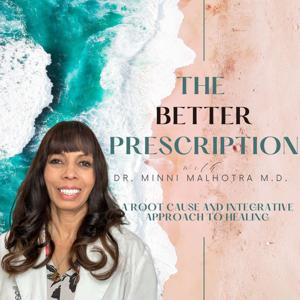
The Better Prescription

The Better Prescription

Download on the App Store

The Better Prescription episodes

  • EP 34: Micronutrient Balance

    Modern medical school education doesn’t focus on the human body’s need for nutrients to fuel its basic functions. Because of this, the vital importance of nutrients has completely escaped the public’s attention. We are so focused on proteins, fats, and carbohydrates, but it’s the micronutrients that are responsible for enhancing our bodies’ metabolic processes. In this episode, we discuss the importance of nutrient balance, and delve into the causes of micronutrient deficiencies, and the myriad of health problems they subsequently create! You will find out if you fall under the category of those who would benefit from micronutrient testing and, if you do, how to go about it. We break down the primary reasons for extra- or intracellular deficiencies and which nutrients we are at risk of being deficient in as we age. Tune in to discover all you need to know about micronutrient balance, from gut health to cognitive decline, and so much more!


    Key Points From This Episode:

    • What micronutrients are and how they enhance the metabolic process.
    • Why the vital importance of nutrients has escaped the public’s attention!
    • What leads to micronutrient deficiencies.
    • The myriad of health problems caused by micronutrient deficiencies.
    • Who would benefit from micronutrient testing.
    • The primary reasons for extra- or intracellular deficiency.
    • How our digestive, detoxification, and antioxidant capacities decrease as we age.
    • The typical nutrient deficiencies in the aging population.
    • Which toxins are most likely to accumulate in our bodies.
    • The antioxidants at risk of depletion.
    • What causes changes in the gut microbiome and which bacterial populations are affected.
    • The nutrient deficiencies associated with cognitive decline.
    • How to test your gut health and why it’s important to do so.
    • What the stomach, duodenum, upper and lower jejunum, ilium, and large intestine absorb, respectively.
    • The role nutrients play in energy production.
    • How to test for micronutrients deficiencies.


    Links Mentioned in Today’s Episode:

    Gut Zoomer

    LabCorp

    Quest Diagnostics

    Vibrant Wellness

    Genova Diagnostics

    SpectraCell

    Anchor Wellness Center

    Dr. Minni Malhotra

    Dr. Minni Malhotra Email

    The Institue for Functional Medicine

    American Academy of Anti Aging Medicine

    13 min
  • EP 33: The Science of Goal Setting

    We may already be a few months into the new year, but that doesn’t mean it’s too late to gain a deeper understanding of goal setting. In today’s episode, Dr. Minni Malhotra discusses the intricacies of goal setting, how visualization can help you achieve your goals, and why visualization exercises are so beneficial. Tuning in you’ll hear a breakdown of the five dimensions of goal setting, and why some goal formulations contribute to wellbeing, and performance, while others do not. Learn how to categorize and analyze your goals, as well as what steps you can take to optimize your chances of success. To learn more about goal setting, how Dr. Malhotra uses the Smart Goals method, and some of the simple ways you can improve your chances of success, make sure you tune in today!


    Key Points From This Episode:

    • Introducing today’s topic: Goal Setting.
    • The five dimensions of goal setting and how they are classified.
    • Why certain goal formulations contribute to well-being and performance while others do not.
    • A breakdown of the four steps to categorize and analyze your goals.
    • How to optimize your goals after you’ve categorized and analyzed them.
    • How visualization and outcome-focused imagery can support goal-directed behavior.
    • How top athletes use outcome-focused imagery to reach their goals.
    • The efficacy of the Smart Goals method and how Dr. Malhotra uses it in her practice.
    • How breaking your goals down into smaller steps will help you achieve success.


    Links Mentioned in Today’s Episode:

    The COPE Method

    Anchor Wellness Center

    Dr. Minni Malhotra

    Dr. Minni Malhotra Email

    The Institute for Functional Medicine

    11 min
  • EP 32: The Gut Skin Axis

    Traditional medicine often views the body as a collection of distinct organs, each prone to its unique diseases and disorders. Functional medicine views the body as a whole and research has started to support this. The prime example is the gut skin axis, where diet and gut health has been linked to skin conditions! Tune in today to hear all about how the microbiome of the gut and the skin are intertwined as well as the microbes that are responsible for skin issues. We hear how diet can impact your skin in both the short- and long-term and why daily supplementation with prebiotics is so important. Dr. Minni describes the tests that Anchor Wellness Centre offers to identify gut skin axis dysregulation, and relates a case study where the application of the COPE method and the Five-R protocol dramatically changed a patient's life! Press play now to find out more!


    Key Points From This Episode:

    • Skin conditions and gut health: how they are connected. 
    • The gut skin axis and how it affects skin differentiation and keratinization. 
    • What makes up the gut microbiome and its functions (digestion and protection). 
    • The skin's functions: protection, temperature regulation, and water retention. 
    • How the skin is formed and maintained. 
    • The short-chain fatty acids involved in both the gut and the skin microbiome. 
    • How both long-term and short-term dietary habits can shape your skin microbiome. 
    • What diseases good gut health can affect, and why supplementation with prebiotics is a good idea. 
    • The skin and gut health tests available at Anchor Wellness Centre: Genova's GI Effects, the Vibrant Gut Zoomer, and food sensitivity tests. 
    • How the Five-R protocol can help identify food sensitivities. 
    • A case study of Dr. Minni’s where using the COPE method and the Five-R protocol changed her patient’s life!


    Links Mentioned in Today’s Episode:

    Genova's GI Effects

    The Vibrant Wellness Gut Zoomer

    The Five-R Framework

    The COPE Method

    Anchor Wellness Center

    Dr. Minni Malhotra

    Dr. Minni Malhotra Email

    The Institute for Functional Medicine

    12 min
  • EP 31: Breaking Through Brain Fog

    Do you find yourself frequently forgetting things? Struggling to concentrate and communicate? Feeling “cloudy”? All of these are symptoms of brain fog, today’s topic on the Better Prescription Podcast. Tune in to hear Dr. Minni Malhotra break down the difference between brain fog and mental fatigue, and how her diet influences her mental state (and joints!). We find out why you shouldn’t ignore the symptoms of brain fog, and the three major causes of it: electromagnetic radiation, stress, and lifestyle. We also hear some simple changes that you can implement to clear up your brain fog, before diving into a case study of Dr. Minni’s where she treated a young woman with severe brain fog. From the supplements that you can take (and how they work), to why you should use the COPE method with Dr. Minni, you won’t want to miss this insightful episode!


    Key Points From This Episode:

    • An introduction to brain fog, and how it differs from mental fatigue. 
    • The symptoms of brain fog. 
    • How the food Dr. Minni eats can affect her mental state and joints. 
    • Why you should not ignore the symptoms of brain fog: the long-term effects. 
    • The first major cause of brain fog: electromagnetic radiation. 
    • Stress, the second cause of brain fog. 
    • The third cause of brain fog: lifestyle (diet, exercise, exposure to harmful chemicals).
    • The simple changes you can make to your lifestyle to avoid brain fog. 
    • Hear a case study of Dr. Minni’s: Chloe, the college student with brain fog. 
    • How the COPE method helped Chloe through her brain fog. 
    • The underlying causes of Chloe’s brain fog: chemical toxicity and stress. 
    • The treatments that Chloe had to cure her brain fog (COPE and Five R’s). 
    • Find out which supplements Dr. Minni recommends for brain fog, and why!
    • Which tests you should run to check your detoxification pathways. 


    Links Mentioned in Today’s Episode:

    The COPE Method

    The 5R Gut Framework

    Anchor Wellness Center

    Dr. Minni Malhotra

    Dr. Minni Malhotra Email

    The Institute for Functional Medicine

    12 min
  • EP 30: What is Insulin Resistance?

    Welcome back to another episode of The Better Prescription Podcast. In today’s show we explore the pivotal, but often ignored issue of insulin resistance. Tuning in, you’ll hear in-depth explanations of insulin’s role in different parts of the body like our muscles, fat, liver, and brain and how insulin resistance causes a range of adverse symptoms and imbalances. Discover how the seemingly simple hormone, insulin, supports the body by stimulating glucose uptake, and why insulin resistance impairs the body on multiple levels. We unpack how the effect of insulin resistance on the brain can impair signaling and alter your feelings of satiety, as well its potentially link to Alzheimer's, which has often been referred to as type 3 diabetes in academic literature. Pre-diabetes is more common than you think: 84 million people, ages 18 and older have pre-diabetes. While genetics play a large role in the likelihood of developing immune resistance or diabetes, there are lifestyle changes that can prevent, treat and even reverse insulin resistance and pre-diabetes. Tune in to learn more about the pertinent topic and how healthier choices can help you and your loved ones address insulin resistance!


    Key Points From This Episode:

    • An introduction to today’s topic: insulin resistance.
    • A summary of the hormone insulin and its many functions in the body.
    • A breakdown of insulin resistance syndrome and its effects on the body.
    • Learn about insulin’s pivotal role in glucose utilization and metabolism.
    • Insulin’s effect on the muscles of the body.
    • The relationship between insulin and fat tissue.
    • Why insulin resistance prevents the breakdown of fat.
    • The role of ketogenesis in insulin resistance.
    • Why diabetic and insulin-resistant individuals struggle to lose weight.
    • Insulin’s effect on the liver, where glucose uptake is not insulin-dependent.
    • The pivotal role of insulin resistance in various aspects of endothelial functioning.
    • Why insulin resistance is associated with endothelial dysfunction.
    • Some of the diseases associated with endothelial dysfunction like hypertension, heart disease, and stroke.
    • How endothelium produces nitric oxide and other key hormones.
    • The negative effects that arise when these systems are out of balance.
    • How insulin resistance increases the likelihood of blood clots.
    • How insulin resistance affects the brain.
    • The effect of insulin on your feelings of satiety.
    • Insight into the potential link between insulin resistance and Alzheimer’s disease.
    • Why pre-diabetes is more common than you think. 
    • Some of the factors that can increase your likelihood of insulin resistance, like obesity and genetic predispositions.
    • How we use the COPE methodology to treat insulin resistance, diabetes, and pre-diabetes.


    Links Mentioned in Today’s Episode:

    Anchor Wellness Center

    Dr. Minni Malhotra

    Dr. Minni Malhotra Email

    The Institute for Functional Medicine

    17 min
  • EP 29: Knowing Your Cholesterol Levels

    The standard solution to “high cholesterol” is a prescription of statins. However, not only is “high cholesterol” a misnomer, many people with traditionally high values in the most commonly done cholesterol screen are actually healthy. Talking to us today about all things cholesterol is Dr. Minni Malhotra, in another installment of The Better Prescription. Minni breaks down what cholesterol is, how it is transported around the body, and why it plays such a crucial role in cellular function. She dives into the different fats that fall under the umbrella term “cholesterol”, and which ones are important in predicting the risk of heart disease and stroke. Tune in today to find out what the test is that you should be asking for, and why particle number and size are far more informative than LDL or HDL levels. We look forward to you joining us!


    Key Points From This Episode:

    • Today’s topic: misunderstood cholesterol numbers. 
    • What is cholesterol, and why should we worry about it? 
    • Why fats are vital for cellular function. 
    • How to absorb hydrophobic fats. 
    • The functional categories of the lipoprotein metabolism: transport of triglycerides and free fatty acids, and transport and recycling of cholesterol.
    • The two methods of cholesterol transport: endogenous and exogenous. 
    • Why checking only LDL and HDL is not enough to prevent cardiovascular events. 
    • The gene variants underlying high cholesterol: the APO gene family.
    • The importance of participle number and particle size and how they contribute to plaque formation. 
    • Which biomarkers you should check: VLDL, APO B100, and APOA1. 
    • How LDL causes heart disease and stroke.
    • The test to ask for: NMR lipoprotein fractionation. 


    Links Mentioned in Today’s Episode:

    Anchor Wellness Center

    Dr. Minni Malhotra

    Dr. Minni Malhotra Email

    The Institute for Functional Medicine

    14 min
  • EP 28: Organic and Non-Organic Foods

    Welcome to another episode of The Better Prescription where we give you the tools to help guide you to a natural root-cause approach to prevent disease, and even reverse it, if it’s not too advanced. During today’s conversation, we talk about organic and non-organic meat and produce, particularly as it pertains to nutrient content and the effect on human health. Unfortunately, due to labeling regulations, you can’t always trust what a label says, because of greenwashing. However, there are labels that can guide your purchase. Today, we unpack what ‘certified organic’ means, as well as why country of origin labels are important. We also explore labels such as cage-free, pasture-raised, grass-fed, no antibiotics, and hormone-free and what they do and don’t tell us. RBGH-free, RBST-free labels, and what it means when you see ‘natural’ and ‘naturally raised’ labels on your food. It can be overwhelming to find the information you need in the store, but these tips should improve your understanding of exactly what to look for! Thanks for joining us.


    Key Points From This Episode:

    • An introduction to today’s topic: the nutrient content and effect on human health of organic and non-organic health.
    • A definition for organic vegetables and meat.
    • How we all have the right to know what’s in our food and how it’s produced.
    • Why you can’t always trust what a label says because of greenwashing.
    • Why ‘certified organic’ is the most meaningful label you can find on your food.
    • Country of origin labels and why this transparency is so important. 
    • USD inspected poultry tags and how the code attached guides you to exactly where the animal was raised and butchered.
    • The role of irradiation and corresponding labeling.
    • Cage free, pasture-raised, grass-fed, no antibiotics, hormone-free and what these labels mean. 
    • “RBGH-free” and “RBST-free and what these labels communicate to us about hormones in our food.
    • Why natural and naturally raised labels can be misleading.
    • How the label ‘fresh’ is only used on poultry to say that it was not cooled below 26 degrees Fahrenheit.
    • Bio-engineered and genetically modified food labeling.
    • Why it is so essential to read the label to guide your purchases.
    • How you should try to balance out your budget. 


    Links Mentioned in Today’s Episode: 

    Dr. Minni Malhotra on Email
    Dr. Minni Malhotra on LinkedIn

    Dr. Minni Malhotra on Instagram

    The Clean 15 Dirty Dozen List
    IFM

    Anchor Wellness Center

    14 min
  • EP 27: How to Detox Your Lymphatic System

    The lymphatic system is one of the least discussed aspects of the human body, with few of us considering how it impacts our overall health and wellness. Dr. Minni Malhotra talks to us today about why this system is so important, from its normal function as the sewage system of the body's tissues, to how it contributes to disease when dysregulated. She dives into the most common causes of lymphatic system problems, and how this system itself can cause other pathologies when not regularly detoxed. We hear ten fantastic tips on how to detox the lymphatic system, which include everything from hydrotherapy to dry brushing. Tune in today to find out what your lymphatic system does for you, and how you can take better care of this remarkable machine!


    Key Points From This Episode:

    • The often-forgotten lymphatic system, and why it’s so important to our everyday functions. 
    • The causes of lymphatic system problems. 
    • How the lymphatic system can contribute to chronic inflammation and recurring infections. 
    • The symptoms of a backed-up lymphatic system. 
    • Why you should detoxify your lymphatic system. 
    • How to detoxify your lymphatic system: the ten best methods. 
    • Number one: regular exercise and how it improves both blood and lymphatic circulation. 
    • Minni’s recommendations for regulating your stress levels (number two). 
    • The benefits of heat (sauna or steam) throughout the body (number three). 
    • Number four: the herbs most effective in cleansing various organs. 
    • Number five: the most powerful cleansing spices. 
    • The top essential oils for detoxing and how they work (number six). 
    • Why you should consider dry brushing (number seven). 
    • Juice fasting: why you need to prepare for it (number eight).
    • How to detox the lymphatic system using massage (number nine). 
    • Body wraps: what they are and how they work (number ten). 
    • Minni’s final tips on living a healthy lifestyle and detoxing your lymphatic system. 


    Links Mentioned in Today’s Episode:

    Anchor Wellness Center

    Dr. Minni Malhotra

    Dr. Minni Malhotra Email

    The Institute for Functional Medicine

    13 min
  • EP 26: What Gut Health Can Tell You

    The gut microbiome and its impact on our overall health and wellness has recently risen to the forefront of the conversation around heath, and Dr. Minni Malhotra dives into this hot topic today. From the definition of gut dysbiosis to the percentages of the good bacteria you want, this episode has it all. We hear which lifestyle factors may be impacting your gut health, and what foods you can eat to help diversify your microbiome. Tune in to find out which markers you can assess to check your gut health, and which two tests Dr. Malhotra advises. We discuss the importance of taking a family history in understanding your gut health, and the link between the innate immune system and the microbiome. Don’t miss out on this bite-sized podcast!


    Key Points From This Episode:

    • The topic for today: gut health and what it can tell you.
    • The two tests that Dr. Malhotra likes to use to assess gut health.
    • The definition of dysbiosis and how it causes disease.
    • What the important groups of good bacteria are, and the amounts of them you should have. 
    • The bad bacteria and why low diversity of gut bacteria is a contributor to dysbiosis.
    • How to measure gut species richness: Shannon’s index and Simpson’s index. 
    • Which medical interventions and family traits suggest that you might have gut dysbiosis. 
    • What lifestyle factors you should change to improve your microbiome.
    • The foods containing natural prebiotics. 
    • What markers of digestive insufficiency you can test for to check your gut health. 
    • The link between the innate immune system and the microbiome. 
    • Other causes of poor gut health. 


    Links Mentioned in Today’s Episode:

    Vibrant Gut Zoomer

    GI Eval by Genova

    Anchor Wellness Center

    Dr. Minni Malhotra

    Dr. Minni Malhotra Email

    The Institute for Functional Medicine

    13 min
  • EP 25: Knowing Your Number: The Omega Three Index

    Welcome back to the Better Prescription podcast, where we hear about all things functional medicine. Today Dr. Minni Malhotra addresses the omega-three debate, and why measuring your omega-three index is as important as knowing your cholesterol levels in preventing heart disease. From a simple explanation of what an omega acid is to the levels associated with good heart health, you won't want to miss this discussion! We dive into the literature to hear what the latest studies are saying and uncover why there is so little consistency across the data. Tune in to learn how to calculate your daily omega-three requirements, and where you can find a supplement that suits your dietary needs. We discuss the importance of applying Dr. Minni’s COPE method to revitalizing yourself, and why you should book for the Omega Quant test today. Press play to find out more!


    Key Points From This Episode:

    • Welcome to today’s episode about the ideal omega three to omega six ratios.
    • What a polyunsaturated fatty acid (PUFA) is.
    • The pathways PUFAs are involved in. 
    • Which three PUFAs are most important in our diet, and the food sources they are found in.
    • What the omega-three index is and why you should know your number.
    • The risk factors associated with heart disease.
    • Why we should be worrying as much about our omega three index as we do our cholesterol levels. 
    • What your omega-three index says about you.
    • Why plant-based omega three sources won't affect your omega-three index. 
    • The latest studies on the benefits of omega three, and why there is a lack of consistency in the literature. 
    • How to calculate how much omega-three you need. 
    • Using COPE to get patients from sick and tired to wellness and vitality: the omega quant test.


    Links Mentioned in Today’s Episode:

    Predicting the Effects of Supplemental EPA and DHA on the Omega-3 Index 

    Associations of Omega-3 Fatty Acid Supplement Use With Cardiovascular Disease Risks: Meta-analysis of 10 Trials Involving 77 917 Individuals

    Cardiovascular Risk Reduction with Icosapent Ethyl for Hypertriglyceridemia

    Anchor Wellness Center

    Dr. Minni Malhotra

    Dr. Minni Malhotra Email

    The Institute for Functional Medicine

    13 min

About The Better Prescription

From the publisher's feed

Dr. Minni Malhotra is a Board Certified Family Physician and A Certified Functional Medicine practitioner. She is an award-winning speaker and best-selling author. She Believes that an…