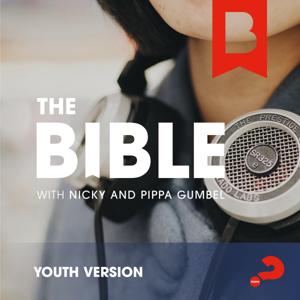
The Bible with Nicky and Pippa Gumbel Youth

The Bible with Nicky and Pippa Gumbel Youth

By Nicky and Pippa GumbelReligion & SpiritualityChristianity
Download on the App Store

The Bible with Nicky and Pippa Gumbel Youth episodes

  • Day 71: Be Confident About Your Future
    ['What does the future hold in store for you?\nFuturologists predict what will happen in the future. For example, it has been predicted that some babies born today will live to the age of 150. Some of their predictions may come true. Others may not.\n\n\nIn 1962 Decca Recording Company rejected the Beatles. They said, ‘We don’t like their sound, and guitar music is on the way out.’\n\n\nIn 1977 Ken Olson, Chairman of Digital Equipment Co., said, ‘There is no reason anyone would want a computer in their home.’\n\n\nThere are certain things about the future that we don’t know and that we are not supposed to know. However, there are other things that you can know about the future and that make a real difference to your life now. Today we see three reasons why, if you put your trust in the Lord, you can be confident about your future.', None]
    44 min
  • Day 71: Be Confident About Your Future
    What does the future hold in store for you?
    Futurologists predict what will happen in the future. For example, it has been predicted that some babies born today will live to the age of 150. Some of their predictions may come true. Others may not.
    In 1962 Decca Recording Company rejected the Beatles. They said, ‘We don’t like their sound, and guitar music is on the way out.’
    In 1977 Ken Olson, Chairman of Digital Equipment Co., said, ‘There is no reason anyone would want a computer in their home.’
    There are certain things about the future that we don’t know and that we are not supposed to know. However, there are other things that you can know about the future and that makes a real difference to your life now. Today we see three reasons why, if you put your trust in the Lord, you can be confident about your future.
    14 min
  • Day 70: Total Forgiveness
    ['Bishop Sandy Millar speaks of a time when he was walking along the beach and he noticed how the sand had been churned up by the footprints of those who had gone before him. The next morning the footprints were all wiped away by the sea. He sensed Jesus saying to him, ‘That is a picture of forgiveness.’\nOr to use another analogy, forgiveness from Jesus Christ is like deleting the file of all the bad stuff in our lives.\nForgiveness is never easy. We all know how hard it is to forgive others. However, we often assume that forgiveness from God is almost automatic. On her deathbed, the Empress Catherine the Great of Russia (1729–1796), said, ‘I shall be an autocrat: that’s my trade. The good Lord will forgive me: that’s his.’\nIn the passages for today we see the very high cost and huge blessing of God’s forgiveness. As P.T. Forsyth (1848–1921) pointed out, first, you have to know the ‘despair of guilt’. Then you can appreciate ‘the breathless wonder of forgiveness’.', None]
    13 min
  • Day 70: Total Forgiveness
    Bishop Sandy Millar speaks of a time when he was walking along the beach and he noticed how the sand had been churned up by the footprints of those who had gone before him. The next morning the footprints were all wiped away by the sea. He sensed Jesus saying to him, ‘That is a picture of forgiveness.’
    Or to use another analogy, forgiveness from Jesus Christ is like deleting the file of all the bad stuff in our lives.
    Forgiveness is never easy. We all know how hard it is to forgive others. However, we often assume that forgiveness from God is almost automatic. On her deathbed, the Empress Catherine the Great of Russia (1729–1796), said, ‘I shall be an autocrat: that’s my trade. The good Lord will forgive me: that’s his.’
    In the passages for today we see the very high cost and huge blessing of God’s forgiveness. As P.T. Forsyth (1848–1921) pointed out, first, you have to know the ‘despair of guilt’. Then you can appreciate ‘the breathless wonder of forgiveness’.
    14 min
  • Day 69: Crucified
    ['In the days of slavery in the United States, southern slaves were living under brutal conditions. They composed some deeply moving songs with haunting melodies, rich with emotion. These ‘spirituals’ were songs of hope and anticipation. They were the soul-cry of the slave longing for freedom.\nThey embraced Jesus as their Saviour and Lord and, in the midst of almost unbearable suffering, they experienced his grace, peace and hope for the future. From this relationship they were able to sing:\n            Were you there when they crucified my Lord?\nIn the New Testament passage for today, we see the background to the extraordinary claim of the New Testament that the one ‘they crucified’ is in fact my Lord. God is described in the Old Testament as ‘The Lord’.\nThe original Hebrew word for ‘Lord’ (YHWH) had no vowels and was not vocalised. It was considered too sacred to pronounce. For that reason, when vowels were added to the original Hebrew texts they weren’t added to ‘the name’ (YHWH). There has been much debate in modern times as to what vowels should be used – it used to be thought it should be ‘Jehovah’, but most scholars now think ‘Yahweh’ is more accurate.\nIn the Greek translation of the Old Testament, the Septuagint, this sacred name (YHWH) is translated Kyrios (Lord). It really is quite extraordinary, therefore, that the New Testament writers (who were Jewish monotheists) made this fundamental Christian affirmation that ‘Jesus is Lord’ (Kyrios) (Romans 10:9; 2 Corinthians 4:5; Acts 2:36) and that our Lord has been crucified for us.', None]
    13 min
  • Day 69: Crucified
    In the days of slavery in the United States, southern slaves were living under brutal conditions. They composed some deeply moving songs with haunting melodies, rich with emotion. These ‘spirituals’ were songs of hope and anticipation. They were the soul-cry of the slave longing for freedom.
    They embraced Jesus as their Saviour and Lord and, in the midst of almost unbearable suffering, they experienced his grace, peace and hope for the future. From this relationship they were able to sing:
    Were you there when they crucified my Lord?
    In the New Testament passage for today, we see the background to the extraordinary claim of the New Testament that the one ‘they crucified’ is in fact my Lord. God is described in the Old Testament as ‘The Lord’.
    The original Hebrew word for ‘Lord’ (YHWH) had no vowels and was not vocalised. It was considered too sacred to pronounce. For that reason, when vowels were added to the original Hebrew texts they weren’t added to ‘the name’ (YHWH). There has been much debate in modern times as to what vowels should be used – it used to be thought it should be ‘Jehovah’, but most scholars now think ‘Yahweh’ is more accurate.
    In the Greek translation of the Old Testament, the Septuagint, this sacred name (YHWH) is translated Kyrios (Lord). It really is quite extraordinary, therefore, that the New Testament writers (who were Jewish monotheists) made this fundamental Christian affirmation that ‘Jesus is Lord’ (Kyrios) (Romans 10:9; 2 Corinthians 4:5; Acts 2:36) and that our Lord has been crucified for us.

    14 min
  • Day 68: What’s in Your Heart?
    ['The Nobel Prize winner and most important Russian literary artist of the second half of the twentieth century, Aleksandr Solzhenitsyn (1918–2008), who was imprisoned for eight years for criticising Stalin, wrote, ‘The line separating good and evil passes, not through states, nor through classes, nor between political parties... but right through every human heart – and through all human hearts.’\nWe are all created in the image of God. Human beings are capable of acts of great love, courage and heroism. Yet, not one of us (apart from Jesus) is without sin. Do you know what’s in your heart?', None]
    13 min
  • Day 68: What’s in Your Heart?
    The Nobel Prize winner and most important Russian literary artist of the second half of the twentieth century, Aleksandr Solzhenitsyn (1918–2008), who was imprisoned for eight years for criticising Stalin, wrote, ‘The line separating good and evil passes, not through states, nor through classes, nor between political parties... but right through every human heart – and through all human hearts.’
    We are all created in the image of God. Human beings are capable of acts of great love, courage and heroism. Yet, not one of us (apart from Jesus) is without sin. Do you know what’s in your heart?
    14 min
  • Day 67: ‘… BUT’
    ['During one of the severe potato famines in Ireland, a number of families wrote letters to their landlord saying they had absolutely no money at all to pay their rent and begged to be let off all their debts. The Irish landlord was Canon Andrew Robert Fausset, born near Enniskillen, County Fermanagh, Ireland, in 1821.\nCanon Fausset wrote back to his tenants. He said it was quite impossible to let them off their debts. It would set a bad precedent. They had to pay every single penny.\n‘But,’ he wrote, ‘I enclose something that might help you.’ In contrast to so many of the other landlords at the time, he sent a cheque for a very large sum of money – which far more than covered all their debts.\nTheir hearts must have leapt with joy when they saw the word ‘but’. ‘But’ is a powerful word when facing trouble, tests and temptations.', None]
    12 min
  • Day 67: '... BUT'
    During one of the severe potato famines in Ireland, a number of families wrote letters to their landlord saying they had absolutely no money at all to pay their rent and begged to be let off all their debts. The Irish landlord was Canon Andrew Robert Fausset, born near Enniskillen, County Fermanagh, Ireland, in 1821.
    Canon Fausset wrote back to his tenants. He said it was quite impossible to let them off their debts. It would set a bad precedent. They had to pay every single penny.
    ‘But,’ he wrote, ‘I enclose something that might help you.’ In contrast to so many of the other landlords at the time, he sent a cheque for a very large sum of money – which far more than covered all their debts.
    Their hearts must have leapt with joy when they saw the word ‘but’. ‘But’ is a powerful word when facing trouble, tests and temptations.
    14 min

About The Bible with Nicky and Pippa Gumbel Youth

From the publisher's feed

The daily Bible reading devotion for young people.

More shows like The Bible with Nicky and Pippa Gumbel Youth

The Joe Rogan Experience by Joe Rogan

The Joe Rogan Experience

227,498 Listeners

BibleProject by BibleProject Podcast

BibleProject

19,473 Listeners

The Bible with Nicky and Pippa Gumbel Classic by Nicky and Pippa Gumbel

The Bible with Nicky and Pippa Gumbel Classic

87 Listeners

The Max Lucado Encouraging Word Podcast by AccessMore

The Max Lucado Encouraging Word Podcast

97 Listeners

The Bible with Nicky and Pippa Gumbel Express by Nicky and Pippa Gumbel

The Bible with Nicky and Pippa Gumbel Express

18 Listeners