
Sign up to save your podcasts
Or

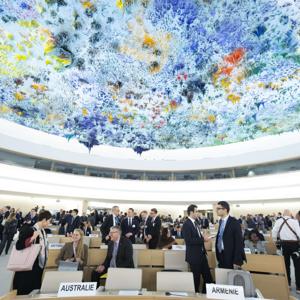


The UN Brief interviewed Brazilian economist Paulo Nogueira Batista Jr., to speak about his time as Executive Director at the International Monetary Fund and as the Vice President at the New Development Bank, launched by five emerging economies, the BRICS. We touched upon the architecture of international finance for development, its shortcomings and its promises.
Support the show
Geneva, 6 October 2020 — Craig Newmark is backing media organizations that are committed to public interest journalism. News organizations that support and elevate democratic ideals.
Combating misinformation, analyzing how websites deploy trackers in visitors’ devices, fighting fake news, are some of the issues he is addressing.
What moves him? What are the challenges ahead for the news media nonprofits that he funded?
What is next? What areas will he be funding?
The UN Brief interviewed Mr. Newmark to find out more about his philanthropic endeavours.
Support good journalism.
Fact-checked.
Credible sources.
Subscribe to The UN Brief.
Dear Subscribers,
I am Maya Plentz, the Founder and Editor-in-Chief of The UN Brief. We cover the United Nations, the UN Human Rights Council, the WTO, and all specialized agencies in the UN system in Geneva, New York, Vienna, Nairobi and its regional offices around the world.
We cover the EU and other multilateral organizations that are convening private sector and governments to shape regulatory frameworks that support the rapid technological transformation of the various sectors of the global economy.
We interview technology executives and venture capital investors who are keen on financing the UN Sustainable Development Goals. They support democratic institutions and the ethical use of emerging technologies around the globe. These are leaders and tech companies that are harnessing technology to reduce economic inequalities. They create prosperity around the globe by integrating the most vulnerable citizens in the digital economy, be it in a developed or developing economy.
Support independent journalism by subscribing to the paid version of The UN Brief.
We also offer select sponsorship opportunities in our newsletters, podcast, and videos.
Please contact us for rates, placements, and editorial calendars.
Support the show
Subscribe to our newsletter https://theunbrief.substack.com/
Subscriber-only episode
The UN Brief interviewed John Frank to discuss the opening of the UN Affairs office, both in Geneva and New York (they are working from home since March 2020), they plan to open physical offices near the UN, sanitary guidelines permitting, this Summer.
John Frank became Microsoft’s Vice President, United Nations Affairs on the 1st of March 2020, to focus on deepening Microsoft’s engagements on issues related to the environment, skills training, human rights, and security.
Previously he was Vice President, EU Affairs, based in Brussels, and Vice President, Deputy General Counsel, and Chief of Staff for Microsoft President and Chief Legal Officer Brad Smith, at Microsoft’s headquarters, in Redmond, Washington.
Frank also led Microsoft’s office in Paris, overseeing legal and regulatory issues for the launch of the Microsoft Network (MSN) in Europe. From 1996 to 2002, he led Microsoft’s Legal and Corporate Affairs group for Europe, Middle East and Africa, focusing on privacy, security, consumer protection, and antitrust matters.
Before joining Microsoft, he practiced law in San Francisco with Skadden, Arps, Slate, Meagher & Flom. Frank received an AB degree from Princeton, and a JD from Columbia Law School.
Subscribe to our newsletter https://theunbrief.substack.com/
Subscriber-only episode
Making Sure Victims of Sexual Assault Are Heard
Victims and survivors of predatory sexual behavior, sexual harassment and sexual assault, have a place to report their sexual assault cases and how they were treated when they went to tell the events. If they are ready to do so. It is well established in the medical literature that every time a victim tells their story they are re-traumatised. Particularly if they first encountered a law enforcement officer or medical provider that dismissed their accounts of the event.
An advocate and activist for women’s reproductive rights based in New York, Alison Turkos, created a website to support people who have been sexually assaulted and want to report how they were heard by authorities and medical personnel in the aftermath of the traumatic event.
In the first day that the website went live more that 150 people signed and responded to the survey. She now has 500 plus people who have shared the stories of how they have not received proper attention of law enforcement, authorities, and the poor treatment received in medical settings when they went to report their sexual assault.
“After publicly sharing my sexual assault story in May 2018 I found immense comfort in other survivors' stories, a sense of camaraderie. As I’ve connected with survivors and supported them as they’ve shared their stories, I’ve realized how little, if any support, there is for victims and survivors of sexual violence who speak publicly.” Alison Turkos
With the data gathered she will prepare a report to present to legislators in Congress, and develop educational tools for victims to help them tell their stories to the press, and for the institutions that work with survivors and victims to learn how to better listen to them. Click here to access her website and the survey.
The UN Brief interviewed Turkos to find out more about her initiative, after reading her interview with Jessica Valenti.
2021 will see the start of the UN Decade on Ecosystem Restoration or, simply, the UN Decade. With a catchy hashtag - #GenerationRestoration - the UN Decade on Ecosystem Restoration is being co-led by the United Nations Environment Program (UNEP) and the Food and Agriculture Organisation (FAO), and will officially launch on World Environment Day, on the 5th of June, hosted by the government of Pakistan, and with the participation of a number of civil society actors, private sector actors, and governments around the globe.
Share The UN Brief
The UN Brief interviewed Tim Christophersen, Head of the Nature for Climate Branch, and the coordinator at UNEP for the UN Decade on Ecosystem Restoration.
What is the UN Decade on Ecosystem Restoration, how and when it was decided that was an important issue to address at the global level, and which UNEP country-member was behind its strategic vision? What is the Bonn Challenge?
What are the resources required for financing ecosystems restoration, what programs are already in place? How can countries calculate GDP including natural resources?
What is the role of the private sector? We discussed these and other questions.
Support the showSubscriber-only episode
We interviewed Matthew Baldwin, Deputy Director-General of the European Commission Directorate-General for Transport and Mobility. He was appointed European Coordinator for Road Safety and Sustainable Mobility in October 2018.
We spoke about what is ahead in terms of regulation for the automotive sector, autonomous driving vehicles, how sexist bias impacted the design of cars’ airbags, how sustainable goals of cleaner air when rebuilding the economy are top of the mind in the European Green Deal, and how the European Commission President Ursula von der Leyen has made a priority of delivering economic growth and jobs by building the infrastructure that a green mobility requires.
*The interview was made via Zoom on the 19th October 2020.
Dear Subscribers,
I am Maya Plentz, the Founder and Editor-in-Chief of The UN Brief. We cover the United Nations, the UN Human Rights Council, the WTO, and all specialized agencies in the UN system in Geneva, New York, Vienna, Nairobi and its regional offices around the world.
We cover the EU and other multilateral organizations that are bringing together the private sector and governments to shape regulatory frameworks that support the rapid technological transformation of the various sectors of the global economy.
We interview technology executives and venture capital investors who are keen on financing the UN Sustainable Development Goals. They support democratic institutions and the ethical use of emerging technologies around the globe. These are leaders and tech companies that are harnessing technology to reduce economic inequalities. They create prosperity around the globe by integrating the most vulnerable citizens in the digital economy, be it in a developed or developing economy.
Support independent journalism by subscribing to the paid version of The UN Brief.
We also offer select sponsorship opportunities in our newsletters, podcast, and videos.
Please contact us via our website for rates, placements, and editorial calendars.
Subscribe to our newsletter https://theunbrief.substack.com/
Subscriber-only episode
Interview recorded via Zoom in February 2021.
The UN Brief interviewed Mr. Gilmour to speak about his career at the UN, that spanned 30 years under the leadership of five UN Secretary-Generals, the challenges faced by the UN and human rights activists. We also spoke about the positive role of new technologies in revealing gross violations and gathering support for activists with the click of a button, and its darker side: how social media platforms fuel major human rights violations by amplifying hate speech, xenophobia, and allowing extremists to organize.
Subscribe to our newsletter https://theunbrief.substack.com/
Subscriber-only episode
Dr. John Krakauer is the John C. Malone Professor, and Professor of Neurology, Neuroscience, Physical Medicine and Rehabilitation, at Johns Hopkins University School of Medicine, and a visiting professor at The Santa Fe Institute.
His main research interest areas are experimental and computational studies of motor control and motor learning in humans, tracking long-term motor skill learning and its relation to higher cognitive processes such as decision-making, prediction of motor recovery after stroke, mechanisms of spontaneous motor recovery after stroke in humans and in mouse models, and new neuro-rehabilitation approaches for patients in the first 3 months after stroke.
He is also the co-founder of the video gaming company Max and Haley, an immersive video game “predicated on the idea that animal movement based on real physics is highly pleasurable and that this pleasure is hugely heightened when the animal movement is under the control of our own movements”.
“A simulated dolphin and other cetaceans developed by KATA has led to a therapeutic game, interfaced with an FDA-approved 3D exoskeletal robot, which is being used in an ongoing multi-site rehabilitation trial for early stroke recovery.“
Check his previous lectures where he speaks about the interaction of the human brain with the world, movement intelligence, and the mind-body false dichotomies.
John Krakauer’s book, “Broken Movement: The Neurobiology of Motor Recovery after Stroke” has been published by the MIT Press.
Subscribe to our newsletter https://theunbrief.substack.com/
From the publisher's feed
Maya Plentz is the founder and chief editor of THE BRIEF, a weekly newsletter with exclusive interviews and analysis focusing on tech policy, and the global digital economy. She has over two…