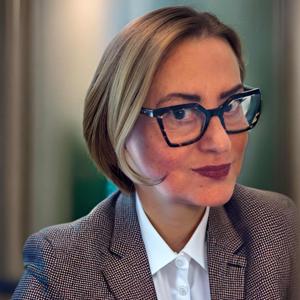
So far, in the UN website, only his credentials are posted, the other contenders are Michelle Bachelet, former president of Chile and former head of the UN Human Rights agency, and Rebeca Grynspan, the current head of UNCTAD.
How do they compare?
Rafael Mariano Grossi
Rafael Mariano Grossi is an internationally recognised leader of multilateral organisations, with more than four decades of senior-level experience in international governance, diplomacy, and institutional management. He currently serves as Director General of the International Atomic Energy Agency (IAEA), the United Nations body responsible for preventing the proliferation of nuclear weapons while advancing the peaceful uses of nuclear science and technology in support of international peace, security, and sustainable development.
Since his unanimous appointment as Director General in 2019, and his re-election in 2024, Mr. Grossi has led the IAEA through a period of unprecedented geopolitical tension and institutional demand. Under his leadership, the Agency has strengthened its credibility as an impartial, technically authoritative, and operationally effective international organisation, capable of delivering results even in highly polarised environments. He has consistently exercised his good offices to facilitate dialogue and reduce risk in situations of international tension across Europe, the Middle East, and Asia, reinforcing the IAEA’s role as a trusted broker within the multilateral system.
Mr. Grossi’s tenure has been marked by a strong emphasis on institutional integrity, evidence-based decision-making, and consensus-building among Member States. He has played a central role in sustaining nuclear safeguards and transparency under increasingly challenging conditions, at a time of mounting pressure on the global non-proliferation regime. His leadership style combines diplomatic judgement with operational clarity, enabling the Agency to remain effective while preserving its neutrality and technical authority.
Beyond peace and security, Mr. Grossi has positioned the IAEA as a key development-oriented organisation within the UN system. He has spearheaded the launch of flagship initiatives that demonstrate how multilateral institutions can deliver concrete impact aligned with national priorities. These include Atoms4Food to support food security and agriculture; Rays of Hope and ZODIAC to expand cancer care and strengthen preparedness against zoonotic diseases; NUTEC Plastics to address plastic pollution; and Atoms for Net Zero to support clean energy transitions. Together, these initiatives have reinforced the Agency’s role at the intersection of science, development, and public policy.
A defining feature of Mr. Grossi’s leadership has been his ability to modernise and expand an international organisation’s reach without increasing its regular budget. By strengthening partnerships and forging innovative cooperation with International Financial Institutions—including landmark agreements with the World Bank and regional development banks—he has diversified funding sources and mobilised additional resources for peaceful nuclear applications. This approach reflects a disciplined commitment to financial prudence, efficiency, and results-driven multilateralism.
Mr. Grossi has also demonstrated sustained leadership in institutional culture and talent management. Under his direction, the IAEA achieved full gender parity at the professional level, increasing the representation of women from 29 per cent to 50 per cent within five years. He established flagship programmes to strengthen women’s participation in science and international organisations, including the Marie Skłodowska-Curie Fellowship Programme and the Lise Meitner Programme. His efforts in this area have been internationally recognised, including through the 2025 Changemaker Award from Women in Nuclear. He is an International Gender Champion.
Prior to leading the IAEA, Mr. Grossi held senior leadership roles across key international organisations. He served as Chief of Cabinet at the Organisation for the Prohibition of Chemical Weapons (OPCW), Assistant Director General for Policy and Chief of Cabinet at the IAEA, and Ambassador of Argentina to Austria, Slovenia and Slovakia, as well as Representative to Vienna-based international organisations, including UNODC, UNIDO and the CTBTO. He also presided over major multilateral processes, including the Nuclear Suppliers Group and the Diplomatic Conference of the Convention on Nuclear Safety, where he secured unanimous adoption of the Vienna Declaration on Nuclear Safety.
Mr. Grossi holds a PhD and a Master’s degree in International Relations, International History and Politics from the Graduate Institute of International and Development Studies in Geneva. He speaks seven languages and has received numerous international honours in recognition of his contributions to multilateral cooperation, international peace, nuclear safety, and institutional leadership.
Throughout his career, Rafael Mariano Grossi has demonstrated the capacity to lead complex international organisations with credibility, independence, and effectiveness—strengthening multilateral institutions so they can deliver tangible results in service of peace, security, and sustainable development.
PS.: Video excerpt is from his statement, a few months ago, on his visit to Iran to discuss issues of great political sensitivity with Iranian government officials.
So far, in the UN website, only his credentials are posted, the other contenders are Michelle Bachelet, former president of Chile and former head of the UN Human Rights agency, and Rebeca Grynspan, the current head of UNCTAD.
How do they compare?
Here is an analysis of Rafael Mariano Grossi’s vision statement in comparison with other known (publicly reported) priorities of significant 2026 UN Secretary-General contenders such as Michelle Bachelet and Rebeca Grynspan.
Context: Under the 2026 UN Secretary-General selection process, candidates are expected to publish a vision statement outlining how they would lead the United Nations; this is a requirement reflected in recent reforms to the selection process. (United Nations)
I. Core Themes in Grossi’s Vision Statement
Grossi foregrounds renewal, results, and pragmatism:
1. UN at an Inflection Point / Renewal
* He frames the UN as relevant but ineffective without reform, stressing operational credibility over rhetoric.
* Calls for a results-oriented, impartial, fact-based UN, not mere declarations.
* Emphasises UN80 initiatives as a foundation for transformation. (United Nations)
2. Peace and Security
* Grossi places effective action for peace and security as the top priority, urging early, evidence-based diplomatic engagement and impartial expertise.
* He especially underscores the Secretary-General’s role in coordinating with the Security Council and Member States with clarity and prudence. (United Nations)
3. Development through Partnerships and Realism
* Recognises the SDGs are off-track and advocates for grounded, sectoral approaches, measurable progress, and partnerships with civil society, private sector, and science communities.
* Encourages stronger engagement with international financial institutions for coherent development support.
* Prioritises tangible access to basic public goods (health, food, water, energy, education) rather than abstract goals. (United Nations)
4. Human Rights and Dignity
* Frames human rights as foundational to peace and development, insisting on effective mechanisms that go beyond declarations, with a focus on women’s rights, youth participation, and civic space. (United Nations)
5. Institutional Reform and Management
* Emphasises performance-driven renewal, eliminating duplication, improved coordination, digitization, and aligning structure with Member State priorities.
* Calls for rightsizing the organization based on mission and resources, not bureaucracy. (United Nations)
6. Principled, Pragmatic Multilateralism
* Grossi’s overarching narrative is that the UN must be credible, impartial, engaged, and effective, with leadership that listens, acts decisively, and delivers results grounded in core Charter values. (United Nations)
Summary of Grossi’s Vision Tone & PositioningHis statement is administratively and operationally focused. It prioritises pragmatism, measurable outcomes, institutional coherence, peace and security, development effectiveness, and institutional credibility grounded in fact-based action rather than ideological framing. (United Nations)
II. Comparisons with Other Major Contenders (Publicly Reported Positions)
At present, full published vision statements for other declared or nominated candidates are not widely available online (unlike Grossi’s). However, based on publicly reported speeches, campaign coverage, and reported priorities, we can highlight key contrasts and emphases:
1. Michelle Bachelet (Chile)
While a formal vision statement text is not yet publicly available, Chile’s nomination and Bachelet’s public remarks highlight the following priorities:
A. Gender and Representation
* Her campaign is strongly associated with breaking the 80-year absence of a woman Secretary-General, underscoring gender equality as integral to legitimacy and leadership. (UPI)
B. Human Rights and Inclusive Multilateralism
* Her background as UN High Commissioner for Human Rights implies a leadership focus on human rights, inclusion, equality, and democratic norms. This theme pervades her public presence. (Idea)
C. Values-Driven Leadership
* Bachelet’s narrative is likely to emphasise values, inclusivity, and diplomacy that bridges North–South and East–West divides — building collective solutions. (PassBlue)
Contrast with Grossi
* Grossi is more institutional and operational in tone, focusing on efficiency and measurable outcomes.
* Bachelet (based on public campaign framing) is associated with normative leadership, equality, and human rights as central pillars of multilateral effectiveness.
2. Rebeca Grynspan (Costa Rica)
Although no full vision statement has been publicly published, statements and reporting on her campaign projections suggest:
A. Restoring Trust & Multilateral Credibility
* Grynspan has emphasised restoring confidence in the UN’s role amid criticism and geopolitical pressures. (Reuters)
B. Inclusivity and Equality
* She frames her potential leadership as breaking systemic barriers and ensuring the UN reflects global diversity and non-discrimination. (Arab News)
C. Development, Economics & Reform
* As UNCTAD Secretary-General and a development economist, her focus is likely to include economic development, finance for development, and equitable globalization. Her campaign is associated with rebuilding trust through both institutional reform and socio-economic equity. (Modern Diplomacy)
Contrast with Grossi
* Grossi focuses on results, operational coherence, and institutional renewal with a broad agenda.
* Grynspan’s reported framing highlights trust, inclusion, equality, and deepening the UN’s relevance in socio-economic realms — likely more explicitly oriented toward systemic transformation, equity, and global South inclusion.
Key Takeaways
Strengths of Grossi’s Statement
* Operational clarity with strong emphasis on measurable impact and institutional performance. (United Nations)
* Integration of peace, development, rights, and reform in a single agenda. (United Nations)
* Appeals to Member States seeking a UN that works, not just a UN that inspires. (United Nations)
Comparative Distinctions
* Bachelet’s framing: Greater emphasis on values, gender equality, and inclusive leadership — gaining traction in the movement for the first female SG. (UPI)
* Grynspan’s approach: Likely more development and equity oriented, focusing on trust restoration, economic perspectives, and equity. (Reuters)
Strategic Implications
* Grossi’s statement is institutionally technocratic and anchored in performance, which may appeal to Member States prioritising reform, coherence, and measurable results.
* Competing visions signal diverse leadership pathways: values and equity (Bachelet & Grynspan) versus operational reform and institutional renewal (Grossi).
Mr. Grossi has also demonstrated sustained leadership in institutional culture and talent management. Under his direction, the IAEA achieved full gender parity at the professional level, increasing the representation of women from 29 per cent to 50 per cent within five years.
Comparative Assessment
Global South Support · Donor Confidence · Security Council Politics
1. Global South Support
Rafael Mariano Grossi
Strengths
* Grossi benefits from credible Global South legitimacy without being perceived as ideologically aligned to a single bloc. As an Argentine diplomat and long-serving head of a technical UN agency, he is seen as a Southern leader who operates comfortably across North–South divides.
* Under his leadership, the IAEA has delivered concrete development outcomes (food security, cancer care, energy transition, pollution) explicitly aligned with national priorities and national ownership, a key Global South demand.
* His emphasis on capacity-building, technology transfer, and IFI partnerships resonates with middle-income and developing countries seeking access to finance and technology rather than prescriptive conditionalities.
Constraints
* Some Global South states may view his strong association with nuclear governance as elite or technocratic, and less directly connected to traditional development narratives than UNDP/UNCTAD-style agendas.
Net assessmentGrossi is well positioned to secure broad, pragmatic Global South support, particularly among:
* middle-income countries,
* emerging economies,
* states prioritising energy security, food security, and technology access over ideological alignment.
Rebeca Grynspan
Strengths
* Grynspan enjoys deep political resonance with the Global South, particularly among developing countries and debt-vulnerable economies.
* As head of UNCTAD, she is strongly identified with development finance reform, debt relief, trade equity, and Global South voice.
* Her narrative aligns closely with South–South solidarity and long-standing demands for rebalancing global economic governance.
Constraints
* Her close identification with Global South advocacy can generate hesitation among some donor states, who may view her leadership as more redistributive or confrontational in economic debates.
Net assessmentGrynspan likely commands the strongest explicit Global South bloc support, especially among:
* G77 members,
* heavily indebted countries,
* states seeking structural reform of global economic governance.
Michelle Bachelet
Strengths
* Bachelet’s Global South appeal is grounded in moral authority, human rights credibility, and symbolic leadership, particularly in Latin America and among progressive coalitions.
* Her profile resonates with countries prioritising gender equality, social justice, and rights-based multilateralism.
Constraints
* Some Global South governments—particularly those sensitive to scrutiny on human rights—may be cautious or ambivalent, given her track record at OHCHR.
Net assessmentBachelet’s Global South support is politically differentiated: strong among progressive governments and civil society–aligned states, weaker among sovereignty-focused or rights-sensitive regimes.
2. Donor Confidence (OECD donors, IFIs, major contributors)
Rafael Mariano Grossi
Strengths
* Grossi has a demonstrated donor-confidence profile:
* expanded programmes without increasing the regular budget,
* mobilised non-traditional funding,
* forged landmark partnerships with the World Bank and regional development banks.
* His leadership signals fiscal discipline, performance management, and risk control, qualities prized by major contributors.
* His technocratic, evidence-based approach reduces fears of politicisation or mission drift.
Net assessmentGrossi is the strongest candidate from a donor-confidence perspective, especially among:
* OECD contributors,
* IFIs,
* states prioritising accountability, value-for-money, and institutional control.
Rebeca Grynspan
Strengths
* Grynspan is respected among development finance actors for her economic expertise and intellectual leadership.
* She is seen as a credible interlocutor on debt, trade, and development finance reform.
Constraints
* Some donors may be cautious about:
* potential pressure for increased redistribution,
* challenges to Bretton Woods orthodoxy,
* more confrontational North–South economic discourse.
Net assessmentGrynspan enjoys high intellectual credibility with donors, but less automatic confidence on budgetary restraint and institutional discipline than Grossi.
Michelle Bachelet
Strengths
* Bachelet retains strong support from donors committed to human rights, gender equality, and democratic values.
* Her leadership style signals normative consistency and reputational clarity.
Constraints
* Donor confidence may be uneven where governments prioritise:
* managerial reform,
* cost control,
* depoliticisation of UN operations.
Net assessmentBachelet’s donor appeal is values-driven rather than managerial, strong among some Western donors, weaker among those focused on institutional efficiency.
3. Security Council Politics
Rafael Mariano Grossi
Strengths
* Grossi’s career is uniquely aligned with Security Council dynamics:
* regular engagement with P5 members,
* experience operating under intense geopolitical scrutiny,
* trusted as an impartial, technical actor rather than a political provocateur.
* He does not advocate overt Security Council reform, instead emphasising cooperation, dialogue, and Charter-based engagement—an approach that reassures veto powers.
* His crisis diplomacy experience closely mirrors the SG’s quiet, preventive role.
Net assessmentGrossi is highly compatible with SC politics, particularly attractive to:
* P5 members seeking stability and predictability,
* states prioritising a low-risk SG appointment.
Rebeca Grynspan
Strengths
* Grynspan’s openness to discussing Security Council reform aligns with long-standing Global South demands.
Constraints
* This position introduces political risk in the SC context, where reform discussions are highly sensitive and veto-prone.
* Some permanent members may view her agenda as structurally disruptive.
Net assessmentGrynspan’s profile is politically stronger in the General Assembly than in the Security Council, potentially complicating consensus among P5 members.
Michelle Bachelet
Strengths
* Bachelet is widely respected personally by many SC members.
Constraints
* Her strong human rights record can be politically sensitive for certain permanent members.
* She may be perceived as more willing to speak publicly and normatively, which can generate friction in SC dynamics.
Net assessmentBachelet’s SC acceptability is uneven: respected, but potentially contentious in crises involving major powers.
Bottom Line
* Rafael Mariano Grossi emerges as the lowest-risk, highest-consensus candidate across Global South pragmatists, major donors, and the Security Council—positioned as a stabilising, delivery-focused Secretary-General.
* Rebeca Grynspan commands strong Global South legitimacy and reformist credibility but faces higher political friction with donors and the SC.
* Michelle Bachelet offers powerful normative leadership and symbolic legitimacy but presents greater political sensitivity in SC dynamics and operational reform debates.
This is a public episode. If you'd like to discuss this with other subscribers or get access to bonus episodes, visit theunbrief.substack.com/subscribe