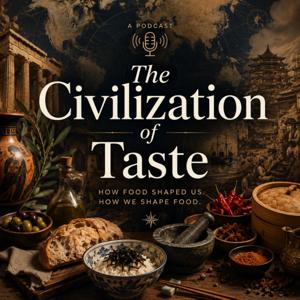
What if the secret to conquering the world was hidden in a piece of dried milk?
In the 13th century, while European monks trembled at the arrival of "demons from Tartarus," a nomadic civilization was quietly perfecting the art of survival on the harsh Mongolian steppes,. They didn’t have permanent cities or granaries, yet they managed to build the largest contiguous empire in human history, spanning one-sixth of the Earth's landmass,.
In this episode of "The Civilization of Taste," we explore the "Dairy Architecture" that fueled the Mongol conquest. We dive into the science of Airag (fermented mare's milk) and Aarul (dried curd)—innovations that transformed perishable milk into a "mobile storehouse" that could last for years,,.
In this episode, you will discover:
- The Chemistry of Survival: How fermentation and dehydration allowed Mongol warriors to move faster than any supply line,.
- The Mobile Economy: Why the Mongols viewed their five types of livestock as "walking fields" rather than mere food.
- The Spice Road Paradox: Why the masters of the Silk Road chose to ignore the world’s most expensive spices in favor of meat and salt.
- The Speed of Conquest: How a diet that required no cooking gave the Mongol cavalry a terrifying advantage in mobility.
Join us as we trace the journey from a simple drop of milk under a Ger roof to the unification of the Pacific and the Black Sea. It wasn't just arrows and horses that changed history—it was the food on their saddles.
Keywords for SEO
Mongol Empire, Genghis Khan, Food History, Airag, Aarul, Nomad Diet, Silk Road, Military Logistics, Medieval History, The Civilization of Taste, Dairy Technology, Tartarus, Steppe Civilization, Ancient Superfoods.