The Connected Commerce Brief

The Connected Commerce Brief

Download on the App Store

The Connected Commerce Brief episodes

  • Why Connected Commerce Breaks Down, and How to Fix It with Marissa Jarratt
    What if the gap between your digital promises and in-store reality is costing you customers?

    In this episode of The Connected Commerce Brief, host Paul Frampton-Calero sits down with Marissa Jarratt, Senior Advisor and Executive in Waiting in the Consumer Practice Area at BCG, to explore why connected commerce often breaks down long before technology enters the picture. They unpack how organizational silos, conflicting metrics, and outdated structures can create friction between digital promises and in-store experiences, and what leaders can do to bridge those gaps. Marissa shares practical ways to turn data into action, rethink brand-retailer partnerships, and measure what truly matters, from customer lifetime value and incrementality to learning velocity. 

    The conversation also examines the untapped potential of physical stores as media and experience assets, the risks of overly automated personalization, and the role of human judgment in creating meaningful customer experiences. Ultimately, the episode offers a roadmap for building organizations that use data to accelerate creativity, learning, and connected commerce. 

    What You Will Learn:

    • How to diagnose the real friction in your commerce ecosystem
    • Why convenience is now table stakes, not differentiation
    • The three-part framework for turning data into action
    • How to reframe brand-retailer partnerships around shared metrics
    • The organizational intelligence problem with AI-driven personalization
    • Why your org chart is sabotaging your strategy
    • How the physical store becomes your most defensible media asset


    Marissa Jarratt
    is a board director, strategic advisor, and former Fortune 50 C-suite executive with more than two decades of experience driving growth across marketing, technology, sustainability, and commerce. As Founder and Principal Advisor of Jarranova, she advises CEOs, boards, founders, and private equity-backed companies on transformation and strategic growth. Previously, she served as EVP and Chief Marketing & Sustainability Officer at 7-Eleven, leading marketing, loyalty, retail media, communications, and sustainability. Marissa is now an Advisor in Boston Consulting Group’s Executive-in-Waiting Program and serves on several boards.


    Episode Highlights:

    • [03:15] Fix Commerce Friction by Aligning Teams, Not Tech

    Marissa explains that connected commerce failures usually come from organizational silos, not technology. Problems emerge when digital promises collide with in-store reality because media, loyalty, merchandising, and operations optimize against different goals. The solution is shared accountability, starting with common metrics and involving operations early. At 7-Eleven, this alignment helped transform its store network into a powerful media asset.


    • [08:45] Turn Data From Insight Into Real-Time Commercial Action

    Marissa describes how organizations become “data-rich, insight-poor” and ultimately fail to act. Dashboards and measurements are plentiful, but converting signals into customer hypotheses and commercial action remains difficult. She argues for shifting from measurement to activation, connecting data, technology, marketing, governance, and vendors. The goal is simple: make data infrastructure a catalyst for immediate revenue-driving decisions.


    • [13:20] Make Dullness Riskier Than Thoughtful Experimentation

    Marissa argues that organizations often reward safe, forgettable work because failure carries greater consequences than being boring. Teams consequently avoid creative risks and default to vanilla experiences. She advocates building cultures where experimentation is protected, learning is rewarded, and teams are challenged when they produce nothing distinctive. By increasing learning velocity and making thoughtful risk-taking survivable, organizations can create meaningful differentiation.


    • [00:19:40] Put Human Judgment at the Heart of AI Personalization

    Marissa warns that AI-driven personalization can quickly become intrusive when teams mistake available data for appropriate action. AI may identify customer signals, but humans must determine whether those signals make contextual sense. She advocates combining sophisticated technology with restraint and judgment, recognizing that thoughtful decisions about what not to use can strengthen trust and create more relevant, respectful customer experiences.


    • [27:05] Rethink ROAS: Measure Value, Growth, and Learning Speed

    Marissa challenges leaders to look beyond ROAS, which can obscure cannibalization and whether marketing genuinely grows the business. She recommends three broader measures: customer lifetime value, incrementality, and learning velocity. Together, they reveal whether customers become more valuable, investments create genuinely incremental growth, and organizations learn faster. Aligning these metrics across leadership can replace siloed optimization with integrated decision-making.


    • [35:50] Let Data Inspire Creativity, Not Replace Creative Courage

    Marissa believes data should reveal emotional opportunities and sharpen creative briefs, not dictate the creative idea itself. At 7-Eleven, audience insights helped identify an opportunity, but bold human creativity brought the “Take It to Eleven” campaign to life. As AI makes average creativity increasingly abundant, she argues that emotional resonance, cultural truth, surprise, and human originality will become even more valuable.


    Episode Resources:

    • Marissa Jarratt on LinkedIn
    • BCG Website
    • Paul Frampton-Calero on LinkedIn
    • Goodway Group Website 
    • The Connected Commerce Brief on Apple Podcasts
    • The Connected Commerce Brief on Spotify
    • The Connected Commerce Brief on YouTube


    The Connected Commerce Brief is handcrafted by our friends over at: fame.so 

    41 min
  • How to Turn Your Marketing Silos into a Connected and Bespoke Customer Journey with Ashley Travis
    What if the silos destroying your marketing strategy could actually become your greatest competitive advantage?

    In this episode of The Connected Commerce Brief, host Paul Frampton-Calero speaks with Ashley Travis, Head of Growth Marketing at Pizza Hut, about breaking down organizational silos to create more connected customer experiences. Ashley explores how cross-functional curiosity can bring retail media, loyalty, CRM, brand, digital, and in-store teams together around a shared customer journey. She also explains how low-risk experimentation can expose data and infrastructure gaps, why strategy must come before structure and technology, and how conversational analytics can help marketers move beyond static dashboards. 

    The conversation also examines the leadership courage needed to drive transformation in legacy organizations, without making innovation feel risky. Ashley also shares why curiosity and building diverse skills across industries can become a powerful career accelerator. 

    What You Will Learn:

    • Why operationalizing curiosity across disciplines is essential
    • How to use low-risk experimentation to uncover foundational data problems
    • The Strategy-Structure-Culture framework for organizational transformation.
    • How to transition from static dashboards to conversational analytics
    • Why courage and contingency planning unlock innovation in risk-averse environments
    • The power of curiosity as a career accelerator


    Ashley Travis
    is the Head of Growth Marketing at Pizza Hut and a global marketing leader focused on building modern, revenue-driving organizations that connect brand, performance, and customer experience. She has led large-scale marketing transformations, modernizing ways of working and aligning brand, media, CRM, digital, and in-store experiences across global brands including Starbucks, KFC, and Pizza Hut.  Her leadership approach combines authenticity, trust, and high performance, with a strong emphasis on developing talent and empowering teams. Ashley believes the best organizations deliver measurable growth while creating cultures where people can thrive, take ownership, and do meaningful work. 

    Episode Highlights:

    • [01:29] Turn Marketing Silos Into Connected Customer Journeys

    Ashley explains that silos fragment customer experiences when specialists focus only on their own disciplines. Leaders can bridge these gaps by creating cross-functional forums where teams learn how retail media, loyalty, CRM, brand, and data work together. Marketers don't need to execute outside their expertise, but they should understand adjacent functions. That broader perspective enables better collaboration, sharper targeting, and more personalized full-funnel customer journeys.


    • [03:37] Make Every Customer Touchpoint More Personal

    Ashley defines connected commerce as delivering relevant, data-driven experiences across every interaction, from advertising and social to digital, apps, stores, and recommendations. Achieving this requires overcoming fragmented technology, disconnected data, and changing consumer behavior. Leaders must modernize how they think about customer journeys and decision-making. Pizza Hut's shift from brick-and-mortar to digital-first demonstrates why organizations must evolve their systems and processes to stay relevant.


    • [07:04] Put Strategy Before Structure and Technology

    Ashley highlights a simple principle: establish the strategic vision first, build the organization around it, and only then introduce technology. Marketers often rush toward AI and other new tools without clarifying business outcomes, data foundations, or team capabilities. Pizza Hut's CRM and loyalty work followed the opposite approach. Defining the destination and building the right capabilities first allowed the team to move faster, scale effectively, and ensure technology supported strategy.


    • [08:27] Experiment Where the Risk Is Lowest

    Ashley recommends testing emerging capabilities, including AI-driven marketing, on lower-risk customer segments such as at-risk or lapsing customers. These experiments can expose disconnected systems, weak data pipelines, and quality issues without jeopardizing valuable customer relationships. Pizza Hut used this approach to turn experimentation into discovery, accelerating foundational improvements. Leaders can create more room for innovation by deliberately choosing environments where the potential learning is high, but the downside is limited.


    • [09:55] Replace Static Dashboards With Conversational Analytics

    Ashley argues that marketers should move beyond static dashboards and endless requests for custom reports. Conversational analytics can let teams ask business questions directly and uncover insights without waiting weeks for analysts. When properly governed, these tools democratize access to data while allowing analytics teams to focus on deeper interpretation and storytelling. Removing the gap between insight and action helps teams test ideas faster, collaborate better, and respond more quickly.


    • [10:44] Build Courage by Planning for What Could Go Wrong

    Ashley identifies fear as a major obstacle to transformation, particularly when leaders are attached to proven strategies. Moving forward requires recognizing the risk, finding a compelling reason to change, and building contingency plans that provide a path forward if an experiment fails. This combination of courage and prudence makes innovation more manageable. Leaders can pursue bold ideas with greater confidence when they know they have options if circumstances change.


    Episode Resources:

    • Ashley Travis on LinkedIn
    • Pizza Hut Website
    • Paul Frampton-Calero on LinkedIn
    • Goodway Group Website 
    • The Connected Commerce Brief on Apple Podcasts
    • The Connected Commerce Brief on Spotify
    • The Connected Commerce Brief on YouTube


    The Connected Commerce Brief is handcrafted by our friends over at: fame.so 
    18 min
  • Why Every Brand Must Think Like an Ecommerce Brand with Pat O'Toole, CMO at Unleashed Brands
    What if the key to scaling your business was treating it like an e-commerce operation, even if you're primarily brick-and-mortar?

    On this episode of The Connected Commerce Brief, recorded on the sidelines of Cannes Lions, host Paul Frampton-Calero sits down with Pat O'Toole, CMO of Unleashed Brands, to explore how connected commerce is reshaping modern businesses. Pat shares why every company must think like an e-commerce operator, regardless of its physical footprint, and how marketing leaders can build faster, more adaptable organizations. 

    The conversation also covers franchisee insights, digital transformation, AI-driven personalization, and balancing innovation with operational discipline. From creating meaningful customer experiences to strengthening relationships with CFOs and boards, Pat offers practical lessons on leading change while keeping people, data, and empathy at the center of business growth in today's marketplace. 

    What You Will Learn:

    • How to reframe your business as a hybrid commerce operator
    • Why understanding your franchisees' ground-level friction points beats boardroom assumptions
    • The CFO conversation every CMO should have
    • How to structure marketing teams for speed and flexibility
    • The 70-30 (or 60-20-20) framework for balancing performance with transformation
    • How to use AI to deliver genuine personalization at scale


    Pat O'Toole
    is the Chief Marketing Officer at Unleashed Brands, where he leads marketing, insights, analytics, CRM, and loyalty across a $1.2 billion youth enrichment platform spanning seven brands. Over a 20-year career, he has led ten billion-dollar brands at companies including PepsiCo and Burger King, driving transformative growth through consumer-centric strategy and innovation. A seven-time Cannes Lions winner and experienced board member, Pat is passionate about building brands that combine creativity, commercial excellence, and meaningful human impact.


    Episode Highlights:

    • [04:30] Why Every Brand Must Win in Both Digital and Physical Worlds

    Pat argues that every business is now a hybrid commerce business. Today's consumers expect seamless digital experiences before they ever engage in person, and poor digital interactions can erode trust in a brand's products or services. He explains that digital transformation begins by auditing the entire customer journey, removing friction points, and ensuring online experiences reflect the quality customers expect offline. Businesses that fail to bridge digital and physical experiences risk falling behind competitors that already understand connected commerce.


    • [08:31] Why CMOs Need Their CFO as Their Closest Strategic Ally

    Pat believes the CMO-CFO relationship is one of the most important yet overlooked partnerships in business. Marketing leaders should stop assuming finance teams understand where marketing investments create value and instead build transparent, data-driven conversations around performance and opportunities for improvement. Regular discussions focused on business outcomes help transform CFOs from skeptics into strategic partners. By leading with curiosity, clarity, and accountability, CMOs can strengthen alignment and build greater confidence in marketing's contribution to growth.


    • [13:38] Build Marketing Teams for Tomorrow, Not Yesterday's Needs

    Pat explains that legacy organizational structures often prevent businesses from adapting to modern commerce. Rather than hiring for traditional roles, leaders should build teams around future capabilities and growth opportunities. Investing in training, upskilling, and flexible team design creates organizations better equipped to evolve alongside customer expectations. Even established businesses can benefit by reassessing whether their current structures support future goals. The greatest challenge isn't adopting new technology, it's creating cultures that embrace continuous change and innovation.


    • [18:37] Turning Customer Data Into Human Understanding With AI

    Pat believes AI's greatest opportunity lies not in collecting more data, but in helping businesses better understand their customers. By identifying patterns across multiple signals, AI can deliver more meaningful and personalized recommendations at scale. Success, however, depends on solving the right problems rather than pursuing every opportunity at once. When paired with strategic focus, AI becomes a powerful tool for transforming customer data into genuine human understanding and creating experiences that feel both relevant and helpful.


    • [20:18] The 70-20-10 Framework for Smarter Innovation and Growth

    Pat shares the 70-20-10 framework for balancing performance with innovation. Seventy percent of resources should support proven strategies, 20 percent should fund promising new approaches, and 10 percent should be dedicated to experimentation. This model provides the discipline needed to pursue transformation without sacrificing today's results. By clearly defining priorities and expectations, organizations can innovate with purpose, align stakeholders around strategic decisions, and avoid the chaos that comes from trying to pursue every opportunity simultaneously.


    Episode Resources:

    • Pat O’Toole on LinkedIn
    • Unleashed Brands Website
    • Paul Frampton-Calero on LinkedIn
    • Goodway Group Website 
    • The Connected Commerce Brief on Apple Podcasts
    • The Connected Commerce Brief on Spotify
    • The Connected Commerce Brief on YouTube


    The Connected Commerce Brief is handcrafted by our friends over at: fame.so 
    29 min
  • The Connected Commerce Brief
    Commerce used to be simpler.


    Customers discovered products in one place, bought them in another, and brands could map the journey with relative confidence.


    Not anymore.


    Today, shoppers move seamlessly between retailers, marketplaces, social platforms, retail media networks, and brand-owned experiences, often in the span of a few minutes.


    The challenge isn't a lack of opportunity. It's making all of those experiences feel connected. So, how are the leaders behind the world's biggest brands responding? 


    What bets are they making? What assumptions are they challenging? And what does growth look like when every customer journey is unique?


    That's why we created this podcast.


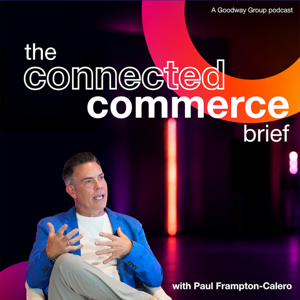
    I'm Paul Frampton-Calero, CEO of Goodway Group, and this is The Connected Commerce Brief.


    In each episode, I sit down with the executives shaping the future of commerce, from CEOs and CMOs to retail leaders, commerce innovators, and technology partner, to explore the decisions behind modern growth.


    We'll talk about connected commerce in practice: leadership, data, media, technology, customer experience, and the organizational changes required to bring it all together.


    No trend chasing. No buzzwords. Just thoughtful conversations about the realities of leading through change.


    If you're helping your organization navigate the future of retail, CPG, and commerce, you're in the right place.


    The Connected Commerce Brief is handcrafted by our friends over at: fame.so 

    2 min

About The Connected Commerce Brief

From the publisher's feed

Commerce has never been more connected across platforms and channels, or more complicated.
