
Sign up to save your podcasts
Or

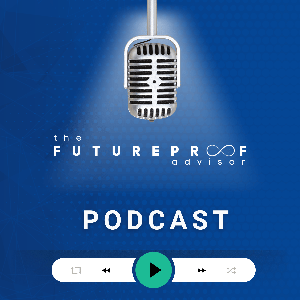

Providing certainty is what advisors are paid to do. Ironically, it’s also what often holds firms back. In this episode of The FutureProof Advisor, I explore the tension between being professionally risk‑averse for clients and needing to be adaptive inside our own businesses. I share a simple hallway story that reveals how quickly momentum can turn into inertia—and how our instinct to “not rock the boat” quietly makes change harder the longer we wait.
Much of this resistance isn’t strategic—it’s human. Our brains are wired to avoid loss, seek safety, and stick with what feels familiar, especially when our income depends on getting things right. But that same wiring works against innovation. I break down why psychological safety—not technology or capital—is the real constraint, and why firms that create space for small, reversible experiments learn faster and build more resilience than those waiting for consensus or perfect certainty. Examples from companies like Google and leaders like Jeff Bezos reinforce a simple truth: learning happens through action, not agreement.
Future‑proof firms don’t eliminate risk—they design for it. That means running “safe‑to‑fail” pilots, being willing to revisit sacred cows like pricing models, and using tools like pre‑mortems to think clearly about downside before it shows up. The firms that will thrive over the next decade aren’t the most confident—they’re the most curious. They keep learning, keep adjusting, and keep moving forward, even when the path isn’t perfectly clear.
 View all episodes
 By Matt Reiner

4.7
1313 ratings
Providing certainty is what advisors are paid to do. Ironically, it’s also what often holds firms back. In this episode of The FutureProof Advisor, I explore the tension between being professionally risk‑averse for clients and needing to be adaptive inside our own businesses. I share a simple hallway story that reveals how quickly momentum can turn into inertia—and how our instinct to “not rock the boat” quietly makes change harder the longer we wait.
Much of this resistance isn’t strategic—it’s human. Our brains are wired to avoid loss, seek safety, and stick with what feels familiar, especially when our income depends on getting things right. But that same wiring works against innovation. I break down why psychological safety—not technology or capital—is the real constraint, and why firms that create space for small, reversible experiments learn faster and build more resilience than those waiting for consensus or perfect certainty. Examples from companies like Google and leaders like Jeff Bezos reinforce a simple truth: learning happens through action, not agreement.
Future‑proof firms don’t eliminate risk—they design for it. That means running “safe‑to‑fail” pilots, being willing to revisit sacred cows like pricing models, and using tools like pre‑mortems to think clearly about downside before it shows up. The firms that will thrive over the next decade aren’t the most confident—they’re the most curious. They keep learning, keep adjusting, and keep moving forward, even when the path isn’t perfectly clear.
4,863 Listeners
2,171 Listeners

56,508 Listeners

461 Listeners
243 Listeners
111 Listeners
135 Listeners