The CTO Podcast

The CTO Podcast

By Insights & Strategies for Chief Technology Officers Navigating the C-Suite while Balancing Technical Strategy, Team Management, & InnovationBusinessTechnologyCareers
Download on the App Store

The CTO Podcast episodes

  • How to Replace Yourself and Buy Time with Dan Martell
    When you're building a business, you shouldn't hire people to add capacity but to buy time out of your calendar. If you don't, you'll end up building a business that you grow to hate and want to shut down because it's taking over your life. Dan Martell teaches entrepreneurs the sequence of how to replace themselves in their business as fast as possible to get the most value at the least amount of risk. He takes listeners on a journey through time as he shares his story and the lessons he’s learned along the way - lessons he also shares in his book.
    Dan Martell is founder and CEO of SaaS Academy, a coaching company for software entrepreneurs, and managing partner at High Speed Ventures. A serial entrepreneur, he has started and sold multiple successful businesses over the course of his career, starting his first company at age 24 and selling it at age 27, becoming a young millionaire. Dan is also an author whose book, Buy Back Your Time: Get Unstuck, Reclaim Your Freedom, and Build Your Empire, compiles expert advice to fellow entrepreneurs.
    Dan shares how he discovered his passion for programming and entrepreneurship. While cleaning out cabins at a church camp, he found an old 486 computer with a book on Java programming and quickly became addicted to writing code. He taught himself how to code and started building tools and apps using different programming languages. He started his own tech organization, Spheric Technologies, which became the fastest growing company in Canada. He eventually sold the company and became a millionaire at 27. 
    After selling Spheric Technologies, Dan moved to Silicon Valley to explore more opportunities in business and entrepreneurship. A successful business was one of his goals, and he didn’t want to regret not following his dreams of building one.
    Silicon Valley is “Disneyland for software entrepreneurs,” according to Dan. The environment is intense and rife with billion dollar ideas, and being there among other ambitious people enabled him to think bigger and achieve more. He went on to build more tech companies, raise venture capital and became an angel investor in multiple software companies, including Intercom, Bootsuite and Unbounced.
    Dan’s book, Buy Back Your Time: Get Unstuck, Reclaim Your Freedom, and Build Your Empire, aims to arm entrepreneurs with the knowledge and techniques they need to conquer their worthiest adversary: time. He believes that our job is to develop ourselves and share what we learn on that journey with others, which he seeks to do with Buy Back Your Time. 
    Entrepreneurs and creators should create more, Dan remarks, as is their God-given purpose. He wants to help entrepreneurs break through the pain line of building the business in the wrong order so that the world will have more solutions, more abundance, more problems solved and more creators creating. 
    When applying the buyback principle, rather than freeing up time to do nothing, trade your time to do valuable things you can get paid for. Start by identifying what you don't like doing and what skills you need to develop to get your desired outcome. Dan encourages people to trade their time, become more valuable, and create economies by creating opportunity for others in the value chain.
    KEY QUOTE
    “The human experience is to face adversity, learn how to overcome it, and if you're not a complete ding dong, teach somebody else how to get through that faster. Our responsibility to people around us is to become better so that we can be an example of possibility.” - Dan Martell
    Resources
    Dan Martell on the Web | LinkedIn | Twitter
    SaaS Academy
    Email Dan: [email protected] 
    Get your copy of Buy Back Your Time here!
    The 4-Hour Workweek by Tim Ferriss

    See Privacy Policy at https://art19.com/privacy and California Privacy Notice at https://art19.com/privacy#do-not-sell-my-info.

    This is a public episode. If you would like to discuss this with other subscribers or get access to bonus episodes, visit www.ctopod.com

    49 min
  • [Replay] Build Your Own CTO Peer Group So That You Can Succeed with Brittany Cotton
    Team Alliances are a way to create a relationship with others in order to achieve common goals. They help people stay healthy and motivated, and they can be helpful when it comes to resolving conflicts. Brittany Cotton joins host Etienne de Bruin to share the benefits of a Team Alliance.
    Brittany Cotton is Head of Coaching at 7CTOs and Program Leader, Coach, Trainer and Facilitator at Accomplishment Coaching. She is also Executive Coach at Be Radical Coaching. Certified by the International Coaching Federation as both a Professional Certified Coach (PCC) and an Associate Certified Coach, Brittany is an expert in leadership development, career development and life coaching, and corporate training.
    A Team Alliance is a conversation around intention, commitment, and contribution, Brittany explains. It’s an agreement to come together under shared goals and collaborate, establishing clear expectations about what needs to be done to achieve those goals.
    Many people are uncomfortable answering questions about their goals and aspirations, and give themselves little time to think about what they truly want in life. Without a clear idea of what they want, people tend to live their lives at the effect of their circumstances, rather than being in control of them.
    It’s important to identify potential obstacles or “leaks” that could prevent the team from achieving their goals. In a boat, a leak may not be noticeable, or it may even seem manageable, but it diverts your attention and energy from the real goal, which is getting to your destination. Similarly, leaks in the team slowly sap you of willpower, forcing you to keep attending to the same recurring issues.
    Your Team Alliance needs to be able to communicate openly and honestly with the group if something is not working, without assigning blame or guilt. This requires a certain level of vulnerability.
    In order to prepare for a Team Alliance conversation, people should come to the forum with a willingness to let go of the past and forgive themselves and others for any mistakes or shortcomings, Brittany shares. Etienne advises people who might feel stuck or like they're repeating the same process as last year that it's important to approach the Team Alliance conversation with a fresh perspective and openness to new insights and ideas.
    Facilitators of Team Alliances are there to facilitate the discussion and handle any situations that come up. Members are encouraged to communicate their needs and what they would like to experience from their facilitators.
    KEY QUOTE
    “A Team Alliance is a conversation around intention, commitment, and contribution.” - Brittany Cotton
    Resources
    Brittany Cotton on the Web | LinkedIn
    Be Radical Coaching
    7CTOs Forum

    See Privacy Policy at https://art19.com/privacy and California Privacy Notice at https://art19.com/privacy#do-not-sell-my-info.

    This is a public episode. If you would like to discuss this with other subscribers or get access to bonus episodes, visit www.ctopod.com
    22 min
  • Myths of CTO Leadership with Mark Hunter
    In this episode of the CTO Studio Podcast with host Etienne de Bruin, Mark Hunter discusses the myths of leadership and how they can be harmful to individuals and organizations. He goes on to discuss how leaders can overcome their fear and create gaps in order to identify opportunities for growth. Finally, he encourages CTOs to build authentic relationships with their teams in order to foster trust and communication.
    Mark Hunter, author of “The Brink: How Great Leadership Is Invented,” is founder and President at Pinnacle Coaching, and Senior Program Leader at Accomplishment Coaching. As a business and executive coach, Mark works with both corporate and individual personal clients to help them get out of their own way and into new levels of possibility, transformation, leadership, and results.
    Mark believes that context and relationship are foundational concepts for sustainable and scalable teams. Leaders in particular need to develop relevant skills such as understanding context, understanding the audience, and situational awareness.
    Fear is not inherently bad, Mark comments, but the way we treat it creates problems. Because we view fear as something leaders shouldn’t have, we don’t tell others when we are afraid, which creates shame, and we suffer in silence.
    Enrollment is important because it ensures that people are committed to what they’re doing. If you complete tasks just because you’re expected to without any real attachment or investment in that goal, it will be much easier to quit when the going gets tough.
    Leaders should understand that gaps in teams are opportunities for growth.
    Humans are problem solvers, and if we don’t perceive that we have problems to solve, we manufacture them. 
    Hierarchy exists, but you don’t have to lead from it. The hierarchy creates a fundamental imbalance of power, and leading from it deepens that imbalance. There is a difference between issuing orders from the title you possess, and using that title as the source of your power. 
    Resources
    Mark Hunter on LinkedIn
    The Brink: How Good Leadership Is Invented

    See Privacy Policy at https://art19.com/privacy and California Privacy Notice at https://art19.com/privacy#do-not-sell-my-info.

    This is a public episode. If you would like to discuss this with other subscribers or get access to bonus episodes, visit www.ctopod.com
    53 min
  • [Replay] Doing Curiosity vs. Being Curiosity
    Quick, critical thinking is one of the core strengths of a CTO, but unlearning the problem-solving mindset might do them good. Jeff Miller, founder and CEO Jeff Miller Coaching, defines and discusses curiosity. In this episode replay, Jeff describes his experience coaching CTOs and why they struggle with curiosity. 
    The environment that raises CTOs is one that teaches them to solve problems as quickly as possible. CTOs have been rewarded for their ability to think quickly and critically in efficient ways, but has this critical mindset actually stunted their curiosity?
    Executives of all kinds have been brainwashed into separating themselves from others, Jeff shares. While a good thing in some situations, it can hinder them from being as effective as they can be. CTOs, in particular, need to relate to many people across their organizations, which becomes difficult if they’re always seeing themselves as different.
    Jeff has observed that the higher the intellect and the more successful a CTO is, the more skeptical they are of coaching. 
    Curiosity is an invitation to learn, make mistakes, and have fun without necessarily having the answer. We need to give ourselves permission to be curious and not program ourselves into thinking in one way.
    Resources
    Jeff Miller on LinkedIn | Website

    See Privacy Policy at https://art19.com/privacy and California Privacy Notice at https://art19.com/privacy#do-not-sell-my-info.

    This is a public episode. If you would like to discuss this with other subscribers or get access to bonus episodes, visit www.ctopod.com

    12 min
  • [Replay] Curiosity and the Unknown
    Curiosity exists in the realm of the unknown, and it cannot be predicted or directed. Joanie Connell of Flexible Work Solutions returns in this episode of the CTO Studio Podcast to discuss how we can learn from not knowing. 
    Team members can preface their questions by stating their curiosity, Joanie shares. Saying “I’d like to take a moment to be curious” immediately identifies the present time as inquiry mode, opening the floor to others to share their curiosity as well.
    Fueling your curiosity with rage takes away from the genuine desire to learn something new because you have a specific end in mind with your questioning. 
    Participative curiosity is performative, whereas reflective curiosity is introspective. Participative curiosity only appears to be curiosity, but when this is applied, you’re not absorbing anything. Reflective curiosity, however, occurs when you are actually open to changing your mind and willing to consider something new. 
    It’s important to have diverse perspectives in teams to stir creativity. Whether people agree or disagree, keeping the conflict centered around the issue they disagree on can lead to more creative solutions or more thorough answers.
    Resources
    Joanie Connell on LinkedIn | Twitter | Website

    See Privacy Policy at https://art19.com/privacy and California Privacy Notice at https://art19.com/privacy#do-not-sell-my-info.

    This is a public episode. If you would like to discuss this with other subscribers or get access to bonus episodes, visit www.ctopod.com

    13 min
  • [Replay] When Curiosity Leads to Questions, But Not All Questions Represent Curiosity
    Asking questions is an outcome of curiosity, and curiosity leads to questions - but not all questions represent curiosity. Joanie Connell of Flexible Work Solutions returns in this episode of the CTO Studio Podcast to share how to foster curiosity in our teams by changing the way we ask questions.
    Open-ended questions invite people to answer in ways that reveal their thoughts and ideas. Beginning a question with “I wonder if…” is a great way to start, Joanie shares.
    Reserving judgement is key. Genuine curiosity withholds assumptions, leaving space for people to speak freely and convey what they mean without fear of being judged.
    Curiosity within relationships is about feeling excited to see what the partnership and intention you’re setting with someone is going to produce.
    We are often imperfect communicators, but we may be even worse when we’re curious. In our haste to learn, we may unintentionally convey the wrong message to people by how we phrase our questions and tone of voice. We should be mindful of being approachable when asking questions. Better yet, we can also tell others how we’d like to be spoken to, and how to phrase their questions in ways that don’t cause harm.
    Resources
    Joanie Connell on LinkedIn | Twitter | Website

    See Privacy Policy at https://art19.com/privacy and California Privacy Notice at https://art19.com/privacy#do-not-sell-my-info.

    This is a public episode. If you would like to discuss this with other subscribers or get access to bonus episodes, visit www.ctopod.com
    15 min
  • [Replay] Curiosity vs. Being Curious
    Empathy is more than simply putting yourself in someone else's shoes - it begins with curiosity and asking questions. Joanie Connell, founder of Flexible Work Solutions, defines curiosity and describes how being curious can help interpersonal relations at work. She joins Etienne de Bruin to discuss how leaders can nurture curiosity among team members.
    Part of the curiosity mindset is the courage to take risks, be vulnerable, and try things that may not work.
    In relationships, being inquisitive can be difficult since it often involves asking people what they're feeling even when you don't know what that might be. You have to be humble and be open to the possibility that you may be mistaken.
    By setting expectations for how questioning will be used, leaders can establish a culture of curiosity. Employees may be hesitant to ask questions for fear of being punished, so leaders must take the initiative to make their environment a safe zone for curiosity.
    There is a time and place for curiosity; if you keep the questions rolling at a bad time, you can slow the process down and miss deadlines.
    Resources
    Joanie Connell on LinkedIn | Twitter | Website
    Email Etienne: [email protected]

    See Privacy Policy at https://art19.com/privacy and California Privacy Notice at https://art19.com/privacy#do-not-sell-my-info.

    This is a public episode. If you would like to discuss this with other subscribers or get access to bonus episodes, visit www.ctopod.com
    11 min
  • The Role of A CTO is Complicated
    Etienne du Bruin goes solo this week as he discusses the complicated nature of a CTO’s role. He talks about the four S’s of a CTO, and describes how systems thinking can be used to understand the role of a leader.
    CTOs shield their organizations from existential threats internally and externally; stretch out the organization with design thinking and organizational design; speed up technology delivery; and work with the cross functional teams to increase sales, Etienne claims. 
    Complex systems consist of many elements on many different scales, all affecting one another on different levels. 
    Systems thinking can be used to understand how the components of a complex company interact with each other. Levels of complexity within companies necessitate that leaders be able to adapt quickly in order to manage these complexities.
    Etienne believes the role of a CTO is one of business, with a budget to build teams that deliver technologies to grow revenues. 
    Resources
    Email Etienne: [email protected] 

    See Privacy Policy at https://art19.com/privacy and California Privacy Notice at https://art19.com/privacy#do-not-sell-my-info.

    This is a public episode. If you would like to discuss this with other subscribers or get access to bonus episodes, visit www.ctopod.com
    16 min
  • [Replay] Aaron Longwell in the CTO Studio
    How does the left and right brain differ in decision-making? In this week’s show, Aaron Longwell, a Software Manager at Amazon Web Services, dives deep into this idea. He joins Etienne de Bruin to talk about the importance of context in decision-making, communication, and how pushing management decisions down in an organization can lead to problems.
    Some ideas you’ll hear them explore are:
    Throughout history, humans have favored the left-brain model of thinking. "We pay less attention to context and … to emotions, pay less attention to the body and more to the brain," Aaron says. Alternatively, the right side of the brain is more creative.
    Good communication is a major factor in solving challenges. Code is communication, so being able to communicate effectively will allow you to code more effectively. 
    Getting communication right from the start saves you time. Don't assume that you're being understood, verify that you are. Ask questions that can let you know that the other person is understanding what you are saying and that you're both on the same page. 
    The mentality of reusing what you can is flawed. The idea that because someone already built in some component of the communication in the software, so it doesn't need to be reworked opens you up for a lot of third-party dependencies and increases complexity.
    Pushing management decisions lower down in an organization creates redundant decision making.
    Complexity is a prerequisite to being robust.
    Resources
    Aaron Longwell | LinkedIn 
    Thinking, Fast and Slow
    The Master and His Emissary 

    See Privacy Policy at https://art19.com/privacy and California Privacy Notice at https://art19.com/privacy#do-not-sell-my-info.

    This is a public episode. If you would like to discuss this with other subscribers or get access to bonus episodes, visit www.ctopod.com
    1 hr 15 min
  • [Replay] How to Find The Best Employees in Tech Today, with Casey Kleindienst
    Have you interviewed and hired someone only to have it not work out soon after? This week’s show discusses the importance of hiring people who will be successful in your company’s culture. Casey Kleindienst, a Management Professor at Cal State Fullerton and a consultant to small and medium enterprises, explores how to identify those individuals. He joins Etienne de Bruin to share how to screen candidates for emotional intelligence and potential risk.
    Some ideas you’ll hear them explore are:
    The interview process tries to answer two questions: Does this candidate fulfill the minimum requirements for the job? And will they succeed in the company’s culture? Culture and potential are the two most important variables to consider, Casey says.
    Don't hire resumes. Rather than the resume, look at the character. The character will give you a prediction of future performance. Hire people that have the potential to deliver value to your company in the long run. 
    Seventy percent of jobs come from the hidden job market, meaning they don’t get posted. Employers call people in their network and ask if they know suitable candidates.
    Being able to teach people and bring them into learning is a skill that demonstrates that someone has actually mastered the craft that they've learned.
    Decision making is a singular activity. If you assign decision making to more than one person, despite whatever discussion they have, they will eventually reach an impasse. They're not going to be able to go forward because there are two opposing views and they both have equal merit in the eyes of the holders.
    Instead of running from them and trying to get rid of them, you should work towards your weaknesses. On the other side of them, there are strengths.
    Resources
    Casey Kleindienst on LinkedIn

    See Privacy Policy at https://art19.com/privacy and California Privacy Notice at https://art19.com/privacy#do-not-sell-my-info.

    This is a public episode. If you would like to discuss this with other subscribers or get access to bonus episodes, visit www.ctopod.com
    41 min

About The CTO Podcast

From the publisher's feed

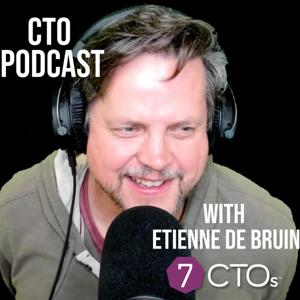
The CTO Podcast explores the worlds of Chief Technical officers as they manage the trials, tribulations, and triumphs of technologists in the C-suite. Hosted by Etienne de Bruin, founder of 7CTOs and…