
Sign up to save your podcasts
Or

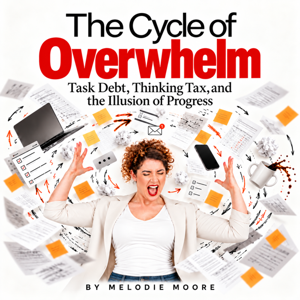


In 1930, John Maynard Keynes predicted his grandchildren would work fifteen hours a week. He was worried about what we'd do with all that free time. He didn't need to worry. We filled it.
In this closing episode, I zoom out. The washing machine, the car, email, the smartphone: each one was supposed to make work lighter, and each time we filled the space with more. Now AI is doing the same thing on fast-forward. It made doing the work cheaper. It didn't make thinking about the work any cheaper.
I talk about what the cycle really costs us: the two-year-old on the floor, the sunsets, the birds. I also talk about the guilt that pulls us back in, and I introduce the people who work differently. I call them Technologists. Technology was supposed to make us lighter. It still can. More done, less on our minds. More human.
27 Slack messages. 206 emails. A day of back-to-back meetings. It's still Tuesday, and the numbers didn't change. What changed is what I do with them.
In this episode, I talk about how to reverse the Cycle of Overwhelm. If you've felt the cycle, you've probably tried to fix it already: a new tool, more SOPs, the magical implementer, more meetings, or just doing it yourself. I've tried every one. They all have the same problem. They add. You can't add your way out.
Instead, I walk you through the three moments where the cycle usually wins: when something lands on your plate, when you hand something off, and when you decide what's next. I'll share the questions that change each moment, what each of us has to give up, and the weekly habit that keeps it all going. You don't have to fix everything. You just have to stop feeding the cycle.
Nobody wakes up and decides to make work harder. I've never met a team member who wanted to hand their boss a half-finished thought, or a manager who wanted to spend all day chasing updates. And I've definitely never met an owner who wanted to be the bottleneck. I've been one. I didn't apply for the job.
In this episode, I look at the part each of us plays in the Cycle of Overwhelm, and what we get out of it. The team member gets to feel done. The manager gets to feel needed. The owner gets to feel indispensable. None of those feel like problems, and that's why they stick.I'll show you how those choices lock together, why everyone in the cycle is right and everyone is still overwhelmed, and how to spot where you show up.
It's no one's fault. It is everyone's choice.
Ten-hour days. Late nights. A weekly review full of things "completed." And still, the video I filmed didn't get posted, I didn't check if our clients were profitable, and I didn't follow up on that sales call. I was, however, very busy.In this episode, I'm talking about the Illusion of Progress: when all the activity starts to look like improvement.
Picture rowing a boat with one oar. You're pulling hard and working harder than anyone out there, but you're just spinning in circles.I'll show you how Task Debt and the Thinking Tax feed each other until a 100-item checklist becomes someone's whole job, a system problem becomes a person's role, and a CRM migration just moves the mess somewhere new. Activity isn't progress. Sometimes the biggest win is realizing eight of the ten things on the list don't need to exist.
3:47 a.m. A client site goes down. My developer has it back up within minutes. Then I get the report: nearly 3,000 words and 18 action items, all to tell me it was a blip. I didn't open it for nine days, and the whole time it was charging me interest.
In this episode, I'm talking about Task Debt. That's the unresolved work that keeps taking your attention because it hasn't been understood, decided on or given a home. It isn't procrastination. Procrastination delays action. Task Debt delays resolution, and some of the busiest people I know carry the most of it.
I'll show you why a 10-minute task can end up costing you 30, why understanding something now doesn't mean you have to do it now, and why moving a task isn't the same as moving the work. You don't have to finish everything. Everything just needs a home.
I hired a server expert to take the problem off my plate. I paid a premium for it. What I got was two pages of options, a new setup that ran slower than the old one, and five pages of documentation nobody was ever going to read.In this episode, I'm walking you through the Thinking Tax. It's the hidden cost inside almost every business, and it never shows up on your P&L.
Work moves through a loop: Anticipate → Execute → Validate. When someone only owns the middle, you end up paying for the rest. Every part they hand back to you adds 30%, so his $100 an hour was really costing me $160.I'll share the three flavours of the tax: Unnecessary Complexity, Unnecessary Repetition and Outsourced Thinking. I'll also get into why we delegate the tasks but hang on to the thinking, and why validation is the part of the loop almost nobody loves.
27 Slack messages. 206 emails. Back-to-back meetings. It's Tuesday, and it already feels like Thursday.In this episode of The Cycle of Overwhelm, Melodie takes you through one week inside the cycle. A PHP update needs to go out across 50+ client sites.
She does everything the advice says: more documentation, a new tool, daily reports, a meeting about the problem. By Friday, everyone is busier than ever and most of the sites still haven't been updated.She defines the three forces behind it. Task Debt builds up the work, the Thinking Tax makes it heavier, and the Illusion of Progress makes that pile-up look like improvement. Then she plays the same week again, this time reversing the cycle.
She also covers what nobody warns you about: the guilt, the bird watching, and a Hyrox habit.
Before chapter one, Melodie shares why she wrote this book and what she means by the cycle of overwhelm. This is an early reading version, recorded October 28, 2026, and she'd love your help shaping it. As you listen, notice where you see yourself, where your attention drifts, and what you want to know more about. Send feedback to [email protected] and follow along for updates at businesstechninjas.com/overwhelm.
Busy every minute, and the important work hasn't moved. In this opening episode, Melodie introduces the Cycle of Overwhelm (Task Debt, Thinking Tax and the Illusion of Progress) and how a Glassdoor review made her see that the problem was never just one person.
From the publisher's feed
Why We Keep Making Work Harder and How to Reverse It
Ever finish a day completely exhausted, knowing you've been busy from morning to night, but wondering what you…
The meetings. The messages. The never-ending task lists. The constant feeling that no matter how much you get done, there's always more waiting.
And the people!
If only your boss understood how much work you had. If only your employees would take responsibility. If only your clients weren't so demanding.
Sound familiar?
What if the problem isn't your boss, your team, your clients, or even you?
What if overwhelm isn't simply the price of success, but the result of how we've learned to work?
I'm Melodie Moore, founder of Business Tech Ninjas. I've spent more than a decade building a business, helping other businesses, and trying to figure out why work seems to get harder the more we do to make it easier.
I've been the frustrated employee blaming my boss. The business owner wondering why my team can't just get things done. And the consultant watching businesses invest thousands of dollars in technology that somehow creates even more work.
I've also been the person who thought another process, another employee, or another productivity system would finally solve everything.
Spoiler alert: It didn't.
What I discovered is a pattern I call The Cycle of Overwhelm.
It happens when our attempts to manage overwhelming work unintentionally create more of it.
Through three interconnected concepts, Task Debt, the Thinking Tax, and the Illusion of Progress, I'll show you how perfectly reasonable decisions can accumulate into an exhausting way of working.
We can become both the creators and the victims of the complexity we complain about.
This isn't another podcast about waking up at 5 a.m., perfecting your morning routine, or learning to squeeze more tasks into your day.
It's about questioning why so much of that work exists in the first place.
Through personal stories, relatable workplace situations, and lessons from inside real businesses, I'll challenge something many of us have accepted without question:
That being successful means being overwhelmed.
I'm sharing my book The Cycle of Overwhelm as an audio series, read by me, one chapter at a time.
Whether you're an employee, manager, business owner, or someone who's simply tired of feeling like they're always behind, this is an invitation to see work differently.
Because the goal isn't to have less ambition or stop working hard.
It's to accomplish more of what matters without making work unnecessarily difficult.
You can't change what you can't see.
And once you see the Cycle of Overwhelm, you can reverse it.
Let's reverse the cycle.