
Sign up to save your podcasts
Or

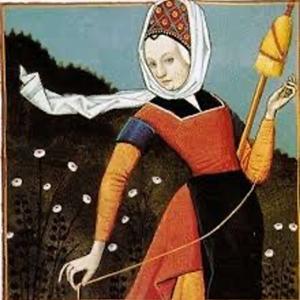


Dear Prudence…”"Surely these were Amazonian times when women had strength."
This conversation delves into the historical narrative of Prudence and Miles Morgan, exploring their journey, family connections, and the significance of the Bay Path. The speakers discuss the challenges of historical research, the role of women in early settlements, and the romanticized view of history. Through their exploration, they highlight the importance of communication and connection in the past, ultimately painting a vivid picture of young love and adventure in a historical context.
Subscribe/email questions or topic ideas for shows
Upcoming Episodes
Join us for Episode Five where we explore the Agawam peoples who have inhabited the Connecticut Valley since 12,000 BC.
Sources & Resources:
Hall, David D. . Witch-Hunting in Seventeenth Century New England: A Documentary History, 1638-1693. Second Edition, Duke University Press, 1991.
Gaskill, Malcolm. The Ruin of All Witches: Life and Death in the New World. Alfred A. Knopf, 2022.
Hawke, David Freeman. Everday Life in Early America. Harper-Collins Publishers, 1988.
Lockridge, Kenneth A. “Stephen Innes. Labor in a New Land: Economy and Society in Seventeenth-Century Springfield . Princeton: Princeton University Press. 1983. Pp. Xxi, 463. Cloth $35.00, Paper $7.95.” The American Historical Review, vol. 89, no. 3, Jun. 1984, pp. 840–41. DOI.org (Crossref), https://doi.org/10.1086/ahr/89.3.840.
Morgan Genealogy
by Nathaniel H. Morgan [This has Titus’ writing about Miles Morgan and Prudence]https://openlibrary.org/books/OL24189989M/Morgan_genealogy
William Pynchon Papers, Mss 236. Courtesy of Phillips Library, Peabody Essex Museum, Rowley, MA. https://pem.as.atlas-sys.com/repositories/2/resources/203 Accessed October 24, 2025.
The Miles Morgan family of Springfield, Massachusetts, in the line of Joseph Morgan of Harford, Connecticut, 1780-1847. Frank Farnsworth. https://babel.hathitrust.org/cgi/pt?id=wu.89061980793&seq=20
Dear Prudence…”"Surely these were Amazonian times when women had strength."
This conversation delves into the historical narrative of Prudence and Miles Morgan, exploring their journey, family connections, and the significance of the Bay Path. The speakers discuss the challenges of historical research, the role of women in early settlements, and the romanticized view of history. Through their exploration, they highlight the importance of communication and connection in the past, ultimately painting a vivid picture of young love and adventure in a historical context.
Subscribe/email questions or topic ideas for shows
Upcoming Episodes
Join us for Episode Five where we explore the Agawam peoples who have inhabited the Connecticut Valley since 12,000 BC.
Sources:
Hall, David D. . Witch-Hunting in Seventeenth Century New England: A Documentary History, 1638-1693. Second Edition, Duke University Press, 1991.
Gaskill, Malcolm. The Ruin of All Witches: Life and Death in the New World. Alfred A. Knopf, 2022.
Hawke, David Freeman. Everday Life in Early America. Harper-Collins Publishers, 1988.
Lockridge, Kenneth A. “Stephen Innes. Labor in a New Land: Economy and Society in Seventeenth-Century Springfield . Princeton: Princeton University Press. 1983. Pp. Xxi, 463. Cloth $35.00, Paper $7.95.” The American Historical Review, vol. 89, no. 3, Jun. 1984, pp. 840–41. DOI.org (Crossref), https://doi.org/10.1086/ahr/89.3.840.
Morgan Genealogy
by Nathaniel H. Morgan [This has Titus’ writing about Miles Morgan and Prudence]https://openlibrary.org/books/OL24189989M/Morgan_genealogy
William Pynchon Papers, Mss 236. Courtesy of Phillips Library, Peabody Essex Museum, Rowley, MA. https://pem.as.atlas-sys.com/repositories/2/resources/203 Accessed October 24, 2025.
The Miles Morgan family of Springfield, Massachusetts, in the line of Joseph Morgan of Harford, Connecticut, 1780-1847. Frank Farnsworth. https://babel.hathitrust.org/cgi/pt?id=wu.89061980793&seq=20
What!? Lascivioius Puritan women? Yes, and we're here to talk about it. We get into the nitty-gritty of our ancestor Mary Burt and some of her fellow Puritan women in Springfield, MA, Massachusetts Bay Colony circa 1640.
What did a colonial woman do when she found herself in a compromising position? Did her family and their standing in the community determine her fate? And what of the other women in the town, how did they navigate the expectations laid on them regarding behavior, love and intimacy?
Join Sarah and Kim as they delve into the fascinating history of Springfield, MA, exploring the lives and legacies of its early settlers. From the intricacies of church seating arrangements to the dramatic court cases that shaped the community, this episode uncovers the rich tapestry of 17th-century life. Discover how power dynamics, social norms, and personal stories intertwine in this captivating journey through time. Tune in to learn about the trials, triumphs, and tales of those who laid the foundations of Springfield.
Join Sarah and Kim as they delve into the fascinating history of Springfield, MA, exploring the lives and legacies of its early settlers. From the intricacies of church seating arrangements to the dramatic court cases that shaped the community, this episode uncovers the rich tapestry of 17th-century life. Discover how power dynamics, social norms, and personal stories intertwine in this captivating journey through time. Tune in to learn about the trials, triumphs, and tales of those who laid the foundations of Springfield.
This conversation explores the historical significance of the distaff as a symbol of women's work, delving into the life of Mary Burt and the witch trials of Puritan society. It examines the dynamics of community relationships, the role of religion and superstition, and the lasting impact of these events on gender narratives. Through a detailed discussion, the speakers highlight the complexities of women's experiences and the societal fears that fueled the witch trials. This conversation delves into the historical context of the Salem Witch Trials, exploring the roles of key figures like Tituba and John Willard, the dynamics of power and hysteria in the community, and the impact of these events on women's history. The discussion highlights the complexities of the trials, the motivations behind accusations, and the societal implications of such mass hysteria, ultimately leading to reflections on the healing process within the community and the significance of women's contributions throughout history.
From the publisher's feed
This conversation explores the historical significance of the distaff as a symbol of women's work, delving into the life of Mary Burt and the witch trials of Puritan society. It examines the…