
Sign up to save your podcasts
Or

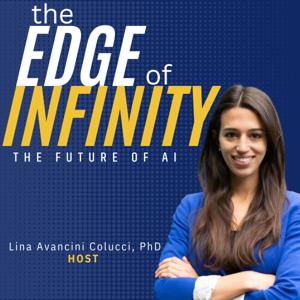


In this episode I talk with Cody Coleman, the founder and CEO of Coactive AI.
Unstructured data is the future. But actually harnessing its power is an overwhelming proposition. Coactive makes it easy for companies to understand and leverage the unstructured data sitting in their servers… starting with images and videos and eventually expanding beyond.
Cody is an inspiring human being. He was born in prison while his mom was incarcerated, and then went on to study at MIT for undergrad and Stanford for his PhD. Inspired by his legendary advisor, Prof. Matei Zaharia, co-founder of Databricks, Cody founded Coactive AI at the end of his PhD. His life mission is showing that anyone can be successful regardless where they come from.
We chat about Cody’s journey, Coactive’s technical approach, and, as always, our predictions for AGI and the future of AI. Hope you enjoy!
***
Time Stamps
1:50 Cody’s early life journey: being born in prison, being put into foster care, and then getting into MIT
4:20 Video games as an escape and how he picked Computer Science as a major
6:15 Imposter syndrome and arriving at MIT
8:00 Story of my life: “You’re smart, you’ll figure it out” - Discovering he was dyslexic
9:45 Why did Cody get a PhD?
13:30 Existential crisis in PhD year 3 and the mental shift that turned it around
20:00 The sparknotes of Cody’s PhD research at Stanford
30:20 The initial inspiration for Coactive: embeddings all the way back in 2017!
37:00 What are customers doing with Coactive?
46:00 Project out to infinity: What does the world look like because of Coactive?
51:00 How Coactive works in the internet of the future?
56:20 Have we achieved AGI? Why or why not?
1:02:20 Where we’ll see signs AGI first?
1:05:25 As a black man in engineering and the startup world, what’s Cody’s self talk around being a minority?
1:17:45 How Cody approaches goal setting
1:23:25 Asks of the audience
***
Links to resources mentioned in this episode:
Cody’s TEDx Talk: https://www.youtube.com/watch?v=stxJMsxxxtA
Cody’s PhD research part 1: https://ddkang.github.io/papers/dawnbench-nips17.pdf, https://arxiv.org/pdf/1911.02549
Cody’s PhD research part 2: https://arxiv.org/pdf/2007.00077
Embeddings at Pinterest 2019: https://medium.com/pinterest-engineering/unifying-visual-embeddings-for-visual-search-at-pinterest-74ea7ea103f0
Embeddings at Meta 2018: https://engineering.fb.com/2018/10/15/ai-research/dynamic-meta-embeddings/
“Free Guy” movie: https://www.imdb.com/title/tt6264654/
“The 3 Body Problem” Book Series: https://www.amazon.com/Three-Body-Problem-Cixin-Liu/dp/0765382032
***
Cody’s Accounts:
LinkedIn: https://www.linkedin.com/in/codyaustun/
Twitter: https://x.com/codyaustun
Coactive AI: https://www.linkedin.com/company/coactiveai/
Lina’s Accounts:
Twitter: https://twitter.com/lina_colucci
LinkedIn: https://www.linkedin.com/in/lina-colucci/
***
The Edge of Infinity: Imagining the Future of AI
Will AI change the world? Everyone agrees that AI will change a lot about society, but no one knows exactly how. My name is Lina Colucci. I founded Infinity AI and got my PhD from MIT and Harvard. I talk to other AI founders, engineers, and researchers who are building the future of artificial intelligence. Together, we predict the ways AI will shape our world both in the near-term and as we project out to infinity.
Join us and let’s imagine the future of AI together.
In this episode we talk with George Morgan who is the founder and CEO of Symbolica AI. Symbolica is a moonshot AI company. George believes the way that AI models are trained today is fundamentally broken and will not lead us to AGI. Symbolica is taking a completely different approach that will make models orders of magnitude faster, cheaper, and with additional reasoning capabilities.
George is also a fascinating human being and this episode is packed with stories about Elon Musk, Andrej Kaparthy, the Sony QRIO robot, and much more. Of course, we also chat about our predictions on AGI and the future of AI.
Hope you enjoy my conversation with George!
Time Stamps
02:30 The 20-year robot saga that took George to Japan
10:55 What’s wrong with AI models today?
16:40 What does it mean to represent things symbolically instead of statistically?
20:20 Symbolica does not have labels, only data
25:10 The manifold hypothesis
29:44 What is online learning?
34:58 Symbolica’s moonshot goals
38:04 What will be Symbolica’s ChatGPT moment?
39:51 George’s path to Tesla (including dropping out of college and writing an email to Elon Musk!)
44:35 Why it’s stressful to work for Elon Musk
47:21 Why George disagrees with Andrej Kaparthy
51:35 The difference between being a founder and an employee (this is the #1 lesson George learned from Elon)
55:50 George’s definition of AGI
57:35 Common issues with LLMs: they mimic human behavior, but don’t let that fool you
01:01:28 Lina’s different take on LLMs’ abilities
1:04:02 George’s counter-argument
1:09:09 Our discussion about a quote from “The Beginning of Infinity” (see below)
* * *
“Even if chatbots did at some point start becoming much better at imitating humans (or at fooling humans), that would still not be a path to AI. Becoming better at pretending to think is not the same as coming closer to being able to think. [...] A non-AI program cannot fake AI. ”
— David Deutsch, “The Beginning of Infinity”
* * *
Links to Resources mentioned in this episode:
Sony QRIO Robot: https://spectrum.ieee.org/qrio-the-robot-that-could
Tesla Self-Driving Team: https://www.tesla.com/AI
Elon Musk: https://twitter.com/elonmusk
Andrej Kaparthy: https://twitter.com/karpathy
Paper about “The Reversal Curse in LLMs - LLMs trained on "A is B" fail to learn "B is A”: https://arxiv.org/abs/2309.12288
Paper where GPT4 explains neurons in GPT2: https://openai.com/research/language-models-can-explain-neurons-in-language-models
Symbolica AI: https://www.symbolica.ai/
* * *
George’s accounts
Twitter: https://twitter.com/vr4300
LinkedIn: https://www.linkedin.com/in/georgemorgan2/
Symbolica AI: https://twitter.com/symbolica_ai
Lina’s Accounts
Twitter: https://twitter.com/lina_colucci
LinkedIn: https://www.linkedin.com/in/lina-colucci/
* * *
The Edge of Infinity: Imagining the Future of AI
Will AI change the world? Everyone agrees that AI will change a lot about society, but no one knows exactly how. My name is Lina Colucci. I founded Infinity AI and got my PhD from MIT and Harvard. I talk to other AI founders, engineers, and researchers who are building the future of artificial intelligence. Together, we predict the ways AI will shape our world both in the near-term and as we project out to infinity.
Join us and let’s imagine the future of AI together.
In this episode, we talk with Evan Morikawa who leads Applied Engineering at OpenAI. Evan's team is responsible for all the backend, frontend, and inference infrastructure for all of OpenAI's products from ChatGPT to the APIs to DALLE.
Akshay Chaudhari is a Professor at Stanford University where he leads the Medical Intelligence for Medical Imaging group. Akshay is a leader in applying deep learning to medical imaging and works across modalities from MRI to X-rays to CT as well as other sensors. We have a far ranging conversation from leveraging GenAI to train medical classifiers to where the future of computer vision is going. Hope you enjoy!
Full Show Notes (transcript + links to all resources): https://blog.infinity.ai
Time stamps
* * *
Akshay’s Accounts
Twitter: https://twitter.com/Dr_ASChaudhari
Lab Website: https://med.stanford.edu/mimi.html
Google Scholar: https://scholar.google.com/citations?user=08Y4NhMAAAAJ&hl=en
LinkedIn: https://www.linkedin.com/in/akshaychaudhari/
* * *
Lina’s Accounts
Twitter: https://twitter.com/lina_colucci
LinkedIn: https://www.linkedin.com/in/lina-colucci/
* * *
This Episode's Quote from "The Beginning of Infinity"
"It is inevitable that we face problems, but no particular problem is inevitable. We survive and thrive by solving each problem as it comes up. And since the human ability to transform nature is limited only by the laws of physics, none of the endless stream of problems will ever constitute an impassable barrier."
- David Deutsch, "The Beginning of Infinity"
From the publisher's feed