
Sign up to save your podcasts
Or

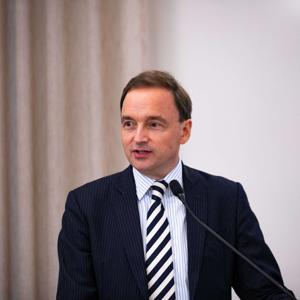


Session 8: Friendship, Community, and the Social Nature of the Person
Aristotle's account of friendship (philia) and Aquinas's Christianisation of it provide resources for thinking about the bonds beyond family; friendship, civic life, and the Church as fellowship. Charity (caritas) is, for Aquinas, a kind of friendship with God. This session asks what genuine community requires, and what distinguishes authentic bonds from their pale imitations.
Reading: Aristotle, Nicomachean Ethics VIII.1–6; Aquinas, Summa Theologiae IIa-IIae Q.23; Paul VI, Populorum Progressio §§17–21
Instructor: Dr. Aloysius Ventham
Philosopher and meta-ethicist. Program Director of the Villa Steiner Academy. Works on moral reasoning, judgment, and responsibility; teaches philosophy and ethics in Salzburg and Vienna.
Session 7: The Family as Domestic Church
The family is not merely a social unit but a theological reality; the primordial community in which persons are formed and love is learned. This session examines the Church's account of marriage and family as a school of the virtues, and honestly addresses the wounds that distort family life and the tradition's account of healing, mercy, and accompaniment.
Reading: Familiaris Consortio §§11–17, 42–48; CCC §§2201–2213; Amoris Laetitia §§57–88
Instructor: Dr. Aloysius Ventham
Philosopher and meta-ethicist. Program Director of the Villa Steiner Academy. Works on moral reasoning, judgment, and responsibility; teaches philosophy and ethics in Salzburg and Vienna.
Session 6: The Body as Gift: Incarnation, Vulnerability, and Human Dignity
The person is not a soul that happens to inhabit a body but a bodily being whose flesh is constitutive of who they are. This session explores what it means theologically that God became incarnate, and what the Incarnation reveals about the dignity of the body. It also addresses human vulnerability and dependence as positive features of creaturely existence rather than defects to be overcome, drawing on MacIntyre's account of our ‘animality’ and the phenomenology of the lived body
Reading: CCC §§362–368 (the body as constitutive of the person); John 1:1–14 (the Prologue); John Paul II, Salvifici Doloris §§3–5 (the person as body); Jean Vanier, Becoming Human ch. 1–2; MacIntyre, Dependent Rational Animals ch. 6–7
Instructor: Dr. Aloysius Ventham
Philosopher and meta-ethicist. Program Director of the Villa Steiner Academy. Works on moral reasoning, judgment, and responsibility; teaches philosophy and ethics in Salzburg and Vienna.
ession 5: The Relational Person: Made for Love
Against any purely individualist anthropology, the Catholic tradition insists that the person is constituted in relation. In relation to God, to others, and to creation. This session draws on Trinitarian theology as the ground of human sociality: we are made in the image of a God who is himself a communion of persons. What follows for how we understand human loneliness, community, and love?
Reading: CCC §§1878–1885; John Paul II, Mulieris Dignitatem §7; Martin Buber, I and Thou Part I
Instructor: Dr. Aloysius Ventham
Philosopher and meta-ethicist. Program Director of the Villa Steiner Academy. Works on moral reasoning, judgment, and responsibility; teaches philosophy and ethics in Salzburg and Vienna.
Session 4: Freedom, Sin, and the Wounded Will
Human freedom is real but not unlimited, and the doctrine of Original Sin explains why our freedom is structurally damaged. Drawing on Augustine and Aquinas, this session explores the will's orientation toward the good and its tendency toward disordered loves. The session asks: what does it mean to be free, and how does grace restore what sin has broken?
Reading: Augustine, Confessions I.1 and VIII.5–12; CCC §§385–421; Alasdair MacIntyre, Dependent Rational Animals ch. 1–2
Instructor: Dr. Aloysius Ventham
Philosopher and meta-ethicist. Program Director of the Villa Steiner Academy. Works on moral reasoning, judgment, and responsibility; teaches philosophy and ethics in Salzburg and Vienna.
Session 3: The Imago Dei: Reason, Freedom, and Moral Agency
What does it mean to be made in God's image? The tradition identifies intellect, will, and the capacity for relationship with God as constitutive of the imago. This session explores the philosophical significance of this claim and why human dignity cannot be grounded in capacity or achievement alone; a point with urgent implications for debates about disability, early life, and dementia.
Reading: CCC §§1700–1715; John Paul II, Veritatis Splendor §§38–53; Robert Spaemann, Persons: The Difference Between 'Someone' and 'Something' (Introduction and ch. 1)
Instructor: Dr. Aloysius Ventham
Philosopher and meta-ethicist. Program Director of the Villa Steiner Academy. Works on moral reasoning, judgment, and responsibility; teaches philosophy and ethics in Salzburg and Vienna.
Session 2: Body and Soul: Against Dualism and Reductionism
The Catholic tradition holds that the human person is a substantial unity of body and soul — neither a ghost in a machine (Cartesian dualism) nor a sophisticated animal (reductive materialism). This session introduces Thomistic hylomorphism as the tradition's answer: what it means, why it was developed, and why it matters for how we treat bodies and persons.
Reading: Thomas Aquinas, Summa Theologiae Ia, Q.75–76 (selections); CCC §§362–368; Feser, Aquinas ch. 4 (excerpts)
Instructor: Dr. Aloysius Ventham
Philosopher and meta-ethicist. Program Director of the Villa Steiner Academy. Works on moral reasoning, judgment, and responsibility; teaches philosophy and ethics in Salzburg and Vienna.
Session 1: The Question of the Human Person
What is a human being, and why does the answer matter? This opening session poses the question freshly and introduces the distinctively Christian claim that the person is made in the imago Dei, showing why this is philosophically load-bearing, not merely pious decoration. We survey the landscape of competing answers and establish what is at stake in Christian anthropology.
Reading: Genesis 1–2; CCC §§355–384; Gaudium et Spes §§12–22
Instructor: Dr. Aloysius Ventham
Philosopher and meta-ethicist. Program Director of the Villa Steiner Academy. Works on moral reasoning, judgment, and responsibility; teaches philosophy and ethics in Salzburg and Vienna.
Understanding the 2025 National Security Strategy of the United States: a conversation with Joe Grogan, former White House Director of the Domestic Policy Council
In this episode, Christiaan Alting von Geusau speaks with his special guest Joe Grogan, former Director of the Domestic Policy Council at the White House during the first Trump administration, also having served in the G.W. Bush administration before that.
We discuss the background and genesis of the National Security Strategy that was published by the White House in December 2025, and the consequences this document and the resulting policies have for international affairs. We also discuss in-depth the new focus of the US administration on the Western Hemisphere - where currently the conflict with Venezuela is heating up - and the challenges in the relationship of the US with Europe. Special attention is also given to the Ukraine war and the problematic role of Russian president Vladimir Putin.
The video of Otto von Habsburg warning for Putin in 2003 (in the podcast we speak erroneously of 2006/2008): https://youtu.be/P1lj6QsqDhU?si=45MkcGFI6YtrJeA7
Description:
This series for (aspiring) legislators, government leaders, and others in public office seeks to provide timeless insights and share enduring wisdom needed in the execution of one’s daily duties and responsibilities, always aiming at justice and the advancement of the common good. Christian leadership for those holding high office is above all a fundamental way of life, consistently lived and carefully guarded, bringing lasting unity to the spheres of faith, family and public duty, unapologetically desiring and working every day to root all in a Christ-centered life of faithfulness, courage and sacrifice. As Christians in leadership positions, we have to ourselves be the change we wish you to see in our society. Throughout history, great Christian men and women of deep faith and formidable character have struggled with this challenge to uphold the principles rooted in their well-formed consciences. Episodes:
1. Who am I, what is my calling?
2. The unity of a life in Christ.
3. The meaning of virtue.
4. Conscience, duty and the law.
5. Exemplary Christians in Politics.
6. What is the Common Good?
The podcast episodes will be presented by Dr. Christiaan Alting von Geusau, Professor of Law and Education, President of the International Catholic Legislators Network (ICLN) (https://icln.world/executive-board/#christiaan) and Managing Director of Ambrose Advice e.U (https://ambrose-advice.com/profile/). He writes and speaks extensively on the topic of this course internationally. You may access some of his lectures, interviews and presentations here.
From the publisher's feed
This podcast seeks to educate and empower leaders in politics, civil society and the church to know what it means to be human and to act accordingly.
Dr. Christiaan Alting von Geusau leads…