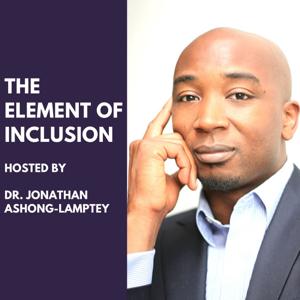
The Element Of Inclusion

The Element Of Inclusion

By Dr Jonathan Ashong-Lamptey Diversity & Inclusion I Broadcaster I Speaker IBusinessCareersManagement
Download on the App Store

The Element Of Inclusion episodes

  • The Hidden Business Case for Inclusion Inside Your Organisation

    Most leaders don't have a business case for diversity They copy someone else's

    Key Topics Covered in This Episode:

    1. Why using organisational artefacts reveals your real business case
    2. How everyday language builds trust with senior leadership
    3. How surfacing an existing case builds instant credibility

    Play the Episode for More

    Key Takeaways from This Episode:

    1. Your strongest business case is already inside your organisation.
      • "You're not creating a business case… you're revealing one."
    2. Alignment with real priorities accelerates support.
      • "Aligning your business case with these priorities increases your chance of buy-in."
    3. Strong business cases always include a clear next step.
      • "Make a clear, credible request."

    Check out these resources

    Business Case in a Box: Build a Business Case for Inclusion your CFO will take seriously.

    12 min
  • Why the Equality Act Doesn't Create Inclusion

    15 years ago the Equality Act was introduced in the UK. And unlike most people, I actually bothered to read it.

    Key Topics Covered in This Episode:

    1. Why people misunderstand the Equality Act
    2. Why it has limited impact
    3. Why it created an industry people hated

    Play the Episode for More

    Key Takeaways from This Episode:

    1. The Equality Act wasn't meant to create inclusion, it was meant to prevent discrimination.
      • "It was designed to create minimum standards of legal protection. Not a roadmap for building inclusive cultures."
    2. You can comply with the law and still fail your people.
      • "I've heard people say that they're following the rules but their culture hasn't changed."
    3. Real inclusion needs leadership not legislation.
      • "All the real impact comes from proactive leadership, not passive compliance."

    Check out these resources:

    • Equality Act 2010
    • EHRC Gender Pay Gap Reporting Update – GOV.UK

    9 min
  • 5 Brutal Inclusion Questions Leaders Are Afraid To Answer

    Most Diversity and Inclusion work doesn't change much. Not because people don't care, but because they won't ask the hard questions.

    Key Topics Covered in This Episode:

    1. How removing social events exposes the real state of inclusion work.

    2. Why your CFO's respect defines a strong business case.

    3. How recognising your diversity hierarchy reveals hidden organisational priorities.

    Play the Episode for More

    Key Takeaways from This Episode:

    1. Social events are not a substitute for a real inclusion strategy.

      • "Remove all your social events. What do you have left?"

    2. Emotional storytelling is optional; structured credibility is not.

      • "Your leaders won't always be able to make the emotional bit land."

    3. Sustainable inclusion work requires a clear methodology.

      • "Random acts of inclusion aren't a strategy."

    Check out these resources:

    Do you have a business case for inclusion your CFO can trust?

    No? Then you need this.

    8 min
  • Why I'm Proud to Be Biased About Inclusion

    Most people think bias is always a bad thing. I don't.

    I'm biased about inclusion and I want you to join me.

    Key Topics Covered in This Episode:

    1. Why I choose to be biased towards inclusion action.
    2. Why most research expects someone else to take action.
    3. Why blaming "them" strips you of power.

    Play the Episode for More

    Key Takeaways from This Episode:

    1. Not all bias is bad—especially if it leads to action
      • "I'm biased against unconscious bias training because it doesn't work. Because there's no evidence. Because there's not enough action. I'm biased towards action and I want you to join me."
    2. Research diagnoses problems, but rarely shows you what to do next
      • "Academic research is amazing for diagnosing problems. It uncovers bias. It maps inequality. It identifies systemic issues. But here's the thing. It's not so good in helping you to do something. It's not hot on your next action steps."
    3. Waiting for "them" undermines your power to change things
      • "It's always they. Never me. Never you. This undermines your agency. It strips away your self-efficacy. Self-efficacy is an individual's belief in their capacity to act in the ways necessary to reach specific goals."

    7 min
  • The Real Reason Your Inclusion Work Gets Ghosted

    Leaders are telling me their DEI budgets have been cut. Resources pulled. Support withdrawn.

    Key Topics Covered in This Episode:

    1. Why most DEI strategies collapse at the measurement stage
    2. How vague inclusion goals make your budget vulnerable
    3. How the PICOC method turns soft goals into fundable outcomes

    Play the Episode for More

    Key Takeaways from This Episode:

    1. If you can't track it, you can't protect it.
      • "We said we were going to improve inclusion. We ran initiatives. But when they asked what changed — we had nothing to show."
    2. If it doesn't deliver, it dies.
      • "Likes isn't impact. Smiles aren't metrics."
    3. If it doesn't serve the business, it doesn't survive.
      • "If your inclusion work doesn't feel like it helps the business succeed it's vulnerable."

    Check out these resources

    You Told Me You're Overwhelmed By DEI. This Will Help

    11 min
  • You Told Me You're Overwhelmed By DEI. This Will Help

    You've told me you're overwhelmed. Too many ideas.

    Key Topics Covered in This Episode:

    1. Why so many leaders feel trapped by too much DEI advice
    2. How 389 episodes can still leave people stuck
    3. What three priorities simplify high-impact inclusion work

    Play the Episode for More

    Key Takeaways from This Episode:

    1. Progress starts when you stop trying to do everything
      • "The other half are overwhelmed and don't know where to start. Or they haven't made enough use of what I already provide."
    2. Structure creates momentum where motivation alone can't
      • "The most impactful work we've done follows a clear, evidence-based framework. One that's easy to explain. Easy to adapt. Easy to act on."
    3. Fewer inputs lead to better, more focused action
      • "If you follow these steps, you'll: Get buy-in for your work, deliver results that matter, and consistently make progress. Everything else is a distraction."

    Check out these resources :

    Ultimate Guide to Inclusion Work

    Inclusion Ready Leaders Brief

    Dr Jonathan on LinkedIn

    Element of Inclusion on Linkedin

    3 Biggest Problems In Organisations Trying To Become More Inclusive

    10 Do's And Don'ts For Creating An Inclusive Workplace

    The Platitude Problem of Diversity & Inclusion

    The Propaganda Problem of Diversity & Inclusion

    The Rhetorical Problem of Diversity & Inclusion

    11 min
  • 3 Bad Pieces of DEI Advice I Want You to Avoid

    I see a lot of dangerous DEI advice. Here I'm going to spell out 3 of the most harmful for you.

    Key Topics Covered in This Episode:

    1. How Rebranding DEI without reforming it destroys trust.
    2. Why you need to reconsider who you let influence you
    3. How critique 'oppression' isn't activism but manipulation.

    Play the Episode for More

    Key Takeaways from This Episode:

    1. People don't want performance; they want progress
      • "Nobody likes a bait and switch."
    2. Credibility is earned by doing the hard things with integrity
      • "Are the people you take advice from worthy of your confidence."
    3. The real threat to DEI isn't backlash; it's unquestioned belief
      • "That's not education. That's indoctrination."

    Check out these resources:

    4 Signs The DEI Bubble Is About To Burst

    The Trojan Horse Problem of Diversity And Inclusion

    The Propaganda Problem of Diversity & Inclusion

    The Rhetorical Problem of Diversity & Inclusion

    11 min

About The Element Of Inclusion

From the publisher's feed

Hosted by Dr. Jonathan Ashong-Lamptey