
Sign up to save your podcasts
Or

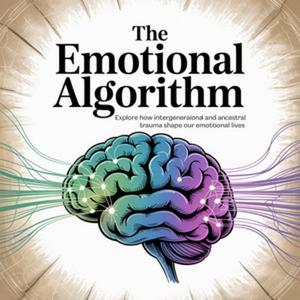


Some of the hardest things we carry are the ones we never consciously chose. A fear that feels bigger than the moment. A habit of shutting down when conflict appears. A deep sense of responsibility that seems to have no clear origin. In this episode, titled Inherited Patterns , we explore how intergenerational trauma, ancestral trauma, emotional psychology, and the neuroscience of emotions can shape the way we think, feel, and respond to life. The surprising truth is that many of our emotional reactions are not random at all. They are often inherited patterns passed down through families, cultures, and generations.
The first thing to understand is that trauma does not always begin with us. Families transmit more than stories, values, and traditions. They also pass along survival strategies. If a parent grew up in chaos, scarcity, or emotional neglect, they may have learned to stay hypervigilant, avoid vulnerability, or suppress their needs. Those adaptations can become part of the emotional climate of a home. Over time, children absorb not only what is said, but what is modeled. This is how inherited patterns can quietly take root, even when no one names them out loud.
From a psychological perspective, these patterns often show up as automatic beliefs. A person may believe they must earn love, never disappoint others, or stay in control at all costs. These beliefs can feel personal, but they are often shaped by family dynamics and inherited emotional rules. Emotional psychology helps us see that our reactions are not just about the present moment. They are also shaped by memory, attachment, and the meanings we learned early in life. When we begin to notice these patterns, we gain the ability to question them instead of living on autopilot.
Neuroscience adds another layer of understanding. The brain and nervous system are constantly scanning for safety. If previous generations lived through chronic stress, the family system may have become wired for threat detection. That can influence how easily we become anxious, how quickly we shut down, or how strongly we react to criticism. In this way, inherited patterns are not just emotional habits; they are embodied responses. The good news is that the brain is adaptable. Through awareness, supportive relationships, and repeated experiences of safety, the nervous system can gradually learn new ways of responding.
Healing inherited patterns does not mean blaming our families or rewriting the past. It means becoming curious about what was passed down, what still serves us, and what no longer belongs in our lives. Healing often begins with naming the pattern, feeling the emotion beneath it, and creating space for a different response. That might look like setting boundaries, practicing self-compassion, or simply pausing before reacting. Small moments of awareness can interrupt old cycles and create new ones.
Ultimately, healing is both personal and generational. When one person begins to understand their inherited patterns, they create the possibility of change not only for themselves, but for the people who come after them. That is the quiet power of this work. It is not about perfection. It is about becoming the first person in the line to say, “This stops here. I choose something different.”
When we talk about healing, we often think about our own experiences first. But what if some of the emotional patterns we carry didn’t start with us? What if the fear, grief, shame, or hypervigilance we feel has roots in the generations before us? That’s where the neuroscience of emotions becomes so powerful. It helps us understand that emotions are not just abstract feelings floating around in the mind—they are deeply connected to the brain, the body, memory, and survival. And when we look at intergenerational trauma and ancestral trauma through that lens, healing starts to make a lot more sense.
The first thing to understand is that emotions are biological signals. The brain is constantly scanning for safety or danger, and when it senses a threat, it activates the nervous system. This is why emotions can feel so immediate and overwhelming. In the neuroscience of emotions, structures like the amygdala, hippocampus, and prefrontal cortex all play a role. The amygdala helps detect threat, the hippocampus helps organize memory, and the prefrontal cortex helps us regulate and make sense of what we feel. When trauma is present, especially over generations, these systems can become more sensitive, causing us to react strongly even when the present moment is not actually dangerous.
That brings us to inherited patterns. Many people grow up noticing that their family seems to carry the same emotional habits: silence around pain, fear of conflict, perfectionism, emotional shutdown, or a constant need to stay prepared for the worst. These patterns are not random. They can be passed down through parenting styles, family culture, and stress responses shaped by earlier trauma. In some cases, the body learns to live in survival mode and teaches the next generation to do the same. The neuroscience of emotions shows us that repeated stress can wire the brain toward protection rather than connection, which is why healing often means learning how to feel safe again.
Another important piece is memory. Trauma is not always remembered as a clear story. Sometimes it lives in the body as tension, anxiety, numbness, or sudden emotional overwhelm. This is because emotional memory is stored differently from ordinary facts. The brain can hold onto the feeling of danger long after the event is over. When trauma is ancestral, the emotional atmosphere of a family can shape how children interpret the world before they even have words for it. They may absorb unspoken grief, fear, or shame and carry it as part of their own identity. Understanding the neuroscience of emotions helps us realize that these reactions are learned survival responses, not personal flaws.
The hopeful part is that the brain is adaptable. Neuroplasticity means the brain can change through new experiences, relationships, and practices. Healing inherited trauma involves building new emotional pathways: learning to regulate the nervous system, naming feelings without judgment, and creating experiences of safety, support, and compassion. Therapy, mindfulness, breathwork, body-based practices, and healthy connection can all help shift the brain out of survival mode. Over time, we can interrupt old patterns and create something new—not just for ourselves, but for the generations that come after us.
So when we explore the neuroscience of emotions, we’re not just studying how feelings work. We’re learning how history lives in the body, how trauma can echo across generations, and how healing becomes possible when we understand what the brain has been trying to protect us from. That understanding is powerful. It reminds us that our emotional patterns are not our destiny. They are places where awareness, compassion, and change can begin.
Emotional psychology is one of those topics that helps us make sense of so much more than mood swings or stress. It asks a deeper question: why do we feel what we feel, and why do some emotions seem to live in us long before we can explain them? In this episode, we explore how intergenerational trauma and ancestral trauma can shape our emotional world, how the brain stores and responds to pain, and what healing inherited patterns can really look like in everyday life.
One of the most important ideas in emotional psychology is that emotions are not random. They are messages, shaped by memory, experience, and the nervous system. When a person grows up in a family where fear, silence, or emotional suppression was common, those patterns can become embedded early. Over time, the brain learns what is safe, what is threatening, and what must be avoided. This is where intergenerational trauma can quietly pass from one generation to the next—not only through stories, but through behavior, attachment, and emotional conditioning.
Neuroscience helps us understand why these patterns can feel so hard to change. The brain is constantly scanning for danger, and when it detects stress, it activates protective responses before logic has a chance to step in. That means a person may react with anxiety, shutdown, anger, or people-pleasing without fully understanding why. Emotional psychology shows us that these reactions are often survival strategies, not personal failures. When trauma is inherited or repeated, the nervous system may stay on alert, even in moments that are objectively safe.
This is also where ancestral trauma enters the conversation. Many people carry emotional burdens that are bigger than their own lived experiences. Family loss, displacement, war, poverty, discrimination, and unspoken grief can leave a lasting imprint across generations. Sometimes this appears as chronic guilt, hypervigilance, perfectionism, or a deep sense of not belonging. Emotional psychology invites us to look at these patterns with compassion instead of shame. If a response was once necessary for survival, it deserves understanding before it can be transformed.
Healing inherited patterns begins with awareness. Once we can name a pattern, we can start to interrupt it. That might mean noticing when the body tightens during conflict, recognizing a trigger that belongs to an older wound, or learning to pause before reacting. Practices like therapy, somatic work, breath regulation, journaling, and supportive relationships can help rewire the nervous system over time. Healing does not mean denying the past. It means teaching the brain and body that the past is not happening now.
At its core, emotional psychology reminds us that healing is both personal and relational. We are shaped by what came before us, but we are not trapped by it. With curiosity, compassion, and consistent care, inherited pain can become inherited wisdom. And sometimes, the most powerful act of healing is simply this: learning to feel, understand, and respond differently than the generations before us.
When we talk about emotion and memory , we’re really talking about the way our inner world keeps records of what matters most. Some memories are clear and easy to name, like a childhood birthday or a first day at school. Others live deeper in the body, shaping how we react, what we fear, and what we reach for in relationships. In this episode, we’re exploring how emotional experiences are stored, why certain patterns seem to repeat across generations, and how understanding the science of emotion can help us begin to heal inherited wounds.
One of the most important things to understand is that memory is not just a mental filing system. The brain and body work together to store emotional experiences in powerful ways. When something feels intense, the amygdala helps tag it as important, while the hippocampus helps organize the details of what happened. That means emotions can make memories stronger, but they can also make them feel fragmented. You may not remember every fact, but you remember the feeling. And sometimes that feeling shows up later as anxiety, shutdown, anger, or a sense of danger that seems bigger than the moment itself.
This is where intergenerational trauma becomes so important. Families do not only pass down stories, values, and traditions. They can also pass down stress responses, silence, and survival strategies. A parent who learned to stay emotionally guarded may unknowingly teach their child that vulnerability is unsafe. A grandparent who lived through war, displacement, or poverty may have adapted by becoming hypervigilant, controlling, or emotionally unavailable. Even when the original event is long gone, the emotional memory can remain alive in the nervous system, shaping how descendants respond to the world.
From a neuroscience perspective, healing begins when we bring awareness to these patterns without judgment. The brain is designed to learn from repetition, which means it is also capable of relearning. When we notice that a reaction feels larger than the present moment, we can pause and ask: Is this response about now, or is it connected to something older? That simple question can create space between stimulus and reaction. Over time, safe relationships, reflection, therapy, breathwork, and somatic practices can help regulate the nervous system and rewrite emotional associations. The goal is not to erase the past. The goal is to stop living as if the past is still happening.
Healing inherited patterns also means making room for compassion. Many of the behaviors we judge in ourselves and others began as protection. Emotional numbness, perfectionism, people-pleasing, and overcontrol often developed for a reason. When we understand the link between emotion and memory, we can begin to see these patterns not as personal failures, but as adaptations that once helped someone survive. That shift matters, because compassion lowers shame, and shame often keeps trauma locked in place.
In the end, emotion and memory are deeply connected threads in the story of who we are. They shape our instincts, our relationships, and our sense of safety in the world. But they do not have to define us forever. When we understand how emotions are stored, how trauma travels, and how healing can happen through awareness and connection, we open the door to something new. We begin to remember not only what hurt us, but also what can restore us.
Stress and memory are deeply connected, and once you understand that link, a lot of confusing emotional patterns start to make sense. Why do certain situations feel bigger than they “should”? Why do some memories stay vivid while others fade? And why do family patterns seem to repeat, even when we consciously want something different? In this episode, we’re looking at stress and memory through the lens of intergenerational trauma, ancestral trauma, emotional psychology, and the neuroscience of emotions.
One of the first things to understand is that stress changes the way memory works. When the brain senses threat, it shifts into survival mode. The amygdala, which helps detect danger, becomes more active, while the prefrontal cortex, the part of the brain involved in reasoning and perspective, can become less available. At the same time, stress hormones like cortisol and adrenaline affect how memories are formed and stored. This is why highly stressful moments can feel unforgettable, while other details from the same period may feel blurry or missing. The brain is not trying to tell a perfect story; it is trying to keep you safe.
This becomes especially important when we talk about trauma. Traumatic stress can leave memory fragments instead of a clear narrative. A smell, a tone of voice, or a certain kind of silence may trigger a powerful emotional response long after the original event is over. Sometimes people think, “I shouldn’t react this strongly,” but the body and brain are often responding to an older memory network. In this way, stress and memory are not just about remembering facts. They are about remembering danger, and sometimes that memory is stored in the nervous system more than in words.
Now add an intergenerational layer, and the picture becomes even more complex. Families pass down more than stories and traditions. They also pass down coping strategies, emotional habits, and sometimes unresolved fear. A parent who grew up in scarcity may teach a child to stay hypervigilant. A family shaped by silence may teach emotional suppression. Over time, these patterns can become inherited responses to stress, even when the original source of the trauma is no longer present. This is why healing inherited patterns often begins with noticing what feels automatic, familiar, or oddly “older than me.”
The hopeful part is that memory is not fixed. The brain is adaptable, and healing can change the way stress is stored and experienced. Practices that help regulate the nervous system—like breathwork, therapy, journaling, somatic awareness, and safe relational connection—can create new emotional experiences that compete with old threat memories. Over time, the brain learns that not every sensation means danger, and not every reminder of the past has to control the present. Healing does not erase what happened, but it can soften its grip and create more choice in the moment.
So if stress and memory have been shaping your reactions, your relationships, or the patterns you keep seeing in your family, know this: your response is not random, and it is not a personal failure. It is information. It is the nervous system asking for safety, understanding, and care. And when we begin to listen with compassion, we open the door to changing not only our own story, but the emotional legacy that comes after us.
Welcome to Emotional Recall , an episode about something many people feel but don’t always have words for: the way pain can echo across generations. Sometimes we think our reactions are only about what happened to us personally. But emotional life is often more layered than that. The fears, coping habits, silences, and survival strategies we carry may be shaped by family history, ancestral trauma, and the emotional patterns passed down long before we were born. In this episode, we’re exploring emotional recall as both a psychological experience and a healing opportunity.
The first thing to understand is that intergenerational trauma is not just a theory about the past. It shows up in the present through behaviors, beliefs, and nervous system responses. A family that lived through war, displacement, abuse, poverty, or chronic instability may pass on more than stories. They may pass on hypervigilance, emotional shutdown, difficulty trusting, or the belief that safety is temporary. Children absorb these patterns not only through what is said, but through tone, tension, and the emotional climate of the home. Over time, those inherited responses can feel like personality traits, when in fact they are often adaptations.
This is where emotional psychology helps us make sense of the pattern. Emotions are not random; they are signals shaped by memory, meaning, and attachment. If a parent was taught to suppress grief, a child may learn that sadness is dangerous. If a family survived by staying small and invisible, self-expression may later feel like risk. Emotional recall happens when present-day experiences activate these older emotional memories. A conflict, a loss, or even a moment of tenderness can awaken something deeper, and the reaction may seem bigger than the event itself because it is connected to stored emotional history.
Neuroscience gives us another important piece of the picture. The brain and body are constantly scanning for threat, and repeated stress can strengthen survival pathways. Over time, the nervous system learns what to expect. That means inherited trauma can live not only in stories, but in regulation patterns: a racing heart, a tight chest, an impulse to people-please, or a tendency to disconnect. The good news is that the brain is also adaptable. Through safe relationships, reflection, and repeated healing experiences, new pathways can form. This is why healing is not about erasing the past; it is about teaching the nervous system that the present is different.
Healing inherited patterns begins with recognition. When we name what is happening, we create space between stimulus and reaction. We can ask: Is this response truly mine, or is it something I learned to survive? That question alone can be powerful. From there, healing may include therapy, somatic practices, journaling, family exploration, or simply allowing emotions that were once forbidden. Grief, anger, and fear often need to be felt before they can soften. And as we do that work, we may find that healing ourselves also changes what gets passed on next.
So if emotional recall has brought old pain to the surface, remember this: it is not proof that you are broken. It may be proof that your mind and body are trying to complete an unfinished story. And with awareness, compassion, and support, inherited pain can become inherited wisdom. That is the deeper promise of healing—breaking patterns, restoring choice, and creating a different emotional future.
Have you ever had a moment where a feeling seemed bigger than the situation in front of you? Maybe a comment from a loved one hit harder than it should have. Maybe a small conflict made you feel suddenly unsafe, rejected, or invisible. In this episode, we’re exploring recall ability —not just as memory, but as the mind and body’s power to bring up past experiences, emotions, and patterns that still shape how we respond today.
When we talk about intergenerational trauma and ancestral trauma, recall ability becomes especially important. The brain is constantly searching for patterns. It notices what feels familiar, what feels threatening, and what feels like home. Emotional psychology helps us understand that many of our reactions are not random at all. They are often built from repeated experiences, family dynamics, and inherited survival strategies. We may think we are reacting to the present moment, but our nervous system may be recalling something much older.
One key point is that memory is not just a story stored in the mind. Neuroscience shows us that emotions, body sensations, and survival responses are deeply tied to recall ability. The amygdala helps detect danger, the hippocampus helps organize memory, and the nervous system stores patterns of response. That means trauma does not always show up as a clear image or narrative. Sometimes it appears as tightness in the chest, a racing heart, or a sudden urge to shut down. The body recalls what the mind may not fully explain.
Another important layer is how inherited patterns can live on through families. If a parent, grandparent, or ancestor had to survive instability, violence, silence, or loss, those experiences can influence how later generations relate to emotion, trust, boundaries, and safety. A family may not consciously pass down the original trauma, but it can still be carried through behavior, belief systems, and emotional conditioning. Strong recall ability can help us notice these patterns more clearly. Instead of saying, “This is just who I am,” we can begin asking, “What am I remembering right now, and where did this response come from?”
The good news is that recall ability can also support healing. When we can remember with compassion instead of judgment, we create space for change. We can slow down a reaction long enough to observe it. We can name the feeling, regulate the body, and separate the past from the present. Practices like therapy, journaling, breathwork, mindfulness, and somatic awareness can help rewire the nervous system over time. Healing is not about erasing memory. It’s about building a new relationship with it.
At its core, recall ability is a bridge. It connects what happened before with what is happening now. It helps us understand that our emotional life is shaped by both personal experience and inherited history. And once we can see that clearly, we can begin to choose differently. We can interrupt old cycles, soften inherited pain, and create a new emotional legacy for the generations that come after us.
So if something in you keeps reacting in ways you don’t fully understand, pause and listen. Your body may be remembering. Your mind may be recalling. And in that awareness, healing becomes possible.
When people hear the phrase memory storage, they often think of the brain as a filing cabinet, neatly labeling every experience and tucking it away for later. But emotional memory doesn’t work that simply. In this episode, we’re exploring how intergenerational trauma, ancestral trauma, and the neuroscience of emotions shape the way we store and carry pain, even when the original event happened long before we were born.
Memory storage is not just about facts and dates. It’s about sensations, survival responses, and emotional imprints. The brain stores experiences in different ways depending on how intense, repeated, or overwhelming they were. A calm, ordinary memory may be easy to recall and place in context. But a traumatic memory can be stored more like a warning signal than a story. That’s why certain sounds, smells, tones of voice, or family dynamics can trigger a strong emotional reaction without a clear conscious reason. The body remembers what the mind may not fully understand.
This is where ancestral trauma becomes especially important. We don’t inherit memories in the literal sense, but we can inherit patterns of stress, fear, silence, and adaptation. Families pass down coping strategies the same way they pass down traditions. If a previous generation survived by staying quiet, staying alert, or suppressing emotion, those behaviors can become embedded in the family system. Over time, what began as protection can turn into a pattern that limits emotional freedom. In this way, inherited trauma can influence how we interpret safety, intimacy, conflict, and self-worth.
The neuroscience of emotions helps explain why these patterns can feel so automatic. The amygdala, which plays a role in detecting threat, can become highly responsive when a person has lived through chronic stress or trauma. Meanwhile, the prefrontal cortex, which helps us reflect, regulate, and make meaning, may go offline during overwhelming moments. This means emotional memory storage is not just intellectual; it is deeply physiological. Healing begins when we create enough safety for the nervous system to notice, process, and refile those experiences in a less threatening way.
That healing process often involves more than talking about the past. It may include therapy, breathwork, body-based practices, journaling, and compassionate self-observation. It also requires curiosity. Instead of asking, “What is wrong with me?” we can ask, “What happened in my family system, and how is my nervous system responding to it?” That shift opens the door to understanding, and understanding creates space for change. When we become aware of what has been stored, we gain the ability to respond differently rather than repeat automatically.
Ultimately, memory storage is not destiny. The brain is adaptable, the nervous system can learn safety, and inherited patterns can be interrupted. We may not choose the emotional material we were handed, but we can choose what we do with it. Healing ancestral trauma is not about erasing the past. It’s about making room for new patterns, new language, and new ways of being. And sometimes, that begins with simply recognizing that what we carry is not ours alone—and that it can be transformed.
Traumatic recall is one of those phrases that can sound clinical at first, but it points to something deeply human: the way old pain can live on in the body, the mind, and even in family patterns we never consciously chose. In this episode, we explore how intergenerational trauma and ancestral trauma shape emotional psychology, why the brain can react as if the past is happening right now, and what healing inherited patterns can actually look like in real life.
One of the most important ideas to understand is that trauma is not only about what happened to us directly. Sometimes, the emotional imprint comes from what was never spoken, what was survived in silence, or what was passed down through family systems. A parent’s fear, a grandparent’s grief, or a lineage shaped by loss and instability can influence how we respond to stress today. This is where traumatic recall becomes especially powerful: a present-day event, tone of voice, smell, place, or conflict can activate an old survival response that feels bigger than the moment itself.
From a neuroscience perspective, this makes sense. The brain is designed to detect threat quickly and protect us before we have time to think. When something reminds us of earlier pain, the amygdala can fire up, the nervous system can shift into fight, flight, freeze, or fawn, and the body may react with racing thoughts, shutdown, tension, or panic. What feels like “overreacting” is often the nervous system doing exactly what it learned to do in order to keep us safe. Emotional psychology helps us see that these reactions are not character flaws; they are learned survival strategies.
Intergenerational trauma adds another layer. Families often carry emotional rules that are never directly stated: don’t cry, don’t trust, don’t ask for help, stay strong, stay quiet. Over time, these rules become internalized. We may find ourselves repeating the same relationship patterns, struggling with boundaries, or feeling guilt when we try to heal. Inherited patterns can show up as chronic anxiety, emotional numbness, people-pleasing, or a deep sense that we must earn safety. Recognizing these patterns is not about blaming our ancestors. It is about understanding the context of our pain so we can respond with compassion instead of shame.
Healing begins with awareness, but it deepens through regulation and repetition. That can mean learning to notice triggers without immediately becoming them, grounding the body through breath or movement, and naming emotions with honesty. It can also mean grief work, therapy, journaling, or creating new family rituals that support safety and connection. Each time we pause before reacting, each time we choose a different response, we interrupt the cycle. That is how healing inherited patterns becomes possible: not by erasing the past, but by changing our relationship to it.
Traumatic recall reminds us that memory is not only mental; it is embodied, emotional, and relational. But it also reminds us that healing is possible across generations. When we learn to understand our triggers, care for our nervous system, and meet old pain with compassion, we do more than help ourselves. We create a different emotional inheritance for the people who come after us.
Fear is one of the most powerful forces shaping human behavior. It can protect us, warn us, and help us survive. But when fear becomes chronic, inherited, or disconnected from the present moment, it can start running our lives in ways we do not fully understand. In this episode, we explore the fear response through the lens of intergenerational trauma, ancestral trauma, emotional psychology, and neuroscience, and we look at how healing begins when we learn to notice what our nervous system is actually doing.
The fear response is not just an emotion. It is a full-body survival reaction designed to keep us safe. When the brain detects a threat, real or perceived, it activates systems that prepare us to fight, flee, freeze, or fawn. The amygdala sends an alarm signal, stress hormones rise, and the body shifts into protection mode. This is incredibly useful in an emergency. But if the nervous system has been shaped by repeated stress, neglect, or trauma, it may become over-sensitive, reacting to everyday situations as if they were dangerous. That is when fear stops being a helpful signal and becomes a pattern.
This is where intergenerational trauma enters the conversation. Many people assume trauma begins and ends with a single life experience, but emotional patterns can also be passed down through families. A parent who grew up in fear may unconsciously teach a child to stay hypervigilant, suppress emotions, or expect the worst. Ancestral trauma can live on through beliefs, behaviors, silence, and body-based stress responses. Even if the original event happened before we were born, the nervous system can still inherit the aftershocks. We may carry fear that does not seem to match our current life because, in a sense, it is older than our current life story.
Neuroscience helps explain why these patterns feel so automatic. The brain is built for prediction, not just reaction. It learns from experience and creates shortcuts to keep us efficient and safe. If fear was a dominant theme in childhood or family history, the brain may wire itself to anticipate threat before evidence is even present. This can show up as anxiety, people-pleasing, perfectionism, emotional shutdown, or a constant need to control outcomes. From the outside, these behaviors may look like personality traits. In reality, they are often adaptive survival strategies that once made sense.
Healing the fear response begins with awareness and compassion. We cannot shame the nervous system into safety. Instead, we learn to slow down, notice triggers, and create new experiences that teach the body it is no longer in the past. Breathwork, grounding, therapy, somatic practices, and supportive relationships all help regulate the nervous system. Just as important is giving language to what we feel. When we can name fear without becoming fear, we create space between stimulus and response. That space is where choice lives.
Understanding the fear response is not about becoming fearless. It is about becoming less ruled by unconscious survival patterns and more connected to the present moment. When we recognize that some of our fear may be inherited, we stop blaming ourselves for every reaction. And when we bring care, curiosity, and neuroscience-informed healing to those patterns, we do more than heal ourselves. We begin interrupting the cycle for the generations that come after us.
From the publisher's feed