
Sign up to save your podcasts
Or

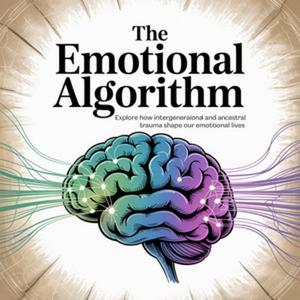


When people talk about the subconscious mind, they often mean the part of us that seems to react before we even have time to think. A feeling rises, a pattern repeats, a relationship triggers us, and suddenly we are responding from somewhere deeper than logic. In this episode, we explore how the subconscious mind can carry emotional imprints from our own life experiences, and sometimes even from generations before us. That’s where intergenerational trauma, ancestral trauma, emotional psychology, and neuroscience all begin to overlap in a powerful way.
One of the most important things to understand is that the subconscious mind is not trying to sabotage us. It is trying to protect us. From a neuroscience perspective, the brain is constantly scanning for safety and danger, and it learns through repetition. If a child grows up around fear, silence, shame, or unpredictability, the nervous system adapts. Those emotional patterns can become automatic, stored below conscious awareness, and later show up as anxiety, people-pleasing, hypervigilance, or difficulty trusting others. What feels like a personality trait is often a survival strategy written into the subconscious mind.
This is where intergenerational trauma becomes especially relevant. Families do not only pass down stories, traditions, and values. They can also pass down emotional responses, belief systems, and unresolved pain. A parent who never felt safe may raise a child who learns to stay small. A grandparent who survived loss may teach emotional shut-down as a form of strength. These inherited patterns can live on through behavior, attachment styles, and even the way we interpret love, conflict, and belonging. The subconscious mind absorbs these lessons early, often without words, and then repeats them until something brings them into awareness.
Emotional psychology helps us name what is happening inside. Many of our strongest reactions are not really about the present moment alone. They are layered responses, shaped by memory, body sensation, and meaning. A small criticism may trigger a deep sense of abandonment. A moment of closeness may feel unsafe because the subconscious mind associates intimacy with pain. Healing begins when we slow down enough to notice the pattern without judgment. Instead of asking, “What is wrong with me?” we can ask, “What is this reaction trying to protect?” That shift opens the door to compassion.
Healing inherited patterns is not about blaming our families or trying to erase the past. It is about bringing awareness to what has been carried unconsciously and choosing something new. Practices like therapy, breathwork, journaling, mindfulness, and somatic work can help the nervous system feel safe enough to release old survival responses. Over time, the subconscious mind can learn that not every signal means danger, not every conflict means abandonment, and not every emotion has to be suppressed. New experiences, repeated with care, can create new pathways in the brain and body.
At the heart of it all is this truth: what was inherited can be understood, and what was unconscious can become conscious. The subconscious mind holds our history, but it does not have to define our future. With awareness, patience, and healing, we can begin to interrupt the cycle, soften inherited fear, and create a different emotional legacy for ourselves and the generations that follow.
Welcome to this episode on brain rewiring, where we explore how intergenerational trauma, ancestral trauma, emotional psychology, and the neuroscience of emotions all connect in the process of healing inherited patterns. If you’ve ever wondered why certain reactions feel bigger than the moment, why old fears seem to live in your body, or why some emotional patterns repeat across generations, this conversation is for you. The good news is that the brain is not fixed. It is adaptable, responsive, and capable of change.
The first thing to understand is that trauma is not only about what happened to you. It can also be about what was passed down to you through family systems, stress responses, beliefs, and unspoken emotional rules. Intergenerational trauma can show up as chronic anxiety, perfectionism, emotional shutdown, people-pleasing, or a deep sense of not feeling safe, even when life is relatively stable. These patterns are often learned early, absorbed through environment and attachment, and reinforced by the nervous system. In many cases, what feels personal is also ancestral.
From a neuroscience perspective, emotions are not random. They are messages from the brain and body designed to keep us alive. When the nervous system senses threat, it activates protective responses like fight, flight, freeze, or fawn. If those responses were useful in a stressful family or cultural environment, they may have become automatic. Over time, the brain builds strong pathways around survival. That is why brain rewiring takes intention and repetition. We are not simply trying to “think positive.” We are teaching the brain and body that a new response is possible.
One of the most powerful parts of healing inherited patterns is learning to notice your triggers without judgment. A trigger is not a sign of weakness. It is a clue. It points to an old wound, an unmet need, or a protective pattern that once made sense. When you pause and ask, “What am I feeling? What am I afraid will happen? Does this belong to the present, or does it echo the past?” you begin to create space between stimulus and response. That space is where brain rewiring begins. Awareness interrupts autopilot.
Healing also requires compassion. Many people try to change by criticizing themselves into growth, but the nervous system does not heal through shame. It heals through safety, consistency, and connection. Small practices matter: grounding, breathwork, therapy, journaling, movement, and supportive relationships all help the brain form new associations. When you repeatedly experience safety in the present, your body starts to update its expectations. Over time, the old story loses some of its power.
Brain rewiring is not about erasing your past. It is about transforming your relationship to it. You may always carry the imprint of what came before, but you do not have to live as its prisoner. Every moment of awareness, every regulated breath, every boundary, every act of self-trust becomes part of a new neural pathway. Healing is both deeply personal and deeply ancestral. When you change your response, you don’t just shift your own life—you help interrupt patterns that may have traveled for generations.
So if you’re in the middle of this work, remember: progress can be quiet. It may look like catching yourself sooner, softening faster, or choosing differently even when it feels uncomfortable. That is brain rewiring in action. And little by little, you are creating a new emotional legacy—one built on safety, awareness, and healing.
Some wounds feel older than our own lives. A reaction that seems too big for the moment, a fear that appears without a clear cause, a family pattern that keeps repeating no matter how hard we try to change it—these experiences can leave us wondering if we are carrying something inherited. That’s the heart of trauma inheritance: the idea that emotional pain, stress responses, and survival patterns can be passed down through families in ways that shape how we think, feel, and relate to the world.
To understand trauma inheritance, it helps to look at intergenerational trauma and ancestral trauma together. Intergenerational trauma refers to the effects of trauma moving from one generation to the next through parenting styles, family culture, silence, fear, or unresolved grief. Ancestral trauma expands that lens even further, asking how historical events—war, displacement, oppression, loss, or violence—can echo through descendants. Even when the original event happened long before we were born, its emotional imprint may still live in family systems, shaping beliefs like “stay small,” “don’t trust anyone,” or “always be prepared for danger.”
From a neuroscience perspective, emotions are not just abstract feelings; they are deeply tied to the brain and body. When someone lives through chronic stress or trauma, the nervous system can become trained to scan for threat. Over time, that state of hypervigilance may become a default setting. Children growing up around a dysregulated caregiver can absorb those patterns through attachment, repetition, and emotional attunement. The brain learns from what it experiences, but it also learns from what it repeatedly witnesses. In that sense, trauma inheritance is not only about memory—it’s about nervous system conditioning.
There’s also growing interest in how trauma may affect biology across generations. While the science is still evolving, researchers are exploring how stress can influence gene expression and how environmental conditions may shape emotional regulation in descendants. But even without focusing on biology alone, the emotional psychology is clear: people often inherit coping strategies before they inherit language for their pain. A family that survived by staying silent may pass down silence. A family that survived by overworking may pass down exhaustion. A family that survived by disconnecting may pass down emotional distance. These patterns are understandable, but they can become limiting when they outlive the danger that created them.
Healing inherited patterns starts with awareness. Naming trauma inheritance can be powerful because it helps separate what is yours from what was handed to you. That distinction creates space for choice. Healing may involve therapy, somatic practices, inner child work, journaling, boundaries, and learning how to regulate the nervous system in safe, supportive ways. It may also mean grieving what was missing, honoring what your family endured, and choosing new responses that reflect the life you want to build now. You do not have to reject your lineage to heal it. Sometimes healing begins by saying, “I see what was passed down, and I choose to carry it differently.”
Trauma inheritance reminds us that pain can travel through generations, but so can resilience, insight, and change. The patterns may be old, but they are not unbreakable. With compassion, curiosity, and support, inherited wounds can become the starting point for deeper understanding and lasting transformation.
Welcome to this episode on mental patterns, where we explore how the mind learns, repeats, and sometimes carries more than our own personal experiences. So many of the ways we think, react, shut down, people-please, or stay on high alert are not random. They are patterned. And often, those patterns are shaped not only by our childhood, but by the emotional legacy passed down through generations.
When we talk about intergenerational trauma and ancestral trauma, we are talking about experiences that can echo through families long after the original event has passed. A parent who grew up in fear may become emotionally guarded. A grandparent who survived scarcity may pass on anxiety around safety, money, or control. These responses are not signs of weakness. They are survival strategies. The body and brain learn what helps us endure, and then they repeat those lessons automatically, even when the danger is no longer present.
From a neuroscience of emotions perspective, this makes a lot of sense. The brain is designed to protect us by spotting patterns quickly. When something feels familiar, the nervous system often responds before we have time to think. That is why a small conflict can trigger a huge emotional reaction, or why criticism can feel like rejection that reaches far deeper than the present moment. The amygdala, which helps detect threat, can become highly sensitive when a person has lived through chronic stress. At the same time, the parts of the brain involved in reflection and regulation may have to work harder to calm the alarm. In other words, emotional reactions are not just “in your head.” They are also in your biology.
This is where emotional psychology becomes so important. Many mental patterns are built around protection: avoid conflict, do everything perfectly, stay invisible, always stay in control, never need too much. These patterns may have once helped someone feel safe, accepted, or loved. But over time, they can become limiting. A person may look successful on the outside while carrying constant tension underneath. Another may struggle to trust, rest, or express needs because their inner world learned that vulnerability was risky. Healing begins when we stop judging these patterns and start understanding what they were trying to do for us.
Breaking inherited patterns does not mean blaming our families or pretending the past did not shape us. It means noticing what we have absorbed and gently asking whether it still serves us. That might look like pausing before reacting, naming a feeling instead of suppressing it, or recognizing that a familiar fear belongs to an older story. It can also mean building new experiences of safety through therapy, reflection, supportive relationships, breathwork, or mindfulness. Each time we respond differently, we are teaching the brain a new possibility.
The truth is, mental patterns are powerful, but they are not permanent. The same nervous system that learned fear can also learn safety. The same brain that repeated old survival responses can form new pathways through awareness, compassion, and practice. Healing inherited patterns is not about becoming someone else. It is about returning to yourself, with more clarity, more choice, and more freedom than the generations before you may have had.
Family beliefs shape us long before we have the words to question them. They live in the stories we hear at the dinner table, the rules we absorb from our caregivers, and the emotional tone of the homes we grow up in. Some family beliefs are supportive and grounding. Others are silent carriers of fear, shame, silence, or survival. In this episode, we’re exploring how family beliefs can pass from one generation to the next, how they influence our emotions and behavior, and what it means to begin healing patterns that may not have started with us.
One of the most powerful things to understand is that family beliefs are not just ideas. They become emotional templates. If a child grows up hearing that vulnerability is weakness, that rest is laziness, or that success requires sacrifice and self-abandonment, those messages can become deeply wired into the nervous system. Over time, the brain starts to treat those beliefs as truth. This is where emotional psychology and neuroscience intersect: repeated experiences shape neural pathways, and those pathways influence how we interpret safety, love, conflict, and worth.
This is also why inherited patterns can feel so personal even when they are historical. Intergenerational trauma and ancestral trauma often show up as family beliefs that were formed during times of danger, loss, discrimination, or instability. A family might learn to stay quiet to survive. Another might believe that trust is risky, that emotions should be buried, or that nobody in the family asks for help. These beliefs may have once been adaptive. They may have protected people in impossible circumstances. But what helped a previous generation survive can become limiting for the next one.
The emotional impact of family beliefs can be subtle or intense. You might notice chronic guilt when setting boundaries, anxiety around making mistakes, or an inner voice that echoes old family rules even when your adult life looks very different. The body often remembers what the mind tries to dismiss. That’s because emotions are not just mental experiences; they are whole-body events. The nervous system learns from repetition, from tone of voice, from tension in the room, and from what was allowed or forbidden emotionally. Healing begins when we start noticing which beliefs are truly ours and which ones were inherited without choice.
Changing family beliefs does not mean rejecting your family or erasing your past. It means creating enough awareness to ask, “Is this still true for me? Does this belief support my well-being? Where did it come from?” That kind of reflection can be deeply liberating. When we bring compassion to the inherited patterns we carry, we can begin to rewrite them with intention. Therapy, mindfulness, somatic practices, journaling, and honest conversations can all help loosen the grip of old emotional scripts. Over time, new beliefs can be practiced: that safety is possible, that rest is necessary, that emotions are information, and that healing is allowed.
Family beliefs are powerful because they live at the crossroads of memory, emotion, and identity. But they are not destiny. The patterns passed down to us can be understood, softened, and transformed. And in doing that work, we are not only healing ourselves. We are shifting what gets carried forward. That is the quiet, generational power of awareness: one person learning to see an old story clearly enough to stop repeating it and start healing it instead.
Welcome to Emotion Science, where we explore a question that feels both deeply personal and surprisingly universal: why do certain emotional patterns seem to repeat across generations? Why do some fears, silences, and survival habits feel older than our own stories? In this episode, we’re looking at the fascinating intersection of intergenerational trauma, ancestral trauma, emotional psychology, and the neuroscience of emotions to better understand how inherited patterns are formed—and how they can be healed.
One of the most important ideas in emotion science is that emotions are not just fleeting feelings. They are signals from the brain and body, shaped by experience, memory, and nervous system regulation. When a person goes through trauma, especially chronic or unresolved trauma, the brain adapts to survive. The amygdala may become hyper-alert, the stress response may stay activated, and the body may learn to expect danger even when none is present. These adaptations can be passed on in families not only through behavior and relationship patterns, but also through the emotional environment children grow up in. A parent who learned to stay guarded may unintentionally teach a child that the world is unsafe.
This is where intergenerational trauma becomes so powerful to understand. Trauma doesn’t always pass down through dramatic stories. Sometimes it lives in tone of voice, family roles, unspoken grief, emotional avoidance, or overcontrol. A family that survived war, displacement, racism, poverty, abuse, or loss may develop coping strategies that once made perfect sense. But over time, those strategies can become inherited emotional blueprints. A child may absorb anxiety, shame, mistrust, or emotional numbness without ever hearing the original story. In that way, ancestral trauma can shape identity long before a person has words for what they are feeling.
The good news is that the brain is also built for change. Neuroscience tells us that emotional habits are not fixed destiny. Through neuroplasticity, the brain can form new pathways when we repeatedly practice safety, reflection, and connection. This is where healing begins: by noticing the pattern without becoming the pattern. Therapy, mindfulness, body-based regulation, supportive relationships, and self-compassion all help create new emotional experiences that the nervous system can learn from. When someone learns to pause, breathe, and respond instead of react, they are literally teaching the brain a new way to interpret the world.
Healing inherited patterns also means making room for grief and truth. Sometimes we have to acknowledge that what was passed down was not only love and strength, but also pain that never got fully processed. That recognition is not an accusation—it is an act of clarity. When we name what our families carried, we interrupt silence. When we understand the neuroscience of emotions, we stop seeing emotional struggles as weakness and start seeing them as adaptations that once protected us. And when we approach ourselves with curiosity instead of judgment, we create the conditions for transformation.
Emotion science reminds us that healing is both personal and generational. The work we do on ourselves can echo forward just as trauma once echoed backward. Every time we regulate, reflect, and choose differently, we help rewrite the emotional legacy we inherited. That is the quiet power of this journey: not to erase the past, but to transform its impact. Thank you for listening, and remember—your emotions are messages, your patterns are learnable, and healing is possible.
When people hear the phrase epigenetic changes , it can sound technical, distant, even a little intimidating. But at its core, it’s about something deeply human: how our experiences, stress, and environment can influence the way our genes are expressed. In other words, we are not just shaped by what we inherit in our DNA. We are also shaped by what happens to us, and in some cases, by the emotional legacies passed down through generations.
That idea opens the door to a powerful conversation about intergenerational trauma and ancestral trauma. Families do not only pass down eye color, habits, or facial features. They can also pass down coping strategies, nervous system patterns, and emotional responses. A parent who grew up in fear may become highly alert and protective. A grandparent who survived hardship may have learned to suppress emotion in order to keep going. Those survival strategies can be passed along, often without anyone realizing it. This is where epigenetic changes become so important: they help explain how stress and trauma can leave a biological imprint that affects future generations.
From the perspective of emotional psychology, this matters because emotions are not just feelings floating in the background. They are signals from the body, shaped by memory, safety, and threat. If someone has inherited a pattern of hypervigilance, shame, or emotional shutdown, they may not understand why they react so strongly in certain situations. But the nervous system may be responding to old stories, old pain, and old protections. Healing begins when we stop asking, “What is wrong with me?” and start asking, “What happened in my lineage, and how did my body learn to survive?”
Neuroscience gives us even more insight into this process. The brain is constantly adapting based on experience. Repeated stress can strengthen pathways related to fear and survival, while supportive relationships, regulation, and safe environments can help build new pathways connected to trust and resilience. That means healing is not about erasing the past. It is about creating enough safety in the present for the brain and body to learn something new. Practices like therapy, breathwork, mindfulness, movement, and compassionate self-reflection can all support this rewiring process over time.
What makes this topic so hopeful is that inherited patterns are not a life sentence. Even if trauma has shaped your family system for generations, awareness can interrupt the cycle. Once you recognize the pattern, you can begin to respond differently. You can name what you feel. You can soften the inner critic. You can choose boundaries, rest, and connection. These small acts matter, because every time you offer your nervous system a new experience, you are helping to write a different story.
Epigenetic changes remind us that healing is both personal and collective. When one person begins to regulate, grieve, and restore safety, the effects can ripple outward. The past may live in the body, but so does the capacity to heal. And that possibility changes everything.
Welcome back to the show. Today we’re diving into a topic that sits at the intersection of emotional psychology, neuroscience, and personal healing: intergenerational trauma, ancestral trauma, and the way our brains hold on to inherited patterns. This episode is called Neural Pathways , and that title matters. Because so much of what we call “personality,” “stress response,” or even “the way I always react” is shaped by neural pathways that have been strengthened over time through experience, repetition, and emotion.
When we talk about trauma, we often think of a single painful event. But inherited trauma is usually more subtle than that. It can show up as chronic anxiety, people-pleasing, emotional shutdown, hypervigilance, or a deep sense that we are never truly safe. These responses are not random. They are often the nervous system’s learned attempts to protect us. In families and communities that have lived through loss, oppression, violence, displacement, or scarcity, emotional survival strategies can get passed down through behavior, modeling, and stress biology. Over time, the brain forms neural pathways that make these patterns feel automatic.
That’s where neuroscience gives us something powerful: the brain is not fixed. Neural pathways are strengthened through repetition, but they can also be softened, rewired, and replaced. This is the foundation of healing inherited patterns. If a child grows up around fear, silence, or emotional unpredictability, their brain learns to scan for danger. If love is inconsistent, they may learn to chase approval or suppress their own needs. Those pathways may become deeply familiar, but familiar does not mean permanent. Awareness creates the first opening for change.
One of the most important steps in healing ancestral trauma is learning to notice the body’s signals before they become full emotional reactions. A racing heart, a tight jaw, a sudden urge to withdraw, or an overwhelming need to fix everything can all be clues. These are not signs of weakness; they are messages from a nervous system shaped by past experience. Emotional psychology teaches us that naming what we feel can reduce its intensity. Neuroscience supports this too: when we pause, breathe, and identify the emotion, we interrupt the old pattern and create space for a new response.
Another key part of healing is compassion. Many people try to shame themselves out of inherited patterns, but shame usually reinforces them. If a neural pathway was built through fear, it will not be transformed by more fear. It changes through repeated experiences of safety, self-awareness, and regulated connection. That might mean therapy, somatic practices, journaling, prayer, community support, or simply learning to stay present with discomfort without becoming consumed by it. Healing is not about erasing the past. It is about teaching the brain and body that the past is not always happening now.
So if you’ve ever wondered why certain reactions feel bigger than the moment, or why emotional patterns seem to run in the family, remember this: you are not broken. You are patterned. And patterns can change. Every time you pause instead of react, feel instead of avoid, or choose care instead of fear, you are carving a new path in the brain. You are building new neural pathways. And in doing so, you are not only healing yourself—you are interrupting what gets passed forward. That is powerful work, and it begins one moment, one breath, one choice at a time.
Stress and emotions are deeply connected, and understanding that connection can change the way we respond to life, relationships, and even the patterns we carry from earlier generations. In this episode, we’re looking at stress and emotions through the lens of emotional psychology, neuroscience, and intergenerational trauma. Why do some reactions feel bigger than the moment in front of us? Why do certain situations trigger fear, shutdown, anger, or overwhelm so quickly? Often, the answer is not just in what is happening now, but in what has been carried forward through memory, nervous system patterns, and inherited survival strategies.
The first thing to understand is that emotions are not random. They are signals from the nervous system, designed to keep us safe and help us adapt. When stress rises, the brain becomes highly alert to danger. The amygdala, which helps detect threat, can become more active, while the prefrontal cortex, which supports reasoning and perspective, may go partially offline. That is why stress and emotions can feel so intense in the moment. We may know logically that we are safe, yet our body reacts as if something urgent is happening. This is not weakness. It is biology.
Now add trauma to the picture. If someone has experienced chronic stress, neglect, instability, or emotional pain, the nervous system may become trained to expect threat. Over time, this can create emotional patterns like hypervigilance, people-pleasing, numbness, or sudden anger. These responses are often protective. They were learned in environments where safety was inconsistent. In many families, these patterns are not only personal, but inherited. Children absorb emotional climates, coping styles, silence, and survival behaviors from parents and caregivers. In this way, ancestral trauma can shape how stress and emotions are experienced across generations.
That is why healing is not just about controlling emotions. It is about understanding them. When we begin to notice our triggers with curiosity, we create space between the stimulus and the response. Instead of asking, “What is wrong with me?” we can ask, “What is this reaction trying to protect?” That simple shift opens the door to nervous system regulation. Practices like slow breathing, grounding, naming emotions, and pausing before reacting help signal safety to the brain. Over time, the body learns that not every strong feeling means danger.
Healing inherited patterns also means allowing grief, compassion, and truth to coexist. Many emotional patterns were passed down by people who were also trying to survive. Recognizing this does not excuse harm, but it does bring clarity. It helps us see that our emotions are often carrying stories older than we are. When we meet those stories with awareness, we create a new pathway. We begin to respond from choice rather than reflex, and that is where transformation starts.
Stress and emotions will always be part of being human, but they do not have to run our lives. The more we understand the neuroscience behind our reactions and the legacy of trauma in our families, the more compassion we can bring to ourselves. Healing is not about becoming emotionless. It is about becoming more aware, more regulated, and more free. And sometimes, that freedom begins with one honest question: what am I really feeling, and where did this feeling first learn to live in me?
Have you ever noticed how certain reactions feel bigger than the moment itself? A small comment hits too hard, a conflict triggers a flood of emotion, or a familiar relationship pattern keeps repeating no matter how much you try to change it. In this episode, we’re exploring emotional patterns: where they come from, why they can feel so automatic, and how intergenerational trauma and ancestral trauma may shape the way we feel, cope, and connect.
At the heart of emotional patterns is the brain’s job to protect us. The nervous system is constantly scanning for safety and danger, and when something reminds it of pain, loss, shame, or rejection, it can react before the thinking brain even has time to catch up. That’s why emotions can feel instant and overwhelming. From a neuroscience perspective, the brain learns through repetition. If a child grows up in an environment where love is unpredictable, silence means danger, or emotions are not welcomed, those experiences can become deeply wired into the body as survival responses.
This is where emotional psychology gives us an important lens. Many of the patterns we call “personality” are actually adaptive strategies we developed early in life. People may become caretakers, perfectionists, peacekeepers, or emotionally shut down because those roles once helped them get through a difficult environment. The problem is that what protected us in the past can limit us in the present. We may keep choosing the familiar, even when it hurts, because the brain tends to trust the known over the unknown.
Intergenerational trauma adds another layer. Trauma does not only live in individual memory; it can live in family systems, stories, beliefs, parenting styles, and even the unspoken emotional rules passed down through generations. A family shaped by war, displacement, addiction, poverty, abuse, or grief may hand down more than history. It may also pass down fear, hypervigilance, emotional suppression, or a deep belief that survival depends on staying small, pleasing others, or never needing too much. These inherited patterns can be invisible until we begin to notice them repeating in our own lives.
The hopeful part is that emotional patterns are not permanent. The brain is adaptable, and healing begins with awareness. When you pause long enough to notice your triggers, name your feelings, and ask, “What does this remind me of?” you create a gap between stimulus and response. That gap is where change lives. Practices like therapy, breathwork, mindfulness, somatic awareness, journaling, and safe connection with others can help regulate the nervous system and teach the body that it is no longer trapped in the past. Healing inherited patterns does not mean denying where you come from. It means understanding your history clearly enough to choose differently.
If you have been feeling like your emotional reactions are bigger than they should be, or like you keep returning to the same painful cycles, this is not a sign that something is wrong with you. It may be a sign that your body is carrying old information. Emotional patterns can be inherited, learned, and reinforced, but they can also be softened, interrupted, and transformed. And that transformation begins with compassion, curiosity, and the courage to tell the truth about what you have lived through.
From the publisher's feed