
Sign up to save your podcasts
Or



In EP26 the EQ Gents dig into a well-known inhibitor for many aspiring leaders looking to propel their careers. The term, known as ‘Imposter Syndrome’ or ‘Imposterism’, was first identified by psychologists Pauline Rose Clance and Suzanne Imes in 1978, to describe a pattern where individuals doubt their accomplishments and harbor a persistent fear of being exposed as a "fraud."
The term was further popularized by Dr. Valerie Young’s book in 1980 called, The Secret Thoughts of Successful Women, wherein Dr. Young identifies 5 archetypes of ‘Imposter Syndrome’ commonly seen in females in the workforce. More recent research has led to the conclusion that males also suffer from ‘Imposter Syndrome’ to the same degree as females.
In this episode, our co-hosts will take a deep dive into Imposter Syndrome, specifically how it shows up and detrimental impacts unchecked Imposter Syndrome can have on one’s mental health and career performance. No doubt, the EQ Gents have had their own personal battles with Imposter Syndrome which they share throughout this enlightening episode.
Topics:
1) Explaining the origin story of ‘Imposter Syndrome’ and how it became widely known as a career killer.
2) The common signs and symptoms one should look out for to determine if they are being plageud by Imposter Syndrome.
3) The five (5) archetypes of Imposter Syndrome
4) Strategies the EQ Gents have personally employed to get through their own struggles with Imposter Syndrome over the years.
Also make sure to check out our host Ismail Qadry’s personal Imposter Syndrome Survival Guide, with helpful tips and tricks to overcome your Imposter Syndrome. Click this link to access: https://eq.ismailqadry.com/
Link to Dr. Valerie Young’s Book - The Secret Thoughts of Successful Women - https://www.amazon.com/Secret-Thoughts-Successful-Women-Impostor/dp/0307452719
Feel free to send us an email at [email protected] and share your thoughts or visit us at https://linktr.ee/emotionalintelligents
Send us Fan Mail
Summary:
The conversation explores the themes of authenticity, trust, and emotional intelligence in various contexts, including leadership, parenting, and employee development. In this episode, we discuss the importance of being authentic and trustworthy as leaders, and the potential pitfalls of being overly positive or performative.
David touches on the concept of the arc of justice, which relates to the idea that the arc over time in a relationship will tend towards intimacy rather than anger. The conversation concludes with a discussion on how emotional intelligence plays a role in receiving and reacting to emotional range from others.
Key Takeaways
Link to Evolution Website: https://evolution.team/david-shechtman
Connect with David Shectman on Linkedin: https://www.linkedin.com/in/davidshechtman/
Feel free to send us an email at [email protected] and share your thoughts or visit us at https://linktr.ee/emotionalintelligents
Send us Fan Mail
Our workforce is more diverse than ever before. This diversity extends beyond race and religion. As generations converge in the modern workplace, we see a large ideological range and sweeping differences in worldviews. Episode 23 of the Emotional Intelli-Gents Podcast focuses on why leaders must show an active interest in and engage on topics to gain a greater understanding of their team-members as people, beyond the scope of their jobs.
Episode 23 centers on the following major themes and topics:
We look forward to sharing our insights with you all and fielding your comments and feedback.
Feel free to send us an email at [email protected] and share your thoughts or visit us at https://linktr.ee/emotionalintelligents.
Send us Fan Mail
In this episode of the Emotional Intelli-Gents Podcast, hosts Ismail and Sameer delve into the intersection of emotional intelligence and leadership. A key focus is the idea that good leaders are fiercely loyal to their team members, a trait they suggest might be underrated. By showing up for their teams, leaders can build trust, confidence, and a sense of accountability. Topics also covered include recognizing moments for demonstrating loyalty, the dangers of being overly loyal, and the significance of psychological safety within a team. Long-term solutions and mutual commitment underscore their views on successful leadership. The hosts emphasize the profound impact of leaders' fierce loyalty during challenging times, and they welcome listeners to engage in their ongoing series on what makes good leaders and managers.
They share personal experiences and highlight the importance of standing up for your team. Loyalty builds trust and fosters a sense of security among team members, leading to greater accountability and achieving collective goals. Tune in to gain insights on creating a supportive and empathetic environment.
Key Topics
Timestamps
(00:00:00) Introduction
(00:01:02) Importance of Leader's Loyalty
(00:03:43) Significance of Employee Loyalty
(00:08:43) Barriers to Managerial Loyalty
(00:11:10) Risks of Over-Loyalty
(00:12:16) Leadership & Team Loyalty
(00:16:55) Children & Mimicry
(00:17:51) Psychological Safety in Teams
(00:22:39) Business Risks
(00:28:25) Commitment Discussion
(00:30:01) Underrated Qualities in Leaders
Link to 6 Seconds: https://www.6seconds.org/
6 Seconds on Instagram: https://www.instagram.com/6secondseq/?hl=en
Connect with Joshua Freedman on Linkedin: https://www.linkedin.com/in/freedman/
Feel free to send us an email at [email protected]
Send us Fan Mail
In this Episode, we cover a myriad of really interesting topics with our special guest, Joshua Freedman. The Episode taps into how Joshua’s company, 6 Seconds’, data-driven approach to determine the psyche of today’s workforce.
Some questions and insights you will find in Episode 21:
More about Joshua Freedman:
Joshua Freedman's journey into the world of emotional intelligence began with a profound fascination with human behavior and a burning desire to understand the role of emotions in shaping our lives. Over the years, he has dedicated himself to researching, teaching, and advocating for EQ as a critical skill for personal and professional success.
Key Achievements:
Joshua Freedman, as the CEO of 6 Seconds, has dedicated his life to promoting emotional intelligence as a pathway to a better world. His passion, expertise, and unwavering commitment to this cause have inspired countless individuals and organizations to embrace the power of emotions for personal and collective growth. Joshua's work continues to shape the way we understand and practice emotional intelligence, leaving a lasting legacy of positive change in its wake.
Link to 6 Seconds: https://www.6seconds.org/
6 Seconds on Instagram: https://www.instagram.com/6secondseq/?hl=en
Connect with Joshua Freedman on Linkedin: https://www.linkedin.com/in/freedman/
Feel free to send us an email at info@emotionalintelligents.com
Send us Fan Mail
In this episode, we delve into the complexities of FOPO, a modern-day phenomenon amplifying our innate fears of judgment from others. We explore its evolutionary roots, highlighting the human instinct to seek societal acceptance. We share our personal encounters with FOPO, emphasizing how it has influenced various aspects of our lives, including this very podcast journey as well as discuss the exacerbating role of social media in the age of constant feedback loops and digital validation. This episode touches upon the spectrum of FOPO's impact, from workplace dynamics to individual decision-making. We also offer insights and strategies for listeners to identify, confront, and potentially overcome this looming fear, advocating for self-awareness and genuine self-expression.
Key Takeaways:
Feel free to send us an email at [email protected] and share your thoughts or visit us at https://linktr.ee/emotionalintelligents
Send us Fan Mail
Ismail and Sameer are joined by a very special guest on Episode 19 of the Emotional Intelli-Gents Podcast, Mr. Bill Carson. Bill Carson dives deep into topics that are very near and dear to his life’s work as a resilience coach, emotional and social intelligence coach, and well-being coach. The podcast episode centers on how employers can meet the demands of today’s workforce with effective upskilling for psychological risk management, and sharing practical ways leaders can implement mental health first aid into their leadership approach.
About Bill Carson:
Topics covered in Episode 19 of the Emotional Intelli-Gents Podcast include:
You can find Bill Carson at the follow places:
https://www.linkedin.com/in/bill-carson-4a645618/
https://inspirelearning.au/
Link to Bill Carson’s recent book release: Safe Conversation For Work and Life: https://a.co/d/5sXrNxy
Feel free to send us an email at [email protected] and share your thoughts or visit us at https://linktr.ee/emotionalintelligents
Send us Fan Mail
In this episode, we dive deep into the world of emotional intelligence with Tara Renze, who is an author, emotional intelligence practitioner, entrepreneur, speaker, blogger, and thought leader. Tara shares her personal journey, the importance of self-awareness, and how to set "butterfly goals" to achieve your dreams. Whether you're looking to improve your leadership skills or simply understand yourself better, this episode is packed with insights that can change your life.
Key Takeaways:
You can find more information using the links to resources below
Tara Renze's Website: https://www.tararenze.com/
Free Emotional Intelligence Assessment - On the https://www.tararenze.com/ website
$100,000 Pyramid Episode featuring Tara: Amazon Prime Video
Feel free to send us an email at [email protected] and share your thoughts or visit us at https://linktr.ee/emotionalintelligents
Send us Fan Mail
In this episode, Ismail and Sameer sit down with Dr. Kristin Neff, pioneer researcher and renowned expert in the field of self-compassion. Dr. Neff is an associate professor at the University of Texas-Austin, in their Department of Educational Psychology. She is author of several books such as The Mindful Self-Compassion Workbook, Fierce Self Compassion and Self-Compassion: The Proven Power of Being Kind to Yourself.” Dr. Neff is the co-founder of the non-profit Center for Mindful Self-Compassion and has been credited with the first academic studies on the topic of Self-Compassion. Her TedX talk on the topic of self-compassion has nearly 3 million views on YouTube to date.
During our one-hour long discussion with Dr. Neff we covered a myriad of really insightful topics and Dr. Neff shared practical ways that each of us can bring more self-compassion into our lives.
Some of the topics covered include:
The episode centers on the topic of self-compassion with very practical applications explained throughout.
Please listen in, and as always we look forward to hearing from you all with feedback on how you plan to use the tips and tricks you learn from Episode 17.
You can find more information about Dr. Kristin Neff, her research, literature, and initiatives at the below links:
https://self-compassion.org/
https://en.wikipedia.org/wiki/Kristin_Neff
https://www.instagram.com/NeffSelfCompassion/?hl=en
TedX Talk: https://www.youtube.com/watch?v=IvtZBUSplr4
Feel free to send us an email at [email protected] and share your thoughts or visit us at https://linktr.ee/emotionalintelligents
Send us Fan Mail
From the publisher's feed
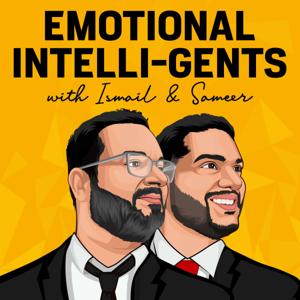
Welcome to the Emotional Intelli-Gents Podcast. A podcast dedicated to helping leaders understand and hone their emotional intelligence skills. We are Ismail and Sameer, the hosts of the show, and…

11,958 Listeners

46,909 Listeners