
Sign up to save your podcasts
Or



Send us Fan Mail
He didn’t have the words when he was little, but he always had the thoughts. We’re joined by Michael Coles, an autistic and ADHD advocate, entrepreneur, and host of Deep Dive Podcast AU, for a candid conversation about what it actually felt like to grow up neurodivergent in Australia when support was limited and “fitting in” was the unspoken goal.
We talk through Michael’s early speech delay, being comfortable playing alone, and the way loneliness can sit quietly under the surface even when a child looks “fine”. He explains monotropism in plain language, why comfort shows can be regulation (not regression), and how sensory overload can push the brain towards shutdown. If you’re a parent worrying about friendships, school, or whether your child’s interests look “too young”, you’ll hear a lived-experience perspective that cuts through the panic and brings it back to safety, connection, and understanding.
We also go deep on communication: expressive and receptive language disorder, why writing can be easier than speaking, and why scripting and prompts can be powerful tools rather than something to be ashamed of. Along the way we touch on masking, bullying, stigma around autism and Asperger’s, and why strength-based identity conversations matter for kids and adults alike, especially in neurodivergent parenting.
If this resonated, share it with a parent or teacher who needs a better frame, then subscribe and leave a review so more families can find these stories. What helped you feel understood when you were growing up?
danabaltutis.com, mytherapyhouse.com.au, https://mytherapyhouse.com.au/your-childs-therapy-journey/ https://www.danabaltutis.com/services
Send us Fan Mail
A family can lose a child and still spend a lifetime learning from them. Steve reflects on Ben’s legacy and how his family continues to grow around their grief, carrying his love and lessons into everyday life.
We explore sibling grief, communication beyond words, and what Ben taught them about empathy, resilience and unconditional love. Steve also shares life in retirement, parenting young adults, and why alternative pathways after Year 12, including an ADF gap year, deserve consideration.
An honest conversation about loss, disability and giving children space to find their own way.
If this episode resonates, please subscribe, share or leave a review to help other families find these stories.
danabaltutis.com, mytherapyhouse.com.au, https://mytherapyhouse.com.au/your-childs-therapy-journey/ https://www.danabaltutis.com/services
Send us Fan Mail
A life can split into before and after, and you can hear that line clearly in our chat with Steve. We go beyond the polite summaries of grief and talk about the real mechanics of it: the shock, the numbness, the exhausting work of funerals, and the strange loneliness that hits when the visitors leave and the house goes quiet. Steve explains why healing is not about moving on, but about learning how to carry someone with you in a different way.
We also dig into the secondary losses people rarely name. When you have spent years caring for a child with disability, your world is built around routines, carers and community. When that ends, the support network can vanish overnight. Steve shares what helped him survive that transition: permission to rest, taking grief moment by moment, leaning into work and deployments, and using health and fitness to steady sleep and mental health. We talk honestly about how partners can grieve in opposite directions and why respecting those differences matters.
Then the story opens up into something bigger: the Camino de Santiago. Steve breaks down what the Camino is, why his family chose it as a reset, and how long-distance walking shifts from physical challenge to emotional processing and, finally, to spiritual connection. He shares simple rituals of remembrance, the power of purpose, and the quiet ways a family can bond when they choose to walk forward together.
If you know grief, caregiving, or major life change, this conversation will meet you where you are. Subscribe, share this with someone who needs it, and leave a review with the biggest takeaway you’re carrying from Steve’s story.
danabaltutis.com, mytherapyhouse.com.au, https://mytherapyhouse.com.au/your-childs-therapy-journey/ https://www.danabaltutis.com/services
Send us Fan Mail
One minute you’re managing the usual routines of disability care and the next you’re being told your child might die tonight. Steve takes us back to the day his son Ben, a boy his family thought they’d have forever, suddenly deteriorated and was rushed to the Women’s and Children’s Hospital. What follows is raw, clear-eyed, and deeply human: the speed of emergency decisions, the kindness of hospital staff, and the moment the world narrows down to holding your child and saying what you need to say.
We also talk about the complicated choices families face under pressure, including whether siblings should be present, how shock affects memory, and why even a peaceful passing can leave lasting trauma. Steve shares how faith and prayer became part of his coping, not as a tidy answer, but as a way to express love and let go when there is nothing left to fix.
From there, we explore what parenting a child with profound disability can teach you about unconditional love, responsibility, and perspective, plus why grief can transform over time without ever disappearing. We dig into practical coping strategies for anger and negativity, boundaries that protect your mindset, and the surprising ways a child’s impact can keep shaping a family long after loss.
If you’re navigating disability parenting, child bereavement, grief, or the search for resilience after tragedy, this conversation will stay with you. Subscribe, share this with someone who needs it, and leave a review to help more parents find these stories.
danabaltutis.com, mytherapyhouse.com.au, https://mytherapyhouse.com.au/your-childs-therapy-journey/ https://www.danabaltutis.com/services
Send us Fan Mail
One dodgy invoice can be a mistake. A pattern of them can be a warning sign. We sit down with Steve Wellings to unpack what it was really like chasing disability services for Ben before the NDIS existed, when “take it or leave it” scheduling, unclear accountability, and limited choice left families carrying the load. Steve walks us through the early pathway of assessments and allied health support, then the moment it turned sour: pressure around a legal document linked to medical malpractice, and the blunt reality that transparency only appeared once he demanded receipts.
From there, the story shifts into advocacy and escalation. We talk about what happens when you give clear feedback and the service response feels like retaliation, why a complaints process matters, and how Ombudsman oversight and political pressure can cut through stonewalling. Steve also explains how negotiating for funding outside the standard provider model helped the family build a care team that actually worked, with routines, respect, and therapists who showed up with intent.
We bring it back to the NDIS today with practical takeaways for parents and carers: ask for invoices, understand your provider’s feedback and complaints pathway, and use the NDIS Quality and Safeguards Commission when things don’t add up. Along the way, Steve reflects on the quieter impact of disability on family life, raising siblings who see compassion as normal and learning to meet other people’s struggles without judgement. If you know someone navigating disability support, share this conversation, subscribe, and leave a review so more families can find it.
danabaltutis.com, mytherapyhouse.com.au, https://mytherapyhouse.com.au/your-childs-therapy-journey/ https://www.danabaltutis.com/services
Send us Fan Mail
You can love your child fiercely and still feel completely unprepared for what their body asks of you. Steve Wellings, Ben’s dad, joins us again to help you meet Ben properly: a gentle, funny, observant kid living with quad athetoid spastic quadriplegia cerebral palsy, where speech and movement are limited but presence is not.
We walk through the real world details of disability parenting and complex medical needs: positioning, splints, standing frames, PEG feeding, incontinence care, clearing lungs, night turns to prevent pressure sores, and the constant job of working out what a look or a mouth movement actually means. Steve shares the moments that changed everything, including the first time Ben’s eyes tracked in a quiet, dim room, and why reducing sensory overload is not a preference but a safety issue for some kids.
The conversation also gets honest about seizures and medication, including the fear of dangerous infant spasms, the pressure of fast decisions, and the reality that dosages and drug mixes rarely stay “right” for long. Along the way we talk about the disability community, fighting for better services, the impact on siblings and relationships, and why the best therapists and schools are the ones who listen first and collaborate closely with families.
If you care about cerebral palsy support, augmentative and alternative communication, NDIS era gaps, inclusive schooling, and quality of life, this one will stay with you. Subscribe, share with someone who needs it, and leave a review so more families find these stories.
danabaltutis.com, mytherapyhouse.com.au, https://mytherapyhouse.com.au/your-childs-therapy-journey/ https://www.danabaltutis.com/services
Send us Fan Mail
A baby can arrive and split your life into a before and after. When Steve Wellings and his wife Marie move to Seattle for a military posting, they imagine a simple path: work, a home in the burbs, footy, and a couple of kids. Their first daughter Elizabeth is born by planned caesarean and that first year feels like bliss. Then Ben’s birth turns into a crisis that still echoes decades later.
Steve takes us through the harrowing detail of a VBAC attempt that should have escalated sooner, an induction that drags on, a ripping sensation that’s later understood as uterine rupture, and a fetal heart rate that plunges into danger territory. Ben is born in severe distress, rushed to Seattle Children’s, and the family is suddenly learning a new language of neonatal ICU care. We unpack HIE (hypoxic ischaemic encephalopathy), what it means when the brain is starved of oxygen, and the gut-punch uncertainty of hearing “we don’t know” even from top paediatric neurologists reading an EEG.
We also talk about what happens after the diagnosis: feeding and medication support, nasogastric and jejunal tubes, the practical skills parents are expected to master, and the way trauma can create lifelong hypervigilance. Steve shares why they considered legal action, what the real barriers look like in medical malpractice, and why returning home to Australia mattered for support and services.
If you’re a parent navigating disability, cerebral palsy risk, HIE, or birth trauma, this conversation gives you language, context, and permission to trust your instincts. Subscribe, share this with another parent who needs it, and leave a review so more families can find these stories.
danabaltutis.com, mytherapyhouse.com.au, https://mytherapyhouse.com.au/your-childs-therapy-journey/ https://www.danabaltutis.com/services
Send us Fan Mail
Parenting can crack open the life you thought you were going to have. One day you’re holding a picture of family holidays, school concerts, easy mornings, and a child who moves through the world the way you expected. Then the real child arrives with their own nervous system, temperament, sensitivities, interests, and ways of communicating, and suddenly “simple” things can take enormous effort. When that gap shows up, it can bring fear, guilt, anger, sadness, envy, and a quiet kind of grief that many parents feel but rarely name.
I take a different approach here and speak directly to the question I keep coming back to: who do you need to become in order to support the child who has come into your life? Not who your child needs to become. We explore the difference between being disappointed in a child and grieving the picture you held, and what can change when you look through your child’s eyes with curiosity instead of “should”. If you’re parenting a neurodivergent child, navigating autism, ADHD, sensory differences, anxiety, or demand avoidance (including PDA), this lens can be especially powerful because it shifts the goal from compliance to connection, regulation, and true communication.
We also talk about how the urge to fix can turn a child into a project, and why parents need support too. I share reflective questions that help you notice what’s happening inside you, separate future fear from present needs, and widen your understanding of both your child and yourself. If this resonates, subscribe to the Empowered Parent Podcast, share the episode with a parent who needs a breath, and leave a review so more families can find it.
danabaltutis.com, mytherapyhouse.com.au, https://mytherapyhouse.com.au/your-childs-therapy-journey/ https://www.danabaltutis.com/services
Send us Fan Mail
The hardest part of parenting isn’t the chaos, it’s what we start believing about ourselves and our kids when the chaos keeps coming. For the final chat in our Empowered Parent Program series, we sit down with Sam Primerano to talk about what helps children truly thrive, especially neurodivergent kids with big feelings, intense bodies, and shifting capacity across the day. We get honest about the moments that leave you frazzled, and the simple but powerful skills that help you release stress instead of carrying it into tomorrow.
We dig into nervous system regulation in real family life: why connection matters more than striving, how self-compassion changes the tone of a household, and what “emotion is energy in motion” looks like in practice. Sam shares what helps her move through tough days, from breathing and music to noticing how the body lets go. We also explore why labels like “violent”, “manipulative”, or “liar” can be so damaging, and how a behaviour-as-communication lens protects kids’ self-esteem and keeps pathways open for learning, repair, and growth.
We also talk about the bigger Australian context, including the anxiety and uncertainty around the NDIS and the upcoming Thriving Kids program. We share a grounded approach to staying informed without spiralling, plus a practical step families can take when systems aren’t meeting children’s needs: contacting your federal MP or state MP. We wrap with hopes for the next generation, the role of nature in regulation, and what being an empowered parent really means when you’re running on empty.
If this resonates, subscribe, share it with another parent who needs a softer landing, and leave a review so more Australian families can find the series.
danabaltutis.com, mytherapyhouse.com.au, https://mytherapyhouse.com.au/your-childs-therapy-journey/ https://www.danabaltutis.com/services
Send us Fan Mail
A late ADHD diagnosis doesn’t just add a label, it can rewrite your entire personal history. Sam joins me for an honest, detailed chat about what finally pushed her to seek an adult ADHD diagnosis, how it landed after years of coping, and why the moment of recognition can feel both relieving and confronting. If you’ve ever wondered whether your “anxiety” is really a busy brain, or why you can function for months then suddenly crash, you’ll hear yourself in this story.
We unpack ADHD burnout in the real world: returning to demanding work, parenting three kids, advocating for a neurodivergent child, and pushing until your body forces you to stop. Sam shares what it’s like when your brain can’t sequence tasks the way it used to, and how nervous system regulation becomes a non-negotiable. We also talk about masking, social overstimulation, and that strangely hollow feeling after being “on” around the wrong kind of noise, pace, or people.
From there we move into identity, shame, and healing. We explore rejection sensitive dysphoria, the inner critic, and how diagnosis can depersonalise behaviours so you stop treating every struggle as a character flaw. You’ll also hear practical, down-to-earth regulation tools Sam actually uses including box breathing, feet on grass, visualisation, and sensory anchors like smell, plus how modelling these practices can support kids’ emotional regulation at home.
If you’re navigating adult ADHD, neurodivergent parenting, or simply trying to live with more calm and clarity, press play and come sit with us. Subscribe for more, share this with a parent who needs it, and leave a review so more families can find these conversations.
danabaltutis.com, mytherapyhouse.com.au, https://mytherapyhouse.com.au/your-childs-therapy-journey/ https://www.danabaltutis.com/services
From the publisher's feed
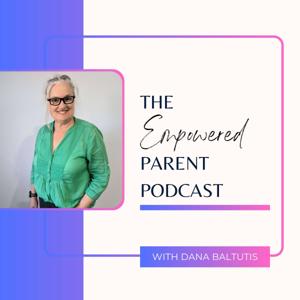
Welcome to The Empowered Parent Podcast.
This podcast is a space for parents to learn, reflect, and grow.
Each week, we explore topics that help parents understand themselves and…
We’ve had wonderful conversations with experts, parents, and professionals - including speakers from the Neurodivergence Wellbeing Conference, and a special series following one mum’s journey in unschooling her child.
Every episode is here to inspire curiosity, compassion, and confidence in your parenting journey.
Don’t forget to follow along, share your reflections, and join the conversation.
You can connect with me at danabaltutis.com or mytherapyhouse.com.au.
Let’s celebrate neurodivergence.
Let’s celebrate belonging.