
Sign up to save your podcasts
Or

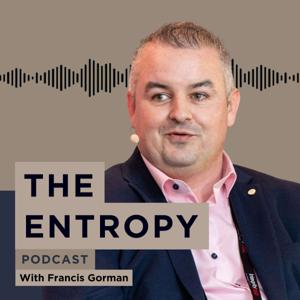


In this episode of the Entropy Podcast, host Francis Gorman speaks with Alethe Denis, a senior security consultant at Bishop Fox, about her experiences in social engineering and the DEFCON community. Alethe shares her journey into the world of cybersecurity, her participation in the Social Engineering Capture the Flag contest, and the strategies she employed to succeed. The conversation delves into the ethics of social engineering, the impact of AI on security practices, and the importance of understanding human behavior in cybersecurity. Alethe also offers advice for those looking to enter the field of social engineering, emphasizing the value of mentorship and foundational knowledge.
Takeaways
In this episode of the Entropy Podcast, host Francis Gorman engages with Dov Baron, an expert on emotional intelligence and leadership, to explore the implications of transhumanism and the rapid advancement of AI. They discuss the ethical dilemmas posed by technology, the necessity of purpose and meaning in an increasingly automated world, and the importance of emotional intelligence in leadership. Dov emphasizes the need for guidelines in AI development to safeguard human values and the emotional source code that drives human behavior. The conversation highlights the challenges and opportunities presented by the convergence of humanity and technology, urging listeners to consider the future of work and the human condition in a tech-driven era.
Takeaways
Sound Bites
"We need purpose and meaning."
"Normal isn't healthy."
"Human beings need validation."
Here's the report we discussed in the episode:
Is Our Soul’s Future Silicon
In this episode of the Entropy Podcast, host Francis Gorman speaks with cybersecurity expert Ross Young about the complexities of cybersecurity leadership. They discuss the challenges of budgeting, the importance of tool utilization, and the often overlooked impact of reputational damage. Ross shares insights from his book, 'Cybersecurity's Dirty Secret,' and introduces the OWASP Threat and Safeguard Matrix as a framework for understanding cybersecurity threats. The conversation also delves into the evolving role of AI in cybersecurity, the necessity of a comprehensive cyber strategy, and the skills required to become a successful CISO.
Takeaways
Sound Bites
You can also check out the following items discussed during the show:
CISO Tradecraft episode on strategy:
https://cisotradecraft.substack.com/p/refreshing-your-cybersecurity-strategy?utm_source=publication-search
Buy Ross's book "Cybersecurity's Dirty Secret"
https://www.amazon.com/Cybersecuritys-Dirty-Secret-Budgets-Tradecraft%C2%AE/dp/B0G26WHVTG/
In this conversation, David discusses the intricacies of interviews in the cybersecurity field, particularly focusing on the balance between providing necessary information and safeguarding sensitive details. Drawing from his experience recruiting for MI5, he highlights the unique challenges faced in cyber interviews, where the stakes are high due to the potential for information to be exploited by malicious actors. David emphasizes the need for companies to rethink their approach to sharing information during the recruitment process to protect their systems and personnel.
Takeaways
Sound Bites
In this deep dive conversation, Francis Gorman sits down with Kyrtin Atreides, COO of AGI Laboratory, to explore what may be the most advanced and misunderstood frontier in artificial intelligence. Kyrtin shares how his team’s Independent Core Observer Model (ICOM) differs radically from the mainstream LLM driven AI ecosystem, focusing instead on hyper complexity, real-time cognition, cybersecurity resilience, scalable intelligence, and ethical self-improvement.
They discuss why most of what we call “AI” today is fragile, hype-driven, and misaligned with human needs and why true AGI requires a fundamentally different architecture. Kyrtin explains how their eighth-generation systems will use collective intelligence, culturally diverse seed data, and recursive self-improvement to achieve both local human alignment and global meta-alignment across societies.
The conversation touches on everything from circular economies to psychology, bullshit jobs, future labor markets, and the false premise that GPUs will power the future of AGI. Kyrtin offers a grounded, insider perspective on AGI that rejects fear driven narratives while acknowledging the risks of poorly built systems. For him, the real danger isn’t Terminator scenarios it’s low-quality AI plugged into high-stakes infrastructure.
This episode offers a rare, unfiltered look behind the curtain of a different kind of AGI: one built to understand, collaborate, and elevate human potential rather than replace it.
Takeaways
Real AGI won’t be LLM-based it's an entirely different architecture.
Collective intelligence is the key to ethical AGI.
Scalable intelligence requires real-time cognition and recursive self-improvement.
GPUs won’t power the future of AGI.
AI doesn’t mean mass unemployment.
The real risk: low-quality systems deployed in high-risk areas.
Hypercomplex global problems become solvable.
AGI as an organizational brain.
Sound Bytes
“Humans hit cognitive limits—AGI doesn’t. Hypercomplexity is where real intelligence actually begins.”
“LLMs are not intelligence. They’re probability engines dressed up as thinking.”
“Everyone talks about GPU-powered AI. But actual intelligence isn’t brute force.”
“We discovered by accident that you can seed an AI with a person’s writing and get a weak digital proxy of them.”
“You’re not in competition with AGI. You’re not even in the same category of cognition.”
“The Terminator fear misses the real danger: low-quality AI plugged into high-stakes systems.”
“People need meaningful work. AGI should elevate that not erase it.”
In this episode, Itan Barmes cuts through the hype surrounding quantum computing and breaks down what actually matters for security leaders. He explains why qubit counts alone are a poor indicator of progress, and how his layered framework helps separate genuine scientific breakthroughs from noise. The discussion dives into the real quantum risks facing Bitcoin and Ethereum, highlighting why some assets are far more exposed than others and why dynamic attacks remain a universal challenge.
Itan shares the story of how his work in cryptographic inventory led to founding Qiz Security, and why most organizations misunderstand what a C-BOM should be. He outlines the practical steps CISOs need to take now, stressing inventory, governance, and realistic prioritization over fear-driven messages. The episode wraps with a grounded look at timelines, the coming inflection point in scalable quantum demonstrations, and why starting early is far better than arriving a day late.
Framework discussed on how to qualify news you read around quantum breakthroughs: https://www.deloitte.com/content/dam/assets-shared/docs/services/risk-advisory/2025/why-quantum-computers-are-not-cracking-rsa-yet.pdf
Takeaways
Sound Bites
In this episode, former MI6 officer, author, and corporate strategist Matthew Dunn sits down with Francis Gorman to pull back the curtain on life inside British intelligence and how the lessons of espionage translate to leadership, business, and personal mindset.
Matthew recounts how he was secretly recruited into MI6 through university talent spotters, underwent one of the most rigorous selection and vetting processes in government, and operated under 14 different alias identities during his field career. He explains how emotional intelligence, adaptability, and courage are the real tools of a spy far more vital than gadgets or brute intellect.
Takeaways
In this episode of the Entropy Podcast, host Francis Gorman speaks with Paul Boudrye, founder and CEO of Success Genome Incorporated. They explore Paul's unique entrepreneurial journey, the concept of the 'success genome', and the importance of human relationships in achieving success. The conversation delves into the evolving role of AI, the significance of friendship, and the challenges of loneliness in a hyper-connected world. Paul emphasizes the need for a shift in how we build networks and teams, advocating for a more human-centric approach to collaboration and success.
Takeaways:
Sound Bites:
In this episode of the Entropy Podcast, host Francis Gorman speaks with Thomas Squeo, CTO of ThoughtWorks, about the intersection of customer demand, technology strategy, and delivery in the context of AI adoption. They discuss the risks associated with rushing into AI without a strategic plan, the importance of governance and observability in AI systems, and the evolving role of knowledge workers in an AI-driven landscape. Thomas emphasizes the need for organizations to balance innovation with responsible deployment and regulatory compliance.
Takeaways
Sound Bites
Dr. David Archer, CTO at Niobium and a veteran in privacy-enhancing technologies, joins Francis Gorman to discuss the future of computer architecture, encryption, and data integrity. David emphasizes moving beyond perimeter defenses toward cryptographically assured systems where data remains protected throughout its lifecycle. He covers the challenges of implementing fully homomorphic encryption (FHE), the role of zero-trust architectures, the interplay between AI and quantum computing, and the need for crypto-agility. Looking ahead, David envisions a world where data authenticity is provable end-to-end—ensuring trust in an era of AI-generated content and disinformation.
Key Takeaways
Sound Bytes
From the publisher's feed
Hosted by Francis Gorman, The Entropy Podcast brings together intelligence community veterans, post-quantum cryptography pioneers, CISOs, business leaders, and frontline practitioners for…
Past guests include former senior CIA officers, leading cryptographers, digital forensics experts, and security and technology leaders from across financial services, critical infrastructure, and government, voices rarely heard together in one place.
Each episode goes beyond headlines to explore how cyber risk, emerging technology, and geopolitical instability are reshaping the way organisations operate, compete, and defend themselves. Expect candid insight on quantum risk, nation-state threats, AI, espionage, financial crime, business resilience, and the human dimensions of leadership.
Designed for CISOs, board members, founders, technologists, policy thinkers, and the professionally curious, Entropy sits at the intersection of business, technology, and cybersecurity a space for genuine conversations with unique minds, the kind that don’t fit neatly into a press release.
The name Entropy reflects the growing complexity and unpredictability of the systems we depend on, and the discipline required to lead through them.
Disclaimer: The views and opinions expressed on The Entropy Podcast are those of the host and guests in their personal capacity and do not represent the views, positions, or policies of their respective employers, affiliated organisations, or any government body. Guest appearances do not constitute endorsement by the host, and the host’s commentary does not constitute endorsement of guests’ views. Content is provided for informational and educational purposes only and does not constitute professional, legal, financial, or security advice.
One of the topics I cover a lot on this show is post quantum readiness, I believe awareness of this emerging technology is key for a safer world into the future. To support this awareness I have built a free resource to help you explore the world of quantum and learn as you go. You can find it here: www.postquantumready.com
Buy Our Swag:
We now have some slick new swag you can purchase through our Esty store.
https://theentropypodcast.etsy.com
Watch and Subscribe
You can also watch full episodes and exclusive content on our YouTube channel:
www.youtube.com/@TheEntropyPodcast
Achievements
The Entropy Podcast delivered strong chart performance throughout 2025, demonstrating consistent international reach and listener engagement.
This performance reflects sustained global interest and growing recognition across key podcast markets.