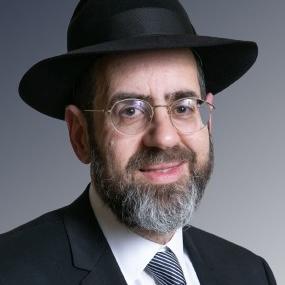
For a 10% discount on Rabbi David Sutton's new book A Daily Dose of Preparation for Yamim Noraim click the link below https://www.artscroll.com/ Books/9781422645086.html The First Step in Cheshbon HaNefesh : Reflecting on Existence Welcome to our Elul series on Cheshbon HaNefesh (Spiritual Accounting), based on Chapter 3 of Chovot HaLevavot . This chapter explores different triggers for introspection, prompting us to consider what we owe God. The first point of reflection is the beginning of our own existence. The author reminds us that we were not always here. God brought us from non-existence into being, a concept described as ma'ayin l'yesh , or "something from nothing," just like the initial creation of the universe. In a personal sense, each of us is a microcosm of this act. We didn't exist, and God brought us into being not because we earned it or because He owed us anything. Rather, our very existence is an act of pure kindness and generosity. This is a fundamental proof that God's ultimate goal is our best interest. He not only brought us into existence but elevated us above the rest of creation. We are not animals, plants, or stones; we are beings of importance and potential. This alone is reason for profound gratitude. We must thank God not just for what He does for us, but for the very fact that we exist and continue to exist. The Parable of the Benefactor Chovot HaLevavot provides a powerful parable to illustrate this point. Imagine a baby abandoned on the road and rescued by a compassionate stranger who raises him to adulthood. How much does this person owe his benefactor? Everything. He would be obligated to do anything asked of him. Earlier in the sefer compares this to a person who was rescued from a pit at age 20. The second person would feel far more gratitude because he was already an independent being before the rescue. The first, rescued as a baby, was raised under the constant benevolence of his benefactor and might have become so accustomed to it that he never truly appreciated the gift of life he was given. This is a mirror of our own experience. We are so used to being in this world that we take our existence for granted. We don't contemplate the sheer grace of simply being here. A Message of Reciprocity and Gratitude Moshe Rabbeinu, in his final address in Parshat Ha'azinu , asks: "Is this how you repay God, O dull and unwise people?" ( הֲלַהשֵּׁם תִּגְמְלוּ־זֹאת עַם נָבָל וְלֹא חָכָם ). The term "naval" refers to a person who is ungrateful. Moshe's words are a direct rebuke, urging us to recognize and appreciate the gift of life and the immense kindness behind it. The author stresses that God's act of creation was "without any preceding merit" ( ללא יתרון שקדם לו ). While a popular song suggests that God "needs every Jew," we must be careful not to fall into the mistaken belief that He truly needs us. As the Zohar explains, God creates the illusion of needing us so that we can earn our reward in the next world and not feel like we are receiving "bread of shame"—a gift we didn't work for. Rabbi Yerucham Levovitz makes a similar point regarding the lighting of the Menorah: God, the source of all light, asks us to light a candle to make us feel like we are a part of the process, but we must never forget the true source of the gift. As we begin this month of Elul , the first step of our spiritual accounting is to contemplate this fundamental truth: God brought us into existence out of pure kindness, and the greatest act of reciprocity is to acknowledge this by living a life of gratitude and spiritual awareness.



 View all episodes
