
Sign up to save your podcasts
Or

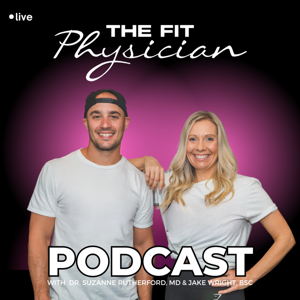


In this high anticipated episode of The Fit Physician Podcast, Suzanne and Jake tackle one of the most researched supplements in the health and fitness world—creatine. Suzanne breaks down the science behind its benefits, who it’s for, and why it’s not just for “gym bros.” Jake adds humor with a personal story about his early supplement mishaps.
You’ll learn how creatine supports muscle growth, cognition (especially for sleep-deprived brains), and even bone health. Plus, why it’s only effective when built on a foundation of solid nutrition and strength training.
IN THIS EPISODE:
00:00
Introduction to the Fit Physician Podcast
00:52
The Exploding Supplement Industry
04:39
Understanding Creatine: The Science Behind It
10:17
Creatine's Role in Energy Production
14:05
Individual Responses to Creatine
16:57
Debunking Myths: Creatine and Bulking
19:39
Creatine's Benefits Across Age Groups
22:24
Hyper Hoax: Creatine's Impact on Bone Health
26:13
Cognition and Creatine: Hype or Hope?
29:30
Conclusion and Future Topics
CONNECT WITH US:
💪 Join the FREE Fit Physician Kickstart Community
📲 Follow Us On Instagram
❤️ Learn More About The Fit Physician Program
In this episode, Jake and Suzanne review the International Society of Sports Nutrition's position stand on diets and body composition. They discuss the organization's background and the purpose of a position stand. The key takeaway from the paper is that there is no one-size-fits-all approach to fat loss. The most important factors are being in a calorie deficit, consuming adequate protein, and finding a sustainable way of eating. The paper also emphasizes the importance of slow and steady fat loss and discourages extreme calorie restrictions. Overall, the position stand provides evidence-based information to help individuals make informed decisions about their diets.
In this episode of the Fit Physician Podcast, Dr. Deb Marshall shares her inspiring journey from aspiring physician to hospitalist in palliative care. She discusses her early struggles with self-doubt, body image issues, and the impact of diet culture on her life. After facing the unexpected loss of her father, Deb found strength through fitness and community, leading to a transformative journey that reshaped her approach to health and well-being. She emphasizes the importance of self-care, resilience, and the power of believing in oneself.
IN THIS EPISODE:
00:00-The Journey to Becoming a Physician
10:08-Overcoming Body Image Issues and Diet Culture
18:12-Navigating Grief and Finding Strength
27:13-Transformative Fitness Journey and Self-Discovery
Connect With Us:
💪 Join the FREE Fit Physician Kickstart Community
📲 Follow Us On Instagram
❤️ Learn More About The Fit Physician Program
In this episode, Jake and Dr. Suzanne Rutherford discuss the importance of dietary fiber and provide tips on how to increase fiber intake. They cover topics such as the definition of fiber, the role of fiber in optimizing health and longevity, the difference between soluble and insoluble fiber, the recommended daily intake of fiber, and practical ways to incorporate fiber-rich foods into the diet. They also address the question of whether a plant-based diet is necessary to meet fiber requirements.
Connect With Us:
💪 Join the FREE Fit Physician Kickstart Community
📲 Follow Us On Instagram
❤️ Learn More About The Fit Physician Program
In this episode of The Fit Physician Podcast, Jake and Dr. Suzanne Rutherford dive deep into the benefits of dietary fiber, exploring its role in reducing the risk of all-cause, cardiovascular, and cancer mortality. Building on the success of the first Science Snack about estrogen replacement therapy, this second edition looks at a systematic review and meta-analysis published in 2023 that compiles data from 32 studies involving over 2.5 million participants globally.
Dr. Rutherford discusses the immense benefits of increasing fiber intake and explains how fiber might just be the strongest lever you can pull for longevity and disease prevention. She breaks down the types of studies included in the analysis, defines key terms like relative risk reduction, and emphasizes that even small increases in fiber intake can yield significant health benefits.
Click here to view the study
Connect With Us:
💪 Join the FREE Fit Physician Kickstart Community
📲 Follow Us On Instagram
❤️ Learn More About The Fit Physician Program
In part 2 of this series, Dr. Gamache talks all things hormone replacement therapy. She explains that testosterone therapy can improve libido, brain fog, energy levels, and muscle mass. Additionally, she discusses the role of estrogen replacement therapy in perimenopause and menopause, emphasizing the importance of starting hormone therapy within the first 10 years of the last period to prevent chronic diseases. In this conversation, Dr. Nathalie Gamache discusses the importance of understanding and managing perimenopause and menopause to live our best lives. She emphasizes the need for individualized treatment plans and the role of hormone replacement therapy. Dr. Gamache also highlights the impact of lifestyle factors such as exercise, nutrition, and sleep on menopausal symptoms.
GUEST BIO:
Dr. Nathalie Gamache is a highly accomplished gynecologist with a strong background in menopause and hormone therapy. She started her career as a biology teacher that fostered her love of human biology and passion for teaching. In typical Nathalie fashion, her dreams didn't stop there and she later pursued an education in medicine. She completed a fellowship in menopause in 2005 and worked as a clinician and surgeon at The Ottawa Hospital until 2012. Dr. Gamache specializes in areas such as menopause, hormone therapy, sexuality, premenstrual syndrome, premature ovarian insufficiency, and cancer survivorship.
Connect With Us:
💪 Join the FREE Fit Physician Kickstart Community
📲 Follow Us On Instagram
❤️ Learn More About The Fit Physician Program
In this highly anticipated episode, we sit down with none-other-than Dr. Nathalie Gamache, a leading expert and innovator in menopause treatment. During the discussion, she breaks down the hormonal changes that occur during perimenopause and menopause. She explains how the onset of symptoms such as heavy and irregular periods, mood swings, anxiety, and sleep disturbances, to name a few, occurs. In part one of this two-part series, Dr. Gamache gives us a firsthand view of what it’s like to be one of her patients and talks about the importance of optimizing overall health and what factors to consider prior to hormone replacement therapy.
GUEST BIO:
Dr. Nathalie Gamache is a highly accomplished gynecologist with a strong background in menopause and hormone therapy. She started her career as a biology teacher that fostered her love of human biology and passion for teaching. In typical Nathalie fashion, her dreams didn't stop there and she later pursued an education in medicine. She completed a fellowship in menopause in 2005 and worked as a clinician and surgeon at The Ottawa Hospital until 2012. Dr. Gamache specializes in areas such as menopause, hormone therapy, sexuality, premenstrual syndrome, premature ovarian insufficiency, and cancer survivorship.
Connect With Us:
💪 Join the FREE Fit Physician Kickstart Community
📲 Follow Us On Instagram
❤️ Learn More About The Fit Physician Program
In this episode, Jake and Suzanne introduce a new segment called Science Snacks where they review research articles related to fitness and nutrition. They start by discussing a study on transdermal estrogen therapy and its effects on muscle mass in early menopausal women. The study found that women who received estrogen replacement therapy showed significant improvements in muscle size compared to the placebo group. However, there was no significant difference in strength between the two groups. Suzanne highlights the importance of understanding how estrogen affects muscle and encourages women to have conversations with their healthcare providers about hormone therapy.
IN THIS EPISODE:
00:00-Introduction to the Science Snack segment
01:20-Overview of the study on transdermal estrogen therapy
03:03-Anabolic resistance and the effects of estrogen loss in menopause
06:22-Details of the study design and training protocol
09:08-Findings of the study: Muscle size vs. strength
11:21-Discussion on study limitations and potential improvements
13:13-Takeaways and implications for menopausal women
15:28-Conclusion and invitation to future episodes on menopause
Connect With Us:
💪 Join the FREE Fit Physician Kickstart Community
📲 Follow Us On Instagram
❤️ Learn More About The Fit Physician Program
Dr. Hanley shares her journey of getting back into fitness after having two children and overcoming disordered eating. She discusses her background in organized sports and the societal pressure to achieve a specific body type. She also talks about her introduction to nutrition and the emphasis on weight and appearance rather than fueling the body. Dr. Hanley highlights the common experience of disordered eating in childhood and the impact of societal norms. She credits therapy and becoming a mother as turning points in her relationship with food. She shares her journey of overcoming food and body image issues, finding sustainable habits, and prioritizing her health as a physician mom. Margaret's story serves as an inspiration for other physicians and moms who are looking to prioritize their health and feel better in their bodies.
IN THIS EPISODE:
00:00-Introduction and Background
09:08-Unpacking Disordered Eating and Seeking Therapy
14:20-Joining the Fit Physician Program and Making Sustainable Changes
26:17-Finding Time for Workouts as a Busy Mom
38:50-The Impact of Nutrition and Fitness on Energy and Function
41:16-The Importance of Prioritizing Your Well-being
CONNECT WITH US:
💪 Join the FREE Fit Physician Kickstart Community
📲 Follow Us On Instagram
❤️ Learn More About The Fit Physician Program
In this episode, Dr. Kathleen Martin Ginis, PhD discusses the challenges of sticking to an exercise routine. She explains that exercise is not a single behavior but a complex set of behaviors that require time, planning, and effort. She emphasizes that exercise is a lifelong commitment that needs to adapt to changes in lifestyle, seasons, and health. Dr. Ginis also highlights the importance of finding intrinsic reasons and values associated with exercise to sustain long-term adherence. She suggests strategies such as scheduling exercise in advance, setting specific times, and creating a plan to overcome barriers. The conversation also touches on the role of self-efficacy, the power of starting small, and the need for self-compassion during setbacks. The conversation explores the importance of external coaching, the power of comebacks, the role of self-efficacy, the impact of perceived benefits on motivation, the significance of strength training for body image, the value of positive self-talk, the effectiveness of scheduling, and the challenges of habit formation in exercise behavior.
IN THIS EPISODE:
00:00
Introduction
02:10
The Challenges of Sticking to an Exercise Routine
09:13
Scheduling and Prioritizing Exercise
16:43
Finding Intrinsic Motivation for Exercise
17:07
Building Self-Efficacy and Confidence in Exercise
20:29
Overcoming Obstacles and Maintaining Consistency
27:08
The Power of Perceived Benefits and Feelings of Improvement
36:28
Reflections on Changing Perspectives
41:22
Because You Are Worth It
CONNECT WITH US:
💪 Join the FREE Fit Physician Kickstart Community
📲 Follow Us On Instagram
❤️ Learn More About The Fit Physician Program
From the publisher's feed