
Sign up to save your podcasts
Or

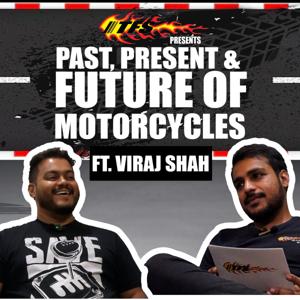


When people see a massive heavyweight cruiser, a common question always comes up: "Does it hit 200 or 300 km/h?" The truth is, these machines were never built for top-speed racing, and pushing them to those limits is a challenge in itself.
In this segment of The Flying Talks, we look at the reality of big-bore engines. We break down the stark numbers—how a massive 1700cc motorcycle can weigh a hefty 333 kg while churning out a relatively modest 80 horsepower. While it may not win a high-speed chase, it brings an immense amount of low-end torque to the table
If speed, acceleration, and aggressive, spirited riding are what you live for, wrapping your hands around the grips of a heavy 1800cc cruiser is going to feel like a complete mismatch. It is a common mistake: people still confuse a massive engine displacement with outright performance, but they are completely different worlds.
In this episode of The Flying Talks, we explore rider mentalities and breakdown how engine characteristics dictate your riding experience. We use the humongous Triumph Rocket 3 with its massive 2,500cc engine as a primary example. When you look at its sheer size, muscular stance, and fat tires, it embodies the ultimate "muscle cruiser"—proving that high displacement has its own distinct, powerful identity that has nothing to do with racing down a straight line.
What actually qualifies a motorcycle as a "superbike"? While anything over 400cc or equipped with a multi-cylinder engine used to automatically earn the title, the definition is shifting in the modern era.
In this episode of The Flying Talks, we explore why a true superbike should perhaps be defined at 800cc and above. We discuss how entry-level and mid-segment options like 650cc machines have evolved, and why evaluating a big bike shouldn't just be limited to top speeds and quick acceleration. From adventure bikes and cruisers to tourers and sports tourers, we unpack the different segments that offer vastly different experiences for riders looking to step up.
When you think of a superbike, your mind probably jumps straight to blistering top speeds and neck-snapping acceleration. But is that all these high-performance machines are good for?
In this episode of The Flying Talks, we challenge the popular mentality surrounding big bikes. We discuss how the decision to upgrade is a major milestone for riders—one they intend to sit with and enjoy for a long time rather than rushing into the next upgrade. More importantly, we dive into the audience perspective: should top speed and acceleration be the only reasons to buy a superbike, or are there much more practical, real-world factors you should look at before making your choice?
What makes a specific segment of motorcycles suddenly become the center of attention for major global brands? It’s all about meeting the modern rider’s desire for versatility.We discuss how consumer expectations have created a brand-new focus area for manufacturers. Bickers are looking for a reliable machine that is comfortable enough for the daily commute, yet powerful enough to tackle high-speed highway cruising and cross-country trips. We dive into why heavy hitters like Kawasaki, BMW, Triumph, and Harley-Davidson are all fighting for a piece of this multi-purpose market.
Remember when a 200cc motorcycle was considered the ultimate upgrade? Times have changed, and consumer expectations are shifting faster than ever.
In this episode of The Flying Talks, we explore the massive boom in the 350cc to 450cc motorcycle segment. We discuss how the once-popular 200cc trend has effectively vanished as riders demand more power, presence, and status from their daily machines. Now, the baseline mindset for many buyers has upgraded to anything above 300cc, driven by a deep psychological desire for inner satisfaction and a sense of riding "something big."
What happens when you jump from a 30-horsepower beginner bike straight into the deep end of the performance pool? For many riders, the gap between entry-level displacements and high-powered machines is a massive transition that isn't always easy to manage.
In this episode of The Flying Talks, we break down how motorcycle manufacturers manage different performance segments. We discuss why Triumph's attempt to bridge this divide with the Street Triple 765 didn't go exactly as planned. Moving from a manageable 30 to 35 horsepower option—like a KTM 390—up to an intense 80 or 90 horsepower machine represents a major cultural and mechanical leap for everyday consumers.
What keeps a community alive even after market changes impact its formal structure? Even when operational landscapes shift, a shared sense of belonging doesn't fade overnight; it endures through established rituals and ongoing bonds.We look at the resilience of the motorcycle subculture. We discuss how brand communities can remain surprisingly vibrant for 10 to 12 years even after the manufacturer makes its exit from the region. We also begin exploring how customer psychology unifies riders, comparing the underlying motivations shared by everyday small-displacement buyers and premium heavyweight motorcycle enthusiasts.
What happens when you roll up to a group ride and realized you didn't get the dress-code memo? When you look around at your fellow riders, the pressure to buy into the entire brand lifestyle becomes very real.
In this episode of The Flying Talks, we explore the powerful cultural dynamics within exclusive riding communities. We look at how motorcycle dealerships keep essential stock—like riding jackets, gloves, and T-shirts—readily available to feed this community demand. When you are out on the road with fifteen or sixteen other riders who are fully decked out in matching bar-and-shield gear, standing out as the odd one out changes the entire experience.
When you buy into a specific motorcycle brand, you aren't just purchasing a two-wheeled machine—you are adopting a complete identity. Why do some riders find it nearly impossible to switch brands once they enter a specific community?
In this episode of The Flying Talks, referencing the file Edits_Podcast_part-30_20260616_105645.mp4, we delve deeper into the fascinating world of lifestyle branding and the immense psychological anchor it creates for owners. We discuss how iconic brands keep their community tightly woven together by creating merchandise for literally every aspect of daily life. From the expected T-shirts and caps to unusual high-end accessories like whiskey-cooling stones, brand-shaped ice trays, and custom coffee mugs—the community identity follows you from the garage straight into your home.
From the publisher's feed