
Sign up to save your podcasts
Or

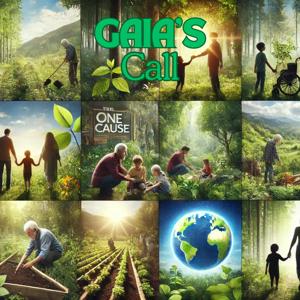

What If the Secret to Abundance Is What We Give Away?
In Part One, we explored Interconnectedness—how we are not separate from nature, but woven into its web. In Part Two, we looked at Sufficiency, and saw how our world is not defined by lack, but by our ability—or inability—to recognize what we already have.
Now we come to the Third Great Truth: Reciprocity. If we are part of a living system… if that system already holds enough… then the question becomes: What is our role within it? The answer, we believe, is found in this simple but transformative principle: Life thrives on mutual exchange.
The Truth of Reciprocity
Reciprocity is not a new idea. It’s the oldest one of all. It’s how life has always worked. The sun shines, and plants grow. The plants feed the animals. The animals fertilize the soil. Everything gives. Everything receives. And the cycle continues.
But somewhere along the way, we forgot. We built a civilization around taking—not giving. Extracting, not replenishing. Using up, not restoring. And this Great Untruth—that the Earth’s resources are infinite and ours to take—has brought us to the brink.
Want a quick reminder of how this truth lives in you? Try inhaling... and then just keep inhaling. Really, pause for a moment and give it a try. Tough, isn’t it? Because the very design of your body insists on reciprocity. You must exhale to inhale again. You receive life—and then you give life back. So does the planet. So does every living system.
Reciprocity is the medicine. It is how we restore balance. It is how we make things right again…not overnight but over time.
Why This Truth Matters
We are not in crisis simply because we take from the Earth. We are in crisis because we’ve stopped giving back. And like any system where the outflow exceeds the inflow, we’re running on empty—ecologically, socially, even spiritually.
But reciprocity—when practiced—reawakens the cycle of life. And life, when honored, responds. We witnessed this globally during the early days of the COVID pandemic. When our human systems slowed down, the Earth responded almost immediately. Skies cleared. Wildlife returned. Carbon levels dipped. Waters ran cleaner. As heartbreaking as that time was, it offered a glimpse of how responsive, how alive, this planet truly is—and how quickly it can heal when given the chance.
Where We See This Truth in Action
Let’s zoom in on some beautiful, tangible expressions of reciprocity in our world today.
Agroforestry & Regenerative Farming
In once-depleted lands across Africa, South America, and even here in the U.S., farmers are ditching chemical-heavy monoculture and returning to ancient, reciprocal methods. They plant trees alongside crops. They rotate animals and compost. They restore the soil instead of stripping it bare.
In these systems, everything feeds everything else. Yields rise. Soil holds more water. Biodiversity returns. It’s farming that gives back—and the land, in turn, gives more generously than ever before.
The Rewilding Movement
In Yellowstone, when wolves were reintroduced after decades of absence, something miraculous happened. The elk populations, no longer unchecked, moved differently. Trees began to regrow. Birds and beavers returned. Riverbanks stabilized. The land remembered itself.
This is the power of letting nature lead. Of recognizing that our role isn’t domination—it’s participation. We can give back not just by planting, but sometimes by stepping aside and allowing life to flourish again.
Biochar & Soil Regeneration – Michael Smith’s GPH
Michael Smith’s Growth Power House (GPH) project brings ancient wisdom into modern form. Biochar—made by burning organic matter in a low-oxygen environment—sequesters carbon, holds moisture, and regenerates tired soil. As Garth Wells points out in his 2023 article, Regenitech and the Sustainable Powerhouse, “Michael Smith has effectively created a supercharged closed-loop greenhouse, burning waste with gasification and using waste gas to grow algae and run a generator with a biochar byproduct that is a superfood for soil.”
This simple biochar substance, once used by Indigenous farmers in the Amazon, is now being used to restore degraded land around the world. Waste becomes resource. Carbon becomes life. That’s reciprocity in action.
A Lesson from the Wild with the Eco-Guardian Team
Tess crouched in the shadow of a fallen tree, running her fingers through the soft, rich earth. Zak and the rest of the Eco-Guardians stood nearby, watching her with curiosity.
“This forest is alive,” she said. “Not just in the way we think—plants and animals and insects—but in the way it gives back to itself.”
Zak tilted his head. “You mean the trees?”
Tess nodded. “And the fungi. And the insects. And the birds. Everything here is part of a cycle. When one tree dies, it becomes food for the next generation. When leaves fall, they feed the soil. Even what seems like waste becomes wealth.”
She stood and brushed her hands off on her pants. “Humans forgot that. We got so good at taking, we stopped asking how to give.”
Later that day, the team helped a nearby village plant native trees on the edge of their fields—not to harvest, but to restore. The villagers weren’t sure at first. It felt unfamiliar. But slowly, the soil changed. The water table rose. The crops began to flourish.
“It’s like the land is thanking us,” one elder said.
How We Can Live This Truth
Reciprocity begins with awareness—and blossoms through action. Here’s what it looks like in real life:
Compost your food scraps
Ann and I love this simple practice. We keep a glass container on the kitchen counter (pictured)
It’s my job to regularly empty it into the compost pile (also pictured).
It’s so simple… and so effective. What once was waste now nourishes our garden which nourishes ourselves, and the cycle continues. On top of it all, gardening can also nourish our mind and spirit, not to mention what great exercise it is.
Plant trees—and care for the ones already growing
A few years ago, I discovered that several of the trees on our property were being suffocated by invasive English ivy. After learning just how damaging this could be, I spent a few hours carefully removing the ivy. When Tropical Storm Helene tore through our area last September, trees fell all around us—but not a single one of ours. I believe with all my heart it’s because they were stronger, healthier, and yes, grateful.
Give back to the places that sustain you
There’s a vacant lot across from our house—owned by someone who doesn’t live here.
It was neglected, overgrown, its trees overwhelmed by ivy. I’ve quietly adopted it. Each day, I head over and free one more tree. Just one. Slow and steady. That’s all it takes. (Check out this short YouTube video on how to do this safely and without dangerous pesticides.)
Support regenerative farmers and businesses (especially local ones)
Look for those who give back more than they take. Your dollars are powerful tools of reciprocity, too.
Choose to invest in soil-healing practices, carbon-positive goods, and businesses that nourish both people and planet. Consider every purchase you make as a vote for the future we want. Imagine your shopping list as a living love letter to the Earth.
Ask yourself daily: “What am I giving back?”
Not from guilt. But from gratitude. Because reciprocity isn’t a sacrifice. It’s a loving relationship with Mother Earth. It’s how we say thank you to the world that gives us everything.
Here’s a pondering question I’d love your to respond to with a comment: Where do you see reciprocity in your own life and how could you make this important distinction more prevalent in the world? (Okay, that’s two questions.)
The Obstacle Becomes the Way
It’s easy to feel overwhelmed by the damage we see around us. The pollution. The deforestation. The greed. But what if that overwhelm isn’t a barrier—but a doorway? What if the pain we feel is the opening? What if it’s pointing us back to a more natural rhythm?
The Stoics remind us: The obstacle is the way. The problem contains the seed of the solution. And in this case, the imbalance of extraction invites us back into balance through reciprocity. The wound is real. But so is the healing.
Closing Reflection
What if everything we took… we replenished? What if giving back wasn’t the afterthought, but the foundation? What if the shift—from takers to stewards—was the very transformation we’ve been waiting for?
You don’t need permission. You don’t need a degree in ecology. You don’t even need a backyard. You just need the willingness to give back to life, in whatever ways are available to you—right here, right now.
Because when we live in reciprocity, we step into the deeper rhythm of the Earth. And life, when honored, always gives back more than we could ever imagine.
Your Invitation to Engage
If this truth speaks to something in you, please don’t keep it to yourself. Like all living systems, this work needs feedback, flow, and exchange.
Here’s how you can give back to the movement:
* Leave a comment. Share a story, a question, a reflection. Let this be a place where real conversation grows.
* Like this post. A simple tap tells the algorithm—and me—that this matters.
* Share it with one person. Someone you care about. Someone ready to give back.
Thanks for reading Unleashed - W. Bradford Swift! This post is public so feel free to share it.
Together, we are co-creating a new way of being. One breath, one compost bin, one freed tree at a time.
Let’s walk this path of reciprocity together.
One Cause is a purpose-inspired series for those raising the next generation of Earth stewards. Subscribe and discover tools, stories, and inspiration for creating a thriving, just, and regenerative future.
 View all episodes
 By Listen to the call of the Earth and take action.
What If the Secret to Abundance Is What We Give Away?
In Part One, we explored Interconnectedness—how we are not separate from nature, but woven into its web. In Part Two, we looked at Sufficiency, and saw how our world is not defined by lack, but by our ability—or inability—to recognize what we already have.
Now we come to the Third Great Truth: Reciprocity. If we are part of a living system… if that system already holds enough… then the question becomes: What is our role within it? The answer, we believe, is found in this simple but transformative principle: Life thrives on mutual exchange.
The Truth of Reciprocity
Reciprocity is not a new idea. It’s the oldest one of all. It’s how life has always worked. The sun shines, and plants grow. The plants feed the animals. The animals fertilize the soil. Everything gives. Everything receives. And the cycle continues.
But somewhere along the way, we forgot. We built a civilization around taking—not giving. Extracting, not replenishing. Using up, not restoring. And this Great Untruth—that the Earth’s resources are infinite and ours to take—has brought us to the brink.
Want a quick reminder of how this truth lives in you? Try inhaling... and then just keep inhaling. Really, pause for a moment and give it a try. Tough, isn’t it? Because the very design of your body insists on reciprocity. You must exhale to inhale again. You receive life—and then you give life back. So does the planet. So does every living system.
Reciprocity is the medicine. It is how we restore balance. It is how we make things right again…not overnight but over time.
Why This Truth Matters
We are not in crisis simply because we take from the Earth. We are in crisis because we’ve stopped giving back. And like any system where the outflow exceeds the inflow, we’re running on empty—ecologically, socially, even spiritually.
But reciprocity—when practiced—reawakens the cycle of life. And life, when honored, responds. We witnessed this globally during the early days of the COVID pandemic. When our human systems slowed down, the Earth responded almost immediately. Skies cleared. Wildlife returned. Carbon levels dipped. Waters ran cleaner. As heartbreaking as that time was, it offered a glimpse of how responsive, how alive, this planet truly is—and how quickly it can heal when given the chance.
Where We See This Truth in Action
Let’s zoom in on some beautiful, tangible expressions of reciprocity in our world today.
Agroforestry & Regenerative Farming
In once-depleted lands across Africa, South America, and even here in the U.S., farmers are ditching chemical-heavy monoculture and returning to ancient, reciprocal methods. They plant trees alongside crops. They rotate animals and compost. They restore the soil instead of stripping it bare.
In these systems, everything feeds everything else. Yields rise. Soil holds more water. Biodiversity returns. It’s farming that gives back—and the land, in turn, gives more generously than ever before.
The Rewilding Movement
In Yellowstone, when wolves were reintroduced after decades of absence, something miraculous happened. The elk populations, no longer unchecked, moved differently. Trees began to regrow. Birds and beavers returned. Riverbanks stabilized. The land remembered itself.
This is the power of letting nature lead. Of recognizing that our role isn’t domination—it’s participation. We can give back not just by planting, but sometimes by stepping aside and allowing life to flourish again.
Biochar & Soil Regeneration – Michael Smith’s GPH
Michael Smith’s Growth Power House (GPH) project brings ancient wisdom into modern form. Biochar—made by burning organic matter in a low-oxygen environment—sequesters carbon, holds moisture, and regenerates tired soil. As Garth Wells points out in his 2023 article, Regenitech and the Sustainable Powerhouse, “Michael Smith has effectively created a supercharged closed-loop greenhouse, burning waste with gasification and using waste gas to grow algae and run a generator with a biochar byproduct that is a superfood for soil.”
This simple biochar substance, once used by Indigenous farmers in the Amazon, is now being used to restore degraded land around the world. Waste becomes resource. Carbon becomes life. That’s reciprocity in action.
A Lesson from the Wild with the Eco-Guardian Team
Tess crouched in the shadow of a fallen tree, running her fingers through the soft, rich earth. Zak and the rest of the Eco-Guardians stood nearby, watching her with curiosity.
“This forest is alive,” she said. “Not just in the way we think—plants and animals and insects—but in the way it gives back to itself.”
Zak tilted his head. “You mean the trees?”
Tess nodded. “And the fungi. And the insects. And the birds. Everything here is part of a cycle. When one tree dies, it becomes food for the next generation. When leaves fall, they feed the soil. Even what seems like waste becomes wealth.”
She stood and brushed her hands off on her pants. “Humans forgot that. We got so good at taking, we stopped asking how to give.”
Later that day, the team helped a nearby village plant native trees on the edge of their fields—not to harvest, but to restore. The villagers weren’t sure at first. It felt unfamiliar. But slowly, the soil changed. The water table rose. The crops began to flourish.
“It’s like the land is thanking us,” one elder said.
How We Can Live This Truth
Reciprocity begins with awareness—and blossoms through action. Here’s what it looks like in real life:
Compost your food scraps
Ann and I love this simple practice. We keep a glass container on the kitchen counter (pictured)
It’s my job to regularly empty it into the compost pile (also pictured).
It’s so simple… and so effective. What once was waste now nourishes our garden which nourishes ourselves, and the cycle continues. On top of it all, gardening can also nourish our mind and spirit, not to mention what great exercise it is.
Plant trees—and care for the ones already growing
A few years ago, I discovered that several of the trees on our property were being suffocated by invasive English ivy. After learning just how damaging this could be, I spent a few hours carefully removing the ivy. When Tropical Storm Helene tore through our area last September, trees fell all around us—but not a single one of ours. I believe with all my heart it’s because they were stronger, healthier, and yes, grateful.
Give back to the places that sustain you
There’s a vacant lot across from our house—owned by someone who doesn’t live here.
It was neglected, overgrown, its trees overwhelmed by ivy. I’ve quietly adopted it. Each day, I head over and free one more tree. Just one. Slow and steady. That’s all it takes. (Check out this short YouTube video on how to do this safely and without dangerous pesticides.)
Support regenerative farmers and businesses (especially local ones)
Look for those who give back more than they take. Your dollars are powerful tools of reciprocity, too.
Choose to invest in soil-healing practices, carbon-positive goods, and businesses that nourish both people and planet. Consider every purchase you make as a vote for the future we want. Imagine your shopping list as a living love letter to the Earth.
Ask yourself daily: “What am I giving back?”
Not from guilt. But from gratitude. Because reciprocity isn’t a sacrifice. It’s a loving relationship with Mother Earth. It’s how we say thank you to the world that gives us everything.
Here’s a pondering question I’d love your to respond to with a comment: Where do you see reciprocity in your own life and how could you make this important distinction more prevalent in the world? (Okay, that’s two questions.)
The Obstacle Becomes the Way
It’s easy to feel overwhelmed by the damage we see around us. The pollution. The deforestation. The greed. But what if that overwhelm isn’t a barrier—but a doorway? What if the pain we feel is the opening? What if it’s pointing us back to a more natural rhythm?
The Stoics remind us: The obstacle is the way. The problem contains the seed of the solution. And in this case, the imbalance of extraction invites us back into balance through reciprocity. The wound is real. But so is the healing.
Closing Reflection
What if everything we took… we replenished? What if giving back wasn’t the afterthought, but the foundation? What if the shift—from takers to stewards—was the very transformation we’ve been waiting for?
You don’t need permission. You don’t need a degree in ecology. You don’t even need a backyard. You just need the willingness to give back to life, in whatever ways are available to you—right here, right now.
Because when we live in reciprocity, we step into the deeper rhythm of the Earth. And life, when honored, always gives back more than we could ever imagine.
Your Invitation to Engage
If this truth speaks to something in you, please don’t keep it to yourself. Like all living systems, this work needs feedback, flow, and exchange.
Here’s how you can give back to the movement:
* Leave a comment. Share a story, a question, a reflection. Let this be a place where real conversation grows.
* Like this post. A simple tap tells the algorithm—and me—that this matters.
* Share it with one person. Someone you care about. Someone ready to give back.
Thanks for reading Unleashed - W. Bradford Swift! This post is public so feel free to share it.
Together, we are co-creating a new way of being. One breath, one compost bin, one freed tree at a time.
Let’s walk this path of reciprocity together.
One Cause is a purpose-inspired series for those raising the next generation of Earth stewards. Subscribe and discover tools, stories, and inspiration for creating a thriving, just, and regenerative future.