
Sign up to save your podcasts
Or



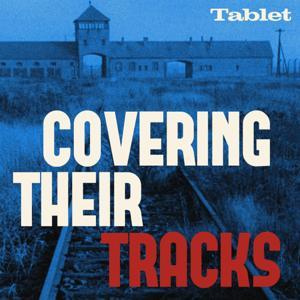
Covering Their Tracks is the extraordinary story of a young man’s escape from a moving train bound for the Auschwitz concentration camp during the Holocaust, and his fight to hold the French national rail company, the SNCF, accountable for their actions as they later bid for lucrative high-speed rail contracts in the United States.
For more information visit http://tabletmag.com/coveringtheirtracks or search for Covering Their Track wherever you get your podcasts.
Learn more about your ad choices. Visit megaphone.fm/adchoices
The Franchise has been nominated for the best sports documentary series in Signal Awards’s Listener's Choice competition! And we need your vote. Voting closes THIS THURSDAY October 5: Now is the time to show your love for this series, Jews in sports ... even the Mets (tell us we’ll lose in catastrophic fashion without telling us we’ll lose in catastrophic fashion). Vote NOW by clicking here or by going to https://tabletm.ag/votethefranchise
Learn more about your ad choices. Visit megaphone.fm/adchoices
Over the course of this series, host Meredith Shiner has explored how Jewish culture, American culture, and sports culture intersect. She's talked to journalists, athletes, amateur and professional sports nerds, and fans who have spent as much time obsessing over these topics as she has. And in this final episode, she looks back on what she’s learned—and what surprised her—through the process of reporting and writing this series.
Previous episodes:
Ep. 7: Sports, Identity, and Justice
Ep. 6: The Sports Mitzvah
Ep. 5: Shondas and Stereotypes: Jewish Sports Team Owners
The Halftime Show
Ep. 4: Jewish Sports Nerds and Their Path to the Promised Land
Ep. 3: Forty Years in the Desert: Jews and the New York Mets
Ep. 2: Reevaluating ‘Jewish Jordan’ Tamir Goodman
Ep. 1: Genesis: Sandy Koufax as Model Minority
Subscribe on Apple Podcasts, Spotify, or wherever you get your podcasts. Email us at [email protected]. Check out the full series at tabletmag.com/thefranchise
Learn more about your ad choices. Visit megaphone.fm/adchoices
On this series, we’ve explored sports as a tool for American Jews to assimilate into their broader communities, to establish and pass down family traditions, and even how sports can be a love language for us. But what if sports is quite literally a way we can tell a rich story of Jewish identity?
This episode focuses on how sports have acted as a cipher to crack the code of what it means to be Jewish in America. We talk to Dan Grunfeld, son of Ernie Grunfeld—the only NBA player to be born to Holocaust survivor parents—and a former professional basketball player himself, about his family’s deeply intertwined Jewish and basketball identities. We discuss the strange saga of Major League Baseball’s Ryan Braun, an all-star who did not really identify as Jewish, until he did, and a player American Jews were excited to claim as Jewish, until they weren’t. We also parse the question of whether sports are just, and trace a path from Sandy Koufax to WNBA star Sue Bird.
Learn more about your ad choices. Visit megaphone.fm/adchoices
Jews don’t have to go pro in sports to love them, and nothing demonstrates that amateur love more than dedicating a whole lifecycle event to it. On this episode, we’re diving into the sports-themed bar mitzvah—and, of course, the coveted shoutout from a professional athlete—and what the confluence of sports and this rite of passage tells us about Jewish identity in America.
In this episode, we’ll hear about the time Sandy Koufax showed up to a DC-area synagogue for a bat mitzvah, and about the bat mitzvah at The Yogi Berra Museum and Learning Center that Yogi himself attended. We’ll talk to parents and their now-adult children about pulling off their own b’nai mitzvah sports miracles. We’ll even hear from long-time sports broadcaster Ernie Johnson, Jr. about why he always says yes when he’s asked to record mazel messages for bar mitzvah boys and girls, and about one specific message that he’s never forgotten. Plus, Rabbi Erez Sherman of Sinai Temple explains why these connections between sports and faith can help bring meaning to both.
Over the course of this series, host Meredith Shiner explores how Jewish culture, American culture, and sports culture intersect. She’ll talk to journalists, athletes, amateur and professional sports nerds, and fans who have spent as much time obsessing over these topics as she has.
Previous episodes:
Ep. 4: Jewish Sports Nerds and Their Path to the Promised Land
Ep. 3: Forty Years in the Desert: Jews and the New York Mets
Ep. 2: Reevaluating ‘Jewish Jordan’ Tamir Goodman
Ep. 1: Genesis: Sandy Koufax as Model Minority
Subscribe on Apple Podcasts, Spotify, or wherever you get your podcasts. Email us at [email protected]. Check out the full series at tabletmag.com/thefranchise
Learn more about your ad choices. Visit megaphone.fm/adchoices
This series has so far focused on the bright spots, the moments that Jewish athletes and storylines have made us proud. But not all stories about Jews in sports are the ones we want splashed in the headlines. On this episode, we confront an uncomfortable subject: Jewish team owners behaving badly. We explore the concept of shondas, and how we feel as Jews when high profile Members of the Tribe embarrass us or bring us shame. .
Episode 5 features interviews with Dave McKenna, the former Washington City Paper journalist who went up against Dan Snyder, ESPN’s Ramona Shelburne, who has reported extensively about Don Sterling’s missteps, sports biographer Jane Leavy, reporter Dave Zirin, and baseball writer Jake Mintz.
Previous episodes:
The Halftime Show
Ep. 4: Jewish Sports Nerds and Their Path to the Promised Land
Ep. 3: Forty Years in the Desert: Jews and the New York Mets
Ep. 2: Reevaluating ‘Jewish Jordan’ Tamir Goodman
Ep. 1: Genesis: Sandy Koufax as Model Minority
Subscribe on Apple Podcasts, Spotify, or wherever you get your podcasts. Email us at [email protected]. Check out the full series at tabletmag.com/thefranchise
Learn more about your ad choices. Visit megaphone.fm/adchoices
We’re halfway through our series, so on this bonus mini episode we’re heading to the locker room for halftime. First, a look at the surprisingly Jewish story behind the iconic sound of the 1990s New York Knicks with Pam Harris, the former Madison Square Garden marketing executive who spearheaded the creation of the Knicks City Dancers and the incredibly catchy “Go NY Go” theme song. Then, an analysis of Kyrie Irving’s recent antisemitic statements and the failure of the institutions around him to truly hold him accountable.
[EMBED]
Over the course of this series, host Meredith Shiner explores how Jewish culture, American culture, and sports culture intersect. She’ll talk to journalists, athletes, amateur and professional sports nerds, and fans who have spent as much time obsessing over these topics as she has.
Previous episodes:
Ep. 4: Jewish Sports Nerds and Their Path to the Promised Land
Ep. 3: Forty Years in the Desert: Jews and the New York Mets
Ep. 2: Reevaluating ‘Jewish Jordan’ Tamir Goodman
Ep. 1: Genesis: Sandy Koufax as Model Minority
Subscribe on Apple Podcasts, Spotify, or wherever you get your podcasts. Email us at [email protected]. Check out the full series at tabletmag.com/thefranchise
Learn more about your ad choices. Visit megaphone.fm/adchoices
While many Jewish kids dream of growing up to become iconic Jewish athletes like Dolph Schayes or Sandy Koufax, the numbers aren’t exactly on our side. This episode is about all the ways Jews have found careers in the game without playing the game—how they professionalized their passion and forged their own path to the Promised Land, in large part by embracing the mathematical and statistical revolution of the early 2000s. The so-called Moneyball generation created models for how brainy Jewish kids could be brainy Jewish adults in sports.
Episode 4 features interviews with New York Mets Assistant General Manager Ben Zauzmer; Wharton statistics and data science professor Adi Wyner; and Adam Neuman, chief of staff for the Big 10 Conference. This episode also celebrates others paths into the sports industry, with Cespedes Family BBQ Twitter phenom Jake Mintz, baseball romance author KD Casey, and father-daughter sports journalism duo Dave Kaplan and Emily Kaplan.
Over the course of this series, host Meredith Shiner will be exploring how Jewish culture, American culture, and sports culture intersect. She’ll talk to journalists, athletes, amateur and professional sports nerds, and fans who have spent as much time obsessing over these topics as she has.
Previous episodes:
Ep. 3: Forty Years in the Desert: Jews and the New York Mets
Ep. 2: Reevaluating ‘Jewish Jordan’ Tamir Goodman
Ep. 1: Genesis: Sandy Koufax as Model Minority
Subscribe on Apple Podcasts, Spotify, or wherever you get your podcasts. Email us at [email protected]. Check out the full series at tabletmag.com/thefranchise
Learn more about your ad choices. Visit megaphone.fm/adchoices
If baseball is the most Jewish of sports, then there is nothing more Jewish than the New York Mets. There are scores of Jewish Mets fans, and Citi Field even has kosher concession stands. But it goes deeper than that: the Mets are the most metaphysically Jewish team. Loving the Mets means wandering the desert, suffering, season after season—and never giving up on this team, no matter how much goes wrong. And a lot seems to go wrong. There’s even a word for it online: LOLmets, which means failing in a spectacular fashion.
LOLMets is more than a meme. It’s a neurosis, an inherited dread, a belief that the worst will always happen because you, your forebears, and your offspring have chosen the New York Mets and are destined for all the suffering that comes with it. This episode takes a look at how so many New York Jews inherited their Mets fandom, how the team’s fabulous flameouts are actually part of their endearing nature, and how Bobby Bonilla Day is a little like Passover in July.
Episode 3 features “Everyone Loves Raymond” creator Phil Rosenthal, who wrote the 1969 World Series champion team into the show; Devin Gordon, author of “So Many Ways to Lose: The Amazin' True Story of the New York Mets—the Best Worst Team in Sports;” Sandy Koufax biographer Jane Leavy; The Baseball Talmud author Howard Megdal; sportswriter Dave Zirin; and Erin Lamb.
Over the course of this series, host Meredith Shiner will be exploring how Jewish culture, American culture, and sports culture intersect. She’ll talk to journalists, athletes, amateur and professional sports nerds, and fans who have spent as much time obsessing over these topics as she has.
Previous episodes:
Ep. 2: Reevaluating ‘Jewish Jordan’ Tamir Goodman
Ep. 1: Genesis: Sandy Koufax as Model Minority
Subscribe on Apple Podcasts, Spotify, or wherever you get your podcasts. Email us at [email protected]. Check out the full series at tabletmag.com/thefranchise
Learn more about your ad choices. Visit megaphone.fm/adchoices
In the 1990s, basketball dominated popular culture. There were the six-time NBA champion Chicago Bulls, the 1992 Olympic Dream Team, and the movie Space Jam—and the face of all of it was Michael Jordan. Everyone wanted to be like Mike, even the Jews.
Enter Tamir Goodman, a 16-year-old Orthodox Jew playing at Talmudical Academy in Pikesville, MD. His skills on the court quickly earned him attention from local and then national media, who dubbed him the “Jewish Jordan.” This episode analyzes the enormous pressure placed on a young star who became a cultural curiosity, and reconsiders whether we got the story right in the first place.
Ep. 2 features a conversation with Goodman, who now lives in Israel with his family and runs youth basketball camps, plus interviews with Goodman’s longtime friend and former New York Knick Mike Sweetney, his high school coach Harold Katz, and Washington, D.C. sportswriter Dave McKenna.
Over the course of this series, host Meredith Shiner will be exploring how Jewish culture, American culture, and sports culture intersect. She’ll talk to journalists, athletes, amateur and professional sports nerds, and fans who have spent as much time obsessing over these topics as she has.
Learn more about your ad choices. Visit megaphone.fm/adchoices
From the publisher's feed

6,871 Listeners

1,463 Listeners
158 Listeners

544 Listeners

57 Listeners

37 Listeners

83 Listeners

305 Listeners

217 Listeners

232 Listeners

445 Listeners
112 Listeners

15 Listeners

115 Listeners

92 Listeners

19 Listeners

11 Listeners

0 Listeners
11 Listeners