
Sign up to save your podcasts
Or

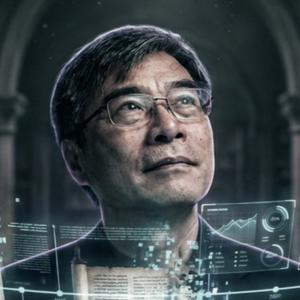


Who was the historical Muhammad? How did Islam triumph over both the Byzantine and Sasanian empires? In this talk to his Chinese high school students, Professor Jiang Xueqin argues that Islam was the first global revolution.While the Byzantine and Sasanian empires appeared to be superpowers, they were weak and fragile due to decades of plague, war, and succession struggles. The Arabian peninsula seemed like a primitive and backward desert, but it was actually a hotbed of innovation. As traders, the Arabs were open-minded, sophisticated, and cosmopolitan. Constant tribal warfare made the Arabs into brave and honorable warriors. Religious wars and imperial persecution drove "heretics" into Arabia in order to openly practice their faith. With his charisma and brilliance, Muhammad united the warring factions to reclaim the promised land that God had promised to their common ancestor Abraham. He promised his followers a Kingdom of God that emphasized religious tolerance and justice, inspiring them to victory even after his death.
Please consider making a small donation here: https://buymeacoffee.com/jiangprofessor
Hosted on Acast. See acast.com/privacy for more information.
Professor Jiang Xueqin explains that Dante's Divine Comedy was the intellectual blueprint for the Renaissance, the Protestant Reformation, and the Scientific Revolution.In a previous lecture, we explored how Augustine's writings would pave the way for Europe's Dark Ages. In his treatise "City of God," Augustine argued that we were born in sin, and we can commit only more sin. Though God is perfect, we were "created out of nothing," and cannot redeem ourselves. Dante believed that God created us to do what He could not -- love and imagine. Love is something that can happen only between humans, and is the Godforce within us that unites the universe. Because God is omnipresent and omniscient, he lacks an imagination (by definition). Our flaws, weaknesses, and limitations are what empowers our imagination. By constantly striving to be better, we continue God's legacy and imagine a better world.
Please consider making a small donation here: https://buymeacoffee.com/jiangprofessor
Hosted on Acast. See acast.com/privacy for more information.
Professor Jiang explains the enduring influence of Dante.Dante recognized that if he is to succeed in birthing a new European mind he must displace Vergil's Aeneid. To do this, Dante makes Vergil into his guide, and Vergil reveals that he is an unreliable narrator. At the beginning of their epic journey, Vergil insists to Dante that only the baptized can enter Heaven. Those who were virtuous and but were not baptized -- such as Vergil -- must remain in limbo. Once in Purgatory, the two meet Cato, who was never baptized. They also meet Statius, a Roman epic poet, who after five hundreds of self-reflection and penance in Purgatory, is finally about to ascend into Heaven. Eventually, Vergil and Dante arrive at the top of Purgatory, and await the arrival of Beatrice. When she does descend, Dante thinks that Vergil can now be redeemed. But Vergil has run away, rather than admit he was wrong. Though Dante cries for his friend, Beatrice tells him they need to move on -- Heaven is only open to those who want to enter it.
Please consider making a small donation here: https://buymeacoffee.com/jiangprofessor
Hosted on Acast. See acast.com/privacy for more information.
Traditionally, we have understood historical movement as either a line or a circle. We are either progressing towards the truth, or trapped in an endless loop. In this talk to his Chinese high school students, Professor Jiang proposes a new theory, which he calls "the oceanic currents of history."When we examine the fall and decline of global empires, a pattern emerges. As the empire expands, it draws once isolated regions into its orbit. The empire allows these regions to become more prosperous and sophisticated through trade and conflict. Prosperity increases the population in these borderlands, which forces them to expand and come into direct conflict with the empire. Sometimes, these people of the borderlands will overwhelm the empire, and become a new empire.
Please consider making a small donation here: https://buymeacoffee.com/jiangprofessor
Hosted on Acast. See acast.com/privacy for more information.
How was Rome able to defeat all its powerful enemies in the Mediterranean world? Why did Rome decline and fall? What is Rome's influence on the world today? What lessons can we learn from it?
Professor Jiang argues that it was Rome's distinct cultural system (which focused on liberty, public virtue, and piety) which permitted it to triumph over its rivals. But after Rome became an empire, this cultural system made it difficult for it to govern. Because America intentionally modeled itself after Rome, we can make certain predictions about America based on our reading of Roman history.
Please consider making a small donation here: https://buymeacoffee.com/jiangprofessor
Hosted on Acast. See acast.com/privacy for more information.
The Byzantine empire saw itself as the continuation of the Roman empire.Professor Jiang argues that Constantinople and Rome had opposing cultural systems. Rome was a pagan Latin republic, and Constantinople was a Christian multicultural empire.
Please consider making a small donation here: https://buymeacoffee.com/jiangprofessor
Hosted on Acast. See acast.com/privacy for more information.
Voltaire once wrote: "The Holy Roman Empire was in no way holy, nor Roman, nor an empire.”
Professor argues that Voltaire was right, and the Holy Roman Empire was a useful fiction created to legitimize the rule of Charlemagne and his successors.
Please consider making a small donation here: https://buymeacoffee.com/jiangprofessor
Hosted on Acast. See acast.com/privacy for more information.
We have understood Western civilization to be composed of four major traditions -- that of the Greeks, Romans, Jews, and Christians.In this talk to his Chinese high school students, Jiang Xueqin argues that the Viking legacy is just as important for the development of Western civilization. During the Viking Age (793 - 1066 CE), the Vikings would interact with and influence the regions from which would emerge the nation-states of Great Britain, France, Germany, and Russia. These four became world empires. They were also for the past four hundred years the greatest cultures of the Western world. Jiang Xueqin argues that this was not just a coincidence -- the brilliance of the Viking oral tradition had a tremendous impact on these future empires.
Please consider making a small donation here: https://buymeacoffee.com/jiangprofessor
Hosted on Acast. See acast.com/privacy for more information.
What was the Viking worldview? What was their value system? Why did they venture out into the world? Unfortunately, the Vikings maintained an oral tradition, most of which was lost after they converted to Christianity. What we do know about the Vikings comes from archaeology and the Norse mythology that was written down in the Poetic and Prose Edda.In this talk to his Chinese high school students, Jiang Xueqin attempts to re-constitute the Viking worldview, and argues that their core values were courage, loyalty, and resourcefulness. He explains the power and beauty of Norse mythology, and how such power and beauty could only be developed in the oral tradition.
Please consider making a small donation here: https://buymeacoffee.com/jiangprofessor
Hosted on Acast. See acast.com/privacy for more information.
The Abbasid Caliphate was considered the Golden Age of Islam. Before the Mongolian conquest, the House of Wisdom in Baghdad was the global center of learning and literacy. Muslim scientists and mathematicians were respected and influential even in Europe. Why did the Islamic world enter its Golden Age, while Europe was stuck in its Dark Ages? Why did this Golden Age come to an end? Why did Christianity eventually overtake the Islamic world? In this lecture to his Chinese high school students, Jiang Xueqin explains that Islam was an intellectual revolution that combined the intimate inter-connectedness of paganism with the absolute clarity of monotheism. This revolution would initiate a new era of human creativity.
Please consider making a small donation here: https://buymeacoffee.com/jiangprofessor
Hosted on Acast. See acast.com/privacy for more information.
From the publisher's feed
Welcome to The Geopolitical Blueprint, your ultimate guide to understanding the hidden forces shaping our world. By analyzing macro history, cyclical patterns, and current global events, this…
In each episode, we look past the daily headlines to examine the deep historical and structural trends driving international relations, economics, and global power dynamics. Whether you are interested in future predictions, regional conflicts, or macro-historical cycles, this show provides the blueprints you need to make sense of tomorrow's world.
Hosted on Acast. See acast.com/privacy for more information.