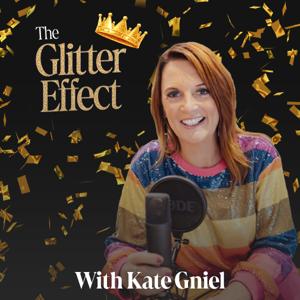
In this episode of The Glitter Effect, host Kate sits down with former elite athlete and sports agent Sally Phillips to discuss life pivots, identity, and finding purpose beyond the game. Sally reflects on her early sports career—from being identified as a basketball prodigy at age seven and earning a scholarship to the Australian Institute of Sport (AIS) at 16, to winning a World Cup gold medal and playing ten seasons in the WNBL.
Despite achieving peak athletic success, Sally opens up about her complex relationship with the sport, falling out of love with basketball, and retiring at just 26. The conversation explores the challenge of uncoupling personal identity from elite competition, turning past regrets into perspective, and how her life experiences led her to launch My Second Half and the C2K (Kindness & Connection) Project to drive intentionality and local community impact.
“After years immersed in sporting culture I began questioning alcohol’s role not only in my own life, but in the environments that shaped me. What started as a personal journey quickly opened up a bigger question: What role does alcohol play in sport?
Half time is the moment we pause, reflect and recalibrate, looking back at the first half and asking; what’s working well and what needs adjusting?
During my own personal half-time break I reached for the whiteboard and wrote A L C O H O L in big bold letters, recognising it as a part of my game that was no longer serving me. I knew I needed to make some meaningful changes if I wanted to step into my ‘second half’ with clarity, intention and purpose.
But this reflection isn’t just personal as I’m seeing many places and spaces across sport that could benefit from their own half-time pause – an opportunity to consider alcohol’s role within clubs, teams, leagues and communities.
That’s the purpose of My Second Half, to explore the intersection of alcohol and sport through conversations around identity, wellbeing, sponsorship, advertising, ethics, fan behavior and violence, community safety, inclusion, athlete wellbeing and the cultural norms that continue to shape our sporting environments and experiences.
If alcohol is beginning to feel central rather than optional in your own sporting experiences, you’re in the right place.
This isn’t about judgement.
It’s about curiosity, conversation and possibility.”