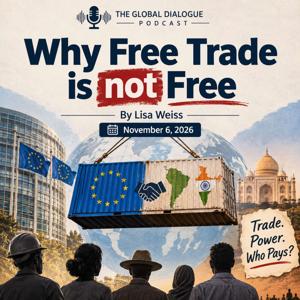
Free trade agreements aren't free – they come loaded with political conditions, inherited power structures, and costs that fall unevenly depending on where you sit in the global economy. Using the EU-Mercosur and EU-India deals as case studies, the hosts unpack how "normative" trade policy often serves European domestic interests as much as any lofty global standard. From 19th-century deindustrialization to today's carbon border taxes, the episode makes the case that someone always pays – the question is who, and whether they had a say.
Highlights
- Why it took 27 years to negotiate a deal that's supposed to make trade simpler and freer
- Whether the EU's push for labor and environmental standards abroad is genuine values-driven policy – or just lobbying in disguise
- How 19th-century colonial trade patterns might still be quietly shaping today's free trade agreements
- What the EU-Mercosur deal reveals about who gets to sell value-added goods and who gets locked into raw commodities
- Why India spent 19 years resisting EU trade terms – and what that tells us about bargaining power in a shifting world order
- Whether the EU's Carbon Border Adjustment Mechanism actually cleaned up global steel production – or just reshuffled who gets hurt