
Sign up to save your podcasts
Or



A backpack to Nepal set the course for a life spent solving hard problems with simple tools. We sit down with entrepreneur and civic operator Christopher Fussner to map how a Jesuit-rooted mobile clinic program expanded to five hubs and roughly 150,000 patient visits a year, using local sisters, schoolhouses as pop-up clinics, and low-cost medicines sourced in Nepal and India. The model is lean, replicable, and deeply human—proof that small teams can deliver big health outcomes without waiting for massive bureaucracies to move.
From there we widen the lens to U.S. soft power and what happens when it shrinks. Chris shares a ground-level view of USAID’s retreat, the impact on groups like IRI and NDI, and why election observation and refugee support matter for credibility abroad. Then we tackle the 2025 national security strategy: rebuilding industrial strength, investing in chips, AI, biotech, and quantum, and asking Europe to carry more of the defense burden. It’s a candid assessment of where America should lean in and where allies must step up.
Ukraine brings policy down to pavement. Chris walks us through buying used ambulances across Europe, driving them to Kyiv and near the front, and why air defense, long-range fires, and drone innovation could let Ukraine automate the fight and hold the line without European boots on the ground. We also look east: freedom of navigation in the South China Sea, a major arms package to Taiwan, Japan–Korea cooperation, ASEAN’s limits, and Australia’s growing role through AUKUS and Pacific partnerships. Throughout, the throughline is practical: real deterrence pairs hard power with visible, humane presence.
If this conversation expands your view of what’s possible—whether in a Nepali mountain village or along a contested border—follow the show, share it with a friend who cares about global affairs, and leave a review to help others find it.
Support the show
A festive Budapest masks a darker reality: a long war in Ukraine and a 33-page U.S. national security strategy that could upend decades of transatlantic habit. We pull the curtain back on a document that sounds tidy on paper but signals a seismic shift in practice—downgrading Europe, shrinking diplomatic footprints, and elevating a Gulf-first, oil-first calculus. The result isn’t just a new posture; it’s a rewrite of the post–World War II bargain that shaped NATO, Ukraine’s hopes, and the European security order.
We walk through the core claims and their consequences. Europe is told to step up or step aside. Ukraine faces a brutal equation as drones, artillery, and blockades meet the slow pressure of demography and displacement. Talk of “deals” blurs into concession chatter, while Moscow tests the West’s red lines and courts India and the Gulf. Meanwhile, a revived Monroe Doctrine approach narrows Washington’s field of view to the Western Hemisphere, closing consulates and trimming bases as a signal that the old umbrella won’t reach as far. Climate cooperation, development finance, and democracy promotion move to the back seat, replaced by transactional ties that reward immediate leverage.
We also look east. The strategy tacitly accepts a co-equal Chinese sphere of influence so long as certain lines hold around Taiwan and the South China Sea, an uneasy managed rivalry that will shape trade routes, supply chains, and ASEAN diplomacy. Upcoming expert voices from Asia and Ukraine will deepen the analysis with on-the-ground context—how money, logistics, and policy collide where it actually matters. If Europe wants agency, it needs to build capacity fast: munitions, air defense, energy resilience, and long-term funding tools that outlast election cycles. If Washington wants credibility, it needs professionals at the table and a coherent endgame.
Listen to unpack what this strategy means for NATO reliability, Ukraine’s survival, and the balance of power from the Black Sea to the Strait of Hormuz. If the map is being redrawn, the question isn’t whether to adapt—but how quickly. Subscribe, share, and leave a review to join the conversation and help others find the show.
Support the show
A closing China meets a scrambling West—and the balance of power looks different up close. We sit down with our Shanghai-based correspondent, Steve Croll to unpack how the city that once courted foreign CEOs now moves confidently without them, and why the assumptions that guided two decades of outsourcing no longer hold. From Hong Kong’s electric past to today’s tighter controls, the story tracks a deliberate strategy: master the tech, shift management in-house, then narrow the aperture for outside influence.
We follow Trump’s whirlwind through Asia to his meeting with Xi and ask the uncomfortable question: what do you negotiate with when your leverage is thin and your intel thinner? Rare earths sit at the heart of the contest. Beijing maintains the upper hand with export controls on gallium and germanium while the U.S. faces a five-to-seven-year march to rebuild processing. On fentanyl, our guest argues the uncomfortable reality that China could choke precursor flows if it chose, given its enforcement machinery. And on agriculture, American farmers still feel the sting as purchases swing toward Brazil after tariffs and retaliation reworked trade patterns.
This conversation isn’t nostalgia. It’s a field report on how power actually shifts: through supply chains, midstream chokepoints, and the quiet disappearance of foreign voices that once shaped policy choices. We map the practical path forward—reinvest in processing, deepen alliances, compress permitting timelines, and pair external pressure with domestic capacity. If you care about geopolitics beyond photo ops and headlines, this is the ground truth you won’t get from a motorcade. Subscribe, share with a friend who follows global trade, and leave a review with the one policy lever you think matters most.
Support the show
The map looks familiar, but the ground beneath it is moving. We open from Singapore with a hard look at an off-year election that punches above its weight: governors’ races that signal voter appetite for moderation and a California ballot push that could reshape congressional math. From there, we trace the long arc from Dixiecrats to today’s polarized blocs to show why the fight over district lines is less about party trivia and more about who gets heard when budgets and benefits are decided.
We unpack the demographic engine driving the South—Black remigration and Hispanic growth—and explain how representation lags when maps are drawn to mute new majorities. That gap spills into daily life: wages that miss the cost of living, SNAP framed as a partisan crutch despite heavy red state usage, and Medicaid expansions that keep rural hospitals alive even as pundits deny the reliance. Along the way, we challenge the convenient narratives that cast poverty as a choice and benefits as a blue-state indulgence. The numbers tell a different story about who pays, who profits, and why resentment travels faster than reform.
Then we go straight at the cost crisis: how hospital consolidation, middlemen, and fragmented bargaining push U.S. health care to world-beating prices with middling outcomes. We outline pragmatic fixes—real negotiation power, simpler billing, less duplication—and make the broader case for shifting decisions closer to the people who live with the consequences. Local and state control won’t solve defense, climate, or antitrust, but it can restore a line of sight between taxes and services, letting communities pick wage floors, coverage levels, and priorities without waiting for a national truce.
If you care about fair maps, livable wages, and health care that doesn’t hollow out your paycheck, this conversation offers a clear, grounded way forward. Subscribe, share with a friend who loves data more than spin, and leave a review with one local change you want to see next.
Support the show
Start with a grand Paris weekend—the thunder of the organ at a renewed Notre Dame, crowds winding through centuries of art—and watch it flicker into something more fragile as the TGV grinds to a halt. That sudden stall becomes our window into a tougher story: a Europe struggling with integration, security, and a welfare model built for a different era.
We unpack how protests at Charles de Gaulle and a brazen Louvre heist expose brittle public systems, then widen the lens to immigration policy, labor participation, and the political incentives that reward promises over performance. France, Germany, the Netherlands, Italy, Spain—each faces its own version of the same knot: generous benefits, slow integration, and a shrinking willingness to do the difficult work that funds the social contract. Populist parties capitalize on the anger; EU institutions move at committee speed while Russia tests the edges and NATO budgets inch upward.
Across the Atlantic, we contrast Europe’s bureaucracy with a U.S. drift toward privatizing public functions—private dollars plugging public holes while SNAP faces cuts and the federal minimum wage sits frozen. It’s two versions of gridlock, each eroding trust. We argue for a remedy that’s unglamorous but effective: localism with real accountability. Think Swiss-style governance—local taxes, local votes, transparent tradeoffs—so citizens see how money moves and why. Pair benefits with work, align immigration with jobs and language programs, and treat defense as an insurance premium that needs honest funding.
Along the way we talk farms and tariffs, guest workers and pensions, and why moving power closer to communities may be the only way to lower the temperature and raise performance. The train metaphor holds: systems are supposed to carry everyone, not just the lucky or the connected. If this resonates, subscribe, share the show with a friend, and leave a review to help more curious listeners find it. What would you fix first—security, welfare, or local control?
Support the show
What does a country look like when trust is designed into its politics, not wished for? We wrap our Switzerland series with diplomat and longtime Geneva resident Marc Finaud to explore how a small, multilingual federation turned subsidiarity into a superpower—building prosperity, safety, and civic calm from the commune upward. Instead of top‑down decrees, the Swiss rely on direct democracy, frequent referendums, and cantonal autonomy that ties spending to local decisions. You vote for the playground—and you fund it. That clarity changes behavior, lowers political temperature, and makes government feel close to home.
We dig into the realities behind the reputation. Marc explains why Switzerland remains a magnet for immigrants, how Geneva and Zurich complement each other—finance and diplomacy on one side, tech and life sciences on the other—and why universities thrive with autonomy, industry partnerships, and a pragmatic stance on culture-war flashpoints. We unpack the health care model: compulsory basic coverage via regulated private insurers, optional top‑ups, and targeted subsidies that protect access while preserving choice. Then we walk through the pension “three pillars,” an elegant blend of universality, shared contributions, and voluntary savings that keeps the social floor firm without dulling personal responsibility.
Perhaps most striking is the social fabric: national service that mixes citizens across backgrounds, strict yet sensible firearm rules paired with strong community norms, and public officials who ride trains without entourages. In a world addicted to spectacle, Switzerland defaults to competence. The result is a country that manages immigration, sustains high wages, supports research and innovation, and still treats politics as a shared project. If you’re looking for lessons your city or country can adapt—from local control and fiscal transparency to service programs that build cohesion—this conversation offers a practical roadmap.
Enjoyed the series? Follow the show, share this episode with a friend who loves policy done right, and leave a review to help others discover the Greenfield Report.
Support the show
Doors left unlocked. Three national languages in daily use. Half the households owning long guns—and still, one of the lowest homicide rates in the developed world. We went to a small village in the Swiss Alps to understand how Switzerland turns this paradox into a durable way of life, and what the rest of us can learn from it.
We walk through the mechanics of direct democracy and why frequent local votes tie decisions to duties in a way that builds trust rather than fatigue. You’ll hear how unwritten norms—politeness, brevity, and firm boundaries—do more to prevent conflict than performative politics or heavy-handed policing. We compare Switzerland’s culture of responsibility with systems that centralize power or outsource safety to slogans, and we explore why a country comfortable with firearms still treats escalation as a social failure, not a right to be performed.
Along the way, we unpack the role of language diversity, community enforcement, and the Swiss habit of keeping national politics out of casual conversation. Education and healthcare emerge as pillars of reciprocity, while neutrality and finance are framed as context rather than causes. An on-the-ground anecdote captures the tone: clear lines, direct eye contact, and a commitment to help—minus the ideological theater. The takeaway is practical and hopeful: freedom paired with obligations, enforced locally and lived daily, can make a society both safe and genuinely free.
If this lens on safety, trust, and local power resonates, follow the show, share this episode with someone who loves civic ideas, and leave a quick review to tell us what your city could borrow from the Swiss model.
Support the show
An 800-year-old bridge in Lucerne sets the scene for a forward-looking conversation about buildings that think for themselves. We bring together architect-CEO Jojo Tolentino and digital twin leader Tim Goring to unpack how open BIM, Siemens Building X, and AI-driven integration move design beyond handover into real operational impact. The theme is simple and urgent: you can’t correct what you can’t measure, and the biggest sustainability gains live in day-to-day operations.
We dig into Europe’s lead on open standards, why Switzerland has become a precision hub for smart infrastructure, and how the line between hardware and software has vanished. Sensors, controllers, and cloud services now speak a common language in data, allowing portfolios to be seen through one “single pane of glass.” That visibility lets CFOs compare apples to apples across new builds and heritage assets, prioritizing investments that cut carbon, reduce cost, and improve comfort. Digital twins act as a pragmatic control room—testing strategies, automating responses, and scaling best practices from one pilot to an entire campus.
AI doesn’t replace expertise; it removes the integration slog. Instead of years of bespoke pipelines, documents and databases are pulled together quickly, turning questions into modeled outcomes. This shift empowers architects to stay involved across the lifecycle—embedding smart building solutions into as-built models, connecting to FM platforms, and closing the loop so each project informs the next. As Jojo puts it, good design is the entry level; design plus data is the advantage. And for everyday users, the benefits feel natural: healthier spaces, fewer outages, smarter utilization—progress that’s often invisible, but deeply felt.
If you’re curious how digital twins, open BIM, and AI make net zero real—faster, cheaper, and at scale—this conversation offers a clear map. Subscribe, share with a colleague who cares about sustainable operations, and leave a review with the one question you want AI to answer about your buildings.
Support the show
This is Henry R. Greenfield's first dispatch from Switzerland—part of a field series exploring how communities create safety, especially in countries where nearly half of households keep a firearm at home.
Landing in Zurich, Greenfield unpacks Switzerland’s quiet paradox: high gun ownership, low homicide rates, and a civic culture built on shared responsibility rather than hollow slogans. Here, firearms are integrated into daily life through mandatory military service, an active network of gun clubs, and meticulous safe practices. Discipline, competence, and mutual expectations shape a society where safety isn’t just a rule—it’s a habit look at why Switzerland remains one of the safest countries in the world despite widespread gun ownership, and why social cohesion matters more than wealth or laws alone. From mandatory service to local voting and controlled immigration, Greenfield discusses how trust and civic duty shape safety.
• high gun ownership paired with low homicide rates
• mandatory service and normalized firearm competence
• social admonishment as everyday enforcement
• local democracy with frequent, simple paper voting
• Europe’s safety rankings and Swiss exceptionalism
• contrasts with the United States’ polarization
• immigration as controlled, contribution-focused policy
• technology and industry beyond finance and watches
Stay connected with Henry R. Greenfield for more in depth discussions and expert solutions as he reports from Switzerland.
Support the show
What if the fastest way to rescue democracy isn’t through endless arguments about abstractions, but by fixing the problems families face every day? Henry R. Greenfield takes a clear-eyed look at why trust has collapsed—nostalgia that romanticizes the past, decades of offshoring and short-term corporate thinking, and institutions that reward power over accountability. Then he turns to a practical path forward built on outcomes, not outrage.
First, health. Instead of treating reform as a box to check, Greenfield proposes a kitchen‑table plan to lower costs across the system: transparent hospital pricing, faster approvals for generics and bio-similars, site‑neutral payments to reduce monopoly markups, and simple, readable bills. When premiums, prescriptions, and wait times drop, public trust grows.
Second, jobs. Greenfield calls for a clear wage floor, paid apprenticeships matched to real vacancies, modular training programs that deliver offers within weeks, and procurement rules that reward local hiring and on‑the‑job learning. When cranes, coursework, and paychecks appear in the same neighborhood, politics looks different.
Greenfield also address immigration with both order and dignity: secure borders, modern processing, targeted guest‑worker programs with enforceable standards, and realistic legal pathways paired with English and credential support. The goal is simple—protect wages, punish exploitation, and align labor needs with opportunity without chaos.
Finally, he outlines “Project America”—a service‑first organizing model that prioritizes real help over viral posts: medical billing clinics, résumé fairs, tenant mediation, and neighborhood safety walks with community policing. Two themes carry everything—health and jobs—communicated the same way, everywhere, by everyone.
If you’re ready to trade pundit chatter for real wins that families can feel, this essay is your field guide. Subscribe, share with a friend who’s ready to build, and leave a review telling The Greenfield Report the first fix you want to see in your community.
Support the show
From the publisher's feed
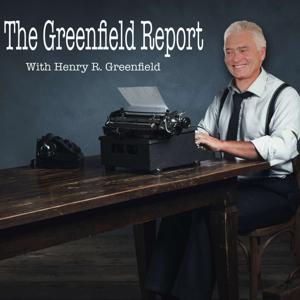
Welcome to "The Greenfield Reportwith Henry R. Greenfield," where 50+ years of world travels across 10 countries shape insightful takes on current geopolitical events. Join Robert for eye-opening…